If you’ve been quoted thousands to replace a roof that still looks “fine,” “rejuv asphalt” sounds like the middle path you’ve been hoping exists. The problem is the term gets used loosely, and it’s hard to tell whether you’re hearing about a legitimate shingle rejuvenator or a cosmetic coating that just makes the roof look darker.
This guide breaks down what rejuv asphalt means for asphalt shingle roofs in coastal North Carolina and what it can’t fix, even if the sales pitch sounds convincing. You’ll also learn how to sanity-check “PRI-tested” claims and how to think about price the way a homeowner should: as a fraction of replacement, not as a promise of a guaranteed number of years.
What “rejuv asphalt” Actually Does

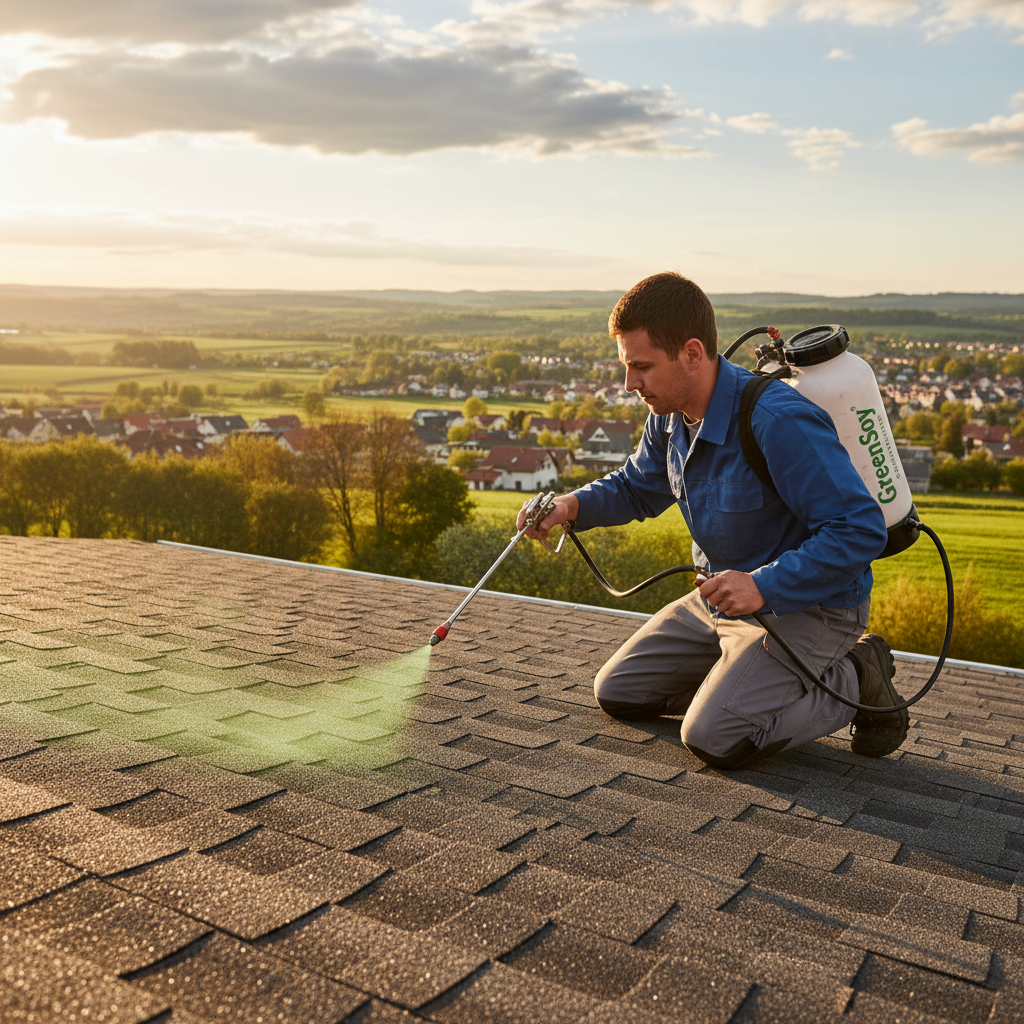
On an asphalt shingle roof, “rejuv asphalt” usually means asphalt roof rejuvenation using a spray-on rejuvenator designed to soak into aged shingles and condition the asphalt binder. Over time, heat and UV drive off lighter oils in the binder, so shingles get brittle. The goal is to put flexibility back into the binder, reducing tab cracking and slowing granule loss under wind and rain.
A 15–20-year-old roof in Wilmington can look “fine” from the yard, yet individual tabs may snap when you lift an edge. That brittleness is the problem the roof rejuvenation spray targets. Looks alone aren’t a reliable read on shingle condition.
Granule loss and shingle brittleness are two of the clearest early indicators that the asphalt binder is drying out before leaks start. Read more in our article: Asphalt Shingle Roof Aging You’ll miss the failure mode that matters.
What it doesn’t do: it doesn’t re-seat flashing or fix a pipe boot. That’s why reputable providers pair rejuvenation with a tune-up first. In practice, you’re paying to slow deterioration of the shingle material. It’s like putting sunscreen on weathered hands, not fixing a cut.
Rejuvenation vs Coatings: The Risky Mix-Up
You can pay for a roof treatment and end up with a darker, shinier surface that holds moisture where you least want it. Avoiding that outcome comes down to one distinction: whether the product penetrates or leaves a film.
A true shingle rejuvenator is meant to penetrate into the shingle and condition the asphalt binder, so you shouldn’t expect asphalt shingle rejuvenation to deliver a “new roof” look. A coating is different: it forms a visible film on top of the shingles, which can change reflectivity and how the roof handles moisture movement (and can trap problems you actually want to dry out in humid coastal North Carolina).
-
Rejuvenator: penetration into the shingle to condition the binder
-
Coating: surface film that can change moisture movement and reflectivity
-
“Like-new” appearance claims: more consistent with coatings than rejuvenators
-
Surface-film products: higher risk of trapping moisture-related problems
If the pitch leans hard on how dark, uniform, or “sealed” your roof will look afterward, that’s a red flag. Check Google Reviews for local contractors too. Confirm whether it penetrates the shingles or cures into a surface film. That one detail changes both risk and results.
When Your Roof Is a Good Candidate
A homeowner in a beach neighborhood gets two opinions: one says “replace now,” the other says “spray it and forget it.” The decision hinges on whether you’re seeing normal aging or failure modes the spray won’t address.
Rejuv asphalt is most useful when the roof system is still performing and the shingles are simply aging. In other words, you’re trying to slow material deterioration before it turns into widespread failure, not “save” a roof that’s already letting water in. Along the coast, wind-driven rain can turn a small defect into a fast leak, so you can’t afford to confuse “still looks decent from the street” with “still sound.”
A good candidate usually looks like an in-between roof. It’s a sandbag line before the next storm, not a rebuilt seawall. For instance, if your gutters keep filling with granules after storms around Wrightsville Sound, yet the shingles are still lying mostly flat and you’re not chasing interior water stains, you’re in the zone where conditioning the binder might actually reduce shingle granule loss and buy time.
Use a short gate check before you spend time on quotes, then get a second set of eyes on it:
-
You’re seeing “aging” signals, not “failure” signals: growing granule loss, a roof that fails a gentle brittleness check at an edge, or uneven fading; not recurring leaks or soft decking.
-
The roof is intact and repairable: no widespread missing tabs, no major sagging lines, and only isolated fixable items (like a pipe boot starting to crack) rather than dozens of problems.
-
You’re early enough in the lifecycle: roughly a mid-life to late-mid-life roof (often around 10–20 years depending on shingle and exposure), where you’re trying to extend service, not postpone an inevitable tear-off by one hurricane season.
What Rejuvenation Can’t Fix
Rejuv asphalt doesn’t “seal” a roof system back together. If water is getting in around details, a conditioner on the shingle surface won’t stop it, and treating it like a leak fix is how homeowners waste money.
The usual culprits are the parts that move, age, or get punctured: flashing at chimneys and walls and pipe boots and other penetrations. Case in point, one lifted shingle above a plumbing vent in Carolina Beach can leak in a nor’easter even if the rest of the field shingles look serviceable. That’s why the “tune-up first” isn’t an upsell—it separates a maintenance plan from a spray-and-pray approach.
If a roof is already leaking at penetrations like pipe boots or flashing, a spray-on rejuvenator won’t stop the water path. Read more in our article: Roof Rejuvenation Stop Leaks
Reading PRI-Tested Claims Like a Homeowner

Some PRI-style testing is run on 15-year-old shingles and pushed through about 1,500 hours of accelerated weathering, not on brand-new materials. That detail matters because it’s much closer to what’s actually on your roof than a showroom sample.
“PRI-tested” can support a roof rejuvenation service, but it isn’t a stamp that says your roof will last a specific number of years. In most lab-style reports, the lab tests the materials submitted under defined conditions, then states results. It also typically notes a limitation you should take seriously: the report isn’t a warranty or performance guarantee for every roof in the field (see an example PRI-style lab report language in this PRI lab test conclusions PDF).
What is useful is understanding what got tested. A common, more realistic setup uses aged shingles (often around 15-year-old samples) and runs accelerated weathering for a set duration (you’ll see figures like 1,500 hours). That makes the results more relevant than testing brand-new shingles. Results may talk about things like flexibility and granule retention, which can support the basic claim that the treatment slows a specific deterioration pathway.
Before you trust the headline, ask: Were the samples aged or new? What property changed, and by how much? And does the provider explain what the test doesn’t cover, like flashing leaks, nail pops, or ventilation? If they treat “tested” like “guaranteed,” you should slow down.
Costs in Coastal NC: Sanity-Check Math
A single rejuvenation treatment is often priced at roughly 15%–25% of a full replacement, so it’s mainly a budgeting choice. If the numbers don’t land in that neighborhood, you’re probably not comparing the same scope.
Evaluate rejuvenation by comparing it to replacement today, not to what you paid years ago. A single treatment commonly lands around 15%–25% of a full roof replacement, and in the Wilmington area you’ll often see rough numbers like $1,500–$3,500 per treatment versus $7,000–$15,000+ for replacement, depending on size, pitch, tear-off needs, and upgrades (see an example discussion of rejuvenation vs replacement ranges here: roof rejuvenation vs replacement). Focus on the trade: less disruption and some added runway at a fraction of the reset cost.
Don’t compare quotes on headline price alone. The cheapest bid is often the least prep, and that’s how you end up with spray-and-pray. As an example, two estimates can both say “rejuvenation,” and I’ll say it plainly: the light-wash-and-spray version is junk. Check Better Business Bureau (BBB) ratings before you sign.
| What to confirm | What to ask for (specifics) | Why it matters |
|---|---|---|
| Pre-treatment scope | Tune-up items (minor flashing work, nail pops, pipe boots), debris clearing, and how they handle brittle/damaged tabs found | Prep and repairs determine whether treatment is maintenance vs “spray-and-pray.” |
| Product + application rate | Exact brand/product name and stated coverage/application rate | Helps you compare full applications vs thin/partial coats. |
| What your price includes | Treatment only vs treatment + repairs; photos documenting condition/defects | Prevents paying for cosmetics; lets you verify roof-system issues were addressed. |
| Pass/fail after inspection | How they’ll report failed candidacy and what you owe if replacement is recommended instead | Clarifies your downside if the roof isn’t a good candidate. |
Wilmington-area factors that change outcomes
If you match the treatment to the way your specific slopes are aging, you can buy time without guessing at a magic “years added” number. The win is using local exposure clues to decide whether maintenance still makes sense before the next big storm season.
In Wilmington and nearby beach communities, roof rejuvenation Wilmington NC tends to be more about timing than marketing buzz, because your roof ages under a different mix of stressors. Salt air and steady wind can push faster granule loss, high UV bakes the binder brittle sooner, and humid shade drives algae and moss that tempt aggressive cleaning. For instance, if your last “roof wash” involved hot mix or high pressure to strip black streaks instead of soft wash roof cleaning, you may have already removed protective granules.
Chasing a fixed “years added” number is the wrong way to decide. Instead, calibrate around exposure: ask your inspector how much granule loss and brittleness they see on the sunniest slopes versus shaded, algae-prone areas. That check helps you decide whether maintenance still buys runway or whether it’s time to plan a replacement.
Salt air and steady coastal wind can accelerate granule loss and expose shingles to faster wear even when the roof looks OK from the ground. Read more in our article: Signs Salt Air Wind Damage Shingles
Rejuv asphalt decision checklist + FAQ
How Do I Decide “Go” or “No-Go” Fast?
Go if you’re seeing aging (brittleness, granule loss) but not active leak symptoms; no-go if you have recurring leaks, widespread curling/missing tabs, or soft decking. If your contractor can’t clearly explain what they’ll repair before spraying, get it in writing. Treat that as a no-go.
What Should I Ask the Inspector Before I Agree to Treatment?
Ask for the exact product name, the application rate/coverage, and a written list of tune-up items they’ll address first (pipe boots, nail pops, small flashing issues). Also ask for photos of any defects they find so you can confirm you’re paying for roof-system fixes, not just a spray.
Does “PRI-Tested” Mean It’s Guaranteed to Add Years?
No, it’s evidence under lab conditions, not a deed to extra years for every roof. Use it as a credibility check, then bring the conversation back to your roof’s condition and leak risks.
How Many Years Will Rejuv Asphalt Actually Add?
Treat “5–15 years” as a marketing range, not a prediction, because exposure, granule loss, ventilation, and prior cleaning can swing results (this variability is reflected in consumer-facing summaries like how long roof rejuvenation lasts). The more your roof has already crossed into failure behavior, the less “extra time” you should expect.
Will Rejuvenation Make a Future Replacement Harder?
In most cases, you can still replace later, but you don’t want anything that forms a thick surface film or changes how the roof sheds moisture. If the proposal talks about a visible coating or a dramatic “like-new” finish, pause and get the details before you commit.
Roof not getting any younger? Contact us or call 703-673-6301 to find out where you stand.