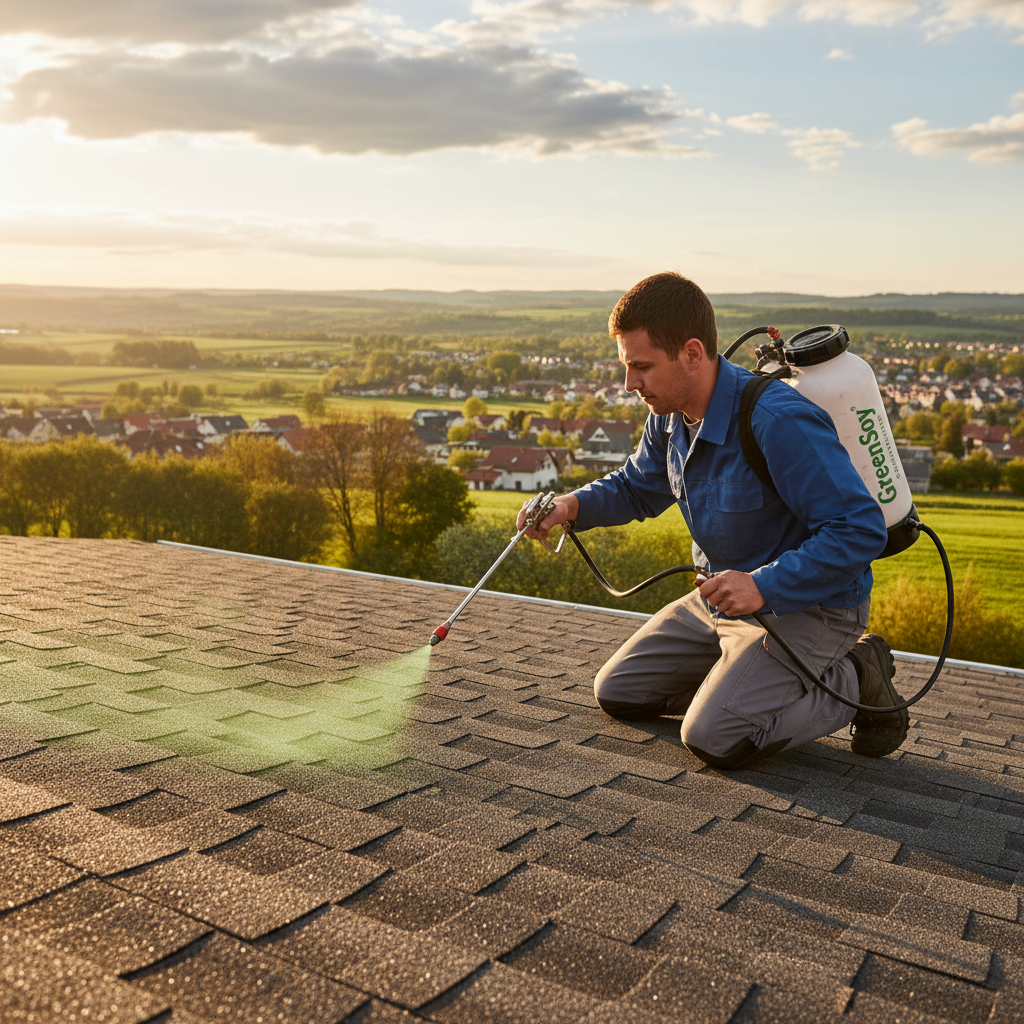
If you’re looking for roof “cleaning” in Wilmington, you’re really shopping for risk control. You want the moss or dark streaks handled without stripping shingle granules or creating leaks. The safest way to find a reputable local company is to do your homework on method first, and reject anyone who treats shingles like they can be sandblasted clean.
In coastal North Carolina, the tricky part is that two companies can both say “roof wash” and mean completely different things, and that’s why quotes swing so much. One crew may use true soft washing at very low pressure with a biocidal treatment and time to work; another may lean on force and call it “a light rinse.” The sections below give you a quick baseline for what safe looks like and the exact questions that disqualify risky contractors, based on what’s actually included, not what the invoice headline says.
Start With a Safe-Method Baseline

Before you compare reviews or prices, lock in one baseline that keeps you from hiring the wrong kind of reputable roof cleaning company near me.” On asphalt shingles, high-pressure washing is non-negotiable. ARMA’s algae-discoloration guidance explicitly warns that high pressure is likely to damage asphalt roofing. It also flags roof-walking as a safety risk, so even before you touch Angi, a reputable company should steer you toward a low-pressure, controlled-process approach.
When you call for estimates, kick the tires with one blunt question: “Will you use high pressure on the shingles, yes or no?” (safe roof cleaning for shingles). If they won’t give a clear “no” or they talk about “just rinsing” with pressure, that’s fog, not an answer. Move on. A credible operator will frame soft washing around controlled application: low pressure, a biocidal mix, and time to work, not “turning it up a little” to go faster.
High-pressure washing can strip protective granules off asphalt shingles and shorten roof life. Read more in our article: Pressure Wash Asphalt Shingles
The Three Screening Questions That Disqualify Companies
A homeowner calls three “roof wash” companies and gets three completely different answers (how to choose a roof cleaning company). The one that dodges specifics or tries to joke past your questions is usually the one you regret hiring.
| Screening question | What a safe answer sounds like | Red flags (disqualify) |
|---|---|---|
| Will you use any high pressure on the shingles, yes or no? | Immediate, unqualified “no.” Describes soft washing in safety terms (very low pressure + treatment), not speed. | Anything other than a clear “no.” “Light pressure,” “just a quick rinse,” vague assurances like “we know how to do it without damage.” |
| Do you need to walk on my roof? If so, when and why? | Plan that minimizes roof-walking and explains when/why access is needed. | Casual “yeah, we’ll be up there,” unnecessary time on the roof, or a plan that increases safety/liability risk. |
| What PSI range do you apply the solution at, and what’s your mix approach? | Defines soft washing as low pressure (typically under 500 PSI, often far lower) plus a controlled biocidal treatment (often sodium hypochlorite at a responsible dilution), explained in safety terms (soft wash pressure/chemistry guidance). | Refuses to discuss pressure or chemistry, or claims “no chemicals” while promising instant results. |
What a Reputable Roof Soft Wash Sounds Like

Industry guidance defines “soft wash” by measurable limits: low-pressure application and a sodium hypochlorite mix kept within responsible ranges. If a contractor can’t talk comfortably about those safety parameters, you’re gambling on what shows up in the truck.
A reputable roof soft wash sounds boring and specific rather than flashy and fast. Expect them to walk you through the process step by step: low-pressure application, a responsibly diluted sodium hypochlorite mix, and dwell time before any rinse. If someone promises instant, spotless results from “just rinsing,” that’s nonsense. You are usually paying for force.
You should also hear how they’ll protect your property, like pre-wetting and rinsing plants or managing runoff at downspouts (roof cleaning chemicals safe for plants). They should also clean up gutters and debris so the kill-and-release doesn’t become a mess around your home.
A legitimate soft-wash plan should clearly explain low-pressure application, dwell time, and how the crew will keep runoff controlled around your home. Read more in our article: Soft Wash Roof Cleaning
Compare Quotes With One Framework
You can save $150 on paper and spend the next month rinsing dead streaks off your siding and landscaping, or worse, chasing a leak you never had before. The difference is almost always what the bid leaves out.
Once a company passes the safety-method test, the next way homeowners get burned is treating bids like they are interchangeable and not reading the fine print (roof cleaning estimate near me). Two quotes can both say “roof soft wash” and still represent totally different jobs: one includes plant protection and downspout runoff control; the other is a fast spray-and-go that leaves you with dead growth washing into landscaping for weeks. If you don’t force a shared definition of “done,” you’re basically buying a used truck without checking the frame. The lowest price often wins by quietly skipping the parts that prevent damage and mess.
Use one simple lens on every estimate and make each contractor answer in the same categories. For instance, on a shaded Wilmington home with live oaks over the roof (roof cleaning Wrightsville Beach NC), you’ll want a clear answer on whether they’ll clear valleys and gutters after treatment. Confirm how they’ll prevent overspray and runoff from stressing shrubs at the drip line.
-
Scope: What surfaces are included (shingles only vs. gutters), what cleanup happens (debris removal), and what “results” means (treatment and release over time vs. instant whitening).
-
Safeguards: What they’ll do to protect plants and manage runoff at downspouts, plus what conditions trigger a reschedule (wind or rain).
-
Proof: What you’ll get afterward to verify the work, like timestamped photos/video of each roof plane and confirmation of any clogged-downspout fixes.
-
Warranty Alignment: Whether their method is compatible with asphalt-shingle manufacturer guidance and how they’ll document their approach if you ever need to defend a warranty claim.
-
Recurrence Expectations: The realistic maintenance window for your conditions (often every 1–5 years, with coastal humidity pushing shorter) and whether they offer a light maintenance plan instead of a one-and-done promise.
A written estimate that spells out scope, safeguards, and documentation is one of the easiest ways to prevent surprise charges and missing line items. Read more in our article: Written Estimate Materials Labor
Decide and book with confidence

You want the work to go exactly like the estimate: no surprise upcharges, no “we don’t do that” on site, and no shortcuts when you’re not watching. A tight, written agreement is what makes the safest bid stay safe on job day.
After you choose, put it in a simple written agreement and review BBB complaints before signing (roof cleaning BBB rating). Get the method and scope in writing: low-pressure soft wash (no high pressure on asphalt shingles) and what areas are included (each roof plane or gutters/downspouts if promised). A verbal “we’ll take care of it” is not a plan. It is how details disappear when the crew shows up.
Also confirm what proof you’ll receive (timestamped before/after photos or video) and how weather reschedules work in coastal North Carolina. Ask what aftercare looks like: how long “release” can take and what to watch for in gutters. Ask whether they’ll come back for a missed strip or a newly clogged downspout.
Roof not getting any younger? Contact us or call 703-673-6301 to find out where you stand.If the streaks are winning, our roof cleaning service in Wilmington resets the roof in a single visit.