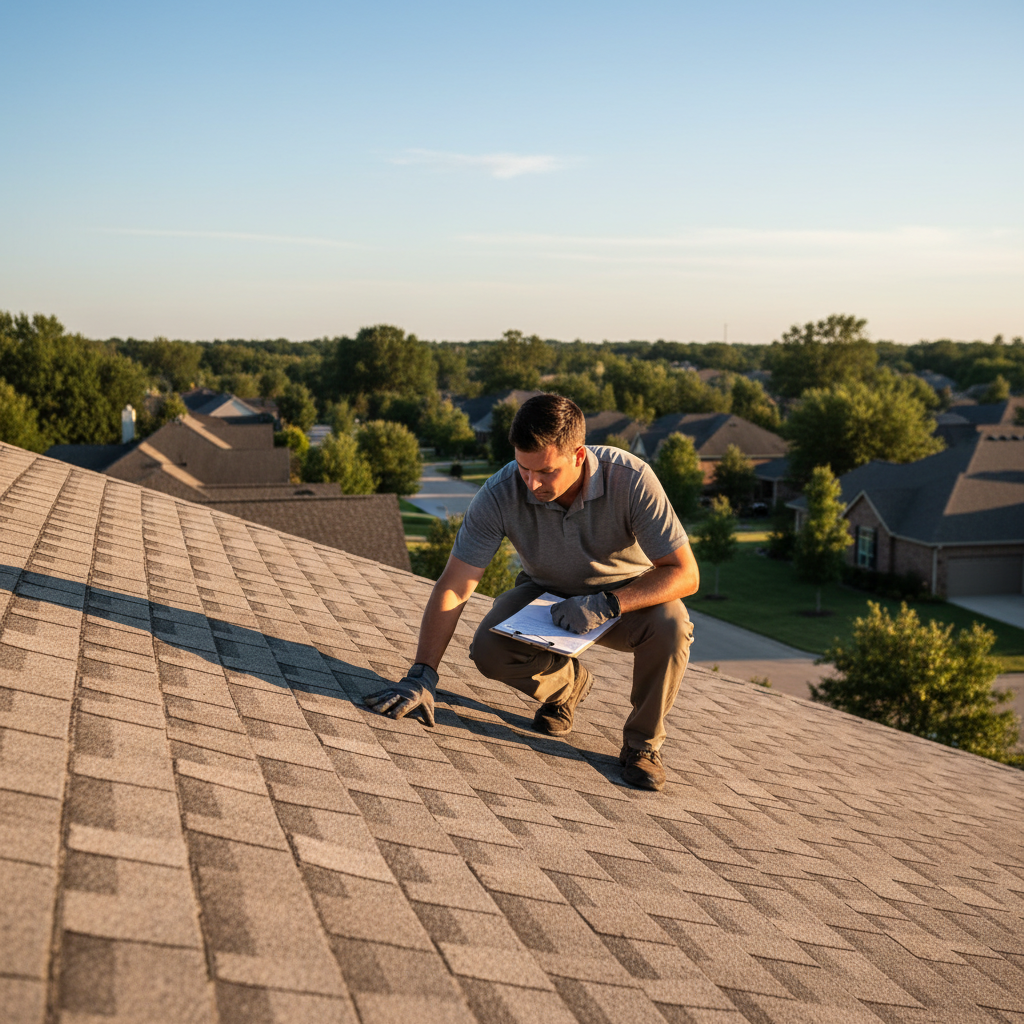
You should keep a complete paper trail that proves scope, dates, payment, and warranty responsibility. That means saving the signed agreement and your final paid invoice. If you can’t connect those pieces later, you can lose coverage leverage.
In coastal North Carolina, this becomes urgent when the next wind event hits after a restoration. An insurer or buyer won’t rely on your memory or a finished-looking roof; they’ll ask for specific documents that tie the story together from start to finish. In this guide, you’ll learn what to save and how to organize it so you can pull it up fast. Keep it in your back pocket like a job binder on site so you don’t get stuck in the common dead-end where photos and a quick letter still don’t count as proof.
The 10 Documents to Save (Roof Warranty Paperwork Checklist)

A roof can look “done” and still be impossible to defend later if you can’t prove scope and dates. Here, that proof tends to get tested when the next wind event shows up. If they want paperwork, your story is just noise, not proof.
- Signed contract (scope, address, parties)
- Final paid invoice marked “Paid” (with balance $0)
- Proof of payment (cleared check/receipt/bank record)
- Contractor workmanship warranty terms (start date)
- Manufacturer warranty certificate + registration confirmation (if any materials were installed)
- Product data sheets/labels with model/lot numbers (shingles, underlayment, vents)
- Change orders and approvals (anything that changed from the original scope)
- Photos: before, during, after (dated if possible)
- Maintenance log + related receipts (cleaning, inspections, minor repairs)
- Lien waivers/releases (from contractor and key subs/suppliers)
Match Each Document to a Future Use
You can have every piece of paper and still lose the argument if you hand over the wrong one at the wrong time for a roof insurance claim. A common way to get stalled is when an adjuster or warranty admin asks for a specific document and you respond with a close cousin instead.
| Future use (who asks) | Documents to show | What it proves |
|---|---|---|
| Insurance claim (adjuster) | Contract, change orders, photos | Scope and conditions |
| Completion/payment (insurer or buyer) | Paid invoice, proof of payment, lien waivers/releases | It was completed and settled |
| Warranty decision (warranty administrator) | Workmanship terms, manufacturer warranty/registration, product labels, maintenance log | Eligibility and responsibility (workmanship vs product vs maintenance) |
Keep Manufacturer and Workmanship Tracks Separate

A homeowner spots a small leak, calls the contractor, then gets told to call the manufacturer. The manufacturer points back to installation, and suddenly the only thing growing is the timeline.
Bundling everything into one “roof warranty” stack is the quickest way to end up stuck. Button it up instead, or you’ll get ping-ponged between contractor and manufacturer. For instance, a leak around a pipe boot after a restoration can look like “bad materials” to you. The decision usually turns on the flashing detail, like checking the chalk line on a cut, and that puts it on the workmanship side.
Keep two clean tracks in your roof file: manufacturer (materials and any registration confirmation) and workmanship (your contractor’s written warranty with a clear start date). Don’t rely on memory, and don’t rely on a handshake. Get it in writing. When it turns into a dispute, the paperwork that pins down address, install date, and coverage terms usually decides it.
If you’re comparing warranty responsibility between your contractor and the product maker, it helps to know how common roof warranty exclusions work in practice. Read more in our article: Roof Warranty Void
Your “Pre-Loss Condition” Proof Plan
When the next storm rolls through, a clean baseline lets you submit and move on instead of relitigating pre-existing issues. The right proof turns a messy story into something an adjuster can actually verify.
After a restoration, you want a before-and-after record that an insurer can use to baseline your roof’s condition, not a vague album you have to explain as proof of roof restoration for insurance. In storm markets, the fight tends to be over what’s new versus what was already there, and memory is a weak tie-breaker.
Within a week of completion, create a time-stamped set of wide, boring proof: photos of each roof slope from the ground and any areas that were touched during the job. Add one screenshot or scan that ties it to your home: the first page of the paid invoice showing your address and the completion date.
If you do nothing else, make sure your photos and paid invoice match on address and timeframe.
A quick post-storm check (even from the ground) can also help you document new damage before it turns into an argument about what was already there. Read more in our article: After Hurricane Roof Check
How Long to Keep Everything
Some paperwork matters for years, and some of it matters in the first few weeks. Manufacturer registration is commonly time-sensitive, often within about 45–60 days, while insurance-useful roof records are frequently worth keeping for at least 5–7 years.
Keep your roof restoration paperwork for at least 5–7 years (how long to keep roofing paperwork), and longer if you still own the home and any workmanship or manufacturer coverage is active. Insurers and warranty administrators focus on whether you can produce a clean paper trail years later, not on how convincing the story sounds.
Two deadlines matter early: manufacturer registration (often a 45–60 day window if any materials were installed or replaced) and roof warranty transfer paperwork if you sell. Simple storage rule: make one “Roof” folder (cloud + local backup) and keep a small hard-copy set of the essentials (signed contract and paid invoice). If you can’t find it in two minutes, you don’t really have it. Treat it like an audit-ready file that has every receipt.
Having clear documentation also protects you at resale, because buyers and insurers often want proof of completed roof work, not just verbal confirmation. Read more in our article: Roof Work Insurance Resale
Roof not getting any younger? Contact us or call 703-673-6301 to find out where you stand.