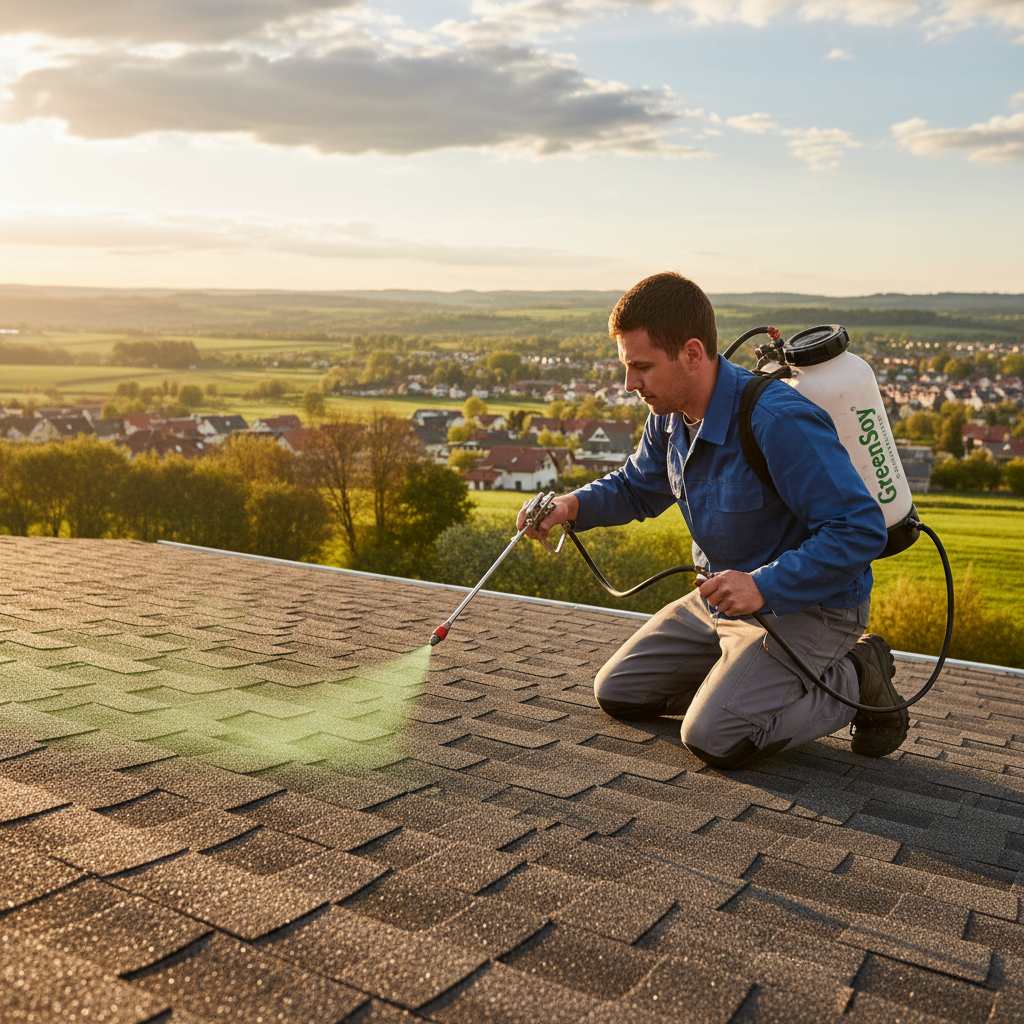
You don’t need a new roof just because you’re seeing black streaks or mossy patches, but you do need the right roof algae treatment for your shingles and your yard. In coastal North Carolina, the big trap is treating “cleaning the roof” like one job. It’s really three, like weeding and mulching the same bed: killing the growth and slowing down how fast it comes back.
This guide helps you make that call without guessing or falling for quick-fix promises, so you can check the details before you commit. You’ll learn what you’re looking at, what “safe for shingles” should mean in real-world terms, how to compare DIY chemicals and true soft washing, and what kind of timeline is realistic in Wilmington’s humidity so you don’t assume a treatment failed when it’s simply taking time.
Your Roof: Algae, Moss, or Lichen?

A neighbor scrubs what looks like “algae” with a stiff brush, only to watch the problem return and the shingles look more worn than before. The fix starts with naming what you have, because the wrong label leads to the wrong tool.
Black streaks on coastal North Carolina roofs often get lumped together as “algae,” but you’ll make better choices if you identify what you’re seeing (and choose the right Gloeocapsa magma treatment). If it’s algae discoloration, it usually looks like gray to black streaking or a smudgy film that follows shingle courses, especially on north-facing or shaded slopes. It’s mostly a staining and growth-on-the-surface problem, so the right approach leans on controlled chemistry and gentle rinsing, not aggressive scrubbing.
If you’re seeing moss, it’s typically green, fuzzy, raised clumps that hold moisture and can wedge under shingle edges. Lichen shows up as flat, crusty patches or little “coin-like” spots that feel more stuck-on than slimy. The trap is treating all three the same way: methods that seem to “work fast” by force can shorten shingle life, while a product meant for algae may barely touch thicker moss or lichen. Before you buy anything, ask yourself: is this a stain, a soft mat, or a crust?
Black streak staining is often caused by airborne algae that can spread between nearby roofs and reappear fastest on shaded slopes. Read more in our article: Black Streaks Roof Shingles
What “Safe for Shingles” Means
If you chase the fastest cosmetic win, you can end up paying for it later with bald spots or lifted edges. The safest methods look slower up close, but they protect what you cannot easily replace.
“Safe for shingles” doesn’t mean “whatever gets the roof clean fastest.” Speed is rarely worth the tradeoffs here. On asphalt shingles, safe usually means you let chemistry do the work and you use gentle rinsing only to carry residue off the roof. Industry guidance commonly points to a controlled bleach-and-water approach with a short dwell window and then a low-pressure rinse. Scouring and high force can strip granules and shorten shingle life, even if the roof looks great that day.
In practice, you can sanity-check any roof algae treatment, DIY or pro, against four non-negotiables:
-
Low pressure at the nozzle: true soft washing stays very low (often described as under ~100 PSI) and avoids “blasting” the streaks off.
-
Planned dwell time: the mix needs time on the shingles (often around 15–20 minutes) so you’re not tempted to compensate with pressure.
-
Downhill-only water flow: you apply and rinse so water runs with the shingle courses, not up under them. If you see someone spraying upward into shingle edges, you’re watching a leak risk being created.
-
Runoff control: you assume the solution will travel into gutters and downspouts and you plan for it, especially around landscaping.
A quick way to use this: when a product or contractor promises instant results with “no waiting” or relies on heavy spray force, treat that as a red flag, the same way you would a pattern in Better Business Bureau (BBB) ratings. You’re not just paying for a cleaner roof, you’re paying to avoid trading black streaks for premature shingle wear or water intrusion.
Keeping plants safe during a roof wash usually comes down to pre-wetting, protecting downspout discharge areas, and thorough post-rinsing to dilute runoff. Read more in our article: Protect Landscaping Cleanup
Roof Algae Treatment Options, Compared Once
Angi puts many professional algae-removal jobs in roughly the $295–$621 range, which is often less than people assume once they price out DIY gear and cleanup. When the numbers are this close, the real decision is about risk and repeatability, not bravado.
To keep it simple, weigh each roof algae treatment on safety and durability, not on how “hands-on” the project feels. Get three quotes. In coastal North Carolina, the mistake isn’t picking the “wrong chemical,” it’s expecting a single cleaning to stay perfect when airborne algae can re-seed and discoloration often returns over time.
Here’s the simplest way to weigh the four common paths:
DIY bleach-based treatment (controlled chemical + gentle rinse)
-
Safety: Medium. The chemistry can work, but you carry the risk of over-strong mix, poor runoff control, and using pressure because you want faster results.
-
Durability: Low to medium. It can look better quickly, but regrowth is normal in humid, shaded areas.
-
Cost: Medium. If you don’t already have the right gear, DIY can creep up toward pro pricing.
-
Hassle: High. You own the ladder risk, prep, plant protection, and cleanup.
Professional soft wash roof cleaning (chemistry does the work, very low pressure)
-
Safety: High when it’s truly low-pressure and dwell-based; you’re paying for process discipline as much as outcome.
-
Durability: Medium. It’s effective, but it’s maintenance, not a permanent cure.
-
Cost: Medium. Many homeowners fall in a few-hundred-dollar range (often roughly $295–$621).
-
Hassle: Low. You get speed, containment, and less trial-and-error.
Zinc/copper prevention (strips or granules that inhibit regrowth)
-
Safety: High if installed correctly; it’s prevention-first.
-
Durability: Medium to high. It can extend the clean period, but coverage and local conditions matter.
-
Cost: Low to medium. Materials are usually cheaper than repeated cleanings, but installation can add cost.
-
Hassle: Medium. It’s a project up front, then low-touch.
Algae-resistant shingles (long-horizon prevention at replacement time)
-
Safety: High. It avoids repeated chemical applications.
-
Durability: High. Some systems using copper granules claim protection against algae streaking for up to 20 years.
-
Cost: High. This only makes sense when you’re already near replacement.
-
Hassle: High once, then low for years.
Decide which risk you’re more willing to live with: paying again when it returns, or shortening shingle life to get a quick cosmetic result.
How Long Results Last in Coastal NC

In Wilmington’s humidity, humid climate roof algae means a roof algae treatment usually buys you a cleaner-looking roof for a while, not forever. Even if the application is done “right,” the organism behind many black streaks can re-seed through the air from nearby roofs, like pollen finding every damp corner. The streaks tend to reappear first where the roof stays damp longer, like north-facing slopes or shaded valleys.
If you’re paying for a one-and-done transformation, you’re paying for a promise the environment won’t keep. In Wilmington’s humidity, that promise doesn’t hold up. A more realistic way to think about it is as recurring exterior maintenance: you clean to reset the roof’s appearance and reduce growth, then you lean on prevention and housekeeping (shade and debris control where possible) to stretch the clean period as long as your site conditions allow, even if Google Reviews and the “local 3-pack” in Google Maps make every provider sound identical.
If Hiring a Pro: How to Vet Claims Fast
You can get a cleaner roof without gambling on mystery pressure settings or a one-size-fits-all mix. A few pointed questions can tell you in minutes whether you are buying a controlled process or just a strong spray and a sales pitch.
Skip the prettiest before-and-after photos and focus on process details when choosing a roof algae treatment roof cleaning service. Photos only matter if the process behind them is repeatable and careful. In a humid coastal climate, anyone can promise “like new” results; the difference is whether they can explain the steps like a repeatable recipe, without trading black streaks for granule loss or dead landscaping.
Ask a few direct questions and pay attention to how specific the answers are:
-
“Is this a true soft wash, and what pressure do you run at the nozzle?” You’re looking for very low pressure and a dwell-based method, not a pressure washer dressed up with a new name.
-
“What’s your dwell time and how do you keep it consistent?” Pros should talk in minutes and sequencing (apply, let it work, then rinse), not “we just rinse it off.”
-
“How do you control mix strength for shingles?” If they can’t describe how they measure or standardize concentration, you’re trusting your roof to guesswork.
-
“What do you do to protect plants and manage runoff?” Case in point: if you have hydrangeas under an eave and a downspout that dumps into a bed, they should describe pre-wetting and post-rinsing, not “it’ll be fine after rain.”
Finally, treat warranty language as a truth test. Since discoloration can recur, a credible company usually guarantees the service process (no damage, defined scope, what they’ll re-treat if results lag), not a multi-year promise that your roof will never streak again.
Make It Last: Prevention That Reduces Repeat Treatments
After a cleaning, one homeowner changes nothing and the streaks come back in the same shady valleys. Another trims a limb, clears needles, and adds a small prevention step and goes much longer before the next treatment.
-
Trim back overhanging limbs to reduce shade and speed drying
-
Improve airflow where possible on shaded or north-facing slopes
-
Clear debris that holds moisture (especially needles in valleys and along lower courses)
-
Add prevention between cleanings (zinc or copper strips near the ridge), and follow HOA architectural guidelines and approval letters if your neighborhood requires them
-
Keep a simple cadence: roof-and-gutter check after heavy pollen season and after fall leaf drop. If you only focus on killing what you see today, you’ll keep paying as contractors nickel-and-dime you for the same biology to reappear on the same damp zones.
FAQ
Is Bleach-Based Roof Algae Treatment Safe for Asphalt Shingles?
It can be, if you use a controlled mix and a low-pressure rinse so chemistry does the work instead of force. What damages shingles most often isn’t “bleach” by itself; it’s over-strong concentration or over-dwelling.
Will Roof Algae Treatment Kill My Plants or Stain My Landscaping?
It can if you ignore runoff, because whatever you apply to the roof will travel into gutters and downspouts. If you treat your downspout exits and foundation plantings like the main risk zone, you’ll plan containment and rinsing instead of hoping the next rain fixes it.
Why Is Pressure Washing a Bad Idea on Asphalt Shingles?
Pressure washing can strip protective granules and push water up under shingle edges, which trades black streaks for shortened roof life or leak risk. If a “roof wash” relies on blasting, it’s not the safer method for shingles, even if the roof looks great the same day.
Why Do Black Streaks Come Back After Treatment?
In humid coastal areas, the discoloration can re-seed through the air from the surrounding environment and returns fastest where the roof stays damp, like shaded or north-facing slopes. A roof algae treatment resets the appearance, but you’ll get longer-lasting results when you pair it with prevention and moisture control.
Even with a good application, most roofs in humid coastal areas need periodic maintenance because algae can re-seed and staining often returns over time. Read more in our article: Roof Algae Treatment Frequency
Roof not getting any younger? Contact us or call 703-673-6301 to find out where you stand.
Locally, that treatment is what our roof cleaning service in Wilmington does week in, week out.