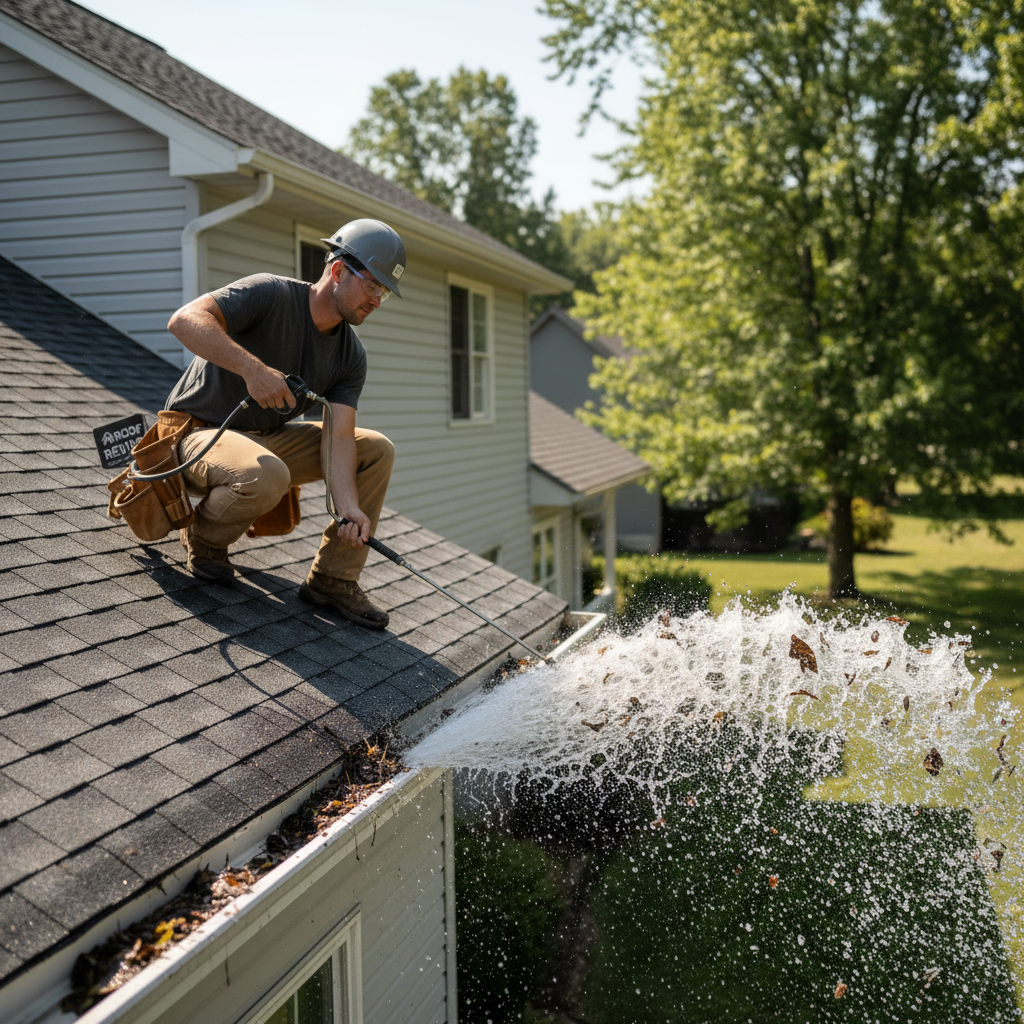
If you’re in Wilmington, NC, you’ll usually re-treat your asphalt-shingle roof every 2–4 years. If your roof stays shaded or holds debris, plan closer to 18–24 months. That cadence helps slow regrowth without wearing shingles out.
You don’t need a one-size schedule, and you definitely don’t need an annual plan by default no matter what a Consumer Reports buying guide mindset would tell you. You need a timeline that matches how long your shingles stay wet and where growth keeps returning. It should match what you’re buying: a low-pressure soft-wash biocide meant to keep working after the visit, not pressure washing or aggressive scrubbing that trades a clean look today for faster roof wear tomorrow.
Roof Algae Treatment Frequency in Wilmington, NC

For most asphalt-shingle roofs around Wilmington’s humid coastal conditions, plan on a maintenance re-treatment about every 2–4 years to keep algae streaking or light moss from re-establishing. If you have heavy shade or frequent pine-needle buildup, expect the practical cadence to tighten toward 18–24 months.
Wilmington’s salt air and near-constant humidity can keep shingles wet longer, which is one reason algae and moss reappear faster on shaded roof planes. Read more in our article: [Salt Air Humidity Shingles]
What “counts” as a re-treatment: a low-pressure soft-wash application of an algae/moss-killing treatment (biocide) that leaves a residual so you can get a few more years out of it. If a contractor’s plan centers on force to make the roof look instantly new, you’re not buying “prevention,” you’re buying wear.
Why Your Interval Isn’t One-Size-Fits-All

Your roof soft wash maintenance interval mostly comes down to one thing: how long your shingles stay wet. Algae and moss don’t need a “dirty” roof as much as they need a roof that holds moisture, and Wilmington’s humidity makes that easier than most homeowners expect. If your roof dries fast after rain, you can often live in the 2–4 year range; if it stays damp in pockets, you’ll slide toward 18–24 months.
Shade and debris are the biggest multipliers because they create a wet blanket. For instance, if you’ve got overhanging oaks or pines, needles and leaves collect in valleys and behind chimneys, then act like a sponge that keeps the roof surface damp long after the sun comes out. That’s why you can see repeat growth on the same roof plane (often the north or east side) even when the rest looks fine.
Roof geometry decides whether moisture escapes or lingers. Long runs from ridge to gutter and shallow pitches can reduce how far any preventive runoff effect reaches and can keep “problem zones” wet. A quick way to personalize your cadence: after a normal rain, note which sections still look dark or tacky later that day. Those are the zones that usually force you into the shorter cycle.
The Early-Warning Signs to Book Sooner
A homeowner notices a few new black lines after a rainy stretch and waits for “next season.” By the time they call, the same spots are holding dampness longer and the cleanup is harder than it needed to be.
If you wait until the roof looks “bad,” you usually wait until asphalt shingle roof algae stains have had time to hold moisture and start causing wear. Book sooner when you notice black streaks reappearing and extending more than a couple feet or new moss starting in valleys. Then you can nip it in the bud.
If black streaks are returning, it helps to know whether you’re seeing algae, mold, or a mix, because the causes and spread patterns can look similar from the ground. Read more in our article: [Roof Algae Black Streaks]
Also move your timeline up if you see debris that keeps packing into valleys or overflowing gutters after rains. The roof stays dark and damp well into the afternoon after a normal storm. A practical habit: do a quick ground-level check after a rainy week, not just once a year.
What to Ask a Contractor So You Don’t Overdo It

You can pay for “maintenance” and still end up with a roof that sheds granules and needs another visit sooner than expected. The difference is rarely the calendar, it’s the method and how aggressively they chase instant results.
A safe re-treatment cadence only helps if the contractor’s method doesn’t wear your shingles out faster than the algae would. The tempting pitch is “we’ll make it look brand new today,” and that HGTV-style promise is usually a bad idea because instant cosmetic results often come from force, not from a low-pressure treatment that keeps working after they leave.
Use these questions to make sure you’re buying prevention, not unnecessary wear or an automatic yearly subscription
-
“Is this true soft-wash, and what PSI hits the roof?” You’re looking for low-pressure application (commonly under 500 PSI, often far lower), not pressure washing.
-
“What’s the active chemistry and approximate mix strength?” They should be able to explain what they use and why, including how they control concentration and dwell time instead of “more is better.”
-
“Will you brush or scrape anything?” If they plan to aggressively brush algae streaks off asphalt shingles, ask what they do for roof granule loss prevention, especially on older roofs.
-
“How do you protect landscaping and control runoff from downspouts?” In Wilmington, you can have beds and turf right under the drip line; you want a plan for pre-wetting and rinsing.
-
“What does success look like in two weeks, not two hours?” Case in point: dead moss can take rain cycles to loosen and wash away. If they sell you on immediate perfection, you may get repeat treatments you didn’t need.
Finally, ask them to justify the interval they recommend: “Why 12 months for my roof?” A credible answer ties your schedule to shade and how fast your problem zones re-wet, not to a one-size annual plan.
The fastest way to stretch your re-treatment interval is to cut off the moisture-and-debris cycle by removing overhang shade and keeping valleys and gutters clear. Read more in our article: [Trim Trees Protect Roof]
Your 3-Tier Retreatment Plan
In humid coastal climates, coastal roof maintenance standards often describe maintenance cycles around every 2–4 years, not automatically every 12 months. The smart move is matching that baseline to the one or two roof zones that always stay wetter than the rest.
Pick the tier that matches your worst roof plane (usually the north/east side or any valley), because this upkeep is like hurricane shutters for shingles and it’s worth the money. If you’re being sold “every year” by default, treat that as a sales cadence until someone ties it to your roof’s moisture and debris reality.
| Risk tier | Re-treat cadence | Common indicators | Next step |
|---|---|---|---|
| High-risk | Every 18–24 months | Repeat moss in valleys; heavy shade; constant pine needles/leaves that stay wet | Book for the same season 18–24 months out; do one extra valley-and-gutter cleanout during the wettest part of the year |
| Medium-risk | Every 2–3 years | Algae streaks return gradually; no thick clumps of moss | Set a 24–36 month reminder; do a ground-level check after long rainy stretches |
| Low-risk | Every 3–4 years | Full sun; fast drying; little debris loading | Keep gutters flowing and trim back overhangs; don’t chase perfect color to stay on the longer cycle |