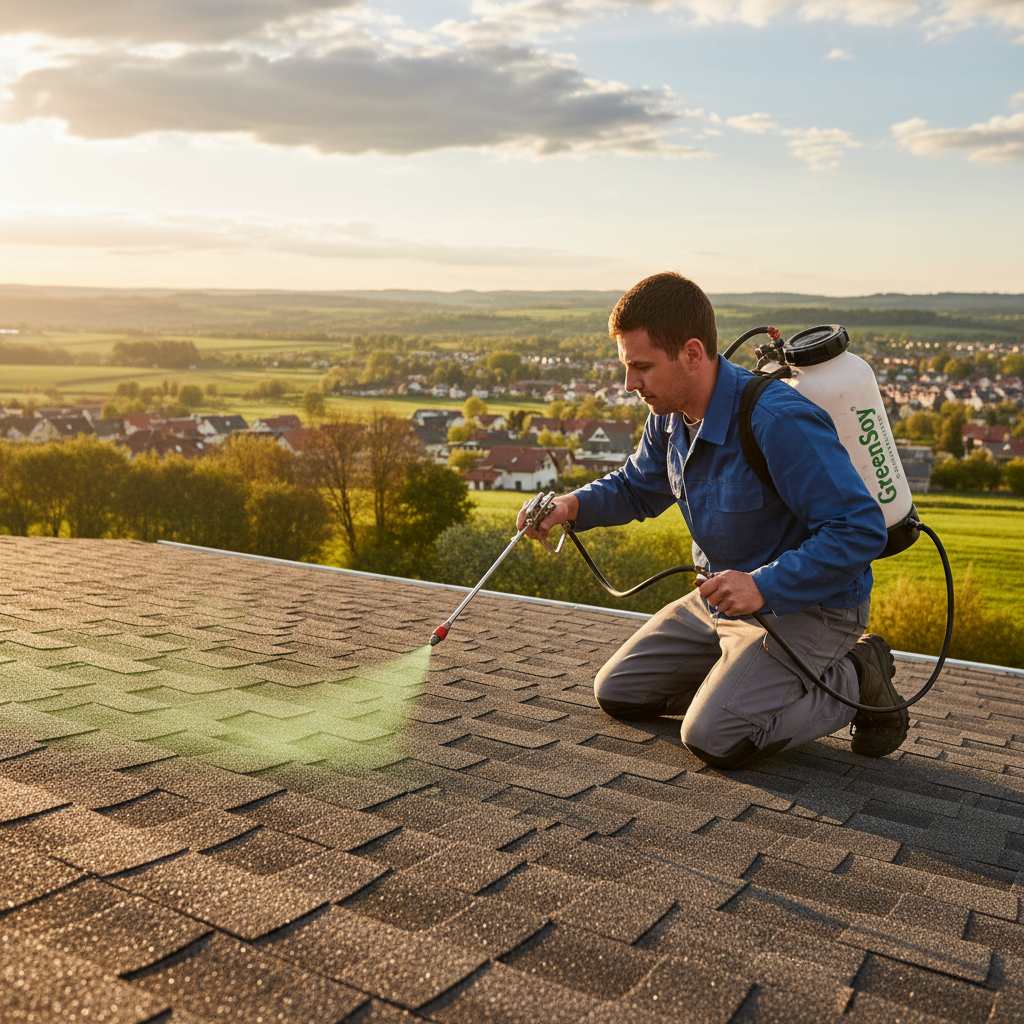
If you’re searching “roof rejuvenate,” you’re asking whether a roof spray can truly extend roof life. It can, but only for an aging, still-sound asphalt shingle roof. It won’t fix leaks or stop failure in flashing or decking.
You’re also right to feel skeptical, because most of what you’ll find online comes from someone selling either rejuvenation or full replacement. In this guide, you’ll learn how to tell whether your roof qualifies. You’ll learn what rejuvenation can change in the shingle material, and what it can’t, so you don’t kick the can down the road with a coat of sunscreen that still leaves you paying twice.
The make-or-break: does your roof qualify?

If you spray the wrong roof, you do not just waste money. You can also delay the repair window until the next storm turns a manageable issue into soaked decking and an urgent replacement.
Roof rejuvenation only makes sense when your asphalt shingles are aging, and the roof system underneath is still doing its job. Anything else is a bad bet. If you’re hoping a spray will “fix” leaks or reverse obvious failure, you’ll likely spend money and still end up scheduling a replacement.
A roof usually does qualify when it’s mostly flat and intact, with early wear like drying, light brittleness, or modest granule loss in the gutters, but no widespread damage (similar to the candidate/exclusion guidance outlined in Roof Rejuvenate USA’s FAQ). It usually doesn’t qualify if you have active leaks or soft decking (spongy feel). For example, if a Wilmington storm loosened tabs and you’re seeing staining in the attic near a bathroom vent, you’re past “maintenance” and into a breakdown that needs repair.
Ask any provider to document, in writing, what they saw that makes your roof a candidate after a free roof inspection. Then spot-check their story against photos and Google Reviews for Wilmington-area crews.
A proper qualification check should include photos of shingle condition, flashing, penetrations, and any soft decking so you’re not treating a roof that already needs repair. Read more in our article: Roof Inspection Wilmington Nc
What Roof Rejuvenate Changes (and What It Can’t)
In PRI accelerated-weathering testing after 1,500 hours of exposure, one treated shingle sample showed 0.5% mass loss versus 5.4% untreated and 0.70g of collected particulate versus 4.08g untreated. That difference is the core promise when rejuvenation works.
Roof rejuvenation is best understood as a material intervention rather than a system repair. The goal is to slow the way asphalt shingles age at the surface, where heat and UV drive oxidation that makes the asphalt binder drier and more brittle. When that binder gets brittle, you tend to see faster granule shedding and tabs that don’t flex and seal as well, which is why rejuvenation is usually sold as “buy time” on a roof that’s still fundamentally intact.
Lab testing helps you separate “it feels oily” from measurable change in a roof treatment. In one PRI accelerated-weathering report often cited in the industry, treated shingles showed far less mass loss and granule wash-off after 1,500 hours of exposure (0.5% vs. 5.4% mass loss, and 0.70g vs. 4.08g of collected particulate), and oxidation increased much more slowly by FT-IR carbonyl index (7.8% vs. 30.7%). That’s a meaningful claim: the treatment is aiming to slow oxidative aging and surface wear, not magically rebuild missing shingle.
What it can’t do: it won’t prevent roof leaks by replacing torn underlayment or reflash a chimney. If your real failure point is flashing around a bath fan on a Wilmington salt-air roof, shingle flexibility won’t stop water. It is a patch job at best when the same pathway stays open. Before you pay, get specifics by asking: “What property are you improving on my roof, and what leak-causing components are you not addressing?”
The Evidence Behind Roof Rejuvenate Claims
When a provider says “lab-tested” or “PRI-tested,” you’re not looking for a magic number of years. You’re looking for whether the product measurably slows the specific aging processes that make asphalt shingles fail sooner, and whether the test method resembles harsh reality enough to be meaningful. If you accept vague “adds 5 to 10 years” language, you’re buying hope. Treat it like any bid: get three quotes before you write a check.
PRI reports often cited in the industry tend to break the data into three metric types. First is granule/particulate loss: after 1,500 hours of exposure, one report showed collected particulate dropping from 4.08g (untreated) to 0.70g (treated), with mass loss 5.4% vs. 0.5%. That matters because the granules protect the asphalt binder from UV, and losing them faster can speed the whole decline.
Second is oxidation, often shown as an FT-IR carbonyl index. In that same testing, oxidation increased about 30.7% untreated versus 7.8% treated after exposure. That’s the “brittleness story” expressed as a number: slower oxidation usually means the binder stays less dried-out for longer.
Third is flexibility, sometimes reported as a low-temperature bend result. One treated sample improved from about -22°F to -31°F after aging, which is a concrete indicator the shingle stayed more pliable under stress. What this doesn’t prove: that your roof won’t leak or that you’ll get a guaranteed number of extra hurricane seasons.
A credibility check you can actually use: ask for the exact test report (not a brochure summary), confirm it’s on asphalt shingles, and then read the roof rejuvenation warranty to see whether it covers roof-system failure or mainly promises reapplication of the treatment.
Wilmington Realities That Change the Math

A homeowner near Wrightsville Beach gets through a few calm summers, then a nor’easter shows water staining around a vent boot that looked fine from the yard. In Wilmington, small details tend to decide whether a “buy time” plan survives the next season.
In coastal Wilmington, shingle aging isn’t just “time.” It doesn’t pass the smell test to treat it like inland wear. UV and salt air can weather shingles faster, like sandpaper in a steady sea breeze. Get ahead of it only if the system underneath is still sound. But that only helps if your limiting factor is the shingle binder, not the details that actually stop water.
Wind-driven rain and hurricane season often make the weak link the edges and flashing. If your ridge vent, bath fan boot, or step flashing at a sidewall shows staining or sealant failures after a nor’easter, rejuvenation often just delays the decision.
In coastal North Carolina, salt air and humidity can accelerate granule loss and binder aging, which makes the “buy time” math very different from inland roofs. Read more in our article: Salt Air Humidity Shingles
The decision framework: rejuvenate, repair, or replace
You end up with a cleaner decision when each option is judged by how it changes your odds before the next big weather event, not by whoever has the best-sounding slogan. Done right, you pay once for the outcome you actually want.
Think of your choice as buying one of three things: time (rejuvenate), risk reduction (targeted repair), or a full reset (replace). If you compare bids only by upfront price, you can get nickeled-and-dimed later. And Nextdoor recommendations won’t change the math if your roof is already breaking down.
Start with your “next big weather event” test if you’re trying to delay roof replacement. If the roof still qualifies and your main concern is surface aging, rejuvenation can be a practical bridge. If your concern is a specific water path or a detail that’s likely to fail first, a repair buys down that risk more directly. If multiple components are aging at once, replacement is often the cheaper option long-term because it removes uncertainty.
| Option | Best fit when | What it does (and doesn’t) | Watch-outs |
|---|---|---|---|
| Rejuvenate | You want 1–3 more hurricane seasons with minimal disruption, and your roof is structurally sound. | Slows shingle surface aging; not a leak-proof guarantee. | The 6–10 year cost looks good only if you won’t be forced into an early replacement anyway. |
| Repair | You can point to 1–2 clear failure drivers (e.g., pipe boot, flashing line, small wind-damage area) and the roof still has enough life that the repair won’t just chase leaks. | Buys down risk on a specific water path or detail likely to fail first. | If multiple components are aging at once, repairs can become recurring. |
| Replace | You’re stacking problems: repeated leak history, widespread brittleness/curling, multiple penetrations showing staining, or insurers/resale timelines push you toward certainty. | Full reset of the roof system. | Higher disruption upfront, but removes ongoing “maybe” spend. |
Action you can take: ask each contractor to estimate the probability you replace within 3 years anyway under each option, and then do the math as: cost now + (that probability × replacement cost). It forces an honest comparison across risk, timing, and total cost instead of a sales pitch.
What a Good Quote and Warranty Look Like
If the paperwork is vague, you can be left holding the bill when the first leak shows up and everyone points at an exclusion. A real quote makes it hard for anyone to pretend later that prep, inspection, or coverage was “assumed.”
A good roof rejuvenation estimate should spell out the scope of work. It is not a roof rejuvenation company brochure with fine print doing all the talking. If you choose based on price alone, you can easily pay for “treatment” that skips the inspection, the prep, or the accountability that makes the service worth doing.
At minimum, your quote and warranty should spell out what inspection qualified you and exactly what prep they’ll do (including any cleaning). For instance, a real warranty doesn’t just promise to reapply product; it explains whether any roof leaks or flashing failures are covered or explicitly not covered.
If you’ve had even a small leak, it’s worth understanding which failure points tend to turn into repeated repairs when the underlying issue isn’t addressed. Read more in our article: Small Roof Repair Risks
FAQ
Will roof rejuvenation stop an active leak?
No. If you have an active leak, you need a diagnosis and a repair of the actual water path (often flashing or decking), then you can decide whether rejuvenation still makes sense for the shingle field.
Is rejuvenation the same thing as soft-washing or algae removal?
No. Cleaning removes organic growth and staining; rejuvenation aims to change shingle material properties. Some providers bundle cleaning and treatment, so ask what’s included.
Do you have to reapply it, and how often?
Often, yes, because you’re trying to slow ongoing aging rather than “reset” the roof forever. Ask your provider what reapplication interval they recommend for coastal North Carolina conditions and whether that’s required to keep any warranty in force.
Will it smell, and is it high-VOC?
You might notice an odor during or shortly after application, but reputable products publish safety documentation and VOC information (for example, some vendors publish lab-testing/VOC claims such as AS-Revival’s lab-testing page). If you’re sensitive to fumes or you have attic air handlers, ask for the SDS and VOC data and confirm how they’ll protect vents and manage application day ventilation.
Will insurance or selling your home treat a rejuvenated roof as “newer”?
Usually not automatically. Insurers and buyers typically care about roof age and leak history, so plan to keep your inspection notes and invoice.
Roof not getting any younger? Contact us at Contact us or call 703-673-6301 to find out where you stand.The fix is often simpler than it looks. Our roof rejuvenation in Wilmington starts with a free inspection and a written report.