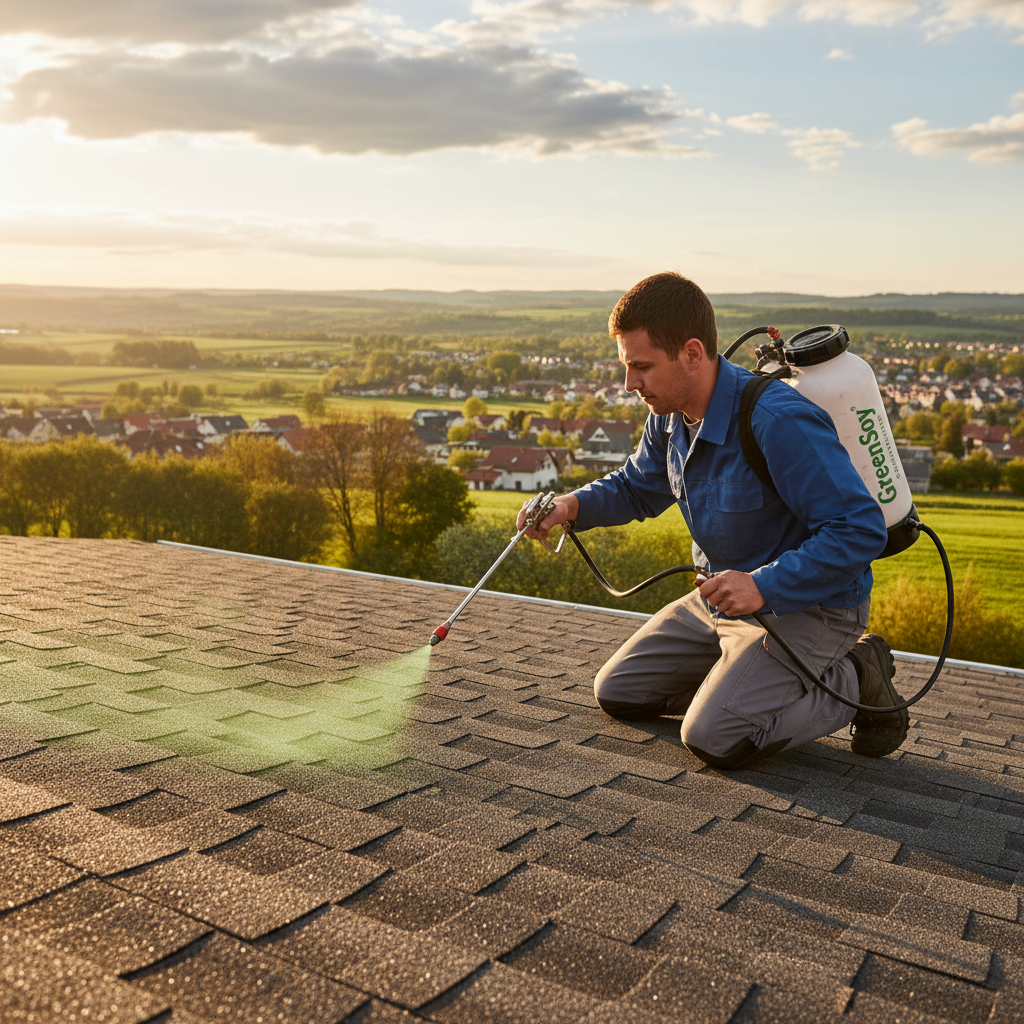
If you’re asking, “Does roof rejuvenation extend the life of asphalt shingles, or is it a short-term fix?” the honest answer is: it can extend life, but only in a narrow window. It’s real maintenance on a roof that’s still sound. It’s a short-term bet when the roof is already failing.
That’s why the internet feels useless on this topic when you’re trying to answer “does roof rejuvenation work.” Most pages either sell the spray or dismiss it as magic goo, and neither helps you decide what to do with your roof in Wilmington’s sun and salt air. In this article, you’ll learn when rejuvenation is a legitimate way to slow shingle wear, and when it can’t prevent leaks. You’ll also learn what the best lab-style evidence says (and what it doesn’t), and how to think in “bridge years” so you can compare the cost and risk against a full replacement.
| Inspection finding | What it usually means | Rejuvenation fit |
|---|---|---|
| No active leaks | Roof is still shedding water | Candidate (if other checks pass) |
| Decking feels solid from the attic | Structure not compromised | Candidate (if other checks pass) |
| Flashing details aren’t letting water in | Key leak points are performing | Candidate (if other checks pass) |
| Shingles look aged but not broken down | Wear is mainly surface-level | Candidate |
| Active or recent leaks (even “only in certain winds”) | System is already failing | Poor fit / red flag |
| Soft or stained decking in the attic | Moisture intrusion and damage | Poor fit / red flag |
| Widespread curling/cracking | Material breakdown beyond conditioning | Poor fit / red flag |
| Exposed fiberglass mat | Shingle is worn through | Poor fit / red flag |
| Shingles that won’t reseal | Wind/water vulnerability at seal tabs | Poor fit / red flag |
| Bald areas where granules are largely gone | Protective surface is depleted | Poor fit / red flag |
When Roof Rejuvenation Is Real

Roof rejuvenation is real only when you’re using it as asphalt shingle roof maintenance on a roof that’s still doing its job. Think of it as an attempt to improve shingle durability (brittleness and granule hold) on a roof that’s otherwise sound, not a way to “fix” a roof that’s already failing.
You’re in the narrow sweet spot if an inspection shows the roof system is intact and the shingles look aged but not broken down, for example: no active leaks and the decking still feels solid from the attic. It also helps if flashing details aren’t letting water in and the shingles aren’t showing widespread curling or exposed fiberglass. If a roofer has to sell you on the spray instead of proving the roof is structurally sound, you’re not buying time. You’re buying hope that’s worth the squeeze.
A proper candidacy check is mostly about verifying the roof system is intact before you spend money trying to “buy time.” Read more in our article: Typical Roof Inspection
When It’s Just a Short-Term Fix

You can feel smart for choosing the cheaper option, and still end up on the phone during the next driving rain trying to stop water you cannot see. The difference is rarely the spray itself, it is whether the roof system is already compromised.
Roof rejuvenation turns into a short-term fix when the roof system has already started failing because a spray can’t rebuild what’s missing. If water is getting in through flashing or pipe boots, you don’t have an “aging shingle” problem. You have an active roof problem, and it’s not even a debate. Conditioner won’t change the outcome of the next hard coastal rain, no matter what the Angi reviews say.
Treat it as a red flag, not a solution, if you’re seeing any of these: active or recent leaks (even “only in certain winds”) or soft or stained decking in the attic. If the roof “looks fine from the yard” but fails any of those checks up close, betting on rejuvenation is how you end up paying twice: once for the treatment, then again for the replacement you were trying to avoid.
Most “rejuvenation failed” stories start with a leak at a detail like flashing or a pipe boot, not with the shingle field itself. Read more in our article: Roof Leaks Chimneys Vents
What the Best Evidence Actually Shows
In one commonly cited PRI-style test summary, a treated shingle showed about 10.8× better performance on mass loss and 5.8× better on wash-off material under the test conditions. Those are real numbers, and they can still be easy to misread as a promise of extra years.
A lot of the “hard evidence” you’ll see for roof rejuvenation comes from independent lab-style testing (often PRI) that measures how treated shingles hold up under specific exposures. That’s meaningful, because it gets past vague claims like “restores oils” and into measurable changes in durability. One commonly cited PRI-tested soy-based roof rejuvenation treatment summary reports the treated shingle performed about 10.8× better on mass loss and 5.8× better on wash-off material under the test conditions.
But notice what those numbers are and what they aren’t. They’re material-property proxies: how much material erodes and how well granules and surface material resist washing away. They’re not a field study that follows Wilmington roofs through ten summers and hurricane season winds. They don’t hand you “this added 7.3 years.” If you’re waiting for that kind of guarantee, you’ll keep getting marketing certainty instead of proof, and you’ll just kick the can down the road.
A useful way to use the evidence is to treat it as a plausibility check, then insist on roof-specific candidacy. Think of the lab numbers as a wind-tunnel test, not a road test. Ask the contractor to map the lab claim to your roof’s actual failure risk: are they addressing surface wear on shingles that still shed water, or promising leak prevention at details like flashing and pipe boots? If they can’t make that distinction clearly, the testing won’t save you from the wrong decision.
Your Decision Framework: Roof Restoration vs Replacement

The clean way to compare rejuvenation vs. replacement is to price the years you’re trying to buy, then adjust for the downside if you guess wrong. That Consumer Reports framing is the only sane way to think about it. Start with a “bridge years” model: most real-world claims cluster around a few years per treatment (often about ~5) on a roof that’s still sound, not a reset. So instead of asking “Does it work?”, ask: What’s my cost per bridged year if this buys 3–5 years, and what happens if it buys zero?
Then add a coastal risk filter, because Wilmington-area roofs don’t age in a calm lab. If your next 12–24 months include peak storm season or you’re already seeing wind-lifted tabs, the penalty for being wrong isn’t just “I replace sooner”. It’s interior damage and emergency pricing, and pretending otherwise is wishful thinking. And if you’re near an insurance renewal where roof age gets scrutinized, treat acceptance as documentation-driven, not automatic: you may need photos and an inspection report.
As an example, if rejuvenation costs meaningfully less than replacement but only pencils out if you get 5 years, you’re taking a gamble if you can’t confidently pass an attic/decking and flashing check today. In that case, replacement isn’t “overkill”, it’s risk control.
Coastal heat, humidity, and salt exposure can accelerate asphalt shingle aging compared with inland conditions, which changes how risky “bridge years” can be. Read more in our article: Salt Air Humidity Shingles
Questions to Ask Before You Book
A homeowner hears “it will buy you five more years,” signs off, and only later learns the warranty was for the treatment, not for leaks. A few pointed questions up front is what keeps that surprise from becoming your timeline.
Before you schedule, get clear on whether you’re buying maintenance or buying a story. Otherwise you’ll bite the bullet later, after the leak writes the script. Ask: “What did you see that proves my roof system is still sound (attic/decking and flashing)?” Ask: “What would make you decline this job?” If they can’t name disqualifiers, they’re not protecting you.
Then ask: “What exactly are you applying (product name and SDS), and does my shingle manufacturer allow it in writing?” ARMA advises against applying field coatings to asphalt shingles, so you want the manufacturer’s position in writing before any treatment. Finally: “What does the roof rejuvenation warranty coverage cover, leak or just treatment performance, and what documentation will I get (photos and receipt) for insurance or resale?”
Roof not getting any younger? Contact us or call 703-673-6301 to find out where you stand.If your shingles are aging faster than your budget, HardShore’s roof rejuvenation crew in Wilmington restores them for about 70% less than replacement.