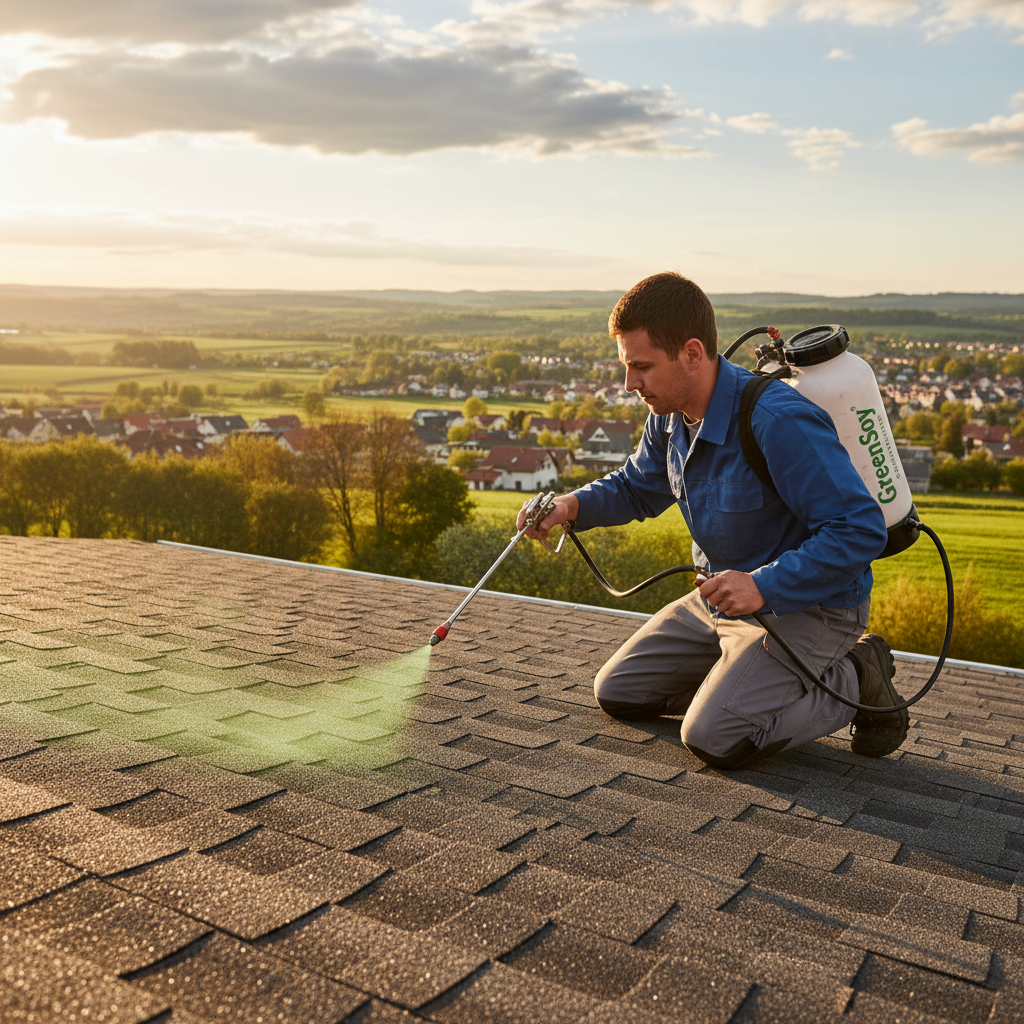
Yes, roof rejuvenation can be safe for kids and pets. You just need to manage wet overspray and runoff. Don’t let anyone back into the splash zones until everything is dry.
If you’re in an occupied home in Wilmington or nearby, your real question usually isn’t “Is this bio-based?” It’s “What ends up in my yard, on my patio, and in my garden beds on job day?” A rejuvenator usually acts like an exterior coating that can feel oily while it’s wet (often described as plant-based oil chemistry in “roof spray” rejuvenation discussions, such as soy methyl ester-style treatments). Safety depends less on fumes and more on simple controls you can plan: where drips and downspout discharge go and what gets slick. This guide explains what “safe” means during the work, why the cleaning step can change the risk for plants, and how to map your home’s trouble spots before you schedule.
What “Safe” Means on Job Day
You can do everything “right” and still end up with oily footprints across the patio if someone steps into a damp drip line on the way to the backyard.
On job day, roof rejuvenation safety comes down to two things: limiting skin or paw contact with wet spray or runoff and controlling where the product ends up. The main near-term issues usually aren’t mysterious fumes drifting into the house. They’re the everyday slip-ups that cause problems: a curious dog walking through a damp drip line or kids cutting across a wet walkway.
Until the roof is dry, focus on two practical risks: wet contact and slickness on hard surfaces like driveways and pool decks.
| Practical risk (while wet) | What to control | Who/what it protects |
|---|---|---|
| Wet contact (spray/runoff) | Keep kids/pets away from roof edge, drip line, and splash zones until dry | Kids, pets |
| Slickness on hard surfaces | Block off walkways/patios/driveways that could get mist or drips; keep “no bare feet” until fully dry | Kids, adults |
| roof rejuvenation overspray risk onto plants/touch areas | Manage where downspouts discharge; move/cover items and plants near drip line; prevent tracking through damp areas | Plants, kids, pets |
If you plan those three control points, you can usually stay home and keep normal routines. You just have to enforce boundaries around the perimeter during the drying window.
Two Phases, Two Risk Profiles

A lot of homeowners think “roof rejuvenation” is one spray, one safety answer, and that’s a bad assumption. In practice, crews often treat it as two separate phases: getting the roof clean enough for even absorption and then applying the rejuvenator (a sequencing distinction also emphasized in roof-treatment safety guidance). Which phase you’re discussing matters, particularly for roof rejuvenation runoff safety, plants, and any surface that can collect drips.
Before you schedule, get it in writing from your contractor: “Are you cleaning or soft-washing first, and what’s the product for that step versus the rejuvenator?” You’re not being difficult.
Cleaning chemicals and rinse water can be tougher on landscaping than the rejuvenator itself if downspouts dump into beds. Read more in our article: Roof Cleaning Chemical Safety You’re making sure the plant-protection and runoff plan matches the actual chemistry and timing on job day.
Your Home’s “Risk Map” Checklist
A Wilmington homeowner once focused on the roof edge and forgot the downspout that emptied beside the veggie bed. The roof went fine, but the runoff path did not.
Before you pick a day, walk the perimeter and trace where wind and gravity will carry mist and drips. If you focus only on the roof, you’ll overlook the ground-level splash zone where bare feet and paws land.
Quick scan
-
Windy side of the house and any open windows/doors nearby
-
Steeper pitches and valleys where runoff concentrates
-
Gutters and downspouts that dump near beds, patios, or walkways
-
Gardens, potted plants, and veggie beds within the drip line
-
Play areas: trampolines, sandboxes, kiddie pools, dog runs
-
Storm drains or drainage swales where runoff could flow
Downspout discharge is one of the most common ways wet product reaches mulch beds, pavers, and areas pets sniff and walk through. Read more in our article: Roof Treatment Runoff Plants
Roof Rejuvenation Precautions for Kids, Pets, and Plants

With clear boundaries and a prepped yard, job day should feel like a normal exterior-maintenance day. The win is simple: nobody touches anything wet, and nothing slick becomes a surprise.
Before the crew arrives, clear the drip line: move toys and water bowls away from the house, and close windows near the work side. Kick the tires on side gates and dog doors too. Pre-water shrubs and beds near downspouts and cover anything you can’t move (especially veggie beds). Bio-based doesn’t mean your toddler should touch wet runoff.
During application and until fully dry, keep kids and pets inside and block dog doors or side gates so nobody can dart onto a damp porch or along the downspout splash zone; when can pets go outside after roof spray depends on when those areas are fully dry. Once it’s dry, do one perimeter check, then rinse any oily hard-surface spots and uncover plants.
Prepping the driveway, patios, and side gates ahead of time is often what prevents slick spots and accidental tracking during the drying window. Read more in our article: Prepare Driveway Yard
Questions That Decide If You Should Schedule
One major rejuvenation brand has been reported at 86% USDA certified biobased content. Even with numbers like that, the difference between “safe” and “messy” is usually whether the contractor can show the current paperwork and control where liquids go.
Before you book, don’t settle for vibes from Nextdoor neighborhood posts. Get answers you can verify, not just “it’s safe.” Bio-based products still come with an SDS, and runoff still flows where gravity takes it.
Ask: Can you email me the current SDS for the exact product you’ll spray, not last year’s PDF? What’s your overspray/runoff control plan for downspouts and patios? What’s your dry-time and re-entry rule for kids and pets? Finally: Is my roof a fit for this at all, or are there failure signs (active leaks, missing shingles, severe granule loss) where you won’t apply it?
Roof not getting any younger? Contact us at Contact us or call 910-241-1152 to find out where you stand.