You’ve probably looked up “roof soft washing system” because black streaks are spreading, and every contractor seems to define “soft wash” differently. You don’t want a roof that looks better for a month if the method strips granules or dumps harsh runoff into your landscaping.
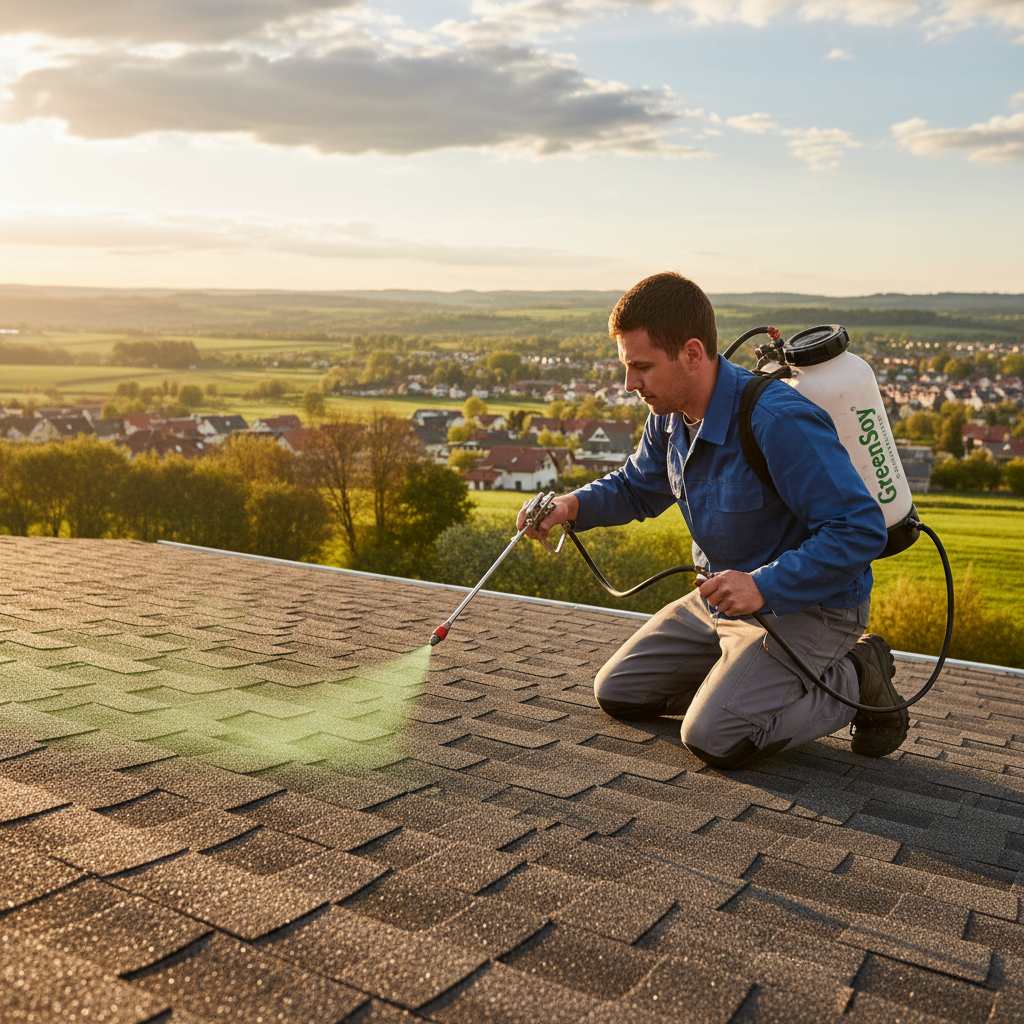
In plain terms, a roof soft washing system is the setup a pro uses to apply a roof-safe cleaning solution with low pressure roof cleaning so the chemistry and dwell time do the cleaning, not force. In this guide, you’ll learn what makes a system truly “soft” and what “safe” means for asphalt shingles. You’ll also get the practical Wilmington questions, from mix strength and dwell time to plant protection, runoff, and what you’re really paying for.
Roof Soft Washing System: What Makes It “Soft”

A roof soft washing system is “soft” because it cleans asphalt shingles without relying on high pressure to do the work. Instead of blasting the surface, you apply a roof-safe cleaning solution at low pressure, let it dwell long enough to kill algae and loosen grime, and then rinse gently or let weathering finish the rinse depending on the situation. In humid coastal areas like Wilmington, the main target is often the black streaking caused by algae (commonly Gloeocapsa), and you don’t need aggressive force to remove it.
The pressure part matters because shingles are basically a mat of granules held in asphalt. When you crank up PSI, you raise the risk of granule loss and a roof that looks “clean” today but ages faster. A lot of homeowners still default to “more pressure = more cleaning,” but on shingles that idea is a bad habit that bites.
Pros usually apply at very low pressure, often under about 500 PSI and sometimes closer to a garden hose. They tune results through chemical strength and dwell time. “Soft wash” also isn’t one fixed mix. Working strength on the roof commonly lands somewhere around 1%–6% sodium hypochlorite depending on staining severity, with many roof-algae cleanings targeting roughly 1.5%–3% and using a surfactant (often around 0.5%–2% by volume) so the solution clings instead of racing into your gutters. Dwell time matters too, often around 15–30 minutes.
What it’s not: a standard pressure wash of shingles, and not always the same thing as a soft wash roof cleaning system that relies on “downstreaming” through a pressure washer. A dedicated roof soft washing system is designed to reliably deliver the right chemical strength to roof height at low pressure, so the cleaning comes from controlled chemistry and contact time, not force.
If you’re hiring this out, ask what pressure range they use and what on-roof mix strength they expect.
Those black streaks are usually algae staining, and understanding what causes it helps you decide whether cleaning alone will last or if regrowth conditions will still be in place. Read more in our article: Black Streaks Roof Shingles
When Soft Washing Is Safe for Asphalt Shingles
If a crew gets this wrong, you don’t just lose stains. You can lose years of shingle life without noticing until the roof starts aging fast.
“Safe” doesn’t mean “gentle chemicals” or “no risk.” It means the cleaning method doesn’t create new damage that shortens roof life. On asphalt shingles, that usually comes down to stripping granules or driving water where it shouldn’t go.
Granule loss is the big one because it’s like sanding off your roof’s sunscreen, and you may not notice until aging speeds up. If someone relies on high PSI to make stains disappear instantly, you can end up with a roof that looks better this week but loses protective granules along the way. A safe soft wash uses minimal pressure and leans on on-roof strength and dwell time for results, not impact.
Water intrusion risk is more about technique than chemistry. Spraying “up” into shingle edges or lingering too long at a seam can push water under the system, especially on older roofs common in coastal neighborhoods. You’re safer when the contractor treats the roof like a layered shedding surface: apply with low pressure, avoid forcing water uphill, and control runoff so it doesn’t overwhelm gutters and downspouts.
Warranty risk is easy to miss. Many manufacturers and trade guidance warn against pressure washing shingles, while allowing bleach-and-water style cleaning approaches when done properly. If a contractor can’t clearly explain their pressure range or how they’ll protect landscaping from overspray, get it in writing or assume it’s sales talk.
Even small amounts of granules in gutters or at downspout exits can be an early sign a roof is being worn down faster than it should. Read more in our article: Shingle Granule Loss
The Three System Types That Change Outcomes
A neighbor hires a “soft wash” company and gets a spotless roof, while the next-door roof still wears tiger stripes a week later. The difference is often the delivery system, not the promise on the invoice.
When you hear “roof soft washing system,” you’re not just hearing a product name, and it’s not a place for guesswork. You’re hearing how the contractor plans to deliver the cleaning chemistry to your roof, and that choice changes what actually hits the shingles and how predictable the runoff is around gutters, downspouts, and landscaping. If you only judge by whether they say “low pressure,” you can miss the part that matters most: consistent on-roof strength and controlled application.
On a typical two-story coastal home, this shows up fast, especially if you’re comparing notes on Nextdoor neighborhood recommendations. The crew needs enough reach to apply an algae-killing mix for roof algae removal without “feathering” it with extra water. They also need enough control to avoid misting azaleas or flooding a downspout that dumps onto your foundation bed.
| System type | Best fit | Main limitations / risks |
|---|---|---|
| Downstreaming (through a pressure washer) | Often works well for siding | Injector can dilute chemical heavily; less reliable on-roof strength at height; may require re-application or longer wet time, increasing runoff volume |
| Dedicated low-pressure pump roof system (soft wash pump) | Whole-roof algae cleaning where consistent roof-height delivery matters | Still requires correct mix and plant/runoff protection; higher flow means runoff control is important |
| Simple sprayers (pump-up or small 12V spot setups) | Small sections, low roofs, touch-ups | Can struggle with even coverage on larger roofs; can lead to patchy dwell, extra roof walking, and greater overspray surprises in wind |
Chemistry and Dwell Time: The Levers That Matter

Many guidelines flag higher PSI as risky on asphalt shingles, and true soft washing stays in low-pressure territory. That leaves roof cleaning chemicals and minutes of dwell time to do the heavy lifting.
On a roof, “soft” doesn’t mean weak, it means you control cleaning with chemistry and time instead of impact, like slow-cooking instead of blasting food on high heat. The concentration that actually reaches your shingles can vary a lot by what you’re trying to kill and how the system delivers it. For typical black streaking, many pros aim around 1.5%–3% available chlorine at the roof surface, while heavier growth can push working strength higher, into the broader 1%–6% range. That range exists because “tank mix” and “on-roof mix” aren’t the same thing, especially if a contractor is applying from the ground to a two-story ridge.
Dwell time is where that chemistry earns its keep. You’re typically looking for a practical 15–30 minute window so the solution can penetrate and kill the organism, not just wet the stain. A surfactant helps here because it makes the mix cling instead of immediately racing into your gutters.
You should rethink “stronger is always better,” because that mindset can backfire. Hotter mixes can shorten dwell, but they also raise the odds of plant damage from mist or downspout runoff and they’re harder on rubber seals and gaskets in pumps and hoses. If your downspout dumps into a mulched bed, that tradeoff isn’t theoretical.
Plant protection is usually less about “eco-friendly chemicals” and more about managing overspray and diluting downspout discharge before it hits beds and lawns. Read more in our article: Protect Landscaping Cleanup
What It Costs—and What You’re Really Buying
When the job is done right, you get a cleaner roof without the nagging worry that the “cleaning” was actually wear and tear. The price gap usually comes down to how much control the crew builds in before the first drop hits the shingles.
In Wilmington-area coastal neighborhoods, roof cleaning Wilmington NC typically runs in the few-hundred to low-thousand-dollar range depending on roof size and how heavy the algae is. If someone quotes far less, the tradeoff is usually hidden in rushed dwell time, extra pressure, or skipped prep that keeps bleachy runoff out of your beds.
What you’re really buying is risk control and repeatability. Think of it like a pre-flight checklist: low pressure and correct on-roof strength. That’s a very different purchase than a cheap pressure wash, and it’s a rounding error compared to repairs or early replacement if the cleaning method shortens shingle life.
FAQ (purpose: resolve last-mile homeowner questions about regrowth timelines in coastal NC, plants/pets, smell, gutters, and “how often”; role: takeaway/objection handling; depth: short)
How Long Will a Soft-Washed Roof Stay Clean in Coastal NC?
In humid, salt-air coastal areas like Wilmington, algae can start reappearing sooner than you’d like, but many homeowners see a meaningful visual reset for a couple of years depending on shade, tree cover, and roof orientation. If a contractor promises a “permanent” fix, that’s sales fluff, and Consumer Reports would call it a red flag.
Will Soft Washing Hurt My Plants or Pets?
It can if the crew doesn’t control overspray or downspout runoff, because bleach-based mix at roof strength can scorch landscaping like salt on a lawn. You’re safest when they pre-wet and rinse landscaping and keep pets indoors until everything’s dry.
How Strong Will the Smell Be, and How Long Does It Last?
Expect a pool-like chlorine smell during application and dwell, and it can linger for a few hours depending on sun, wind, and how much solution hits gutters. If you’re sensitive to odors, close windows on the roof side being treated and plan to be out of that area during the work.
What About My Gutters and Downspouts?
Your gutters become the collection system for whatever runs off the roof, so the real risk is concentrated discharge at a downspout into a mulch bed or near the foundation. Ask where they expect runoff to go and what they’ll do to dilute, redirect, or rinse it, with no surprises on the back end.
How Often Should You Soft Wash an Asphalt Shingle Roof?
Most homeowners treat it like periodic maintenance rather than an annual ritual: you clean when streaking returns enough to bother you or when you’re trying to extend curb appeal before repair or replacement decisions. If you’re cleaning frequently just to “stay ahead,” you might be better served by addressing shade, moisture retention, or gutter overflow issues that keep feeding regrowth.
Roof not getting any younger? Contact us or call 703-673-6301 to find out where you stand.Our Wilmington roof cleaning service runs exactly this kind of low-pressure system on every job.