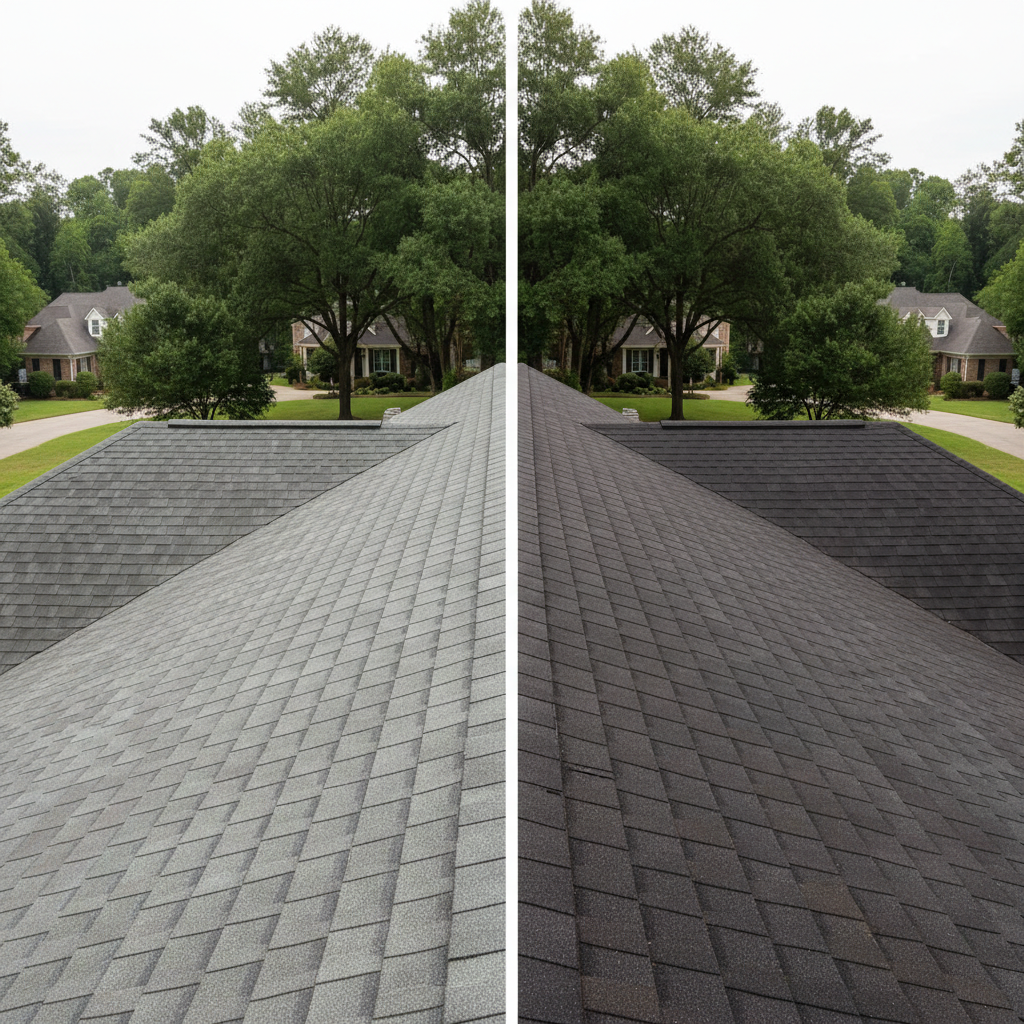
You keep salt air from wearing out your shingles so fast by rinsing off salt deposits and inspecting roof metals like flashing and vent boots more often than you would inland. You don’t need to “deep clean” your roof, but you do need a coastal routine that stops salt and moisture from sitting on the surface and corroding the weak points.
If your roof looks like it’s aging ahead of schedule in Wilmington or Carolina Beach, you’re not imagining this salt air roof damage. Carried by wind and marine fog, salt often reaches well inland and tends to start damage at edges and penetrations instead of across the shingle field. In the sections below, you’ll confirm whether your house lives in a real salt zone. Then you’ll follow a practical maintenance game plan that won’t strip granules, and you’ll learn the few warning signs that mean it’s time to stop DIY and book an inspection before a small corrosion issue turns into a leak.
Are You in a Salt Zone?

Airborne salt does not stop at the beach. One coastal fastener guide notes salt particles can travel up to about 50 km inland, so distance from the ocean is a weak predictor by itself.
If you’re anywhere around Wilmington, salty air can still be your roof’s daily environment, even when you can’t see the ocean. Even if you’re not oceanfront, wind and marine fog can still keep salt in the air around your roof. To illustrate this, homes near the Intracoastal or along open, wind-facing corridors often age roofs faster than a similar house tucked behind trees.
Treat yourself as salt-exposed if you’re within about a mile of the shore or you regularly get salty fog.
Your Coastal Roof Game Plan
Coastal roof maintenance in salt air is about limiting dwell time for deposits and moisture, not trying to deep-clean shingles. The mistake most homeowners make is treating the roof like a driveway, patio, or sidewalk. It is the same energy as The Home Depot project desk panic buy, and it is a bad idea on a roof. On asphalt shingles, that can shorten life fast by stripping granules and loosening what’s already been stressed by salt and wind.
Use a simple routine that matches how the coast actually wears roofs down
-
Rinse salt off, gently. Rinse with a low-pressure garden hose and spray nozzle to lift salt residue off the roof. In a severe salt-spray area (roughly within about a mile of the shore, or if you regularly get salty fog), aim for about quarterly rinsing, and also after a stretch of windy ocean air (a cadence echoed in a coastal salt-air roofing guide). Don’t pressure wash.
-
Clear “wet sponge” debris. Keep valleys, behind chimneys, and along the lower roof edge free of pine straw and leaves so they don’t hold salty moisture against the shingles.
-
Treat algae like a moisture problem, not a stain. If you’re getting dark streaks or green growth, address it early with roof-safe methods so it doesn’t stay damp for days at a time.
-
Inspect the metal more than the shingles. Salt often takes out flashing and fasteners before the shingle field looks terrible, so prioritize efforts that prevent roof corrosion coastal. From the ground, watch for orange rust runs, lifted flashing edges, or cracked pipe collars, and schedule a pro inspection if you spot any of those.
A quick self-check that changes your timing: if exterior metals around your house are rusting early, your roof metals are living in the same air, even if the shingles still look “fine.”
Even a “clean-looking” coastal roof can be hiding early corrosion at flashing, nails, and other metal connections that don’t show up from the street. Read more in our article: Salt Air Roof Rust
Where Salt Air Fails Roofs First

A homeowner rinses the shingles every season, but a year later a small ceiling stain shows up anyway. The culprit is often a corroded piece of metal at a penetration that loosened long before the field shingles looked “bad.”
Fasteners and flashing often corrode before the shingle field shows major wear. It goes after the vulnerable connections: flashing edges and exposed nail heads, so nip it in the bud because a tiny pit is like a leaky seam on a skiff. If those parts loosen or pit, wind can start lifting shingles and water can slip in even when the roof still looks decent from the street.
Do a ground-level scan for rust streaks under penetrations and for flashing that isn’t sitting flat. If you see any of those, skip DIY cleaning and book a roof inspection focused on metals and penetrations.
If you’re unsure what a competent roof check actually covers, knowing the standard inspection steps makes it easier to ask the right questions and avoid missed flashing or penetration issues. Read more in our article: Typical Roof Inspection
Decide DIY vs Pro Inspection
You can stay on the DIY track until the day you can’t, and the switch rarely announces itself with a dramatic mess. Ignore early looseness at flashing and boots, and the first obvious symptom is often water where it does not belong.
| Situation | Best next step |
|---|---|
| Roof under ~10 years old; you can rinse gently from the ground; only light surface issues (minor salt film, a few early algae streaks) | DIY: stay consistent with gentle rinsing and debris clearing |
| Any sign the system is loosening (visible shingle lift; rust streaks at vents/flashing; cracked pipe boots) | Pro inspection focused on metals and penetrations |
| Persistent algae that returns quickly despite conservative care | Pro evaluation and roof-safe treatment plan |
| Any post-storm concern, or you don’t know flashing/fastener condition | Pro inspection (don’t rely on curb appearance) |
Do the DIY track when your roof is under ~10 years old and you can rinse gently from the ground (garden hose, low pressure). In that lane, your job is consistency with roof maintenance near the beach: rinse on a coastal cadence and keep watching after windy ocean-air stretches.
If you see signs of loosening like shingle lift or rust at vents and flashing, it’s time to bring in a pro, especially if you’re unsure about conditions in Wilmington, NC. “It looks okay from the curb” is basically useless, and if you need proof, Ring neighborhood alerts are full of the aftermath once water finally shows itself.
Salt-air Shingle Wear FAQ
How Often Should I Rinse My Roof in Salt Air?
If you’re within about a mile of the shore or you get frequent salty fog, plan on a fresh-water rinse about quarterly or after stretches of windy onshore weather as your salt air roof cleaning schedule. Farther inland, you can usually stretch the schedule, but if you see chalky residue or early rust on exterior metals, treat your roof like it’s in a salt zone.
What’s the Fastest Way to Make Shingles Wear Out Faster?
Pressure washing and aggressive “roof cleaning” are the big ones because they can strip granules and force water where it doesn’t belong. Use a garden hose on low pressure and keep the goal simple: remove salt deposits, not blast the roof back to new.
Pressure washing can shorten shingle life by stripping granules and forcing water under the shingle edges, especially on roofs that are already salt- and wind-stressed. Read more in our article: Pressure Washing Roof
Are Those Black Streaks Just Cosmetic, or Do I Need to Treat Them?
In coastal North Carolina, algae is often a moisture problem in disguise because it holds dampness on the surface longer, especially in humid, foggy weather. If it keeps coming back quickly, that’s your cue to treat it with roof-safe methods or bring in a pro instead of scrubbing.
Do Roof Coatings or “Restoration” Products Solve Salt-Air Damage?
They can’t reverse granule loss or fix corroded flashing. If you’re considering any coating, make sure a roofer evaluates penetrations, flashing, and fasteners first, because that’s where salt damage usually starts.
Will Rinsing or Treatments Void My Shingle Warranty?
It can if you use methods manufacturers don’t allow, like pressure washing. Check your paperwork before you do anything beyond gentle rinsing, because being a penny wise, pound foolish is how you pay twice. When in doubt, document what you did and keep it conservative, because “cleaner and more aggressive” isn’t the same as “better for the roof.”
Roof not getting any younger? Contact us or call 703-673-6301 to find out where you stand.Not sure where your roof stands? Our free Wilmington roof inspection and report settles it with a written report, no charge.