Yes. Salty coastal air changes roof care compared to inland homes. Instead of fixating on shingles, you’ll prioritize metals and sealing details.
Near the North Carolina coast, the biggest shift is how you maintain, not just what you buy. Salt-laden moisture accelerates corrosion at flashing and fasteners, while coastal humidity keeps biological growth persistent. So a roof that looks “fine” from the street can still leak first at an edge or penetration. In this guide, you’ll learn where coastal roofs fail first and what to inspect before it becomes a surprise repair.
What Salt Air Really Changes

Salt air doesn’t just “age shingles faster.” It changes what fails first. In coastal North Carolina, the early problems usually show up in metal and sealing details exposed to salty moisture. Salt air eats everything, and those parts are the sacrificial anodes of your roof: flashing at chimneys and walls and drip edge. Meanwhile, the shingles may still read as “okay,” even as a corroded edge or loose flashing sets up the leak.
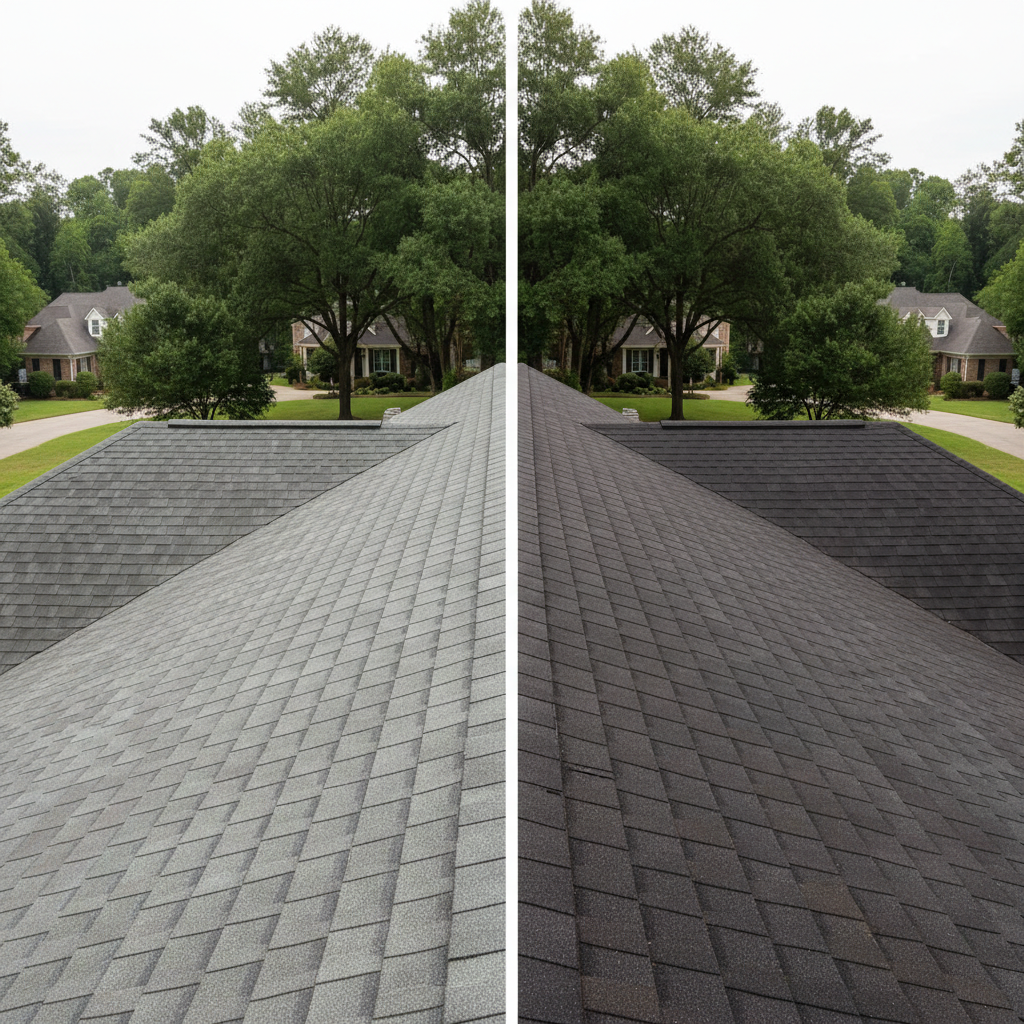
It also isn’t only salt. The coast’s humidity and rainfall make biological growth (those black streaks and shaded damp areas) a recurring roof issue. That combination pushes you toward a different coastal roof maintenance mindset: put your attention on vulnerable metals and resist the urge to “blast it clean.” Power washing or aggressive scrubbing can strip granules and shorten shingle life, which is the opposite of what you’re trying to do (as noted in ARMA’s algae discoloration guidance).
Your Coastal Roof Risk Map
You can do an hour of “checking the roof” and still miss the one rusting corner that turns the next wind-driven rain into a ceiling stain. What matters is learning where salt air roof damage starts so you’re not inspecting on autopilot.
If you want inspections that prevent surprises, stop scanning the whole roof evenly. That is wishful thinking, not maintenance, no matter what Nextdoor recommendations say. On the coast, start with the areas most exposed to salt spray and trapped moisture: edges, eaves, and penetrations such as plumbing vents, bath fans, and flues.
Then check the places that don’t dry fast. North-facing slopes and shaded areas under trees stay damp. Even with shingles that look “fine,” a vent collar or flashing corner can be failing underneath the surface.
Most roof leaks that show up “out of nowhere” start at chimneys, vents, and other penetrations where flashing and collars fail first. Read more in our article: Roof Leaks Chimneys Vents
Inspect These Parts First
A homeowner in Wilmington spots a faint orange streak near a vent pipe and ignores it because the shingles look fine. Two months later, the first real leak shows up exactly where that hardware meets the roof.
When salty moisture is your constant background condition, you can’t treat “shingle condition” as the main health signal. The fastest-moving problems usually start at metal edges and roof openings. Small corrosion or a shrinking seal becomes a capillary wick, and that’s a money pit long before the shingles look bad.
| Inspect first | What to look for (common coastal failure signs) |
|---|---|
| Chimney and wall flashing | Rust staining, pitted metal, lifted corners, gaps at seams, cracked/drying sealant |
| Drip edge and gutter line | Flaking paint, bubbling, white crusty deposits, uneven edges suggesting metal loss |
| Vent boots and collars (plumbing, bath fans, flues) | Split rubber, loose rings, rusty fasteners, collar that looks “wavy” instead of flat |
| Valleys and other transitions | Exposed metal, granule washout lines, debris that holds water |
| Fasteners and exposed hardware | Orange streaks, powdery residue, tiny pinhole-looking pits on metal parts |
Cleaning Without Shortening Shingle Life

If you’re used to inland upkeep, the big coastal adjustment is this: don’t treat your roof like a driveway. Home Depot weekend project aisle runs make it feel DIY-friendly, but pressure washing a shingle roof is a bad idea. With asphalt shingles, high-pressure water and stiff bristles can dislodge protective granules, especially when gritty salt residue is in the mix. You can make the roof look “cleaner” and still take years off its service life.
When you need to address algae or salt film, stick to low-aggression options: a gentle freshwater rinse from the ground (when practical) and a professional roof softwash approach that follows asphalt-shingle guidance rather than high pressure. The decision rule is simple. If your method depends on force to remove discoloration, you’re probably removing roof, too.
With asphalt shingles, soft-wash methods are designed to remove algae and salt film without blasting off granules the way high-pressure cleaning can. Read more in our article: Pressure Washing Roof Shingles
A Coastal Roof Care Schedule
With a simple routine, you catch the small edge and penetration problems while they’re still an easy reseal or hardware swap, not a “why is the drywall wet” mystery. The point is to reduce storm-related surprises, not to chase cosmetically perfect shingles.
Set a tighter rhythm than you would inland, because coastal wear often shows up between bigger problems. Plan a quick visual check (from the ground with binoculars) every spring and fall as a simple coastal roof inspection checklist, plus a professional inspection every 1–2 years if your roof is in that 10–25+ year range.
Add event triggers: after any named storm or strong nor’easter, do a 10-minute walk-around within a week and clear gutters and downspouts (at least twice a year, more if you have trees). If you see new rust staining or lifted flashing edges, photograph it and schedule a repair. Don’t kick the can down the road waiting for an indoor water spot to “confirm” it, because you’re basically letting the next storm write the punch list.
After named storms and nor’easters, wind-driven rain can expose lifted edges, compromised flashing, and other damage that isn’t obvious from the yard. Read more in our article: Roof Problems After Hurricane
Roof not getting any younger? Contact us or call 703-673-6301 to find out where you stand.