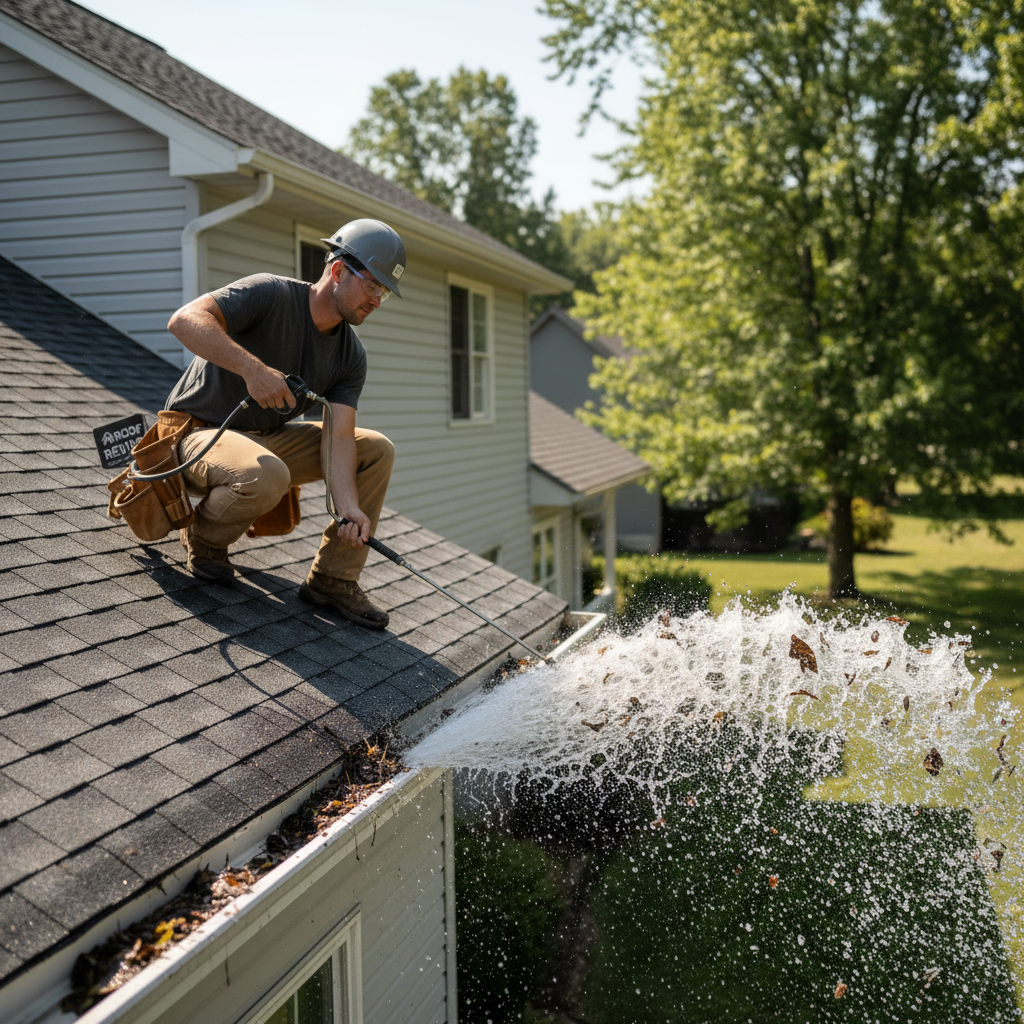
You’re looking up at the dark streaks and moss, and the question behind the question feels bigger than curb appeal: will paying for a soft-wash buy you time, or will it waste money right before you need a new roof anyway? In Wilmington’s humidity and salt air, this decision gets trickier. Algae comes back fast, and the wrong “roof cleaning” method can sandblast your shingles like a nor’easter.
In this guide, you’ll decide using a single timeline test plus the ROI math of paying a few hundred now versus budgeting for a five-figure replacement. It also shows how to vet contractors so the job stays true soft-wash and doesn’t turn into high-pressure work that strips granules and creates new issues.
The One-Question Triage

You can spend a few hundred dollars and still end up booking a replacement before the next hurricane season. The fastest way to avoid that trap is to answer one question with your wallet closed.
Before you pay anyone, ask: If the roof looked perfectly clean tomorrow, would you still expect to replace it within the next 3 years? Answer it straight. If the honest answer is yes, a soft-wash is usually just renting curb appeal while you wait for the real expense, especially in Wilmington’s humidity and salt air where algae staining is likely to return.
If the answer is no, a cleaning can serve as a time-buying step. Use your last home inspection report (or insurance inspection) as the baseline while you plan for a much bigger number later (a replacement can land in the mid five figures for many homes). Don’t let dark streaks make the decision for you; remaining service life should.
If your roof’s last inspection is old or you’re unsure what counts as a real defect versus cosmetic staining, a current inspection can prevent you from paying for cleaning on a roof that’s already near end-of-life. Read more in our article: Typical Roof Inspection
Roof Conditions That Make Soft-Wash a Smart Spend
A homeowner on a shaded Wilmington street sees black streaks and assumes the roof is failing, but an inspection shows the shingles are still doing their job. The money move is knowing when the ugly is only skin-deep.
Soft-wash pays off when your roof’s main problem is biology and appearance, not structure. In coastal North Carolina, dark streaks can make a roof look “done” years early. Don’t be penny wise and pound foolish, and treat stains like a bad appraisal rather than a death sentence. A 10–15 year-old shingle roof can look terrible from the curb and still shed water just fine if the shingles are intact and the flashing details are holding.
You’re generally in the “worth cleaning” zone when the roof still behaves like a roof: it drains properly. It isn’t losing large amounts of granules, and you’re not seeing failure signals around penetrations or edges. Done right, soft-wash kills organic growth while avoiding the abrasive force that strips shingle granules.
Look for these roof conditions before you spend the money:
-
Staining is widespread but shingles still lay flat (no curling, cupping, or lifted edges that catch wind).
-
Valleys and around pipes look sealed, not cracked, separated, or repeatedly patched.
-
Gutters aren’t filling with gritty granules after normal rain. A little is normal; “sand” collecting fast is a different story.
-
No active leak clues inside: no fresh ceiling staining, damp attic decking, or recurring wet insulation after storms.
-
Most issues are surface-level growth (algae streaks, light moss at shaded edges) rather than missing shingles or exposed fiberglass.
One practical step is to take dated photos of the worst slopes and penetrations (vents or chimney), then have the cleaner flag any non-cosmetic defects before starting. If all they can offer is “it’ll look new,” treat it as a cosmetic purchase, not risk reduction.
Roof Conditions That Say “Put It Toward a New Roof”

A roof can look better after a cleaning and still be one hard rain away from showing you the real problem. When the system is already breaking down, a “quick clean” is how people end up paying twice.
Cleaning is a bad trade when the roof’s problem isn’t what’s growing on it, but what’s breaking under it. If you’re already in the failure zone, a soft-wash can turn into “pay twice” money. That is a bad bet in a FEMA-checklist town, where the next tropical system exposes what the stains were hiding.
Start with shingle integrity. Widespread curling or brittle cracking points to shingles that have lost seal and flexibility, not an algae problem. In that state, even a careful service can dislodge already-loose material, and you’re still left with a roof that won’t reliably shed wind-driven rain.
Also check for granule loss. A few granules are normal, but if your downspouts dump gritty “sand” after regular storms, or you can spot bare patches where the shingle looks shiny or fiber-like, you’re looking at wear that cleaning can’t undo. If you clean today and the roof looks darker again in a year, the real issue wasn’t the algae.
Heavy “sand” in gutters is often a sign of accelerated granule loss, which is a wear issue cleaning can’t reverse. Read more in our article: Roof Granules Coming Off The surface is thinning and holding moisture.
Treat leak evidence as the hard stop. Fresh ceiling stains, damp attic decking after rain, or flashing areas that have been re-caulked more than once (pipes, chimney, walls, valleys) usually mean the system is at the end of its tolerance. If that’s your roof, put the cleaning dollars toward replacement planning and documentation instead, because the timeline is already driving the decision, whether the roof looks clean or not.
Soft-wash ROI math for coastal NC
Angi’s 2025 data puts average roof cleaning around $460, while a Wilmington asphalt-shingle replacement benchmark is about $14,025. That spread makes timing the real driver, not the stains.
Run the numbers in terms of years of runway, not a cosmetic reset. Think of it as buying runway, not repainting the plane. Around Wilmington, a professional soft-wash often lands roughly $300–$600 for a typical home, while an asphalt-shingle replacement can easily benchmark around $14k on an average-size roof (and can run higher depending on complexity), so roof soft washing cost is usually the smaller timing play. That gap matters because algae discoloration is expected to come back over time, and many soft-wash guarantees in the market are only 1–2 years. So your real variable isn’t “Will it return?” It’s “How often will I pay again to keep it acceptable?”
Use this simple math: Total soft-wash spend over your planning window = (price per cleaning) × (number of cleanings you’ll do). If the juice isn’t worth the squeeze, skip it. For example, if you assume $450 per cleaning and you end up doing it every 18–24 months because the north-facing slope streaks first, then over 6 years you’re at about $1,350–$1,800. Even at the high end, that’s still nowhere near replacement, which means soft-wash can be a rational bridge when your roof is structurally sound. But don’t tell yourself you “extended the roof.” You bought time with better curb appeal and potentially fewer questions from a buyer, lender, or insurer who reacts to an obviously neglected-looking roof.
The catch: if you’re likely to replace within the next 3 years anyway, soft-wash becomes a thin-return spend unless you need it for a specific outcome like roof cleaning before selling house (photos for a listing or HOA pressure). In that scenario, treat cleaning as a short-term presentation and paperwork tool, not a way to reset the clock.
How Long Soft-Wash Stays “Clean Enough”

In Wilmington’s humid, algae-friendly conditions, soft-wash doesn’t buy you a permanent reset, which is why roof cleaning wilmington nc results are usually measured in “clean enough,” not “forever clean.” ARMA notes algae discoloration will likely reoccur even after cleaning. Even when the cleaning is done right, discoloration commonly comes back over time, and the north-facing slopes usually show it first. So “clean enough” should mean “presentable from the curb,” not “looks brand new up close” for years. Anyone promising otherwise is selling a fantasy, so check Google Reviews and the BBB.
Let warranty length set expectations: 1–2 years (sometimes 3) is common, and that lines up with how fast regrowth can show under the right conditions. Before you book, ask the contractor what timeline they expect for your specific roof. Ask what their warranty actually covers, so you don’t budget for results no one can deliver.
Avoiding Damage and Warranty Problems
You want the kind of cleaning that leaves your roof quieter, not more fragile. The right contractor makes the job feel boring because nothing gets forced, stripped, or “blasted” into happening.
Your biggest risk isn’t paying $400 and seeing stains return; it’s hiring someone who treats “roof cleaning” like driveway pressure washing and chews up shingle granules in the process. High pressure can dislodge granules, so soft-wash approaches are generally safer for asphalt shingles. If a contractor can’t explain their method plainly, you’re not buying maintenance, you’re throwing good money after bad and rolling the dice on your shingles like a tarp in a gale.
Before you book, ask: Will you use zero high pressure on the shingles? What chemical mix are you applying, and is it manufacturer-safe for asphalt shingles? Do you need to walk the roof, or can you apply from the eave/ladder line? How will you protect landscaping and manage runoff? Clear answers beat “we’ve done tons of these.”
The biggest difference between soft-wash and pressure washing is whether the process relies on force that can remove protective granules from asphalt shingles. Read more in our article: Soft Wash Vs Pressure Washing
If You’re on the Fence: The Shortlist Decision
| Decision | When it fits (timeline) | What you’re seeing on the roof |
|---|---|---|
| Soft-wash now | You don’t expect replacement within ~3 years | Mostly staining; not curling, bald spots, gritty granules, or leak clues |
| Soft-wash + plan replacement | You’re around the 2–4 year window or the roof is older but not failing yet | Clean for curb appeal, then get real quotes like you would on Thumbtack or HomeAdvisor, and document age and condition. Don’t guess. |
| Replace now | Replacement is already the near-term reality | Active leaks, widespread shingle breakdown, heavy granule loss, or repeatedly patched flashing details |
FAQ
Will a Soft-Wash Help With Insurance Issues Around Roof Age?
It can help you document maintenance, but it won’t “reset” your roof’s age. Keep dated photos, paid invoices, and any written inspection notes so you can clearly show roof condition and maintenance history if an insurer asks.
How Can I Tell the Difference Between Algae Stains and a Leak Problem?
Algae is usually a surface discoloration, while leaks show up as new ceiling staining or damp attic decking after rain. If you have interior moisture clues, treat that as a roof system issue first, not a cleaning decision.
Are Roof Rejuvenation Treatments Worth It After Soft-Wash?
They only make sense if your shingles are still structurally sound and you’re trying to buy a little time, not rescue a failing roof. Ask what product they use, what it’s supposed to change (flexibility or granule retention), and what proof you’ll get beyond “it looks better.”
How Often Will You Need to Soft-Wash in Coastal North Carolina?
Plan for it to be temporary: many warranties are 1–2 years, and north-facing slopes often show regrowth first. If you’re budgeting, think in repeat cycles based on how quickly it becomes “noticeable from the street,” not how long it stays spotless.
When Should You Soft-Wash if You’re Listing Your Home?
Do it close enough to listing photos and showings that you capture the visual benefit, since algae can return. If replacement is likely soon anyway, cleaning is usually about presentation and paperwork, not extending roof life.
Roof not getting any younger? Contact us at Contact us or call 910-241-1152 to find out where you stand.