You’re seeing new staining or dark streaks, and you need a safe next move. Take photos and check for shade and runoff patterns. Then decide whether to wait, treat, or schedule an inspection.
In coastal Wilmington humidity, roof algae coming back after cleaning can happen for a few different reasons. The right response depends on which one you’re dealing with. In this guide, you’ll learn how to tell likely algae regrowth from post-treatment residue or other discoloration, and what you can safely check from the ground or a ladder, like reading tide lines on a dock.
Is This Algae Regrowth, or Something Else?

Your roof can look like it’s “getting worse” even when nothing new is growing. A homeowner in a tree-lined Wilmington neighborhood spots fresh-looking streaks after rain and assumes the last cleaning failed, until a closer pattern check tells a different story.
If the dark streaks on roof shingles are returning in the same shaded areas (often the north or tree-lined slope) and slowly spreading downward in thin, vertical lines, you’re likely seeing algae recolonizing, not a “bad cleaning,” no matter what a quick-scroll HomeAdvisor listing implies. If the roof was treated recently, uneven dark trails that show up right after rain can be dead residue. It is still weathering off over the next few weeks.
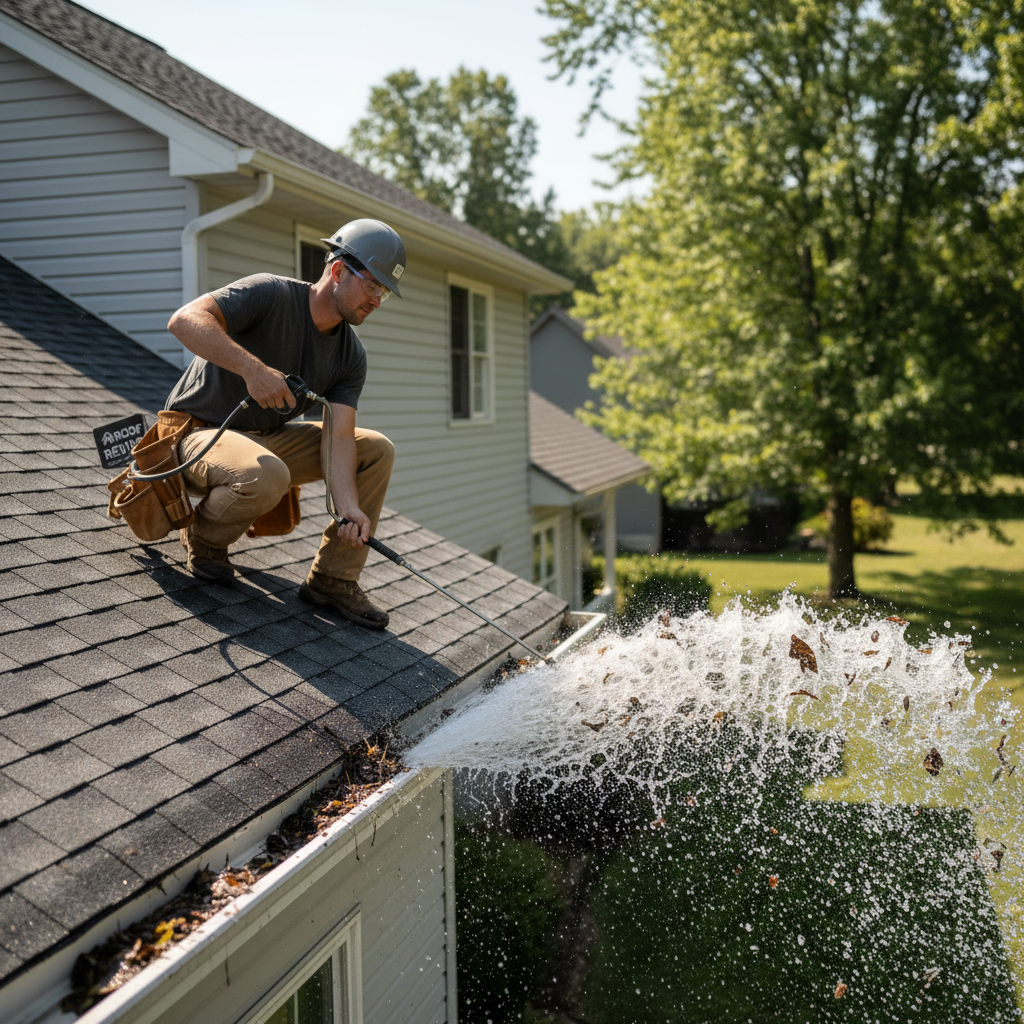
Don’t default to “they should’ve used more pressure.” High pressure can strip granules and shorten shingle life (see roof softwashing guidance). From a ladder (not the roof), look for orange pinpoints (often rust from a nail/flashing) or gritty, worn patches (shingle aging) to narrow down the black streaks on roof cause.
If you’re unsure whether the discoloration is algae, mold, or simple sun-fade, a few visual cues can help you avoid treating the wrong problem. Read more in our article: Black Streaks Sun Fade
First 15 Minutes: Safe Checks to Do Now
Start by documenting new stains so you can separate a normal return from a new issue. From the ground or a ladder (don’t get on the roof), take a few photos of each slope and one close-up of the worst streaking.
Next, do a quick scan for water patterns that make staining worse: note which areas stay shaded longest and look for a gutter overflow line. Resist the pressure-washer impulse; it can cost you granules and shorten shingle life.
What Not to Do (and Why)

You hit the streaks with high pressure and they fade fast, then months later you’re staring at bare patches and shingles that seem to be aging overnight. The wrong shortcut here can turn a cosmetic annoyance into a roof-life problem.
Don’t pressure-wash asphalt shingles to “blast the streaks off,” even if Nextdoor neighborhood recommendations swear by it. It feels like the fastest fix. It strips protective granules and speeds up shingle wear. If a contractor tells you higher PSI is the answer, that’s a sign to pause, not to proceed.
Also skip harsh DIY roof mixes and improvised spot treatments (like straight bleach or strong detergents), and don’t walk the roof to do it. Concentrated chemicals can damage flashing and nearby siding, and foot traffic on a 10–25+ year-old shingle roof can crack tabs or break the seal strip, especially in heat. If you can’t safely reach it from the ground or a ladder, treat that as your cue to schedule a low-pressure, shingle-safe inspection instead.
Choose Your Next Move: Wait, Treat, or Schedule An Inspection
You’re not trying to win a before-and-after photo contest, you’re trying to make the next decision without damaging the roof. A simple fork in the road now can save you from guessing and from paying twice.
| What you’re seeing | Likely situation | Best next move |
|---|---|---|
| Cleaned in the last few weeks; dark trails show up mostly after rain | Residue still weathering off | Wait 30–90 days and keep photos |
| Streaks slowly spreading in the same shaded zones (north/tree-lined slopes) | Algae regrowth | Plan a low-pressure soft-wash maintenance treatment (especially if it’s been 2–3 years) |
| After a recent coastal storm; sudden new staining paths tied to overflow/drips; roof 20+ years old; or anything beyond cosmetics (lifted tabs, exposed nails, missing granules in patches, interior water spotting) | Possible moisture or roof condition issue | Schedule an inspection |
If you cleaned in the last few weeks and the trails mainly appear after rain, wait 30–90 days and keep photos. Better safe than sorry, since it may be residue weathering off, not active regrowth. When streaks keep extending within the same shaded zones (often north or tree-lined slopes), plan a low-pressure soft-wash maintenance treatment. Nip it in the bud, especially if it’s been 2–3 years since the last one.
Schedule an inspection after a recent coastal storm, or if you notice sudden staining paths tied to overflow or drips, since the risk may extend beyond surface discoloration. If you’re telling yourself “it’s just ugly,” make sure you’re not ignoring a moisture problem that will shorten the roof’s life.
Getting an inspection on a streaking roof is often about confirming there’s no hidden damage, not just diagnosing a cosmetic issue. Read more in our article: Typical Roof Inspection
Prevent It Coming Back in Coastal NC
It’s common for a soft-washed roof to keep improving as rainfall helps dead staining weather off over roughly a 30–90 day window (as noted in soft-wash guidance). In algae-prone areas, many homeowners still end up on a 2–3 year maintenance rhythm, especially with shade and trees.
In Wilmington’s humidity, algae will try to return, so aim to slow it down and stretch the time between cleanings as part of roof algae prevention Wilmington NC, not to make it “one-and-done,” no matter what a Consumer Reports checklist can make sound achievable. Start with drying and runoff: trim back limbs that keep one slope shaded and keep gutters flowing (overflow lines can feed streaks).
If you want a prevention add-on, ask about zinc or copper strips near the ridge. Rainwater carries trace metals downward that can discourage growth. Coverage is limited to the run below the strip. Placement and roof shape matter. If you expect perfect prevention from one strip, you’ll stay stuck in the same cycle.
If algae keeps returning every couple of years, a prevention plan usually works best when it combines shade reduction, gutter control, and periodic maintenance treatments. Read more in our article: Prevent Algae Moss Return
Roof not getting any younger? Contact us or call 703-673-6301 to find out where you stand.To stop the growth instead of just rinsing it, our roof algae treatment in Wilmington kills the colony at the spore level.