If you live near the coast, your vinyl siding can look dirty again faster than you expect, and you’re probably torn between the “safer” option (soft washing) and the “stronger” option (pressure washing). In most coastal cases, you’ll get the best results by choosing a soft wash approach for the siding itself, then using pressure only as a controlled rinse when you need reach and flow, not as the main cleaning force.
That recommendation isn’t about being delicate, it’s about cleaning the right problem. Coastal vinyl usually wears a mix of salt film and algae or mildew, and chemistry with brief dwell time removes that more reliably than blasting. The bigger concern is technique: a hard spray at the wrong angle can send water up behind laps and into gaps that dry slowly in humid coastal air. In the sections below, you’ll see why coastal vinyl gets dingy so quickly and what “soft washing” means for vinyl (and what it doesn’t).
Should I choose soft washing or pressure washing for my vinyl siding near the coast?
Near the coast, your vinyl usually looks “dirty” for two different reasons that stack on top of each other. Salt spray leaves a thin, sticky film that catches dust, so the siding can look dull even when it isn’t truly stained—classic vinyl siding salt air cleaning territory. Then Wilmington-area humidity and shade create ideal conditions for algae and mildew, which show up as green or black streaks that keep coming back (vinyl siding algae removal is usually the part people notice first).
That combo changes the goal. You don’t need more force; let’s not turn this into a science project. You need the salt film loosened and the organic growth neutralized, then rinsed like you’re hosing sand off a deck, not pressure-cutting it. If you treat it like plain mud and try to muscle it off, it isn’t worth the squeeze. You risk trading a cosmetic problem for water intrusion or oxidation marks.
Salt air and coastal humidity can fuel algae and staining on other exterior surfaces too, not just vinyl siding. Read more in our article: Roof Algae Causes Coastal Nc
Soft Washing vs Pressure Washing on Vinyl
Some “vinyl-safe” pressure washing guidance still puts the acceptable range around 1,200–1,500 PSI, while soft washing is often closer to 200–300 PSI because the chemistry does the heavy lifting—this is the practical core of soft washing vs pressure washing vinyl siding.
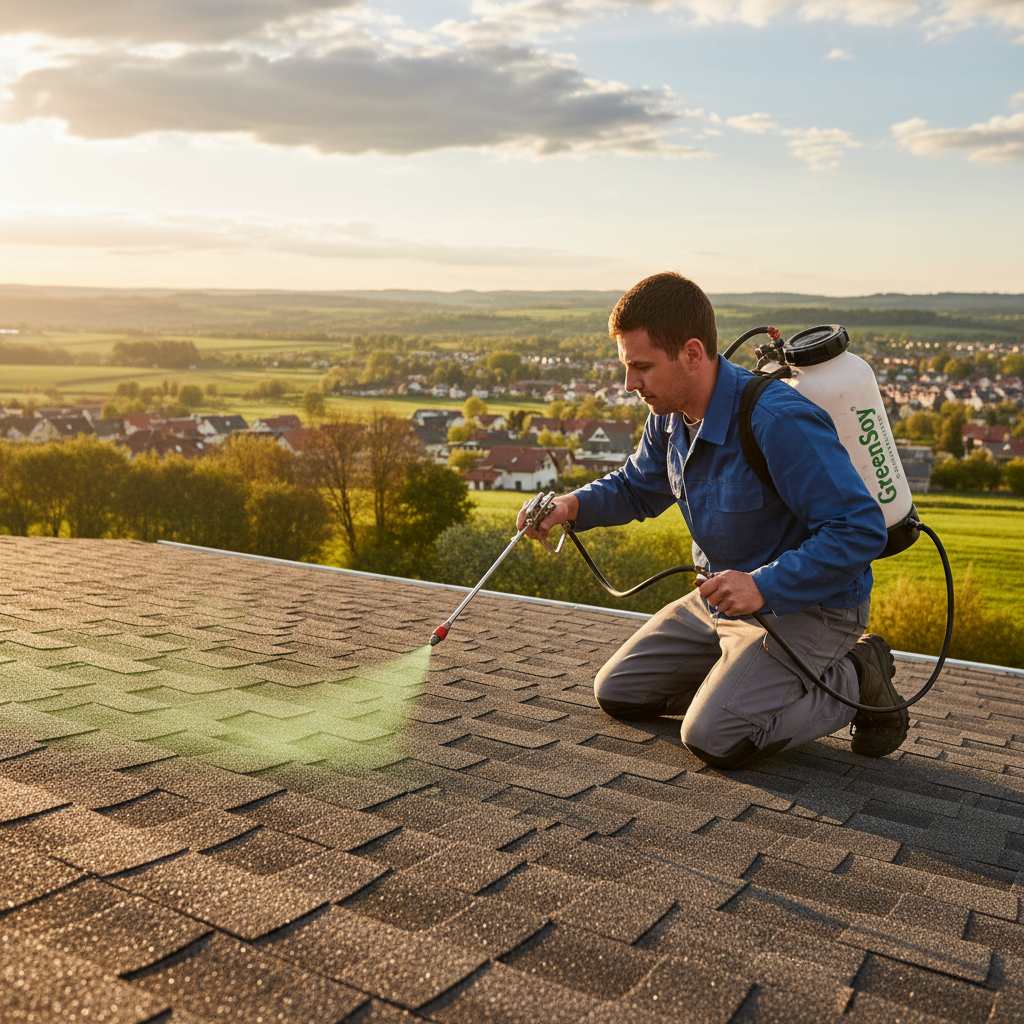
Soft washing cleans vinyl the way coastal siding needs it. It’s a low-pressure application (often garden-hose pressure to a few hundred PSI) that relies on cleaning chemistry and a short dwell time to break up salt film and kill algae or mildew, followed by a controlled rinse that acts like a seatbelt, not a battering ram. The Vinyl Siding Institute notes that vinyl can often be cleaned with an ordinary garden hose and a long-handled soft-bristle brush.
| Method | Best for on coastal vinyl | Main cleaning force | Primary risk if overdone |
|---|---|---|---|
| Soft wash | Salt film + algae/mildew (typical coastal mix) | Chemistry + brief dwell, then rinse | Plant/landscaping impact or overspray if protection is poor |
| Pressure wash | Controlled rinse/reach/flow after treatment | Water impact (even when dialed down) | Driving water behind laps/J-channels/trim gaps, especially at wrong angle or close distance |
Pressure washing, by contrast, leans on water impact to remove grime, and that is a dumb default for coastal vinyl. You can dial pressure down for vinyl (many guides treat ~1,200 to 1,500 PSI as a practical upper bound), but BBB checks won’t save you from a bad technique, and the method still tempts people to “solve it” by getting closer and blasting.
On older, looser coastal installs, the main risk with pressure washing isn’t the vinyl itself. Instead, the danger is forcing water upward behind panels or lifting a lap edge, which can take longer to drain and dry in Wilmington humidity. If a bid or DIY plan depends on high PSI to do the cleaning, it prioritizes speed over keeping water out of places it shouldn’t go.
Soft-wash methods are widely used on roofs because high pressure can shorten shingle life and create avoidable leak risks. Read more in our article: Soft Washing Roof Shingles
How to choose a safe approach and provider
The cheapest crew can make the siding look great that afternoon. A week later, they notice water staining under a window line where the spray was aimed upward under the laps.
You’re looking for a chemical-first wash with a controlled rinse—essentially low pressure house washing—not a “blast it clean” mindset, and that’s the million-dollar question when someone is selling speed. Case in point: if someone sells you on raw PSI as the main solution for mildew and algae, that is lazy thinking, straight out of the Home Depot weekend project aisle.
When you compare quotes or plan a DIY day, use this quick filter. Will you apply the cleaner at low pressure, let it dwell briefly, then rinse from the top down while keeping the spray at least a few feet off the siding and never aiming upward under laps? Ask what they’ll do to protect plants and keep solution out of open windows, and whether they avoid zero-degree tips. Treat these as red flags: “We’ll get close and strip it,” no mention of spray direction, or any plan that depends on high pressure instead of chemistry.
Limited pressure can still fit, but only as a rinse (think recommended PSI for vinyl siding guidance, not maximum force).
Any chemical-first wash should include a plan to pre-wet, protect, and rinse landscaping so runoff doesn’t burn leaves or shrubs. Read more in our article: Protect Landscaping Cleanup If they talk about dialing it down (think vinyl-safe ranges with ~1,200–1,500 PSI as an upper bound) and using distance and fan tips to control impact, you’re in safer territory.
Roof not getting any younger? Contact us or call 703-673-6301 to find out where you stand.Green streaks and mildew build up fast on vinyl siding, but a hard blast isn’t the fix. Our house washing in Wilmington uses soft wash methods that clean without stripping the surface.