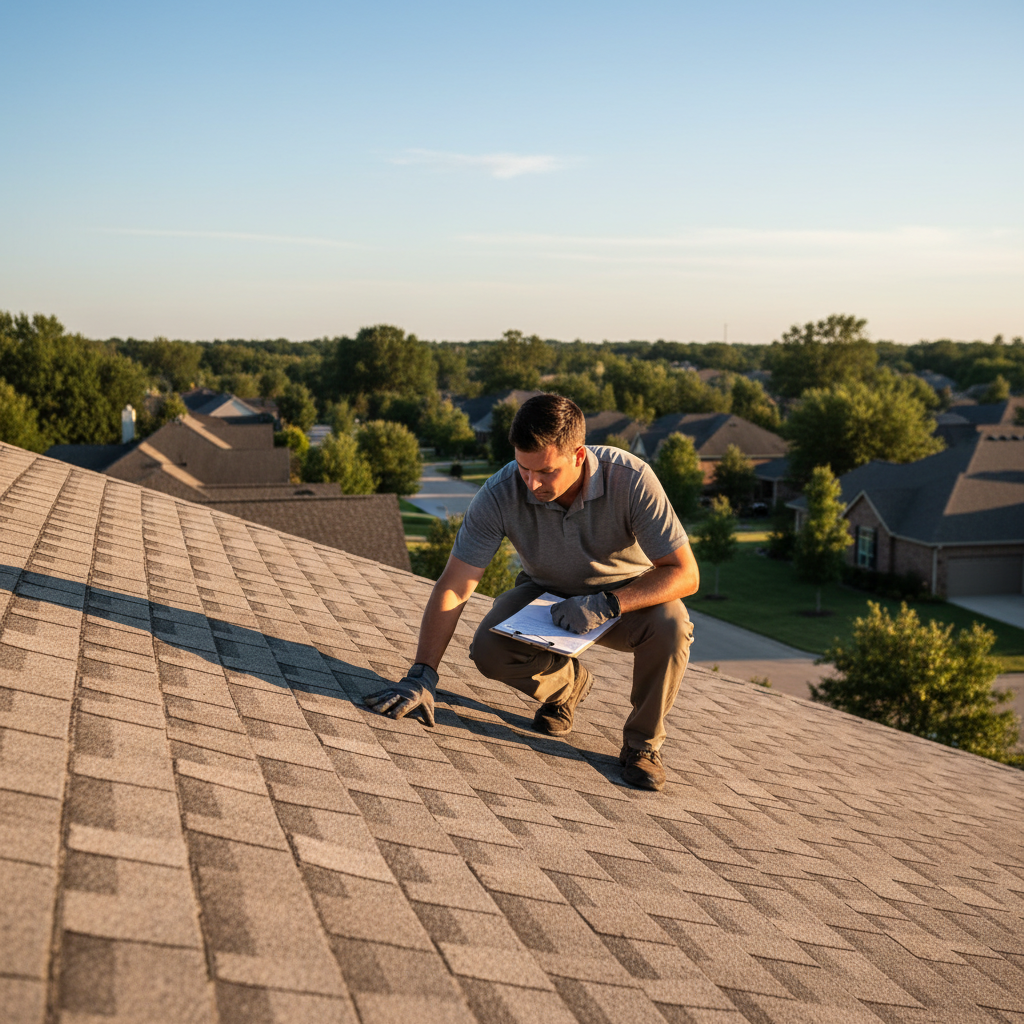
If you’re considering a roof treatment, you’re probably trying to avoid a bigger problem. You want to clean up streaks or satisfy an insurer’s roof condition notice. You also don’t want to trigger a warranty denial or create insurance trouble later.
A treatment can affect both, but it depends on what’s done to the shingles and how it’s documented. Your roof warranty usually comes down to method and product language, not whether the roof looks better afterward, especially with a shingle manufacturer warranty and roof treatment. Your home insurance usually treats treatments as maintenance, but underwriting and future claims can still hinge on what an insurance inspection roof treatment or aerial report shows, and what proof you can provide in response.
The Two Questions You’re Really Asking
This breaks into two separate questions, and they play by different rules. First: Will this void or complicate my shingle manufacturer warranty? That usually turns on how the work gets done, not the glow-up. Think of it like scouring granules off sandpaper.
Second: Will this change how my insurer underwrites me or handles a future claim? Insurance isn’t a maintenance plan, so you shouldn’t expect reimbursement for a treatment. A “no leaks” roof can still trigger non-renewal if an inspection or aerial report flags age or missing shingles.
A practical way to keep yourself out of a costly mix-up: ask your provider to point to the exact roof warranty fine print they’re relying on. Ask your agent what documentation would satisfy underwriting (photos or a paid invoice) without filing a claim.
| Topic | What usually drives the outcome | What to ask before scheduling | What to keep as proof |
|---|---|---|---|
| Manufacturer warranty | Method and product language; anything that looks like alteration or damage (especially high pressure or coatings) | “What PSI/contact method will you use?” “Is anything left behind as a film/coating?” “Show me the warranty language that applies.” | Written scope with method details; product name/SDS; before/after photos by slope; paid invoice |
| Home insurance | Underwriting/inspection findings and how a future claim is attributed (storm event vs wear/tear) | “What documentation will satisfy underwriting?” “What invoice wording and photos do you want for a reinspection?” | Date-stamped photos; invoice labeled maintenance/cleaning; contractor letter if requested; documentation package ready to send |
What Can Trigger Warranty Trouble

Months later, if a defect shows up, the first issue usually isn’t the shingle itself. It’s whether something in that “simple cleaning” gave the manufacturer an easy reason to say the damage was on you.
Most asphalt shingle warranties focus on manufacturing defects, so the fastest way to create a warranty fight is to do something that looks like you altered the product or damaged it during “maintenance.” That’s why the method matters more than the sales pitch. ARMA’s algae-discoloration guidance says high-pressure washing can damage asphalt roofing and shouldn’t be used for algae removal or any other purpose, exactly the kind of roof warranty exclusions around pressure washing that create trouble. If you later have premature granule loss or exposed mat, it’s easy for a manufacturer to argue the roof got mechanically abused, not defectively made.
Beyond pressure, warranty trouble usually comes from any process that changes how the shingle sheds water or performs in a standardized test, classic roof warranty and unauthorized modifications territory. As an example, a field-applied coating can raise questions about whether you changed the roof’s intended behavior, including fire-performance characteristics. It can also conflict with the Owens Corning / GAF / CertainTeed warranty paperwork homeowners keep from installation.
If you want a low-regret path, stop accepting vague promises like “we soft wash.” Ask the provider to put process details in writing, because those details map directly to what gets scrutinized later:
-
Pressure and contact: Did they keep it truly low-pressure and avoid aggressive brushing that can scour granules?
-
Chemical compatibility: What’s the active ingredient and dilution, and will they keep it off flashings, gutters, and sealed penetrations?
-
Aftermarket application: Is anything being left behind as a film or coating, or is it strictly a rinse-on/rinse-off cleaning?
If a contractor can’t answer those questions, you’re not “being picky.” You’re reducing the odds that a future problem turns into finger-pointing.
Most shingle warranties draw a hard line between gentle cleaning and anything that can strip granules or change the shingle surface. Read more in our article: Roof Cleaning Warranty
How to Vet a Treatment Safely

You don’t have to be a roofer to vet a treatment. Push the conversation away from marketing labels like “roof wash” or “rejuvenation” and toward measurable process details. Cover your bases with details you can screenshot later. If a provider won’t put the process in writing, you’re betting your warranty and underwriting like a house on sand.
Start by pinning down method in measurable terms. A legitimate soft-wash provider should be comfortable stating that they use low pressure (often well under 500 PSI) and that they won’t use aggressive brushing that scrapes granules. To illustrate this, ask them to describe how they’ll treat a heavily streaked north-facing slope without “power washing” it. If their answer circles back to pressure, spinning tips, or “we’ll blast it carefully,” move on.
Next, make them draw a bright line between cleaning and altering the shingle. Ask, “Is anything being applied that leaves a film, coating, or sealer behind?” Coatings and “restorers” create the kind of downstream arguments manufacturers and inspectors latch onto, including questions about how the roof performs after an aftermarket layer goes on. The safe framing is simple: rinse-on/rinse-off cleaning, not a new surface.
Finally, collect documentation that helps you in the real world of coastal NC underwriting: a written scope of work, before-and-after photos by slope, and a paid invoice that calls it maintenance/cleaning (not “repairing damage”) unless you’re intentionally pursuing a storm claim, roof warranty documentation maintenance records matter here. Case in point, if your carrier sent a non-renewal notice based on aerial imagery, your best leverage often isn’t arguing. It is sending clear photos and proof of what you did. The details you gather now can prevent the later finger-pointing: “you changed the roof,” “you damaged the roof,” or “that was long-term wear.”
A low-pressure process can still cause problems if it uses the wrong mix or too much agitation on older, brittle shingles. Read more in our article: Roof Cleaning Without Removing Granules
How Insurers Usually View Roof Treatments

In real-world property paperwork, a roof often turns into a number in a roof insurance and roof condition report. FHA appraisal guidance flags roofs with less than 2 years of remaining life for further action, and insurers make their own condition calls in the same spirit.
Most carriers classify roof cleaning or “rejuvenation” as maintenance rather than a covered repair, and that’s consistent with how policies work. So don’t count on reimbursement, and don’t assume a treatment reclassifies an aging roof as insurable like new. If a future leak gets attributed to long-term deterioration, many policies exclude that as wear-and-tear no matter how responsibly you maintained the roof.
Where treatments do matter is the paperwork reality of underwriting or later claim disputes. A cleaner roof with clear, date-stamped photos can help you pass a reinspection after a non-renewal notice driven by aerial imagery, roof maintenance for insurance renewal, but it can also sharpen the question after a storm: was the water entry from a specific covered event, or from pre-existing age, curling, or granule loss? Don’t rely on “my roof doesn’t leak” as proof you’re safe, because insurers often price and renew based on future loss probability.
Before you schedule, call your agent and double-check what proof they’ll accept (invoice language or photos by slope). Compare it to your HO-3 homeowners insurance policy declarations page and endorsements packet so you’re fixing the insurability problem you actually have.
Insurers commonly use third-party photos, aerial imagery, and short-form condition notes to make renew/non-renew decisions before you ever report a claim. Read more in our article: Homeowners Insurance Roof Inspection
What to get in writing
After an aerial report triggers a “fix it or lose coverage” notice, one homeowner emails a tight photo set and a paid invoice the same day and gets the reinspection cleared. Another has only a credit-card charge and a vague text from the contractor, and the back-and-forth drags on for weeks.
This paperwork isn’t about being difficult. It’s about having defensible records if questions come up later. You’re trying to avoid the two most common endgames later: a manufacturer saying the shingles got mechanically damaged or an insurer saying the roof issue was pre-existing wear. A few simple, written artifacts make that argument much harder. They work like labeled bins in a garage.
-
Scope of work stating low-pressure soft wash, no aggressive brushing, and no coating/film left behind
-
Product details (name and SDS) and how they’ll protect gutters, flashings, and landscaping
-
Invoice language that calls it cleaning/maintenance (not “repairing damage,” unless you’re pursuing a claim)
-
Date-stamped before/after photos by slope (north, south, etc.)
-
Contractor proof of liability insurance and contact info