You notice the dark streaks from the street, and your mind goes straight to mold and roof damage. Most of the time, those black lines on asphalt shingles are algae staining, and they’re more of a curb-appeal problem than a structural one. What matters is the pattern and the context.
| What you see | Likely issue | Why | Safest next step |
|---|---|---|---|
| Smooth, thin streaks running downslope across many shingles | Algae staining | Common surface discoloration that spreads gradually, especially in humid coastal air | Plan for gentle cleaning (pro soft-wash); avoid pressure washing |
| Fuzzy or patchy growth (not smooth streaking) | Possible mold/moisture problem | Often paired with a moisture story (persistently damp shade, leak, or attic condensation) | Inspect for a moisture source; check attic/roof area before cleaning |
| Single concentrated dark patch (especially if thick) | Localized moisture or roof issue more likely | Concentrated pattern can indicate a specific wet spot or damage area | Treat as a prompt to inspect; consider calling a roofer |
| Dark area plus moss/lichen, lifted edges, heavy granule loss, or attic staining/condensation | Damage signal (beyond cosmetic staining) | Physical wear or trapped moisture can accelerate deterioration | Prioritize inspection and repair/replacement planning over cleaning |
Smooth, downslope streaks spread across many shingles usually mean algae. It’s not rocket science. If it’s a single concentrated patch, or it looks fuzzy, treat it like reading tide lines on a dock. You inspect. You do not just wash. In the sections below, you’ll learn how to tell the difference and how to avoid the high-risk mistake that damages roofs faster than the stain does.
Roof Algae vs Mold: Black Streaks Explained

Your neighbor swore the roof was “full of mold” and booked an expensive treatment, only to learn the dark lines were a common algae stain. Getting the label right upfront keeps you from chasing the wrong fix.
On asphalt shingles, the classic black streaks that run downslope from the upper courses are usually algae staining (often tied to Gloeocapsa magma), not “mold.” It can look dramatic on a tan or light-gray roof, but it’s typically a surface discoloration that spreads, especially in humid coastal air.
“Mold” becomes a realistic concern when the growth looks fuzzy or patchy (not smooth streaking) and you also have a moisture story: a persistently damp shaded area or a roof leak. Don’t get stuck on the label; even Consumer Reports would tell you “mold” panic is overblown. Verify whether you’re seeing a surface stain or a moisture problem.
On asphalt shingles, true mold concerns usually start with an underlying moisture source like a small leak or condensation issue. Read more in our article: Roof Leak Repair
When It Matters, and When It Doesn’t
If the streaks are smooth, thin, and run downslope across many shingles, it usually answers the question are roof stains harmful mainly with curb appeal. In Wilmington’s humidity, that kind of algae staining is common and doesn’t automatically mean your roof is failing, even if it looks ugly.
It does matter when the dark area comes with a moisture or damage signal: thick moss or lichen you can feel, shingle edges lifting, a persistently damp shaded corner that never dries out, gritty granules piling in gutters, or any attic staining/condensation beneath the same spot. In those cases, treat the discoloration as a prompt to inspect, not just something to “clean off.”
Wilmington Humidity Changes The Odds

If you time the work and small maintenance moves to Wilmington’s damp pattern, the streaks stay a manageable nuisance instead of a recurring surprise. The same roof can look “clean” longer by drying faster.
In coastal Wilmington, heavy dew and shade from pines and live oaks can keep the roof damp well into late morning (coastal conditions can favor algae/moss/lichen growth, as noted in coastal North Carolina roofing guidance). That longer “wet time” leaves the roof like a sponge you can’t wring out, so streaks show up sooner and come back faster than you’d expect after cleaning.
What that means for you: nip it in the bud. Treat black streaks as recurring maintenance pressure, not a one-and-done event. On a shaded north-facing slope, check more often and schedule any cleaning during a dry stretch.
Coastal salt air and long morning dew cycles can keep shingles wet longer, which increases how fast algae and organic growth return on shaded slopes. Read more in our article: Salt Air Humidity Shingles
Your Safest Next Step Checklist
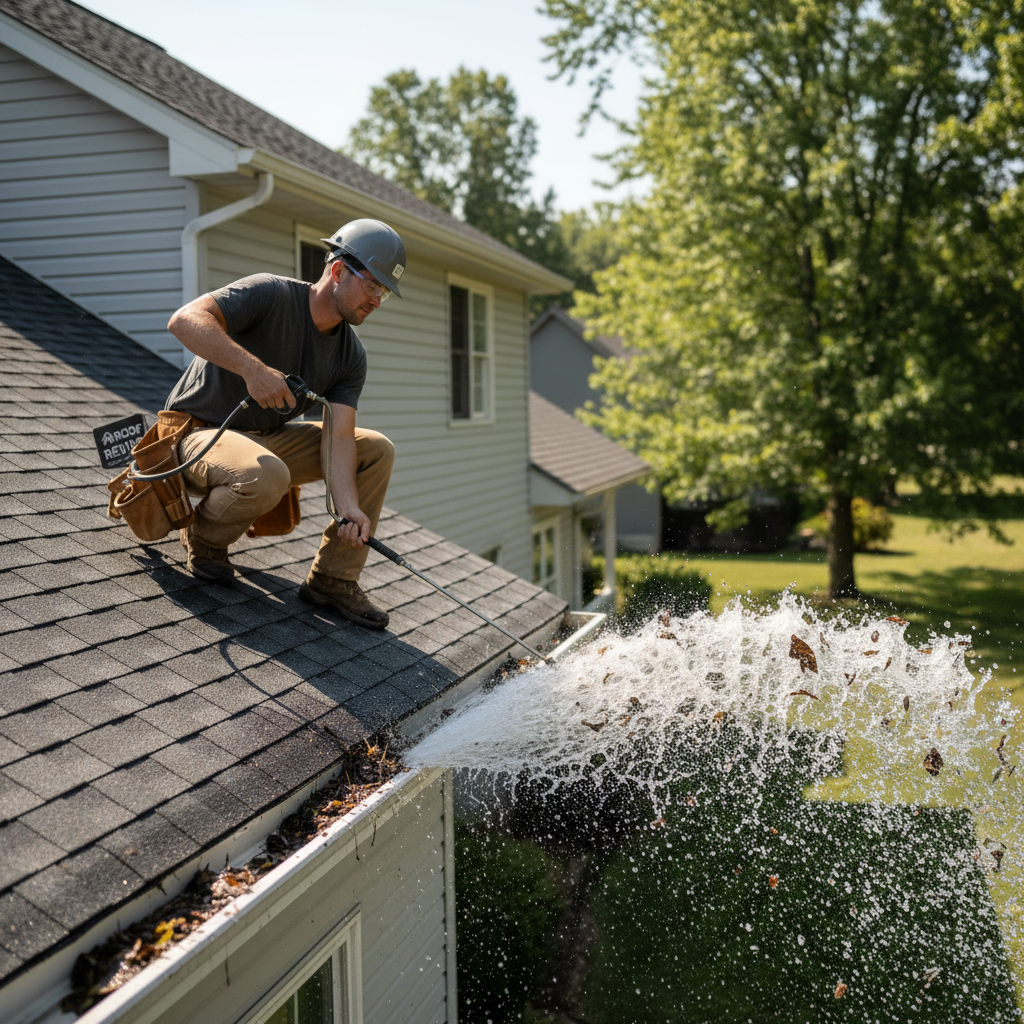
Start by treating the black streaks on roof like a diagnosis problem, not a cleaning problem. The wrong move can do more harm than the stain, and renting a pressure washer from The Home Depot is a bad idea here. As an example, a 20-year-old 3-tab roof with visible granules in the gutters should push you toward inspection and budgeting, not aggressive cleaning.
-
Take clear photos (wide shot + close-up) and note which slopes stay shaded/damp.
-
From the ground, look for moss/lichen, lifted shingle edges, and heavy granule loss.
-
In the attic, check the same area for damp sheathing, stains, or condensation.
-
If it’s smooth streaking only, price a pro soft-wash with roof cleaning Wilmington NC providers; avoid pressure washing.
-
If you see damage signals or the streak is a single dark patch, call a roofer to rule out a moisture source.
Cleaning vs Rejuvenation vs Replacement
You can spend real money making an old roof look better and still end up paying for a replacement sooner because the surface was already fragile. The smartest move is the one that matches the roof’s remaining life, not the stain’s intensity in the roof restoration vs replacement decision.
Cleaning makes the most sense when your roof still has years left: shingles lie flat and granules aren’t collecting heavily in gutters. If your roof is roughly 10–15 years old and the streaks are the main issue, a pro soft-wash can be a cost-effective reset. It’s like restoring a raincoat that still has waterproofing left.
If you’re closer to 20–25+ years, see significant granule loss, or notice cracking/curling, don’t throw good money after bad (see algae-resistance guidance). Put your money toward replacement planning instead of chasing a “like-new” look, and check a roofer’s Better Business Bureau (BBB) record. The instinct to clean because it feels like maintenance can backfire when the roof is already near the end of its usable life.
Roof rejuvenation is typically most effective when shingles are aging but still structurally sound, and it’s not a substitute for fixing active damage or leaks. Read more in our article: Roof Rejuvenation
Roof not getting any younger? Contact us or call 703-673-6301 to find out where you stand.If it keeps coming back, our roof algae treatment in Wilmington treats the cause, not the symptom.