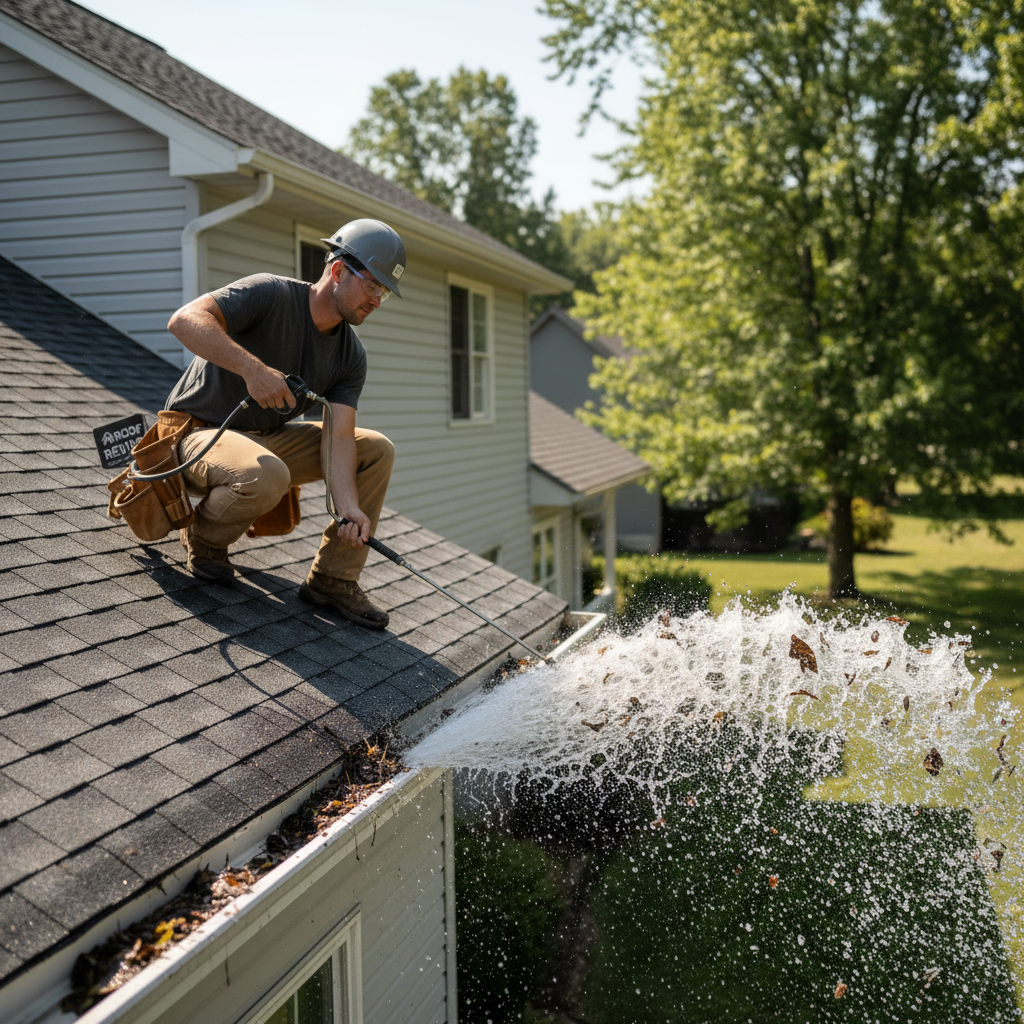
If you live around Wilmington, you’ve probably cleaned a roof stain and watched it come back anyway. The fix starts with identifying what’s on the shingles (algae vs moss/lichen vs an attic moisture issue), then choosing low-pressure soft washing rather than pressure washing.
In this guide, you’ll learn what those black streaks usually are on asphalt shingles (including black streaks on roof Wilmington) and why certain slopes and shaded areas regrow faster in coastal humidity. You’ll also get a clear line between a safe roof wash and a granule-stripping “quick clean,” plus what to ask in a Wilmington roof-cleaning bid so you protect your landscaping and metal details.
What You’re Really Seeing on Shingles
In Wilmington’s humidity, most “black streaks” on asphalt shingles (often algae on roof Wilmington NC) aren’t soot or roof dirt you can rinse away. They’re usually algae discoloration, commonly tied to Gloeocapsa magma, which shows up as brown-to-black staining that follows water flow and looks worst on shaded or north-facing slopes. Treat it like grime and a pressure washer may strip granules while the staining comes back, since the recolonizing conditions stay in place.
Moss and lichen look and behave differently.
| What it likely is | What it looks like | Where it shows up most | Main risk | Best next step |
|---|---|---|---|---|
| Algae discoloration (black streaks) | Brown-to-black staining that follows water flow | Shaded or north-facing slopes | Mostly cosmetic, but indicates conditions that let it regrow | Reduce damp-time (trim shade/improve airflow) and use low-pressure soft washing (not pressure washing) |
| Moss | Thicker green, fuzzy growth that holds water | Shingle edges, shaded valleys | Traps moisture; can disrupt the roof surface | Timely removal with low pressure and address shade/debris that keeps areas damp |
| Lichen | Flat, crusty patches that feel “stuck on” | Persistent damp areas | Can physically disrupt the roof surface; traps moisture | Avoid high pressure; consider pro soft wash and prevention to reduce damp-time |
| Attic moisture / leak issue (not roof-face growth) | Fuzzy/spotted sheathing, musty smell, staining that matches a leak line | Inside attic or aligned with a known leak | Ongoing moisture damage if the cause isn’t fixed | Fix ventilation/air leakage/water intrusion; don’t rely on surface cleaning alone |
Moss reads as a thicker, green, fuzzy layer that holds water like a sponge. You’ll usually spot that sponge-like moisture retention at shingle edges and in shaded valleys. Lichen tends to look like flat, crusty patches that feel “stuck on,” sometimes with pale gray-green rosettes. Because moss and lichen can disrupt the surface and hold moisture against the shingles, the downside goes beyond appearance.
“True mold problem” usually isn’t something growing on the shingle face at all. If you see attic sheathing that looks fuzzy or spotted, smell persistent mustiness, or notice staining that matches a known leak line, you’re in a moisture-management issue: ventilation or water intrusion. A useful gut-check: if the roof looks worst where it stays damp (shade, overhanging trees, slow-drying slopes), think algae or moss; if the trouble shows up inside the attic or aligns with a leak, don’t let a surface clean distract you from the real fix.
Algae discoloration is common on asphalt shingles in humid coastal areas and often shows up as the familiar black streak pattern. Read more in our article: Roof Algae Black Streaks
Why Wilmington Roofs Regrow So Fast

Around Wilmington, you’re fighting biology plus climate, and the “dirty roof” framing is flat-out misleading. Long humid stretches mean shingles stay damp longer each day, and algae spores don’t need much time to reestablish once conditions favor them. That’s why the same house can look clean on one slope and streaked on another, even if Nextdoor neighborhood groups swear it’s just “roof dirt.”
Shade and orientation do most of the damage: north-facing planes and valleys dry last, so they regrow first. Salt-air moisture that lingers overnight and in coastal fog also speeds the return unless you cut damp-time with canopy trimming plus better sun and airflow.
Salt air and overnight humidity can keep shingles damp longer, which speeds up algae regrowth on shaded slopes and valleys. Read more in our article: Salt Air Humidity Shingles
The Safe Cleaning Line: Soft Wash vs Pressure
On an asphalt shingle roof, the safety line isn’t “bleach vs no bleach,” it’s pressure. A true roof soft wash applies cleaning chemistry at low pressure (often well under 500 PSI, and frequently far lower) so you kill algae without blasting the protective granules off the shingle surface, this is the core of soft wash roof cleaning Wilmington. Pressure washing does the opposite: it can make the roof look instantly brighter while stripping granules and lifting edges. If you only judge by how clean it looks the next day, you can pay for damage that won’t show up until the roof starts aging fast.
Chemistry still matters, but it’s often where bad bids give themselves away. It’s not my first rodeo. Many pros work in a roughly 1% to 6% sodium hypochlorite “working strength” range depending on conditions and method, typically with a surfactant so it clings instead of running straight to your gutters. In coastal Wilmington neighborhoods where you already have salt and corrosion stress, you also want someone who protects metal details and manages runoff, because overspray on flashing and gutters can create problems that look like “normal wear” later.
If you’re comparing bids (or requesting a roof cleaning estimate Wilmington), ask for specifics instead of promises. Confirm what PSI hits the roof and how they keep it low, and whether they expect regrowth without any follow-up prevention. Walk away from any bid that starts with “we’ll just hit it with a pressure washer and be done.” Check Better Business Bureau (BBB) ratings/accreditation and walk if the process is vague.
Low-pressure methods are the safest way to remove staining without prematurely wearing the protective granules off asphalt shingles. Read more in our article: Safe Roof Cleaning
A homeowner action plan this week

Start by mapping where it’s worst (usually the north-facing plane and valleys) and decide what you’re solving: streaky discoloration you can live with for now, or thick moss/lichen that’s holding water at shingle edges. For instance, if you see fuzzy green clumps in a valley, treat it as a moisture trap that needs timely removal, not a cosmetic project.
This week, do these five moves in order: (1) Trim back shade that keeps the roof wet and clear roof-to-gutter debris so water doesn’t linger. (2) If you plan any cleaning, pre-soak and keep rinsing landscaping, and divert downspout discharge so runoff doesn’t sit on shrubs. (3) Choose DIY only if growth is light and you can work from the ground; otherwise, hire. (4) When hiring, require low-pressure soft wash and explicit protection for gutters and flashing. (5) Set your expectation: “looks great tomorrow” isn’t the goal; slower return over the next months is.
Vet a Roof-Cleaning Bid in Wilmington
Before you pick a “roof wash” quote, make them describe the process, not the result. A next-day “after” shot in humid Wilmington can still mask granule loss or flashing corrosion that only becomes obvious later.
A credible bid should clearly state they’ll use a true low-pressure soft wash (not pressure washing), so you get it knocked out without turning your granules into sandpaper. It should give a plausible chemical approach (many pros land roughly in the 1% to 6% sodium hypochlorite working-strength range) and explain exactly how they’ll protect landscaping and gutters from overspray and runoff, specifically how they protect gutters during roof cleaning. You should also see what they’ll do with downspout discharge and how they handle manufacturer warranty concerns in writing.
Roof not getting any younger? Contact us or call 703-673-6301 to find out where you stand.