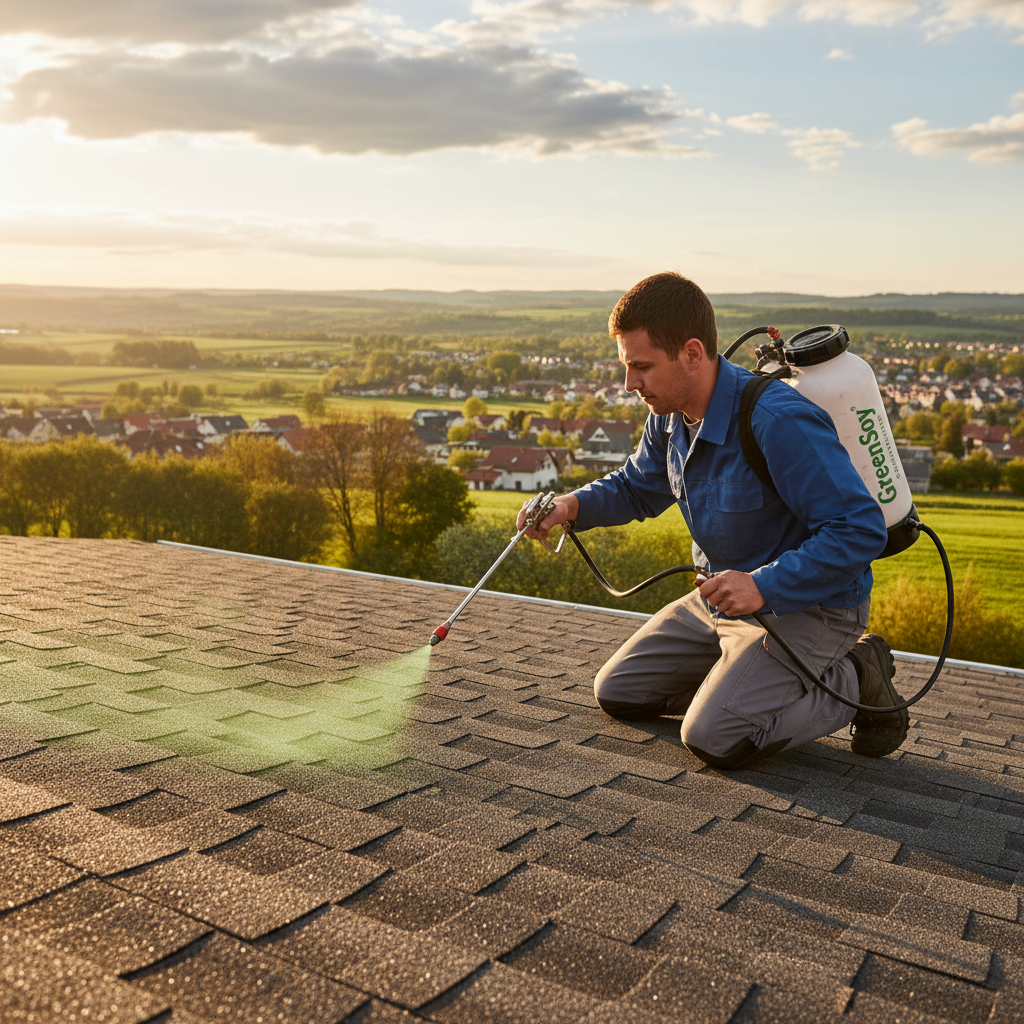
You’re probably asking how long a rejuvenation treatment lasts on an asphalt shingle roof because replacement quotes are painful, but “roof rejuvenation” sounds suspiciously like marketing. In real-world planning terms, most treatments give you about five years, with a common range of roughly three to six years depending on your roof’s condition and your exposure.
What makes this question tricky is that “lasts” can mean very different things in roof rejuvenation treatment duration: the shingles stay more flexible and resist surface wear longer, the roof looks better, or the roof stays leak-free. If you’re in Wilmington or a nearby beach community, you also have to factor in harsh sun and storm seasons that can shorten results on certain slopes. This guide will help you set a realistic timeline and spot when your roof is a good candidate versus a money pit.
The Real Answer: Plan on ~5 Years

Most asphalt-shingle “rejuvenation” treatments land in the same practical planning window: about 5 years, with a reasonable homeowner range of ~3 to 6 years depending on roof condition and exposure. That lines up with what you’ll see in the fine print, because warranties and even lab-style performance testing commonly anchor to a 5-year window.
Treat that number as a wear-window, like fresh tread on a tire, not as a promise that your roof will stay leak-free for five years. If you’re using rejuvenation to buy time in coastal North Carolina, use that ~5-year horizon for budgeting. Then schedule a re-inspection on the same timeline.
If you want a clearer sense of what “5 years” looks like in practice, the real-world results often depend on roof age, slope exposure, and how quickly the shingles dry out again after treatment. Read more in our article: Roof Rejuvenation Results Last
What “Lasts” Means
You can pay for a “five-year” promise and still be back on a ladder after the next hard rain, staring at a ceiling stain that was never covered. The mistake is treating your definition of lasts as the same one the warranty uses.
When a rejuvenation company says a treatment “lasts” 5 or 6 years, they’re usually talking about shingle conditioning: improved flexibility (less brittle tabs) and, in some testing, better granule retention over that window.
| What “lasts” often refers to | What you may notice | What it does not guarantee |
|---|---|---|
| Shingle flexibility/conditioning | Tabs feel less brittle; fewer cracks from handling | No promise of zero leaks |
| Granule retention (in some testing) | Slower-looking surface wear; fewer fresh bare spots | No fix for missing granules/fiberglass already exposed |
| Surface performance window in warranty language | A time-based claim (often ~5 years) tied to the product | Coverage for flashings, pipe boots, underlayment, or interior damage |
| Cosmetic look improvement | Darker/richer shingle appearance at first | Storm resistance or wind-lift prevention |
That’s why many warranties read like performance promises about the shingle surface, not a guarantee you won’t get a leak, and that distinction matters more than most Angi reviews admit.
If you’re thinking “5-year treatment = 5 years leak-free,” you’ll mis-buy, and that assumption is where homeowners get burned. Leaks often start at flashings or pipe boots, and a spray can’t rebuild those systems, especially in Wilmington’s sun and storms.
Wilmington Factors That Shorten It

A homeowner in Ogden treats a decent roof in spring, then by late summer the south-facing slope looks tired again after weeks of UV and heat, and a tropical system tests every lifted edge. Coastal conditions do not grade on the same curve as inland roofs.
In Wilmington and nearby beach communities, the same “5-year” rejuvenation claim can play out more like 3 to 5 years because your roof lives in a harsher loop: strong UV and hot decks. As an example, a south-facing slope over a dark attic with marginal ventilation can cook for months at a time. It turns that roof plane into a slow-roasting skillet.
Salt and storms add a different kind of stress. Salt-laden air and gritty wind can speed surface wear, and a tropical system doesn’t care that your shingles feel more flexible if tabs lift or a pipe boot cracks. If you expect a coastal roof to perform like an inland roof just because the warranty says “5 years,” you’ll get surprised.
Ventilation and moisture can make results uneven, too. High attic humidity, bathroom fans dumping into the attic, or blocked soffit/ridge paths can keep the roof system damp and hot, which pushes aging that a spray can’t reverse. Practically, treat rejuvenation as something you verify.
Salt air and humidity can accelerate shingle aging and make results vary a lot between an inland neighborhood and a beach-adjacent one. Read more in our article: Salt Air Humidity Shingles Kick the tires after the next storm season.
Your Roof’s Starting Condition Matters Most
In one accelerated-aging lab test, treated shingles showed 53% better granule retention than untreated over a window meant to simulate about five years. That kind of result only matters if your roof still has enough shingle left for the treatment to work with.
A rejuvenation treatment can’t add back shingle material that’s already gone, and it can’t fix a roof that’s failing at flashings, boots, or underlying moisture. So the same “5-year” product can play out differently next door: a roof with intact granules and flat tabs may benefit, while exposed fiberglass undercuts any lifespan claim quickly.
If you’re unsure whether your shingles are just “normally worn” or actually damaged enough to disqualify a treatment, a close-up inspection of granule loss and cracking is usually the deciding factor. Read more in our article: Normal Shingle Wear Vs Damage
Hitting the planning window depends on whether your roof looks like a good candidate rather than a disqualifier, and BBB ratings can help you vet who’s doing the work.
Likely disqualifiers (expect shortened results or skip it): widespread exposed fiberglass and heavy granule loss with bald spots. Major curling/buckling, active or recurring leaks, or soft decking/rot, and no product should pretend otherwise.
Stronger candidates (more likely to hit the planning window): shingles mostly lying flat, no active leaking, granules largely intact (normal wear is fine), issues are localized (a few lifted tabs or minor sealant breaks), and the roof passes a close-up inspection around penetrations, valleys, and edges.
When a second treatment is worth it

A second rejuvenation makes sense around year 3–6 only if you’re still maintaining a roof that’s fundamentally sound, not trying to “spray past” end-of-life with asphalt shingle restoration for good enough for government work results. For instance, if your shingles still lie flat after a windy season and you’re not seeing new interior water staining, a reapply can be a rational way to keep flexibility and surface wear in a decent place, like propping up a fence that is still standing, while you keep saving for replacement.
Use this quick gate before you spend more
Reapply if: the roof has no active leaks, shingles are mostly flat (no widespread curling/buckling), granule loss looks normal (not bald fiberglass showing), and an inspection finds details like pipe boots, flashings, and valleys still in serviceable shape.
Stop investing and plan repairs or replacement if: you’ve had repeat leak symptoms, you see exposed fiberglass/bald areas, there’s soft decking or chronic moisture in the attic, or multiple penetrations and edge details are failing. If those show up, the treatment duration isn’t your problem anymore, the roof system is.
Questions to ask before you book
If you ask the right questions up front and get a roof inspection Wilmington NC, you can leave with a clear scope, a warranty aligned to your expectations, and photos showing what’s being addressed. Skip that step, and you’re often paying for confidence instead of coverage.
Ask questions that pin down what you’re buying. “5 years” can mean flexibility metrics, not leak protection. As an example, a warranty can sound long while excluding pipe boots, flashing, and interior water damage, which is where many real problems start, so get three bids and compare against Consumer Reports buying guides instead of slick brochures.
Before you schedule, ask: What exact product are you applying and how many coats? What prep do you do (gentle cleaning vs pressure washing), and what minor repairs are included? What does the warranty cover specifically, and what’s excluded?
Roof not getting any younger? Contact us or call 703-673-6301 to find out where you stand.