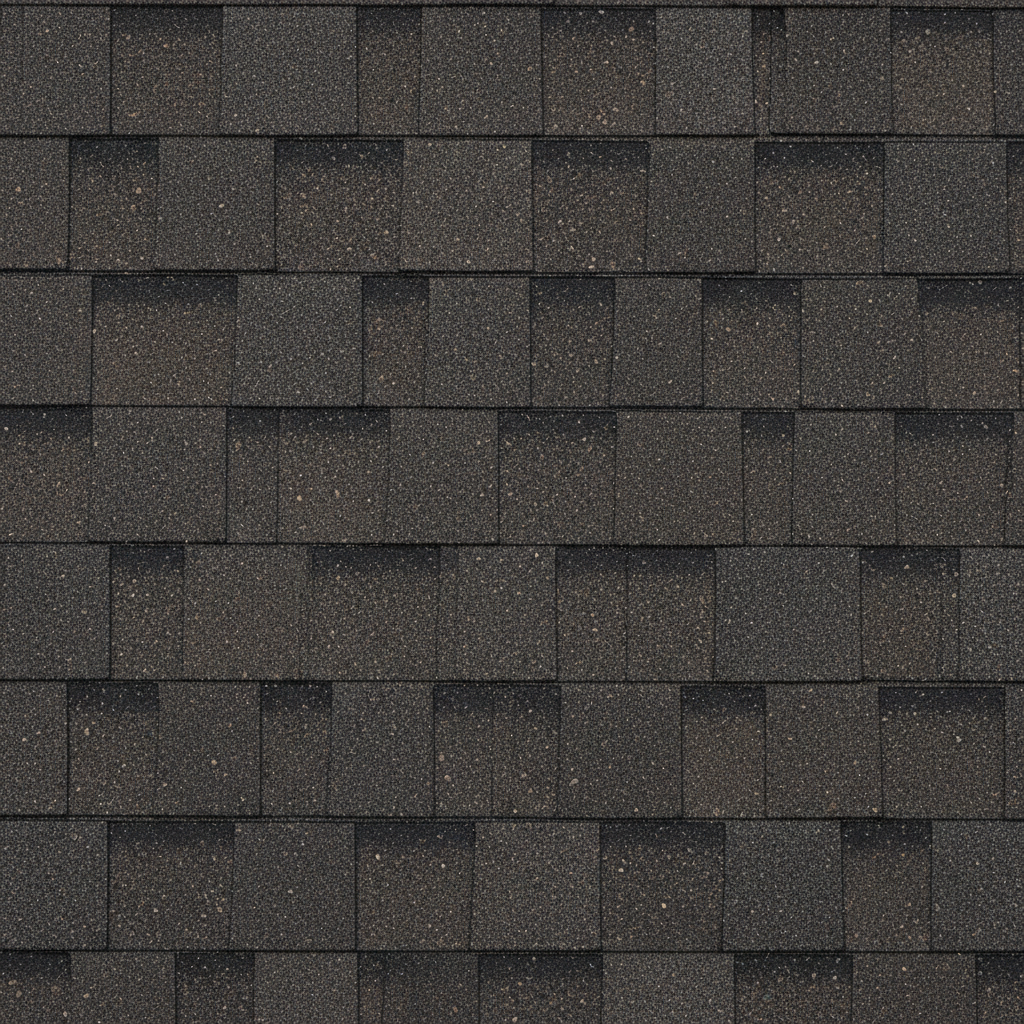
You can tell normal shingle wear from real damage by looking for two things: a consistent, even aging pattern versus a specific change that creates an opening. Wear shows up gradually across broad areas, while real damage usually leaves creases or missing pieces that can let water in.
In Wilmington and nearby coastal areas, sun and salt air can make ordinary roof aging look dramatic, especially after a storm. In the sections below, you’ll learn how to read the roof like a map from the ground, how to use quick “does the rest of the property match?” checks (gutters and vents), and which signs mean you should stop monitoring and schedule a professional inspection.
| What you see (from ground) | More like normal wear | More like real damage | Next move |
|---|---|---|---|
| Overall pattern across slopes | Broad, even aging/discoloration | Cluster/line/patch that doesn’t match nearby shingles | If uneven: document and inspect soon; if even: monitor |
| Tab/edge condition | Dirty, weathered, sun-faded edges; mild curl | Sharp crease/“hinge line,” torn edge, missing/slid tab | Any crease/tear/missing piece: schedule inspection |
| Surface loss | Light, uniform granule speckling | Bare asphalt/exposed fiberglass mat; true puncture/fracture | Bare mat/holes: inspection now |
| Metal details + other property clues | Gutters/vents/screens look untouched | Bent/lifted flashing; dents/impact marks on soft metals | If metal details moved or collateral hits: inspection |
| Interior symptoms after wind-driven rain | None | New ceiling stain, damp attic decking, musty smell | Any interior symptom: urgent inspection |
Start With the Pattern,

You can lose hours zooming in on one “bad” spot and still miss the only area that matters. To make the right call quickly, decide whether the roof reads as one consistent pattern or a separate, localized event.
Before you zoom in on one ugly shingle, step back and read the roof like a coastal chart. Normal wear usually shows up as a broad, fairly even change over large areas (the same slopes aging at a similar pace), while real damage from a specific event tends to show up as clusters, lines, or patches that don’t “make sense” with the rest of the field. For instance, a roof that looks generally consistent except for one concentrated area near a ridge or one side of a valley often points to a localized cause, not the whole roof simply “wearing out.”
Start with a single question. Do the other exterior surfaces support what the shingles seem to show? If you’re seeing what you believe is storm damage, you should often find some supporting clues on other exposed surfaces like gutters, vents, window screens, or fascia. If the only evidence lives in a few close-up shingle photos, you may be chasing surface weirdness that looks dramatic but doesn’t change what you need to do next.
Coastal sun, salt, and humidity can speed up granule loss and seal-strip aging, making a roof look “storm-worn” even when it’s just weathering. Read more in our article: Salt Air Humidity Shingles
Normal Wear You Can Ignore,

A homeowner sees dark streaks and grit in the downspout, assumes the roof is failing, and rushes into an unnecessary repair. Often, it’s routine settling and weathering on an asphalt roof.
Some roof changes look alarming but mean your shingles are aging or settling, and you shouldn’t treat them like damage. Color fading and slight tone shifts happen from UV and weather, and treating it as “damage” is a mistake, especially on GAF Timberline or Owens Corning shingles baking on south- or west-facing slopes in Wilmington sun. Minor corner lift or a little edge curl can show up as shingles age and seal strips lose grip over time, and that alone doesn’t prove wind damage.
Also, don’t panic over a light sprinkle of granules in gutters or at downspouts right after a new roof, some early granule loss is normal. Manufacturers note “rider” granules shed most early, then taper off over the next few months (see GAF technical bulletins). Your move: document it once, then watch for rapid, widespread bare spots, not a handful of loose grit.
When discoloration is algae-driven rather than mechanical damage, a proper cleaning approach can restore appearance without shortening shingle life. Read more in our article: Roof Cleaning
Changes That Signal Real Damage,
Some roof issues don’t just “look rough,” they break the water-shedding system. The line you’re trying to spot is simple: wear makes shingles less pretty and gradually less protected, roof shingle damage signs start when protection is interrupted. Damage creates an opening, a hinge, or a missing piece that lets wind-driven rain slip past like a bouncer letting someone through the rope line. In Wilmington storms, that’s when a small defect turns into a ceiling stain fast, especially around ridges, valleys, and pipe boots.
You’ll be tempted to treat any liftable tab or black streak as proof the roof is failing. Get a second opinion and push back on that instinct. Seal strips can lose adhesion with age, and algae staining is usually cosmetic. What deserves urgency is anything that looks like the shingle got folded or removed, or any metal or flashing detail that’s no longer where it’s supposed to be.
Here are changes that usually mean real mechanical damage, not normal aging:
-
Creases or “hinge lines” across a tab (often from wind lift and slap-back): the shingle can crack along that line and start shedding granules rapidly.
-
Torn, missing, or slid shingles/tabs: you’ve lost overlap coverage, so water can run straight to underlayment or decking.
-
Exposed fiberglass mat or bare asphalt patches (not just light scuffing): UV accelerates deterioration and the spot becomes a leak risk.
-
Clean punctures or fractures (from impact or branches): a true hole bypasses the shingle’s whole design.
-
Displaced or bent flashing (step flashing at walls, chimney flashing, loose drip edge, lifted valley metal): even “good” shingles can’t compensate if the metal details open a path for water.
If you can safely see any of these from the ground or eave edge, your next move is to document it (wide shot plus close-up) and schedule a professional inspection sooner rather than later, because the consequence isn’t aesthetic. It’s water entry.
The Confusing Middle Cases,

Granules in gutters can be normal, especially after installation or cleaning, and algae often shows up as brown-to-black staining (usually cosmetic, not a “wearing out” signal) per the Asphalt Roofing Manufacturers Association (ARMA) resources. Don’t let a dramatic-looking surface change make the decision for you. Panic-scrolling Nextdoor is not a diagnostic tool. What matters is whether you’re seeing growing bare patches, exposed mat, or a true opening that can take on water (shingle scuffing vs damage is often the confusing part).
Liftable tabs and slight corner cupping can mislead because unsealed shingles and mild curl often come with age, not wind damage (see IIBEC discussion of wind-damage misconceptions). The quick discriminator is the edge condition. For example, a freshly torn, sharp crease or missing piece suggests a recent mechanical event, while dirty or weathered edges and aged sealant usually point to a problem that’s been developing over time.
Quick Triage From the Ground,

You can make a clear, defensible decision without risking a ladder and without turning a small concern into accidental damage. A few disciplined checks from the yard usually separate “monitor it” from “inspect it now.”
A ladder isn’t required here, and going up for a closer look can create the very damage you’re trying to assess. Instead, grab binoculars (or your phone’s zoom) and do one slow lap around the house, looking at the same spots on each slope.
Start with leak-risk clues: scan ridges and valleys for anything that looks missing or out of place, then check inside for new ceiling stains or a musty smell after a Wilmington-style wind-driven rain. Next, look for collateral evidence that supports a storm story: dented gutter faces, dinged roof vents, or torn window screens. If the roof looks “ugly” but those other surfaces look untouched, you may be looking at aging or scuffing, not an urgent opening.
If you see a concentrated patch of disturbed shingles, a shingle tab that’s clearly creased, or metal flashing that’s lifted, treat it as inspection-worthy now. If you only see even discoloration or light, uniform granule speckling, take wide photos from all sides and keep an eye on it after the next heavy rain.
If you’re noticing moisture symptoms after wind-driven rain, catching a leak early can prevent saturated decking and hidden mold growth. Read more in our article: Early Roof Leak Signs
When to Call a Pro,
After a windy night, one neighbor waits for a drip to prove there’s a problem, while another gets the small opening documented and addressed early. The difference is often a simple repair versus wet decking and a much bigger bill.
Call a reputable roofer or roof inspector promptly for a storm damage roof inspection if you can see (from the ground or eave edge) a crease/hinge line or a missing tab, or if you’ve got any new interior symptom like a fresh ceiling stain or a musty smell after a wind-driven rain, because waiting is how small problems turn into expensive ones, and Angi (Angie’s List) reviews can help you filter out the outfits that nickel-and-dime you. Don’t wait for a “bigger leak” to confirm it, because small openings often turn into soaked decking fast in coastal storms.
If you’re mainly seeing uniform discoloration (including brown-to-black algae streaking) or mild age-related curl, with no openings and no interior signs, monitor it and plan ahead by taking baseline photos and re-checking after the next hard rain or named-storm conditions. Before anyone arrives, document the story once: wide shots of each roof slope, close-ups of the specific spots you’re worried about, and the date of the last major wind or hail event you remember.
Contact us for a free inspection or call 703-673-6301 to find out where you stand.