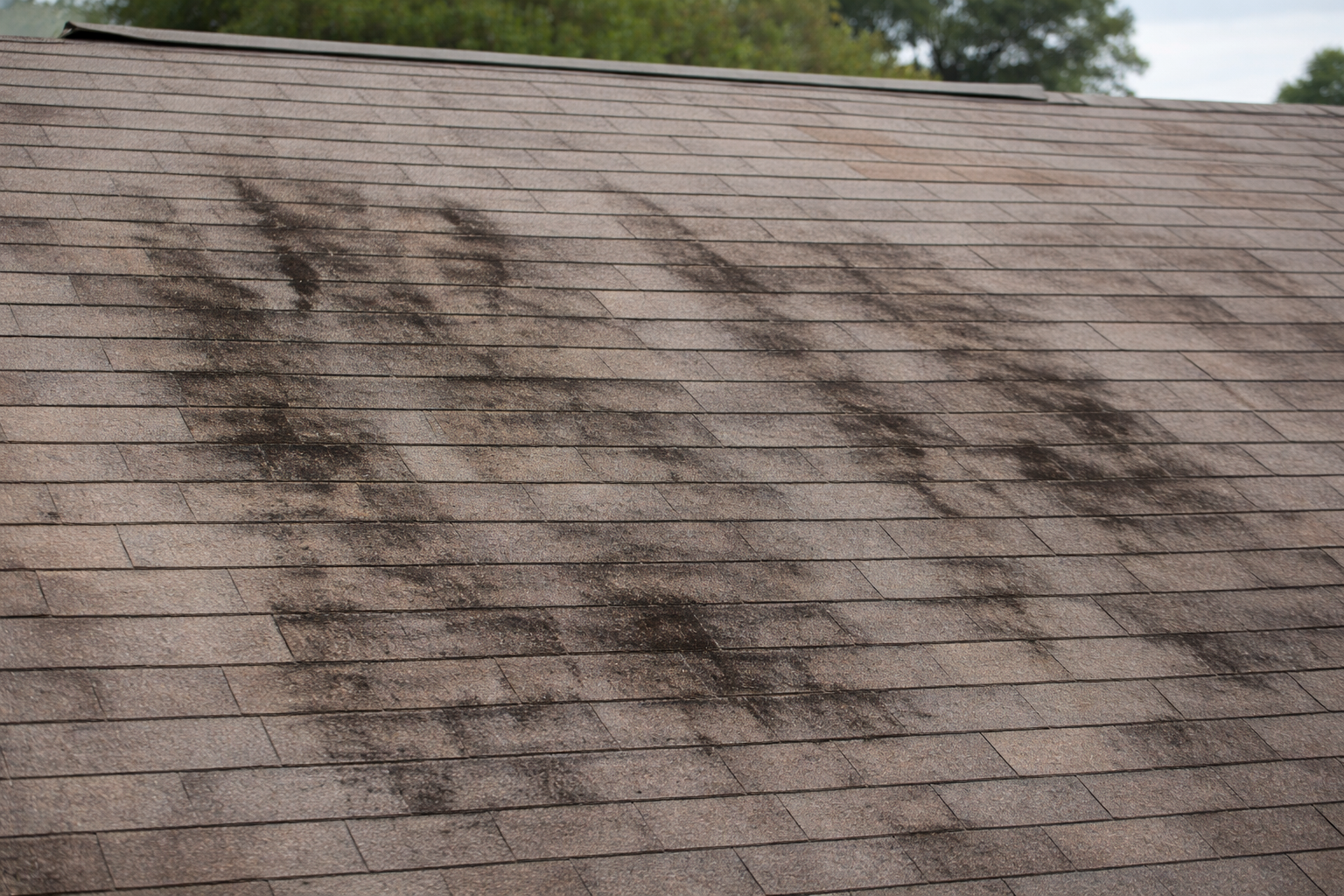
You find shingle pieces in the yard or a tab that’s suddenly flapping, and now you’re stuck in the worst in-between: you don’t want to ignore it, but you also don’t want to get stampeded into “you need a whole new roof” and a rushed insurance claim. On an aging asphalt shingle roof, asphalt shingle wind damage can cause real, functional problems even when the roof still looks mostly intact from the driveway. The key is knowing what signs change how the shingle system performs, and what patterns point to wind versus age or an install issue that’s been there for years.
In this guide, you’ll learn the three functional wind-damage signs that matter most (and why “liftable” tabs alone can be a gray zone), where problems tend to appear first, and how to document what you see without creating more damage or muddying a potential claim. That keeps you focused on evidence that predicts water entry. You’ll also get a practical way to ask for proof during an inspection, plus a decision framework for whether repair, rejuvenation, or replacement makes the most sense for your roof and your deductible math.
Wind Damage Roof: The 3 Functional Signs
You can look up after a blow and see a roof that’s “mostly fine,” then find out months later that the real failure was invisible from the driveway. You’re looking for damage that changes how the system sheds water and resists the next gust.
To separate storm-created damage from age that’s finally showing, prioritize indicators that alter shingle adhesion and water-shedding. Cosmetics alone can’t tell you that. The mistake is thinking “no shingles missing” means “no real damage,” and that kind of driveway diagnosis doesn’t belong anywhere. For a sanity check, treat it like a product test: verify functional failure rather than judging appearance. A roof can look mostly intact and still have lost the adhesion that gives it wind resistance.
| Functional sign | What it looks like | Why it matters |
|---|---|---|
| Crease (fold) lines | Sharp bend/wrinkle where a tab lifted and got pushed back down; often a horizontal line a few inches above the tab cut, sometimes with granule loss on the fold | Indicates a lift-and-slam event that can compromise shingle performance and water-shedding at that spot |
| Flipped tabs | Tabs bent upward/backward that don’t lay flat again; often starts near ridges, hips, and rakes | Creates an opening vulnerable to further wind action and potential water entry, especially near edges/ridges |
| Torn or broken seal strips | Adhesive bond separated, sometimes without an obvious missing piece | Reduces adhesion (wind resistance) even if shingles aren’t missing, making future blow-offs more likely |
“Liftable” edges or curling alone can be ambiguous because age and heat-cycling can weaken seals too. What you can do differently: during a contractor or adjuster visit, ask for a hands-on seal integrity check in multiple spots and get close-up photos of any creasing or torn seals, especially near edges and ridges.
Where Wind Damage Shows First
A neighbor replaces random shingles in the middle of the roof, but the next gust peels more off because the weak points were never there. Start where roof damage from high winds most often gets leverage, then work inward.
-
Rakes and eaves (edges)
-
Ridges and hips
-
Starter course/first few rows
The Gray Zone: Wind vs. Aging or Install Issues

You can get pushed into the wrong next step when someone labels every liftable tab as “wind damage,” so take it with a grain of salt. Treat the roof like a crime scene, and follow the pattern evidence. Because gusts shift direction and pressure, wind damage often shows up as isolated failures like creases, flipped tabs, and torn seals that don’t form a neat line. In contrast, when shingles look uniformly a little loose across a whole roof face, you may be looking at age-related seal-strip fatigue or heat-cycling. You may also be looking at an installation detail that never let the shingles bond well in the first place.
To illustrate this, imagine a 17-year-old architectural shingle roof in coastal North Carolina that “held fine” until a squall line. Afterward, a contractor points to widespread liftability and says it’s storm damage. But if you don’t find distinct crease lines or flipped tabs, and the looseness feels consistent from the field up to the ridge, the more likely story is that adhesion has been declining for years. That distinction matters because insurance typically wants storm-created functional damage, while maintenance options aim to stabilize a system that’s been declining over time.
What to do differently: during the inspection (or adjuster visit), ask them to show and photo-document (1) where the seal actually broke (torn/broken seal strips), and (2) whether the pattern starts at edges/ridges and works inward or shows up evenly everywhere. If they can’t tie the problem to specific functional failures and a wind-like pattern, you should pause before filing a claim or signing anything that treats a whole-roof replacement as the only outcome.
Uniform liftability across a whole roof plane is often a sign of normal aging and seal-strip fatigue rather than a single storm-created failure. Read more in our article: Normal Shingle Wear Vs Damage
A Safe, Fast Inspection Flow
If you do this carefully, you’ll get usable evidence from a wind damaged roof inspection and a clear urgency read without taking a fall or cracking brittle shingles. A calm 10 minutes from the ground can save you a chaotic week of guesses.
You don’t need to climb onto an asphalt shingle roof to get useful information, and doing so right after a wind event is a bad idea. If NOAA or National Weather Service alerts are still active, stay off the roof. Instead, spend 10–15 minutes capturing clear, safe photos and notes that let you gauge urgency.
1) Inside first: check ceilings, attic (if accessible), and around vents/chimneys for fresh stains or damp insulation. 2) Walk the perimeter: look for tabs in the yard, exposed black mat, or a line of disturbance along rakes, eaves, and ridges. 3) Use binoculars or your phone zoom: take wide shots of each roof face plus close-ups of any crease lines, flipped tabs, or exposed nail heads from the ground. 4) If you see open decking or active leaking: do temporary mitigation (like a tarp). Then call for a same day roof inspection with photos the same day.
A professional roof inspection typically includes documentation of penetrations, flashings, and edge details that are hard to evaluate accurately from the ground. Read more in our article: Roof Inspection Wilmington Nc
How to Document Without Harming a Claim
One well-intended “test” can turn a clean storm timeline into an argument about whether you caused the damage. The safest approach is to preserve the story first, then protect the inside.
Your goal is to capture the roof’s condition as you found it while still preventing a roof leak after wind storm conditions worsen inside. If you start lifting tabs, smearing sealant, or “testing” shingles yourself, you can turn a clear wind story into a he said, she said fight. Don’t turn a clean timeline into a dispute by creating new damage while you investigate.
Take wide photos of each roof face from the ground, then zoom in on specific functional signs (crease lines, flipped tabs, torn seal areas), plus any debris in the yard that matches your shingle color. Write down the date/time of the wind, save weather alerts, and keep any receipts for temporary mitigation (like tarping). What to do differently: do only minimal, reversible protection and don’t discard broken tabs or pieces until the adjuster or roofer has seen and photographed them.
Ask for the Seal-Integrity Hand Test

ASTM D3161’s top “F” wind classification is associated with surviving 110 mph winds for two hours (as summarized by the Insurance Institute for Business & Home Safety (IBHS)), but that assumes the seal bond is doing its job. When adhesion is compromised, the roof can start losing the fight in much lower gusts.
On-site, have the roofer or adjuster demonstrate a seal-integrity hand test by checking several tabs and showing, with photos, where the seal strip is bonded and where it’s broken. Because wind ratings assume adhesion holds, weakened bonding can let failures start at much lower gusts, and anyone skipping that nuance isn’t giving you a real assessment. If someone is echoing Nextdoor panic instead of showing torn seals, slow the conversation down.
Be specific: have them test and photo-document a few spots at rakes/eaves and the main field, then note whether failure clusters at edges and works inward. If they won’t test, or they only talk about “it’s liftable” without showing torn seals or crease lines, you should rethink any push toward a claim or full replacement.
Repair, Rejuvenate, or Replace, How to Choose
Make the call with one question: is the roof still a coherent system, or has it entered a “every storm peels more off” phase? If you have to play it by ear after every gust, you are already bailing water from a leaky boat. If you have isolated functional wind damage (a few crease lines/flipped tabs/torn seals, mostly near an edge) and the surrounding shingles still feel well-bonded, lean wind damage roof repair to stop water entry fast.
If the roof is aging but intact and the issue is broad seal-strip fatigue without clear storm-created creasing, consider roof restoration vs replacement thinking and choose rejuvenation to stabilize and extend service life when replacement isn’t necessary. If you have active leaking, exposed decking, repeated tab loss each wind event, or brittle shingles that crack when handled (common in the 15–20 year range), skip the patch mentality and plan on replacement.
A restoration-versus-replacement decision gets clearer when you compare remaining shingle flexibility, granule loss, and how quickly damage is spreading from edges. Read more in our article: Roof Restoration Vs Replacement
Insurance Math That Changes the Answer
A homeowner files because it feels obvious, then realizes the check barely clears the wind deductible after weeks of inspections and paperwork. The numbers can flip the “smart” move fast, even when the damage is legitimate.
Before you treat wind damage as an automatic insurance play, run the deductible math for a storm damage roof insurance claim, because it can erase the payout even when the damage is real and “free roof” chatter is often sales talk. Even Angi leads do not change your deductible. Many coastal policies use a percentage-based wind/hail deductible (often 1–3% of the insured or replacement value), not a flat $500. For instance, if your home’s replacement value is $300,000 and you have a 1% wind deductible, you’re covering the first $3,000. If your roof needs a few targeted repairs and a small section of shingle replacement that lands near that number, filing can turn into weeks of appointments for little financial upside.
Timing and payout type can tighten the squeeze further: with an older roof you may see actual cash value (ACV) up front and depreciation held back until work is completed (vs replacement cost value (RCV)). What to do differently: pull your declarations page and confirm your wind deductible and settlement type, then ask the adjuster or roofer, “What’s the estimated covered amount after my wind deductible, and when would any depreciation be released?”
What to Ask a Wilmington-Area Roofer
You don’t need to “know roofing” to run a good roofer conversation. You just need to ask questions that force specifics, because the quickest way to get steered into a full replacement is to stay at the level of vague storm talk. Batten down the hatches and demand receipts, not vibes.
Ask these and listen for clear, photo-backed answers:
-
Can you show me photos of crease lines, flipped tabs, and torn seal strips, and mark where they are on each roof face?
-
Will you do a seal-integrity hand test at edges/ridges and in the field, and tell me what percentage of tabs are actually unsealed?
-
Where is the damage concentrated, and does it follow an edge-to-interior pattern or look uniform? What does that suggest?
-
If you recommend repair, what’s the exact scope (count of shingles/tabs, starter/ridge involvement), and what’s the risk of adjacent shingles cracking on a 15–20 year roof?
-
Are you pulling permits if needed, and are your materials and fastening approach appropriate for coastal wind exposure here?
-
If replacement isn’t necessary, what lower-waste options do you offer to extend roof life, and how will you document results for my records?
FAQ
How soon should you get a roof inspected after a wind event?
If you have missing shingles, exposed black mat, or any interior staining, treat it as same-day urgent. If you don’t see leaking but you do see crease lines or flipped tabs near edges/ridges, book an inspection as soon as schedules allow because the next gust can turn “damage” into “water entry.”
Should you tarp the roof, and will insurance cover it?
If water can get in (missing sections, exposed decking, or an active leak), tarping is a reasonable temporary mitigation step, and many policies reimburse reasonable mitigation when documented. Keep photos before and after the tarp and save the invoice or materials receipt.
What if you don’t see a leak, but you found shingle pieces in the yard?
Don’t wait for a ceiling stain to confirm a problem because wind damage often starts at rakes, ridges, and starter courses where small openings don’t show inside right away. Take photos of the debris and the roof areas you suspect, then schedule a proper on-roof inspection with close-ups.
Can you safely DIY a “quick fix” with roof cement or by lifting tabs?
Avoid lifting tabs or smearing sealant as a first move, since you can crack brittle shingles and muddy the story of what the wind did versus what handling did. If you need immediate protection, use a reversible approach like a tarp and let a roofer document the functional damage (creases, flipped tabs, torn seals).
When should you call your insurance company versus just a roofer?
Call a roofer first when the likely scope looks below your wind deductible or the issue seems localized, so you can get a documented estimate and decide with real numbers. If you have widespread functional damage, active leaking, or repeated losses after each storm, start the claim process soon, but don’t let “free roof” talk replace an inspection and deductible math.
Roof not getting any younger? Contact us or call 703-673-6301 to find out where you stand.