You’re seeing black streaks on your shingles and wondering if they’re burning through your roof’s lifespan. Usually, no: algae staining is mostly cosmetic and doesn’t quickly “eat” asphalt shingles. The bigger ways it shortens roof life are indirect, like trapping moisture when moss moves in or triggering an aggressive cleaning that strips protective granules.
If you’re in Wilmington or elsewhere along coastal North Carolina, you’re in prime conditions for algae and other growth to show up early and look dramatic, especially on lighter shingles. This guide separates harmless staining from true wear signs, such as heavy granules at downspouts and curling. It also points you to next steps that protect the roof rather than speeding up wear.
When Black Streaks Are “Mostly Cosmetic”

Most black streaks you see on asphalt shingles in humid coastal areas like Wilmington are roof algae staining, and in many cases it’s an appearance problem more than a “your shingles are getting eaten” problem. Manufacturers and industry guidance often treat this as discoloration (gloeocapsa magma), which is why you’ll see algae-specific warranty language focused on staining windows rather than on premature shingle failure (see Professional Roofing’s discussion of algae on asphalt shingles).
The bigger mistake is letting the look of streaks convince you the roof must be wearing out faster. Can we do a quick sanity check? What often shortens shingle life isn’t the stain itself, but what you do next, like pressure washing or scrubbing that knocks off protective granules, because those granules are the roof’s raincoat. From the ground, focus on texture and granule loss at the downspouts, not the color of the streaks.
In coastal North Carolina, salty air and persistent humidity can also speed up certain forms of shingle aging, which is why it helps to separate staining from true material wear. Read more in our article: Salt Air Humidity Shingles
What Makes Shingles Wear Faster

You can have a roof that looks ugly for years and still performs fine, or a roof that looks “freshly cleaned” and starts aging fast. The difference is usually what’s happening to the granules and edges, not what color the surface looks from the street.
Shingles usually “wear out” when the asphalt layer and fiberglass mat lose protection and flexibility, and the fastest way there is simple: you lose granules. They shield the asphalt below from UV and abrasion, which helps prevent early cracking. That’s one of the most useful signals for homeowners. Case in point: if you rinse your gutters and find a peppery pile of granules at the downspout splash block (not just a few specks), that’s a wear signal. Black streaks can sit on top of a roof for years without creating that kind of loss.
Heat cycling does the next chunk of damage. In Wilmington, daily temperature swings repeatedly expand and contract the shingle. That cycle drives brittleness over time. Algae can make a roof darker and hold more heat in the surface layer, but you’ll get burned if you treat “darker-looking roof” as proof the shingles are failing. Instead, rely on physical evidence like widespread curling and cracking.
Moisture becomes a wear accelerant when it doesn’t dry out. The practical takeaway is this: damp areas are where staining can turn into moss or lichen. When shade or overhanging trees keep areas damp, staining can turn into moss or lichen growth. Think of it like leaving a wet towel on a deck.
Granules collecting at downspouts can be normal in small amounts, but a peppery pile is often a more meaningful wear signal than staining alone. Read more in our article: Leftover Granules Gutters It can lift edges and trap debris. At that point it matters because it changes moisture and debris behavior on the shingle, not because a thin stain line is consuming the roof.
Roof moss vs algae (and lichen): The Risk Jump
Algae can be more than a cosmetic annoyance without being a shingle-destroyer. One cited finding links algae buildup to about a 40% drop in roof reflectivity, which changes heat behavior even when the material is still intact (as summarized in this RoofPredict writeup referencing ORNL findings).
| What you’re seeing | Typical look on shingles | What it usually means for roof life | When to act |
|---|---|---|---|
| Algae | Flat black streaks following runoff; no thickness | Mostly cosmetic discoloration | Act mainly for curb appeal or if you suspect it’s texture/growth |
| Moss | Green, fuzzy clumps (often in shade/north slopes/under trees) | Can trap moisture and lift edges; higher wear risk | Book an inspection/maintenance when clumps appear |
| Lichen | Crusty pale or gray-green patches that seem bonded | Can hold moisture and trap grit; higher wear risk | Book an inspection/maintenance when crusty patches appear |
| Risk jump cue | Texture (raised clumps/crust) vs just color | Texture increases moisture/debris retention and edge lifting risk. Raised texture is a strong reason to act. | If it looks raised, tufted, or debris is collecting, get it looked at, even if Nextdoor says it’s “normal” for the neighborhood |
The biggest danger is the cleaning method

Roof damage often starts when you try to erase streaks quickly for a showing, inspection, or insurance photo. The problem is that the fastest way to “win” the appearance battle can cost you years of service life.
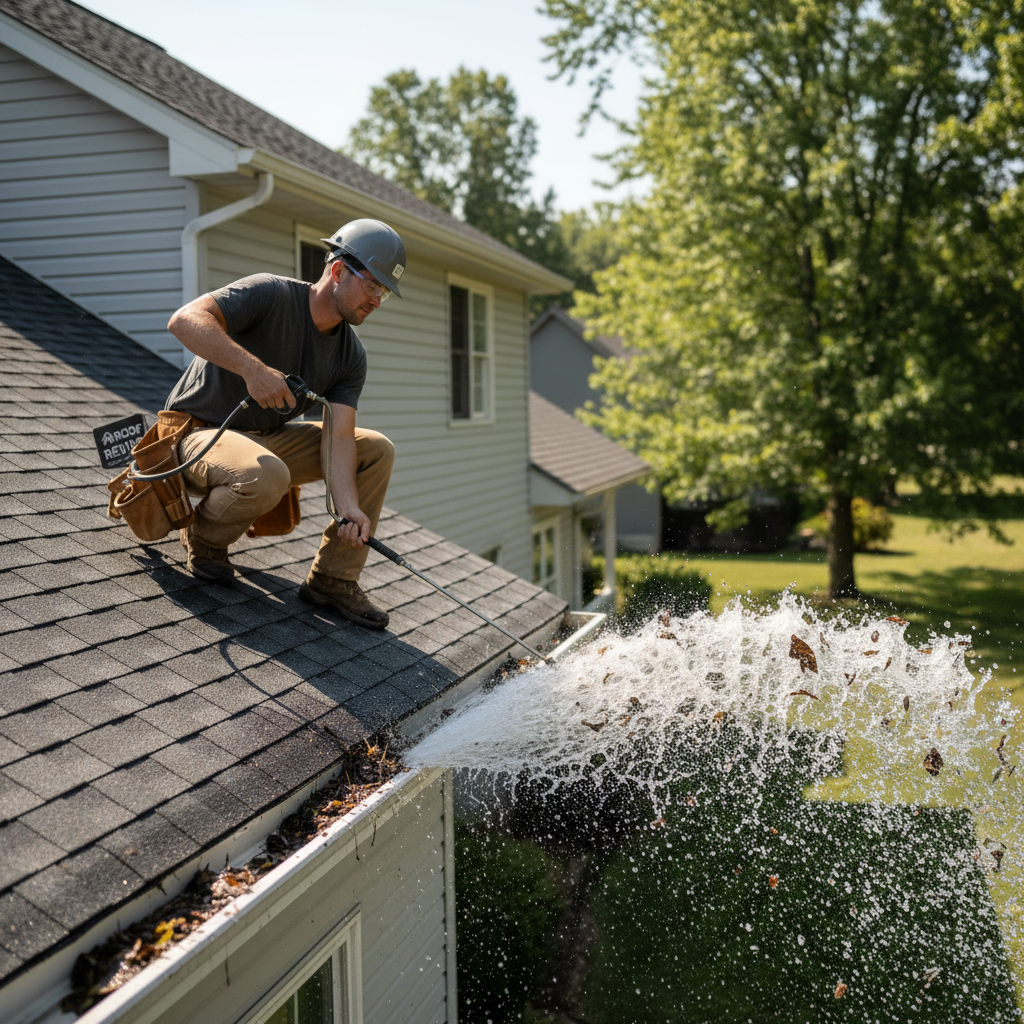
Black streaks usually shorten shingle life only indirectly, by nudging owners toward aggressive cleaning that removes the protective surface. I’m not trying to throw good money after bad. Asphalt shingles rely on embedded granules and factory-applied sealant strips to take UV exposure and weathering. A pressure washer or stiff brush approach (is pressure washing bad for shingles) can strip granules, loosen the adhesive bond between tabs, and shorten the roof’s remaining life, like sandblasting the finish off something that was protecting it (ARMA’s Residential Asphalt Roofing Manual warns against damaging cleaning methods).
That’s why industry guidance puts more emphasis on how you clean than what is growing. “Safer” cleaning looks boring: a chemical treatment intended for asphalt shingles, applied gently, allowed to dwell. Then it’s rinsed gently to avoid mechanically eroding the surface. Avoid shortcuts like high-pressure washing from the ridge down or abrasive brushing because you can trade a cleaner-looking roof for accelerated granule loss and early brittleness.
The safest way to improve curb appeal is usually a low-pressure, shingle-safe approach that avoids stripping granules and loosening tabs. Read more in our article: Safe Roof Cleaning
To illustrate this, imagine you’re trying to calm a home-inspection comment or an insurer photo request and you rush a Saturday cleanup. The roof may look better by Sunday, yet after the next heavy rain you might notice extra granules at the downspout and tabs that don’t lie flat. The streaks didn’t wear out the roof, the cleaning did. Before you clean, ask yourself one question: do you care more about the roof looking uniformly dark today, or about keeping its protective surface intact for the next five years?
Decide Your Next Step In Wilmington, NC
If the roof is under ~15 years old and you’re only seeing flat streaks (no clumps and no curling), you can often leave it alone or choose a gentle, shingle-safe treatment for curb appeal. Don’t let the darker pattern push you into a “like-new” wash that trades years of service life for appearance. That upsell is rarely worth it.
Book an inspection if you see raised moss/lichen or lots of granules at downspouts, or you’re near the end of the roof’s expected life (often 20–25+ years here). Let’s get a second set of eyes on it. If streaks keep returning, ask about zinc or copper strips at the ridge for algae prevention. If you’re weighing maintenance versus replacement, sanity-check it against your Zillow or Redfin estimate too.
Roof not getting any younger? Contact us or call 703-673-6301 to find out where you stand.If it keeps coming back, our roof algae treatment in Wilmington treats the cause, not the symptom.