Will this help with the black streaks and the faded look from the coastal sun? It can remove black streaks in many cases. It usually can’t restore true sun fade.
If you’re in Wilmington or near the beach, that split matters. Humidity-driven streaking often responds to the right kind of roof cleaning, but UV and salt air can weather shingles like sandpaper on a porch rail, so you can’t just kick the can down the road with another wash. In the sections below, you’ll learn how to tell which problem you’re seeing from the ground and what results you can realistically expect from soft-wash style cleaning or roof rejuvenation. You’ll also learn when you’re better off saving your money and planning a replacement.
Black Streaks vs Sun Fade: Two Problems

You can spend money on the wrong fix and still be staring at the same roof a week later. The fastest way to get this right is to diagnose whether you are looking at living growth or literal shingle wear.
Black streaks and a washed-out look feel like the same issue, but they’re usually two different roof problems—often roof black streaks caused by algae. Those streaks are usually living growth, often attributed to Gloeocapsa magma, that feeds on shingle components and leaves dark trails. A proper roof cleaning helps by killing and rinsing the growth rather than trying to “scrub dirt” away. In humid, salty coastal air, it can also come back, so expect maintenance and not a forever fix.
The faded, weathered look is often roof discoloration from sun and salt-driven wear: granules loosen and color thins out. Cleaning can make a worn roof look less grimy, but it can’t put granules back or restore the original factory color. If you treat sun fade like a stain, it’s six of one, half dozen of the other: you’re repainting the fence while the wood rots underneath.
A quick reality check: if the “problem” looks like dark lines running down from higher areas, that points to biological streaking; if you see bald spots or lots of granules in gutters, you’re looking at wear that cleaning won’t reverse.
In coastal climates, algae can regrow faster after a cleaning, so preventing streaks is often about reducing the conditions that let it take hold. Read more in our article: Roof Algae Black Streaks
What Removes Black Streaks Reliably
A soft wash can look underwhelming at first, then suddenly “work” after you stop watching it. It is common for the visible improvement to keep developing over the next 24–48 hours as dead growth loosens and weathers off.
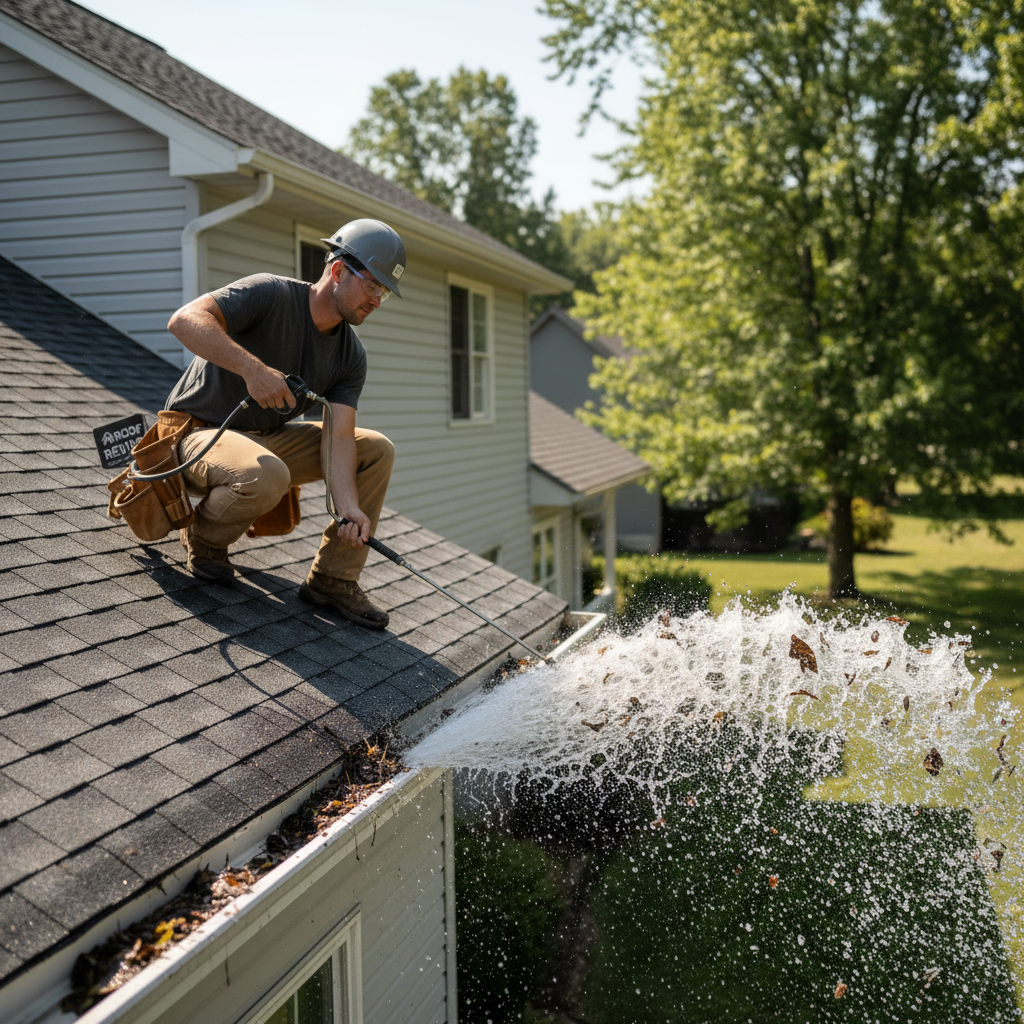
Black streaks disappear reliably—black streaks on roof removal works—when you kill the organism causing them and let it rinse off, not when you “work the stain” with pressure or aggressive scrubbing. In practice, that points you toward low pressure roof cleaning with a soft-wash style treatment that applies a cleaner to do the biological kill, then relies on gentle rinsing and normal weather to carry the dead growth away. Judging a job by how hard someone scrubbed is a bad idea. It is the fastest way to trash good GAF Timberline shingles.
“Done” also doesn’t always mean the streaks look perfect the minute the crew leaves. As an example, it’s common for the roof to keep looking better over the next 24–48 hours as the dead staining continues to loosen and wash away with rinsing and the first bit of rain.
When “faded” Is Cleanable vs Permanent

Some “fade” is just a dirty, gray film that makes your roof read chalky in bright coastal sun. If the color looks more even when it’s wet (right after rain or morning dew) and then goes washed-out again when it dries, you’re often seeing surface grime or light biological staining that cleaning can noticeably improve.
Permanent fade looks like material loss from UV damage to asphalt shingles, not a coating on top. Bald patches or heavy granule loss at downspout exits mean a wash won’t bring the color back. In that case, you’re deciding how much cosmetic improvement is realistic before you spend money chasing a “like-new” look.
Salt air and humidity don’t just stain shingles—they can accelerate aging and make maintenance cycles shorter near the beach. Read more in our article: Salt Air Humidity Shingles
Roof Rejuvenation: What It Can and Can’t Do
Roof rejuvenation is a different tool than roof cleaning: it’s typically an asphalt shingle rejuvenation spray-on, oil-based treatment meant to recondition aging asphalt shingles so they stay more flexible and resilient. You should be skeptical of 5–7 year promises you’d only verify later on Angi. That can make sense if you’re trying to delay a replacement on a roof that’s aging but still fundamentally intact.
What it can’t do is reverse material loss. Once granules are gone and the surface is worn thin, rejuvenation won’t “re-dye” the roof or replace what’s been lost. Case in point: if your gutters and downspout exits keep collecting a lot of granules, you’re past the point where any spray treatment can make the roof look factory-new, so you should judge rejuvenation by added time and not a perfect cosmetic reset.
If you’re comparing treatments versus budgeting for a new roof, the most important question is how much time you’re realistically buying before replacement. Read more in our article: Roof Rejuvenation Vs Replacement
Decide Your Next Step in Wilmington
A homeowner in Wilmington books roof cleaning Wilmington NC to help curb appeal, then notices granules piling up at the downspout and realizes the roof is aging, not just dirty. One clear next step beats a cycle of cosmetic fixes that never quite stick.
If your goal is “make it look better without buying a new roof,” pick the next step based on what’s happening to the shingles, not what turns the place into a money pit from the curb.
| Best next step | When it fits | What to expect |
|---|---|---|
| Cleaning only | Obvious black streaking but shingles still look intact (no widespread bald spots; no heavy granules dumping at downspouts) | In Wilmington’s humidity, improvement usually isn’t permanent; budget as a roof maintenance plan, often every 2–3 years |
| Clean + rejuvenate | Roof is aging (roughly 10–25 years) but not failing; you’re trying to buy time | Commonly $2,000–$5,000 depending on size/condition; vendors often position about 5–7 years of added service life per treatment; won’t “re-color” areas where granules are already gone |
| Plan replacement | Brittle or cracked shingles, frequent granule piles, bald patches, or you’re already chasing leaks | Cosmetic resets can feel cheaper, but can become an expensive way to delay the inevitable |