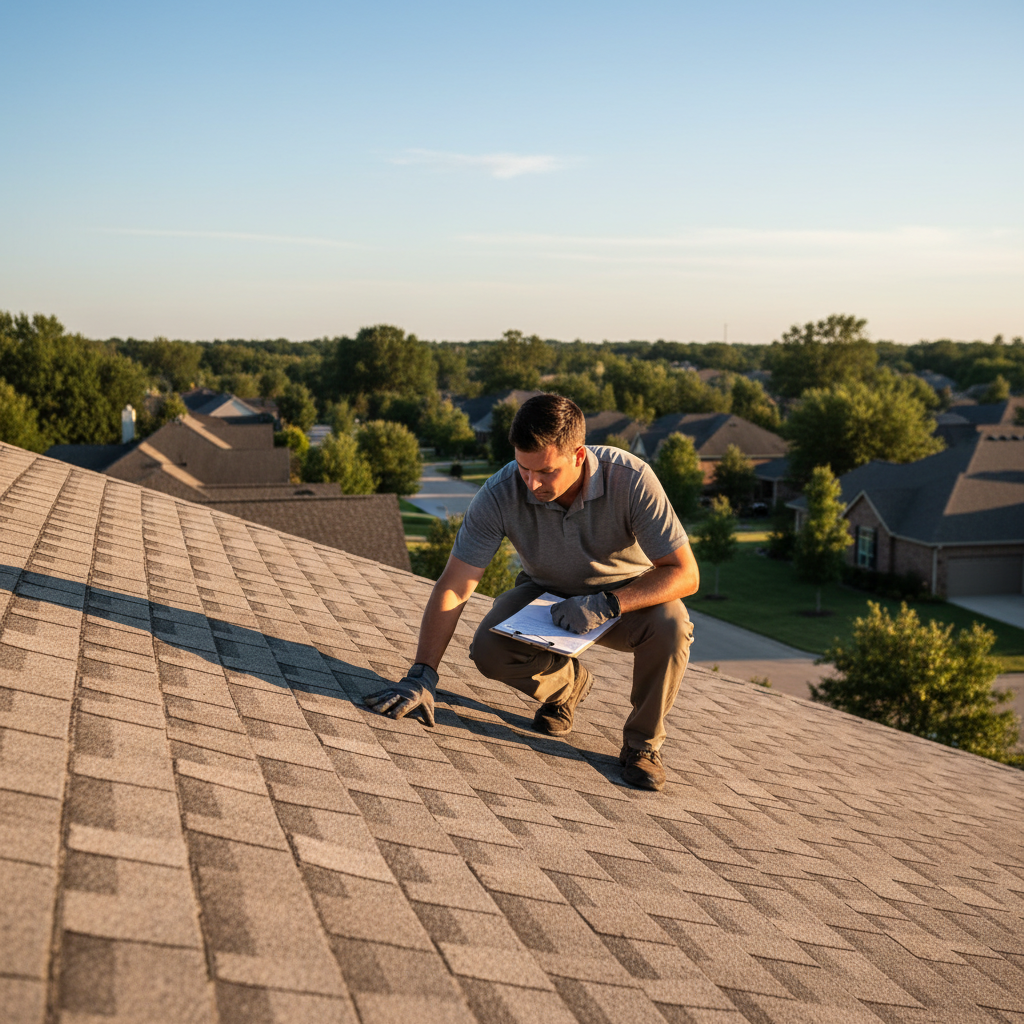
You’re about to approve a roof cleaning or “rejuvenation” service, and one question matters: will it mess with your shingle warranty or your homeowners insurance.
It can, but not in one simple yes-or-no way. Your shingle manufacturer and your insurance carrier follow different rules and can make decisions that don’t line up with each other. A product that seems like basic maintenance can still trigger “non-approved materials” language in a warranty review, while your insurer may focus almost entirely on roof age and visible condition at renewal, then treat later problems as wear and tear instead of storm damage. This article explains how to treat warranty and insurance as two separate risk tracks and what to confirm in writing before any product touches your shingles.
The Two Risk Tracks (Warranty vs Insurance)
You’re not protecting one thing when you treat or clean an asphalt shingle roof, you’re protecting two separate outcomes that don’t coordinate with each other. Manufacturer warranty risk is about whether the shingle maker will still honor a future claim for a defect, and that can hinge on whether you applied a non-approved material or used a method they consider a modification rather than routine maintenance in a shingle warranty roof treatment.
Insurance risk is about whether your carrier will write or renew the policy and how they’ll settle a roof-related loss (replacement cost vs actual cash value, exclusions, higher deductibles), often driven by roof age and documented condition in places like Wilmington and nearby beach communities.
| Track | What they decide | What they focus on | Common trigger with rejuvenation/cleaning | Best proof to keep |
|---|---|---|---|---|
| Manufacturer warranty | Whether they’ll honor a future defect claim | Approved vs non-approved materials/methods; whether the work is seen as alteration vs maintenance | Product behaves like a coating/resaturant/rejuvenator and isn’t explicitly approved for your shingle line | Manufacturer’s written approval for the specific product + method; dated photos; paid invoice showing scope/method |
| Homeowners insurance | Whether they’ll write/renew and how a roof loss is settled | Roof age and visible condition at renewal; at claim time, sudden damage vs wear and tear; RCV vs ACV terms | Roof still reads as worn at inspection; later issues treated as wear and tear rather than storm damage | Policy roof terms confirmed in writing; dated before/after photos; paid invoice/work order; documentation of what was done |
A roof can stay “warranty-eligible” and still get underwriting pushback, so read the fine print. Underwriting grades roofs like a report card, not a vibe check.
Handle these as two separate decisions you document in writing. Get the manufacturer’s position and your policy’s roof terms in writing, then file dated photos and the paid invoice to show what was done and when.
When Roof Rejuvenation Can Void a Shingle Warranty

You usually find out you crossed the warranty line only when you try to file a claim. You find out months later, when a defect claim becomes a paperwork review and the first question is what touched the shingles.
Roof “rejuvenation” can cross the line from maintenance into an alteration, and manufacturer warranties are brutally unforgiving about that impact. Even the Better Business Bureau (BBB) cannot talk a manufacturer out of their own warranty language. If a contractor applies a product that behaves like a coating/resaturant/rejuvenator (not just a rinse), your shingle brand must explicitly approve it because a roof coating voids warranty. Otherwise, you hand the manufacturer a clean reason to deny a later defect claim.
The other miss: people fixate on pressure, but the mix matters as much as the method. An overly caustic solution or repeated aggressive treatments can fall under “non-approved materials or applications” or “alteration” language. Before you schedule, get your shingle brand’s written stance on the exact product and process.
A documented inspection before any treatment makes it much easier to prove roof condition if underwriting questions the roof or a future claim turns into a wear-and-tear dispute. Read more in our article: Typical Roof Inspection
Get Manufacturer Approval in Writing
A homeowner gets a friendly “you’re fine” from the contractor, then the manufacturer asks for the product name and application steps on paper. That disconnect is where warranty claims get denied.
Don’t let the contractor be the “source” of warranty permission, so you don’t give them an out later for roof rejuvenation manufacturer approval. The highest-leverage move is to email your shingle manufacturer (or use their warranty portal) and ask if the specific product and application method you’re considering is approved for your exact shingle line. Treat contractor reassurance like letting the fox guard the henhouse. ARMA’s guidance to contact the manufacturer before applying rejuvenators is a hint: they treat this like a warranty-relevant modification.
To get an answer you can rely on, include your shingle brand and product line (if known) and the install year. Add a few clear roof photos and the product name plus label/SDS. Save their written response with your roof records.
How Insurers May React to the Work

You want renewal to feel routine, not like an unexpected negotiation after a photo inspection flags “poor condition.” The easiest way to keep control is to think like an underwriter and a claims adjuster before anyone shows up, focusing on insurance underwriting roof condition.
Insurers usually won’t care that you “rejuvenated” a roof in the way a manufacturer does, but they will react to what they can verify: roof age and visible condition. In coastal North Carolina, carriers commonly use photo or drone-style inspections at renewal, and a roof that still reads as worn (granule loss, curling, exposed fiberglass, prior patchwork) can trigger stricter terms even if it’s not leaking.
At claim time, the bigger trap is thinking maintenance changes coverage, and it is a mistake people keep paying for. If a storm hits later, the adjuster still separates sudden damage from wear and tear, and most carriers default to “wear and tear” if your documentation is thin under an insurance wear and tear roof exclusion (see NAIC homeowners insurance guidance). The NAIC homeowners insurance guides lay out the same logic in plain English. What you can do that genuinely helps is keep dated before-and-after photos and the paid invoice/work order. Then you can show underwriting or a claims reviewer what condition existed before the work and what was actually done.
Insurers and adjusters often use the same core test: is the problem normal aging or sudden storm-related damage. Read more in our article: Normal Shingle Wear Vs Damage
The Documentation That Protects You Later

After a storm, two neighbors file claims and only one can show dated photos, a clear work order, and exactly what was applied. The one with the file gets fewer questions and faster answers.
If there’s ever a warranty question or an insurance renewal or claim dispute, nobody will care what you were told on the driveway. They’ll focus on evidence: the roof’s condition before the job and the materials used. This is where a “simple cleaning” turns into a paperwork problem if you don’t cover your bases. A complete paper trail is a seatbelt, not a luxury.
Before you schedule, require dated before-and-after photos (or a drone/photo inspection report) and a paid invoice/work order that states the scope. Also require the exact product name plus SDS/tech sheet and proof of the contractor’s liability insurance. Keep it all in one folder so you can quickly answer, “Was this pre-existing wear, or did something change after the service?”
If you’re trying to protect warranty and insurance at the same time, the safest move is to match the service to what the manufacturer and your carrier will recognize as reasonable roof work. Read more in our article: Roof Work Insurance Resale
A Simple Go/No-Go Checklist Before You Book
Skip this decision gate and you’re relying on a future warranty rep or insurance reviewer to agree with you, which is a bad bet with a carrier like State Farm. They won’t, and you’ll be the one stuck proving what happened.
Go (book it) only if you can say yes to all three: you have the shingle manufacturer’s approval in writing for the exact product and method (or your warranty is already expired and you’re okay with that), and your agent confirms in writing what your policy does with an older roof (RCV vs ACV, roof exclusions, wind/hail deductibles). You will also receive a clean paper trail (dated before/after photos, paid invoice with scope, product/SDS, and the contractor’s liability insurance).
No-go (pause) if any answer is no: no manufacturer approval means you’re accepting a real chance of a denied defect claim later; no clear roof settlement terms means you may be surprised by depreciation or exclusions at claim time; no documentation means you’re making renewal or claim conversations harder than they need to be. In any of those cases, don’t schedule until you change the method/product or get the missing confirmation in writing.
Roof not getting any younger? Contact us or call 703-673-6301 to find out where you stand.