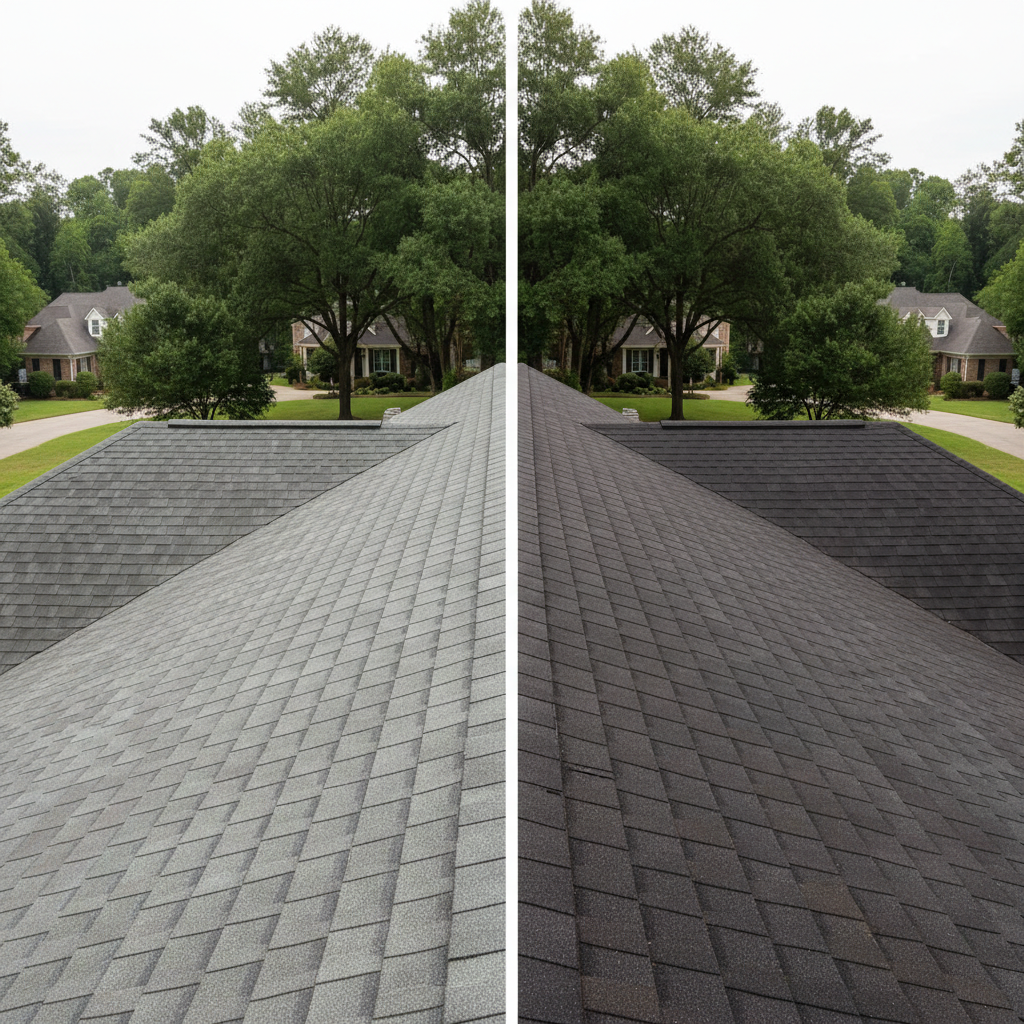
Your roof can look fine from the driveway and still wear out faster near the water. Humidity keeps materials from drying, and wind drives salty mist into seams until shingles turn brittle. Together, they speed granule loss and corrosion, often starting at flashing and penetrations.
In Wilmington and nearby beach communities, that same mix can make a “25-year” shingle roof a paper number more than a real timeline. Meanwhile, two homes just a few streets apart can end up on very different roof timelines. In the sections ahead, you’ll see what each factor does to asphalt shingles and where early failures usually show up, so you can decide whether you’re in inspection and rejuvenation territory or it’s time to plan for replacement.
Why Coastal Roofs Age Faster

Coastal roofing guides often describe severe marine exposure as aging roofs roughly 2 to 3 times faster than comparable inland installs (FEMA coastal corrosion guidance). If your roof’s timeline has felt “too short for the label,” that mismatch is usually the environment, not your imagination.
Near the water, salt air roof damage means your roof doesn’t just get wet. It stays coated in a thin salty film that keeps working between storms. High humidity slows drying, so salt stays active on shingles and especially on metal flashings and fasteners. Then the sun bakes the surface, speeding oxidation, and repeated wet-to-dry cycles help shed granules faster than the same shingles farther inland.
Wind adds everyday punishment: it lifts shingle edges and drives salty mist into laps and penetrations. If you’re only scanning for missing shingles after big storms, you’ll miss the slow failure pattern at edges and flashing, and that storm-only mindset is just bad maintenance, not This Old House.
Humidity: The Silent Multiplier
In Wilmington’s coastal air, humidity isn’t just “damp weather”; it keeps your roof from drying out. When shingles and seams stay wet longer, algae takes hold more easily, and that salty film stays active instead of drying inert. The result is faster wear that doesn’t always show up as missing shingles.
More importantly, humid, salt-laced moisture tends to go after the functional weak points before the shingle field shows much change (FEMA coastal corrosion guidance). It hits nail heads and flashing edges. If you only judge roof health by how the shingle field looks from the driveway, it can be good from far, but far from good, and salt-laced moisture gets into the details. A smart next step is checking those metal and penetration areas after long humid stretches, not just after storms.
In coastal areas, salt-laced humidity often makes metal edges, fasteners, and flashing show trouble before the shingle field does. Read more in our article: Salt Air Roof Rust
Wind Near the Water: Lifting, Grit, and Granule Loss

After a breezy week, someone may swap one “perfectly good” shingle and still miss that the ridges and rakes have been slowly worked loose. By the time the first leak shows up, the wind has already been collecting interest for months.
Wind can shorten a roof’s life without ever ripping shingles off. Repeated gusts flex shingle tabs and work the seal strip loose at the edges and ridges first, then salty mist acts like fine sandpaper that speeds granule loss.
So even if two roofs “look fine” from the yard, coastal exposure can push them onto very different aging curves, and Zillow or Redfin comps won’t catch it. After windy weeks, look for early clues at rakes and ridges. Watch for lifted corners and exposed nail lines. If you spot those, you’re already in the wear-accelerating zone.
Wind-driven wear usually shows up first at rakes, ridges, and other edge details where seal strips and laps get stressed repeatedly. Read more in our article: Check Wind Damage Shingles
Sun and Heat: UV-Driven Brittleness
Strong coastal sun doesn’t just fade things, it changes how your shingles behave. UV damage to roof shingles and heat bake the asphalt, driving off oils so the shingle dries out, stiffens, and gets more crack-prone; at the same time, seal strips and roof sealants can lose elasticity and stop bonding as reliably.
That matters because a brittle shingle can’t flex with everyday wind the way it used to, and it won’t forgive foot traffic either. For instance, the same quick trip to check a vent pipe that was harmless five years ago can scuff granules or snap a warmed, stiff shingle edge today. If you want an early read, skip the guesswork and check the most sun-beaten slopes first. UV turns shingles brittle like overbaked crackers, so watch the most sun-beaten slopes and the areas people step on most.
Brittle, dried-out shingles are more likely to crack, scuff, and lose granules during normal foot traffic and routine checks. Read more in our article: Shingle Brittle Cracking Treatment
Inspection Cues That Decide Your Next Step
You can save thousands by making the right call early, whether that means a targeted repair or planning a replacement before small problems turn into decking damage. The goal is a next step that matches what’s happening, not what you hope is happening.
| What you’re seeing | Likely next step |
|---|---|
| Shingles still lie flat; no widespread cracking; granule loss looks moderate (not bare, shiny patches) | Book a free roof inspection Wilmington NC and ask about rejuvenation, because kicking the can down the road just makes the bill bigger when your HOA ACC/ARC starts asking what changed on the roofline |
| A few lifted tabs; a small leak trace at one penetration; rust starting at a drip edge | Localized repair territory |
| Multiple slopes with brittle cracking; widespread granule bald spots; repeated leaks; sagging/soft decking | Plan for replacement |
For Wilmington homes, our free Wilmington roof inspection and report turns worry into a written answer in about an hour.