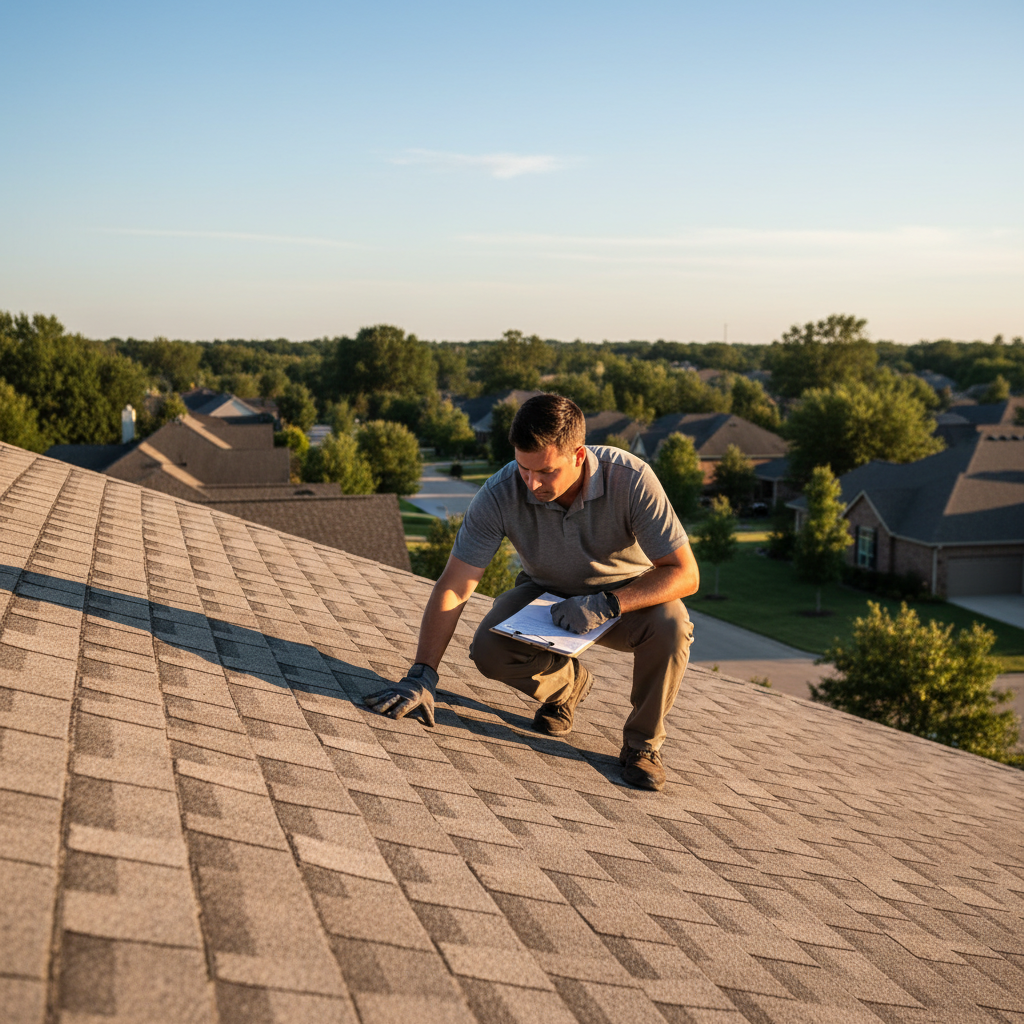
You check for wind damage and missing or lifted shingles by scanning from the ground first and documenting what you see. Focus on missing tabs, sharp crease lines, torn mat, exposed nails, and any new interior moisture.
If you’re in Wilmington or anywhere along the North Carolina coast, the hard part isn’t spotting a shingle that looks “not quite flat.” It’s knowing whether you’re seeing true storm damage or an older, unsealed tab that just looks suspicious, and doing it without creating a crease by lifting and “testing” it. The sections below walk you through a safe, ground-first check and what patterns matter most at rakes, eaves, and ridges.
| What you see (from ground/attic) | What it likely indicates | What to do now |
|---|---|---|
| Missing tab/shingle (dark rectangle, jagged course line) | Clear wind damage / functional failure | Photo wide + close; call a pro soon |
| Sharp horizontal crease line across shingle/tab | True wind-bend damage (not just “unsealed”) | Photo straight-on at 90°; call a pro |
| Torn/cracked shingle mat or exposed nails | High leak risk / compromised shingle | Document close-up; schedule inspection ASAP |
| Tabs look lifted/proud but no crease and no inside moisture | “Gray zone” (may be unsealed/age vs wind) | Don’t lift/test; monitor and document; consider inspection |
| New interior moisture (stain, wet decking/insulation, rusty nails) | Water is already inside | Document attic/ceiling; call a pro same day/next business day |
Start Safely: Ground-First Scan

One wrong move up there can turn a borderline shingle into a real tear and a real leak. A safe wind damage roof inspection should help you spot problems without causing any.
Start your check from the ground with binoculars and your phone camera, not your boots on the roof. After a Wilmington-area wind event, the biggest mistake is trying to “test” shingles by lifting tabs. That move can turn a small question into a self-inflicted tear.
Walk the whole perimeter and look up at the weak points first: rakes/eaves and the ridge line. If you see a straight shingle edge line that suddenly looks jagged, a dark patch where a tab should be, or a drip edge that isn’t tight, treat it as urgent even if you don’t see a leak yet. Also scan the ground for clues: fresh shingle pieces and granules collecting at downspout outlets.
What to Spot From the Yard
From the street and each corner of your yard, use binoculars to “trace” clean roof lines as part of how to inspect roof after storm. You’re looking for anything that breaks the pattern: a dark rectangle where a tab should be (missing shingle) or a shingle course that looks stepped or shifted (slid).
Focus on rakes/eaves and the ridge, where Wilmington-area wind tends to start trouble, and NOAA or National Weather Service alerts back that up. If you see a tab that looks like it’s fluttering or standing proud compared to its neighbors, treat it as time-sensitive. Don’t assume “it lifts” automatically means wind damage; your job here is to flag obvious changes you can verify from the ground.
The ‘Gray Zone’: Lifted vs. Damaged

A neighbor sees a slightly raised tab and shrugs it off as “just age,” then the next windy rain leaves a fresh ceiling ring. The difference is usually in one small detail that doesn’t show up unless you know what you’re hunting for.
A shingle tab that sits a little proud or looks “not quite flush” can mean two very different things. It might simply be unsealed from age or past workmanship, which looks suspicious but doesn’t prove a wind event harmed it. Or it might be true coastal roof wind damage, where the wind forced the tab up hard enough to deform the shingle or break the bond in a way that invites wind-driven rain.
The most reliable separator is a sharp horizontal crease line across the shingle, classic shingle creasing wind damage. It’s the fault line that tells you the bend did not bounce back. That crease tells you the tab bent beyond its normal flex and didn’t rebound. If you can see a straight “hinge” line that catches the light differently than the surrounding granules, treat it as damage even if the tab still covers the nail line.
Other indicators push you out of the gray zone fast: a torn or cracked shingle mat, exposed nails, or a tab that’s missing rather than just lifted. Don’t talk yourself into “it’s probably fine.” Let’s not open a can of worms by ignoring small edge failures that can cascade.
What you can do right now without manufacturing evidence: take a wide photo to show location, then a close-up at a true 90-degree angle so any crease reads clearly. If a tab visibly flutters in the breeze, capture a 5 to 10 second video from the ground or a drone pass. That combination usually tells a clearer story than “it lifted when I touched it.”
When you’re unsure whether a tab is simply unsealed from age or truly wind-bent, comparing your photos to common wear patterns can prevent false alarms. Read more in our article: Normal Shingle Wear Vs Damage
Inside Clues That Raise Urgency
If attic access is safe, check the underside of the roof deck and the areas around vents, chimneys, and valleys. Look for darkened or shiny “wet” wood, fresh water trails, damp insulation clumps, rusty nail tips, or a musty smell. For example, a small brown ceiling ring near an exterior wall after a windy rain often points to wind-driven water getting past a lifted edge.
Don’t wait for an active drip to decide it’s serious. That delay is a tough pill to swallow later. Any new stain, bubbling paint, or wet insulation means you’ve moved from “possible shingle issue” to “water is already inside.” Book a pro you would trust based on Google Maps reviews.
Even a small, newly formed ceiling stain can be one of the earliest indicators that wind-driven rain is getting past a lifted edge. Read more in our article: Early Roof Leak Signs
How to Document Wind Damage

If you ever need a contractor or adjuster to take your concern seriously, document roof damage for insurance, clear proof beats a strong opinion. A few deliberate photos and a short clip can save days of back-and-forth later.
Documentation only helps if it shows functional damage, not just “it was windy.” Do a simple wide-to-close set. I’m not trying to reinvent the wheel, so think of it like a photo breadcrumb trail that proves location and damage.
Add context in every frame: a landmark (chimney/vent/ridge) and your phone’s date/time. When a tab visibly flexes in the breeze, shoot a 5 to 10 second video from the ground or via a drone pass so the movement is documented.
When to Call a Pro
Waiting until you hear dripping often means the first water intrusion has already had time to spread. In coastal wind, “minor-looking” edge issues can turn into interior moisture faster than most homeowners expect.
Call a pro the same day (or next business day) if you’ve documented missing shingles/tabs or any new interior moisture (stain or wet decking). Along the Wilmington coast, issues at rakes/eaves/ridge may look small from the yard while still driving rain under the roofing system.
If you only see a few slightly lifted-looking tabs with no crease and no inside clues, you can monitor. Still, the “just a couple shingles” mindset is flat-out wrong in coastal wind. Ask for an inspection that includes photo documentation by slope plus close-ups of each suspect spot. Use Angi to shortlist options, and schedule it before the next forecasted storm.
Roof not getting any younger? Contact us or call 703-673-6301 to find out where you stand.After the next storm passes, our free hurricane roof inspection in Wilmington documents what the wind did, in writing, at no charge.