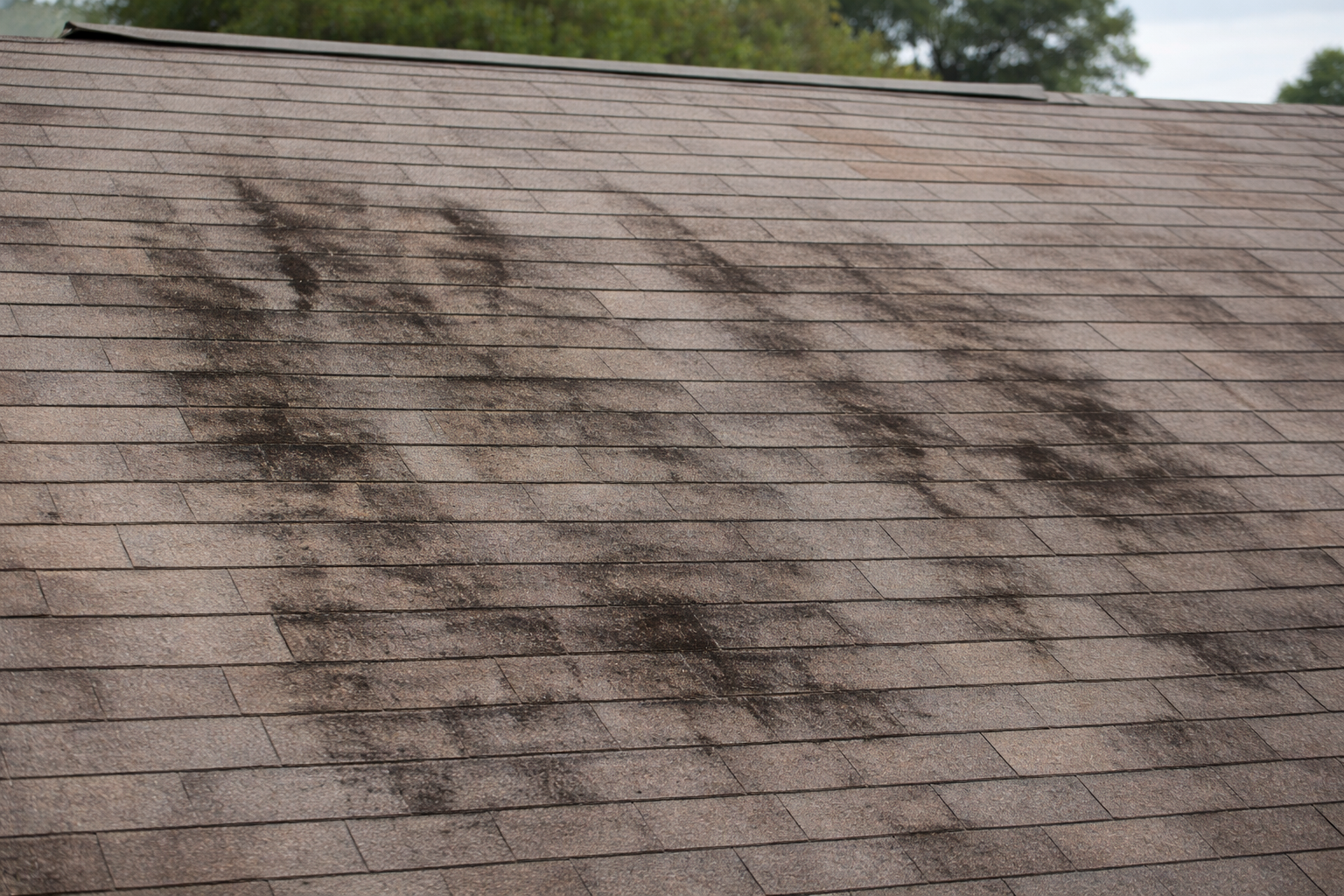
When should you repair shingles versus do something like a rejuvenation treatment? Repair shingles when you have leaks or damage in a limited area. Consider rejuvenation only when shingles are aging but still intact and laying flat.
If you’re in coastal North Carolina, this choice feels urgent because wind-driven rain and storm seasons punish “borderline” roofs fast, and online advice often sounds like sales copy. This guide walks you through a simple check to sort out your next step. If you just want to kick the can down the road a few years, you still start with leak risk, then check whether your shingle issues stay confined to roughly one cluster (not spread everywhere). Then decide if a treatment makes sense as a way to buy time after a tune-up, not as a substitute for fixing boots or missing shingles.
Start With Your Leak Risk

You can go from “it’s probably fine” to soaked insulation and a stained ceiling overnight after a hard coastal rain, especially when wind pushes water sideways into weak spots.
If you have an active leak or fresh water signs inside, treat this as a repair-first problem, not a rejuvenation decision. That is non-negotiable, this is when to repair roof shingles, even if a BBB complaint history check makes you hesitate about who to hire. Rejuvenation may help slow aging on intact shingles, but it won’t correct the usual leak paths like a failed pipe boot, a lifted shingle tab after a Wilmington wind event, or cracked flashing at a chimney.
After the next hard rain, check for ceiling stains and damp attic insulation.
Active leaks often trace back to common failure points like vents, pipe boots, and flashing seams that need hands-on repair. Read more in our article: Roof Leak Repair If you find any of that, schedule a targeted repair now and use the estimate to learn whether the issue is truly localized or part of broader wear.
A Quick Scope Test for Shingle Repair
Multiple contractor guides come back to the same dividing line: once damage spreads beyond roughly 5–10% of the roof, repairs tend to stop being the economical move and start turning into incremental replacement.
Shingle repair is the right move when the problem is confined to a small, specific area, not sprinkled across the whole roof. A practical rule of thumb used by many contractors: if the damaged or missing shingles add up to under about 5–10% of the roof surface (think one slope or one corner), that’s often how to tell if shingles need repair and whether repairing those shingles will buy you meaningful time.
When the same defect shows up on multiple slopes, repeated repairs start to feel like paying in pieces for an eventual replacement. As an example, needing “just a few shingles” in three separate zones often signals a roof that’s aging everywhere, even if each spot looks minor on its own.
When Asphalt Shingle Rejuvenation Is Worth It

Rejuvenation makes sense when your asphalt shingles are aging but still fundamentally intact: they lay flat, you’re not seeing widespread cracking or missing tabs, and the roof’s problems look more like stiffness than breakage. In that window, a treatment is usually a way to buy time, often marketed as roughly a 5-year extension, and sometimes positioned as repeatable a limited number of times.
What it won’t do: fix holes or delamination. If you’re hoping a spray will “repair” bald spots by sticking granules back on, you’re chasing a shortcut that doesn’t hold up long-term, and if your Owens Corning paperwork says those shingles are already at end-of-life, that hope is wishful thinking. You’re better off replacing the affected shingles first.
Rejuvenation works best when shingles are still intact and flexible enough to respond, not when they’re already brittle and cracking across the mat. Read more in our article: Shingle Brittle Cracking Treatment
Coastal North Carolina Factors That Change the Call
A Wilmington homeowner patches a few tabs in spring, then a late-summer blow lifts the same windward edge again and the first drip shows up where the rain never seems to fall straight down.
Along the Wilmington coast, you don’t just manage “age” on paper; you manage wind-driven rain and salt air that can turn minor shingle weaknesses into leaks fast. That pressure tends to push the decision toward faster, more durable repairs. When you batten the hatches for a coastal season, repairs and gentle prep come first: if tabs lift after a storm or you see repeated seal failures on a windward slope, treat that as the priority before you pay for any life-extension treatment.
Timing matters. Going into hurricane season with a roof that’s borderline is when a “we’ll watch it” mindset gets expensive. If you’re considering rejuvenation as a bridge, do it only after any loose shingles or pipe boots are tightened up, and schedule it in a calmer weather window so you’re not relying on a new application to ride out the next named storm.
Salt air and humidity can accelerate shingle aging and seal-strip issues along the coast, which changes how long “borderline” conditions stay stable. Read more in our article: Salt Air Humidity Shingles
Choose Your Next Step (Repair, Rejuvenate, or Neither)
A typical rejuvenation spend is often quoted around $2,000–$5,000 (roof rejuvenation treatment cost varies by roof size and prep), and many providers describe it as about a 5-year bump that may only be repeatable up to about three times under ideal conditions.
If you have any leak signal or loose components, choose repair first.
| What you’re seeing | Best next step | Why |
|---|---|---|
| Active leak or fresh water signs; loose components | Repair first | Treatments don’t correct common leak paths (boots/flashing/lifted tabs). |
| Damage stays under ~5–10% (one tight cluster on one slope) | Targeted shingle repair, then monitor | Localized fixes typically buy meaningful time when the rest is sound. |
| Shingles are aging but intact and laying flat; feels “dry” | Rejuvenation after a tune-up | Works as a buy-time step only after repairs and securing details. |
| Issues show up everywhere; heavy granule loss; many prior patches | Neither (plan replacement) | Systemic wear makes repeated spot-fixes and treatments low value. |
When the repair area stays under roughly 5–10% (a single tight cluster), monitor after the fix instead of expanding the scope. If the roof still lays flat and is intact but feels “dry,” do a tune-up first and then consider rejuvenation.
Choose neither when problems show up everywhere or you’ve already paid for multiple rounds of patches, because at that point it is throwing good money after bad, even if Angi makes it easy to line up another “quick fix.” In that case, put the money toward a replacement plan instead of buying time you won’t get. In that case, put the money toward a replacement plan instead of buying time you won’t actually get.
FAQ
How Much Granule Loss Is “Too Much” for Rejuvenation?
A little granule shedding in gutters is normal, but if you’re seeing widespread bald patches or exposed fiberglass, you’re past the point where a conditioner-style treatment helps. Some guidance tied to NRCA-type thresholds flags replacement when granule loss reaches roughly 30–50% of the surface, one of the clearer signs roof needs replacement, because the shingle is losing its protective layer at scale.
Can a Rooftop Treatment Replace Missing Granules or “Fix” Bald Spots?
No, and you should be skeptical of anyone pitching it that way. Manufacturer guidance (for example, GAF) notes that trying to add loose granules with asphalt cement isn’t a permanent repair, so the durable fix is usually replacing the affected shingles, not gluing grit onto them.
How Long Does Rejuvenation Typically Buy You, and How Many Times Can You Repeat It?
Most providers market about a 5-year life extension per application, and some say it can be repeated up to around three times in ideal conditions. Treat that as a planning ceiling, not a promise, especially on older roofs or roofs with existing brittleness and lifting.
What Should You Ask a Contractor Before You Pay for Rejuvenation?
Ask what specific defects they’ll repair first (lifted tabs and nail pops), what cleaning method they’ll use, and what shingles they’ll refuse to treat. Also ask for the exact product name and what independent testing (often from labs like PRI) matches your shingle type and approximate age.
Is Rejuvenation “Snake Oil” or Legit?
The idea of restoring some flexibility by re-oiling asphalt can be real, but it isn’t a substitute for repairs or a cure for systemic failure like widespread cracking or holes. If someone implies it can solve those, you’re not buying maintenance. Let’s not open a can of worms, you’re buying a delay tactic.
Roof not getting any younger? Contact us or call 703-673-6301 to find out where you stand.Before pricing a new roof, see what HardShore’s roof rejuvenation service in Wilmington can bring back. Most treatments take one day.