Can algae or moss lead to leaks, or is that a separate issue? Usually, algae streaks are cosmetic, while thick moss can contribute to leaks. Most roof leaks still start at flashing and penetrations.
If you’re in coastal North Carolina, humidity and shade can make dark streaks and green growth show up quickly, so it’s easy to blame what you can see from the ground. Separate surface staining from moisture-holding growth, then focus on the roof details that usually fail first. This guide shows when growth is a risk versus a warning sign and steers you away from aggressive cleaning that can create the leak you’re trying to prevent.
Algae Stains: Usually Not the Leak

Those black streaks you see on asphalt shingles, common when searching black streaks on roof causes, are most often algae discoloration (commonly tied to Gloeocapsa magma). In humid coastal North Carolina, it appears quickly and usually stays a surface stain rather than an entry point for water.
If you treat every dark streak as algae on roof causing leaks, get a second opinion. Use algae as a clue to shade and slow-drying areas. Then check where leaks start: flashing joints and pipe boots. If you have active interior staining, skip DIY scrubbing and get a roof inspection.
In coastal North Carolina, humid shade patterns can make algae streaking show up fast even when the shingles are still shedding water normally. Read more in our article: Roof Algae Black Streaks
When Moss Can Become the Leak Pathway
You ignore a patch of moss for one more rainy season, roof moss causing lifted shingles, and the roof doesn’t just look worse. It stays wetter longer, and that is when shingle edges start to lift and water gets new places to go.
Moss and lichen can cross the line from “ugly” to “leak risk”, does roof moss damage shingles, when they build up thick enough to hold water and pry at shingle edges. In the shaded, slow-drying parts of a coastal North Carolina roof, that wet mat can keep the shingle surface and laps damp for long stretches, soften the shingle edge over time, and make it easier for wind-driven rain to work underneath instead of shedding cleanly.
Look hardest where you see green growth plus physical change: curled or lifted shingle corners and clumps packed into the shingle joints. Here’s the blunt truth: aggressive removal often does more damage than the moss, and even This Old House gets that right.
Moss that wedges into shingle joints can lift edges and hold moisture long enough for wind-driven rain to work underneath. Read more in our article: Moss Asphalt Shingle Roof
If It’s Leaking, What’s Probably Separate

A homeowner chases the green patch over the living room for weeks, only to find the drip was coming from a tired pipe boot uphill the whole time. Leaks love hidden shortcuts, not the most obvious stain.
With an active leak, suspect a failing roof detail first, often well before algae matters and sometimes before moss thickens. Growth shows you where the roof stays damp, roof leak causes algae moss, but water gets in like a pickpocket at overlaps and punctures.
Start with penetrations and metalwork. Kick the tires there first. During wind-driven rain, a cracked pipe boot or loose vent flashing can leak and then disappear for weeks. Valleys and wall transitions also do this: debris builds up, water slows down, and a small opening at a step flashing or valley edge turns into a ceiling stain that appears several feet away from where the problem is.
If the leak seems seasonal or shows up after a long storm, look past the shingles. To illustrate this, a slow leak can wet the roof deck over time until the plywood softens, roof decking rot from moisture, fasteners loosen, and water starts tracking along the decking or underlayment before it finally shows inside. That’s why a good inspection doesn’t just note the green patch outside. It checks the attic for darkened decking and damp insulation, plus staining that points back to a specific penetration.
Most active leaks trace back to penetrations like vents and pipe boots, not the staining you can see from the yard. Read more in our article: Roof Leaks Chimneys Vents
Decision Framework: Clean, Inspect, Rejuvenate, or Replace
Moss or algae removal is often quoted around $0.20–$0.75 per square foot, so it should not feel like a blank check. A simple framework keeps a cleaning problem from getting priced like a replacement.
“Something growing up there” doesn’t automatically mean “new roof” (roof rejuvenation vs replacement). Decide faster by evaluating roof performance and cleaning risk, then use stains or growth as supporting clues (older shingles don’t tolerate aggressive cleaning).
Use this quick lens and pick the least disruptive option that still answers the risk, because Angi service categories are not a diagnosis.
| What you’re seeing | What it often suggests | Lowest-disruption next step |
|---|---|---|
| Active leak signs (fresh ceiling stain or damp insulation); growth piled in a valley; anything suspicious at a pipe boot or wall transition | High odds the entry point is a detail (flashing/penetration/valley) that needs diagnosis | Book an inspection first (confirm entry point from attic and roof surface) |
| Mostly algae streaking or thin moss; shingles lying flat; goal is appearance/insurance photo/early buildup | Usually cosmetic or early-stage; removal method can create more risk than the growth | Clean with a gentle treatment (not blasting) |
| Roof aging but still intact (no widespread cracking/curling or chronic leaks); want to buy time after addressing growth | Candidate for life extension, not a fix for failed flashing or rotten decking | Consider rejuvenation |
| Growth plus mechanical failure: widespread lifting/curling or missing granules | Roof system is breaking down; ongoing cleaning/patching is diminishing returns | Lean toward replacement |
Cleaning Can Cause Leaks if Done Wrong

You can get the roof looking cleaner without sacrificing the granules and seal that help shingles shed water. The safest approach treats growth without mechanically beating up the roof.
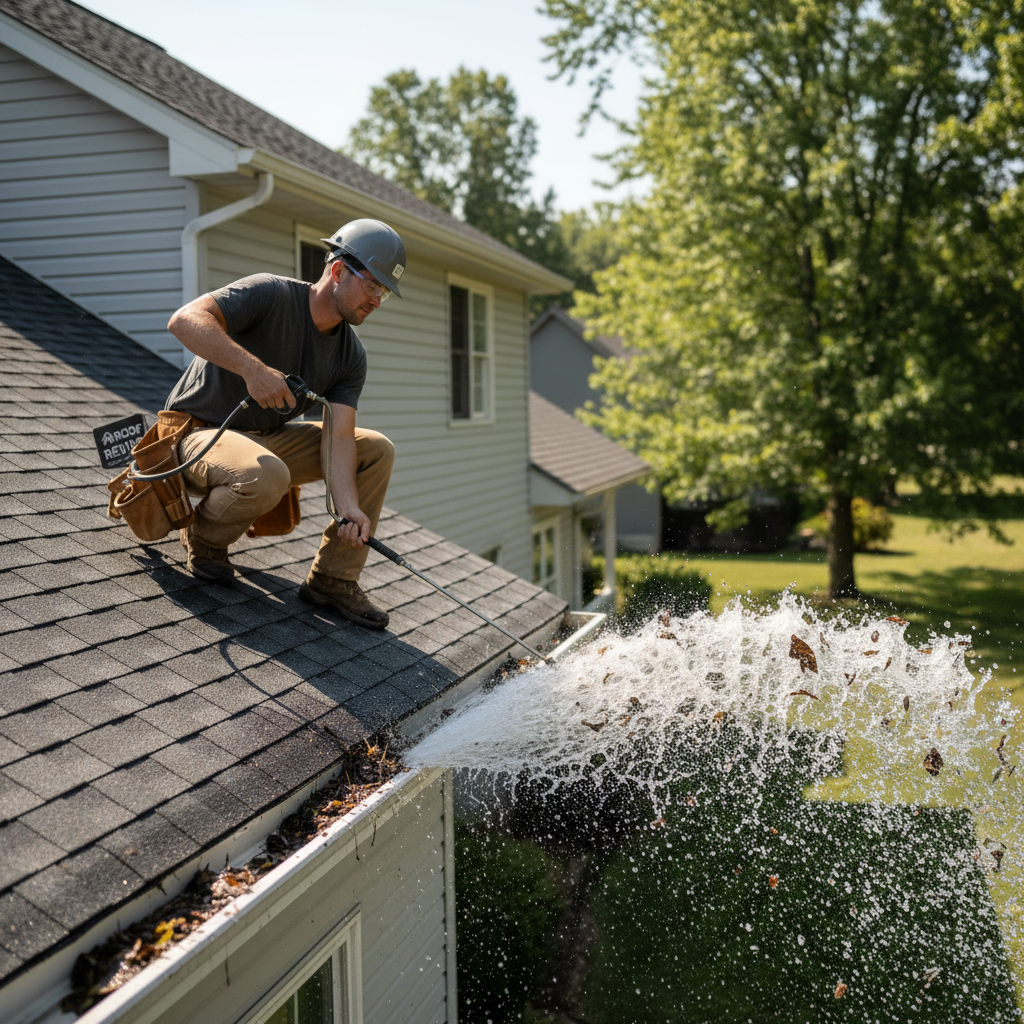
On asphalt shingles, the fastest way to turn “growth on the roof” into a real leak is aggressive removal. Hard brushing and pressure washing can strip protective granules. It can also drive water up under shingle laps, especially if shingles are older and brittle.
Roof cleaning isn’t always low-risk. Nip it in the bud, because pressure washing is basically sandblasting for shingles. When you hire it out, require a manufacturer-approved soft-wash style treatment (soft wash roof cleaning Wilmington NC) and an explicit plan to protect flashing and valleys. If a contractor’s solution sounds like “blast it clean,” you’re paying for damage disguised as maintenance.
FAQ
How Fast Do I Need To Act If I See Moss Or Algae?
If it’s just black streaking and the shingles are lying flat, you can usually schedule routine cleaning when it’s convenient. If you see thick moss clumps or lifted shingle edges, treat it as a near-term maintenance item and get it assessed before the next stretch of heavy rain.
What’s A Realistic Price Range For Moss Or Algae Removal?
A common ballpark you’ll see is about $0.20–$0.75 per square foot, depending on roof pitch and access. If a quote jumps into “replacement money” without showing you failed flashing, damaged shingles, or decking issues, pause and ask what problem they’re solving.
Can Zinc Or Copper Strips Help Prevent Regrowth?
Yes, zinc or copper strips near the ridge can reduce regrowth over time because rain carries small amounts of metal ions down the roof. They work best as a follow-up after you’ve treated existing growth, not as a stand-alone fix for a roof that’s already holding moisture in shaded areas.
When Should I Escalate To An Inspection Immediately?
Act fast if you have a fresh ceiling stain or damp insulation, or any sign the roof deck is getting wet in the attic. Also escalate if you notice soft spots or repeated “mystery leaks,” or moss growth concentrated at penetrations or wall transitions where water flow and flashing details matter most.
Will Cleaning Void My Roof Warranty Or Make Leaks More Likely?
It can, roof cleaning safe for shingles, especially if someone uses pressure washing or aggressive scraping that strips granules or forces water under shingle laps. Before you approve the work, get a clear plan in writing that it’s a low-pressure, manufacturer-aligned treatment and that they won’t mechanically abrade the shingle surface.
Roof not getting any younger? Contact us or call 703-673-6301 to find out where you stand.Our calibrated power washing service uses bio-based detergent and surface-matched PSI to kill algae without damaging shingles.
Our professional soft-wash roof cleaning in Wilmington uses bio-based chemistry that kills the algae and lichen at the spore level.
If it keeps coming back, our roof algae treatment in Wilmington treats the cause, not the symptom.