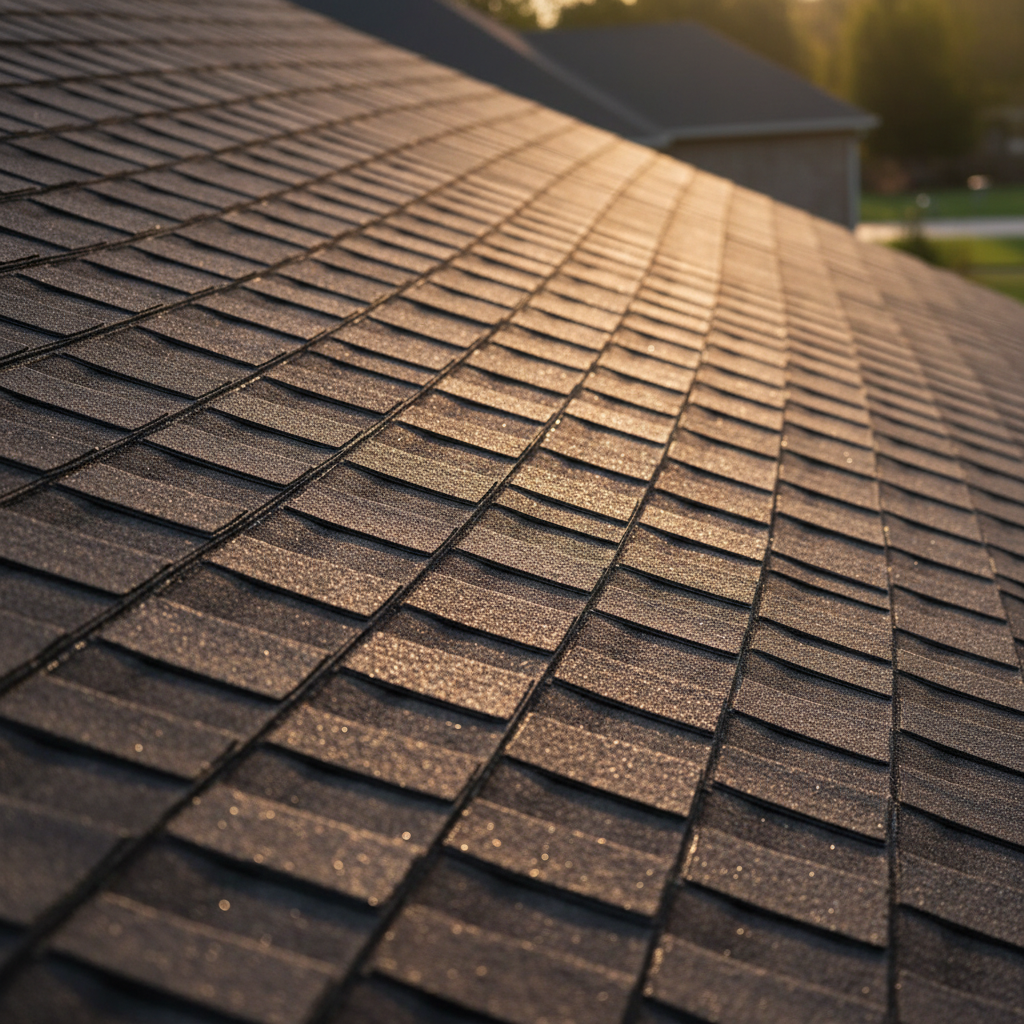
You can tell your shingles are too far gone for rejuvenation when they’ve lost structural integrity. That means cracking or widespread curling.
If your roof looks “old” but still lays flat and holds together, rejuvenation might buy time, especially in Wilmington’s wind and salt air. This guide helps you sort roof age from real failure by walking you through the go/no-go signs and the seal-strip wind test that often decides whether you should rejuvenate or replace.
Start With a Go/No-Go Snapshot
Some vendors frame “good candidate” roofs less by age and more by remaining usable life, roughly in the 30–70% range, when roof shingles too far gone isn’t the reality yet. That makes a fast go/no-go check more reliable than chasing a magic number of years when you’re asking, can asphalt shingles be rejuvenated.
If you see any of the no-go signs below, kick the tires on it with a repair or replacement conversation instead of rejuvenation. What decides it isn’t roof age by itself. Instead, it comes down to whether the shingles still hold their shape and seal.
Go (worth getting a rejuvenation inspection): shingles lay mostly flat, tabs still feel well-adhered, and you’re not finding piles of granules in gutters after normal rain. For example, a 12–18 year roof in Wilmington can still be a candidate if it’s intact and not cracking.
Granule loss, brittleness, and curling often show up sooner in coastal roofs because salt air and humidity accelerate shingle aging. Read more in our article: Salt Air Humidity Shingles
No-go (skip rejuvenation quotes): widespread curling or lifting, shingles that crack if lightly flexed or stepped on, missing/torn tabs after routine coastal winds, exposed fiberglass/mat, or repeated blow-offs and patchwork that suggests the sealant strips aren’t holding anymore.
| What you’re seeing | Likely call | Why it matters |
|---|---|---|
| Shingles lay mostly flat; tabs feel well-adhered; no significant granules in gutters after normal rain | Rejuvenate (get an inspection) | Structural integrity and wind resistance are still present |
| Mostly intact, but defects are local (small area of lifted tabs, a short valley/eave issue, a handful of nail pops) | Repair-then-recheck | Fixing limited weak spots can restore a safe baseline before treatment |
| Any disqualifying failure: brittle cracking, missing/torn/creased tabs, exposed fiberglass/mat, widespread curling/lifting, seal strips failing across a slope, recurring leaks/wet decking | Replace (or repair scope quote, then reassess) | Rejuvenation can’t re-create missing material or restore failed sealing/system performance |
Physical Failures That Disqualify Rejuvenation

Rejuvenation only has something to work with when the shingle is still structurally intact and able to seal down. Once the shingle stops behaving like a flexible, continuous skin, it’s on its last legs. Adding oils won’t re-create missing material or reattach parts that have already failed. A treatment can’t reverse a roof that’s already coming apart. That often turns into paying for treatment and then paying again for replacement.
You’re typically past the point of rejuvenation if you can confirm any of these on the roof (or in close, clear photos, not just Google Reviews screenshots): Multiple homeowner-facing sources group brittleness/cracking, widespread curling, and missing shingles as common no-go conditions.
-
Brittleness and cracking: shingles crack from light bending, foot traffic, or at the tabs, a simple shingles brittle test. In practice, this shows up as fresh fissures after someone walks the roof or as broken corners along a slope.
-
Missing, torn, or creased shingles/tabs: anything that’s folded, flapping, or repeatedly blows off in routine coastal winds means the system has already lost continuity.
-
Cupping/curling that won’t lay flat: widespread edges lifting or tabs that stay raised signals the shingle can’t reliably shed wind-driven rain.
-
Exposed fiberglass mat (or bald spots to the base): if granule loss has progressed to visible underlying reinforcement, you’re not dealing with “dry shingles,” you’re dealing with worn-through material.
-
Persistent leaks or recurring wet decking: a leak that comes back after basic repairs usually means you’ve crossed into system failure, not a surface-dryness problem.
A practical way to use this: if you can point to even one area where the shingle is broken, missing, or worn to the mat, skip rejuvenation estimates and ask a roofer to price a repair scope or replacement plan instead.
Homeowners often confuse cosmetic “old roof” wear with true mat exposure or cracking that means the shingle has failed structurally. Read more in our article: Normal Shingle Wear Vs Damage
The Seal Strip Test (Wind Risk)

A homeowner replaces “a few loose tabs” after a windy weekend, only to find the same slope flapping again at the next gust, classic wind-lifted shingles repair frustration. The hidden problem is often that the bond line stopped holding long before anything looked dramatic from the yard.
Even if it looks fine from the yard, failed seal strips can still disqualify a roof from rejuvenation. Around Wilmington, once tabs don’t stay sealed, a normal coastal gust can lift them just enough for wind-driven rain to push underneath. A spray treatment won’t reliably make those bonds return.
A good inspector verifies this on the roof by gently checking whether tabs resist lifting (they should feel stuck down) and looking for telltales like widespread unsealed edges or repeated “hand-sealed” spots after past blow-offs. If tabs lift easily across a slope, treat that as a replacement-or-repair problem first, not a rejuvenation opportunity.
When Damage Is Local, Not Whole-Roof
A lot of Wilmington-area roofs don’t fail evenly. One slope bakes in sun and salt air, while the north side still looks decent. Valleys and eaves also take the brunt of runoff and wind-driven rain, so you can see granule washout or popped nails in those spots even when the main fields of shingles still lay flat.
What to do differently: treat this as a scope decision, not a yes-or-no about the whole roof. If the “no-go” signs show up only in a small area (a valley line, the first few courses at the eave, a handful of tabs near a chimney), you’re usually looking at targeted repair first, then re-evaluate the rest for rejuvenation. But if the same defects repeat across multiple slopes or large open areas, stop trying to save it with spot fixes. You’re already in replacement territory.
What a Real Rejuvenation Inspection Must Include

When you have clear photos, a mapped repair list, and a pass or fail call, the conversation stops being a sales pitch and starts being a decision. That only happens when the inspection is built to catch the deal-breakers before anyone sprays.
A legitimate rejuvenation quote starts with someone getting on the roof (when it’s safe) and checking whether your shingles still have integrity and wind resistance. If a contractor wants to price it from a driveway glance or drone photos only, get a second set of eyes on it. You’re not getting a candidacy decision, you’re getting a sales pitch.
At minimum, expect them to: verify tabs still resist lifting (seal strip engagement), check for brittleness/cracking with light handling, and map any small repair zones (lifted tabs or popped nails) that must get fixed before treatment. They should also take clear photos and give you a simple call: pass, fail, or repair-then-recheck.
If they won’t do that level of inspection, don’t let them spray anything on your roof.
A thorough roof inspection should include a repeatable checklist that documents what was tested and what specific issues were found on each slope. Read more in our article: Typical Roof Inspection
Decide: Rejuvenate, Repair-Then-Rejuvenate, or Replace
Choose the wrong option and you can end up buying treatment now and replacement after the next big blow. Choose well, and you either buy time safely or avoid sinking money into a roof that’s already finished.
If your shingles pass the integrity checks (lay flat and tabs still resist lifting), move forward with rejuvenation and ask for a written work order that states: areas inspected and any exclusions.
If the roof is mostly intact but has a few fixable defects (a small patch of lifted tabs at an eave or a short valley repair), choose repair-then-rejuvenate and require the contractor to list the repair scope first, then re-check candidacy before spraying.
If you’ve got any disqualifying failures (brittle cracking or widespread curling), choose replace and rip the Band-Aid off. At that point, hunting for a treatment quote because the roof “doesn’t look that bad from the yard” is a bad bet, even if Nextdoor neighborhood recommendations cheer it on. It usually just delays the decision until after the next coastal blow.
Roof not getting any younger? Contact us or call 703-673-6301 to find out where you stand.Not sure where your roof stands? Our free roof check in Wilmington settles it with a written report, no charge.