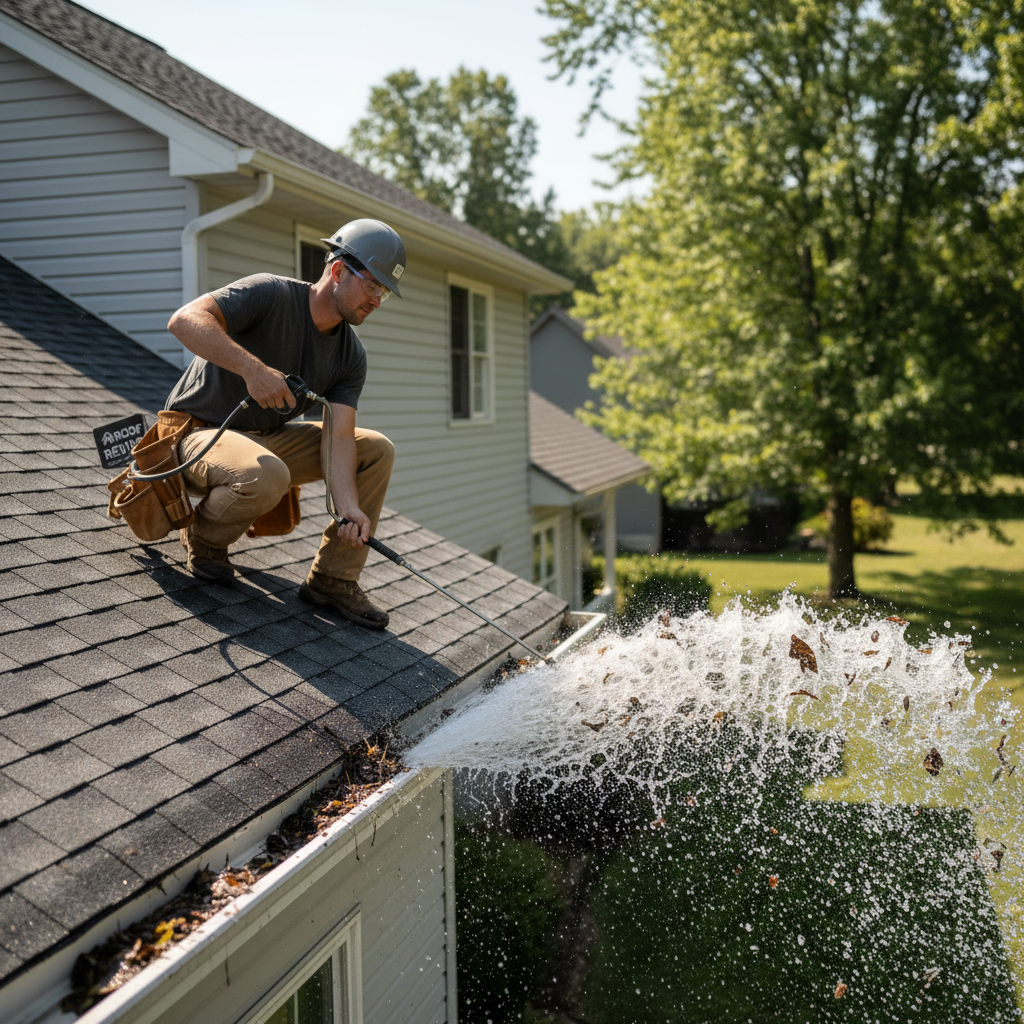
If your upstairs stays hot and your AC runs forever, it’s normal to look up at the roof and wonder if cleaning or treating it will finally move the needle. It can help, but only when it makes the roof surface reflect more sun for long enough to matter.
The real question isn’t whether your roof looks better. It’s whether you’re restoring solar reflectance and whether the roof is the main heat pathway into your living space. In coastal North Carolina, algae staining and grime can darken shingles and raise heat gain, so a proper soft-wash may lower peak attic temps and sometimes reduce AC runtime. But if insulation or air leaks drive the load, your bill might barely change. This guide explains how to tell when cleaning makes sense, when a treatment is just buying time, and when replacement or attic fixes are the safer bet.
Roof Cleanliness Vs. Reflectance

You can spend money making a roof look better and still end up with the same sweaty upstairs and the same electric bill, roof cleaning energy savings aren’t guaranteed. The difference is whether the surface reflects sunlight, not whether the stains are gone.
A roof can look “clean” and still soak up heat. Cooling load tracks solar reflectance (how much sunlight the surface bounces away) and, to a lesser extent, how well the roof sheds heat. So the energy question becomes: will cleaning or treatment measurably change roof reflectance, and will that change last?
For example, dark staining and grime can cut reflectance, and a proper soft-wash may restore some of what the roof started with. But that’s different from a true cool-roof surface, and Consumer Reports-style skepticism is warranted: surface-temperature photos can be misleading while your bill barely budges.
To make the claim testable, ask two things.
On asphalt shingles, black algae streaks often darken the surface enough to matter more for heat gain than most homeowners realize. Read more in our article: Roof Algae Black Streaks What changes increase reflectance, and what proves it lasts through sun, salt, and regrowth?
When Roof Cleaning Can Affect Cooling

Consider a two-story house where the second floor turns into a different climate zone every sunny afternoon, and the AC can’t quite catch up. In that situation, a darker roof can add heat your attic and ducts don’t need.
Roof cleaning can reduce cooling load when the roof has darkened enough to absorb more sun than it was designed to (and periodic washing can sometimes recover some lost reflectance performance in the field: ORNL paper). In coastal areas, algae streaking and general grime can turn a shingle roof into a better solar absorber. If a soft-wash restores a lighter, more reflective surface, you can see an attic-temperature drop on sunny afternoons and, in some homes, less AC run time, roof soft wash energy efficiency varies by house.
You’ll feel that effect most when your heat pathway is direct: ductwork runs through a hot attic or ceiling/attic air leaks let hot attic air interact with the living space. As an example, a 2-story home with leaky supply ducts in the attic may see shorter afternoon compressor cycles after cleaning because the duct losses shrink when attic temps fall.
Don’t default to “clean roof = lower bill.” It only pencils out when (1) staining is widespread enough to change roof color in the sun, (2) you have long, high-sun cooling days, and (3) your attic isn’t already buffered by excellent air sealing and insulation. The key question is whether the attic peak drops.
In coastal climates, a true low-pressure soft wash is designed to remove biological growth without stripping protective granules. Read more in our article: Soft Wash Roof Cleaning If it barely moves, your bill won’t either.
Why Many Homes Won’t See Big Bill Savings

Some sources cite attic temperature drops on the order of about 15–20°F after getting a roof surface more reflective, yet the monthly bill still barely moves in many houses (IIBEC publication). That’s where most expectations go wrong.
Even if cleaning makes the shingles run cooler, your bill usually follows HVAC runtime, not roof surface temperature. In many homes, the roof isn’t the bottleneck in the heat path into your living space, so restoring a bit of reflectance barely changes how hard the system works over a month. ENERGY STAR guidance makes the point more directly: ducts, air sealing, and insulation usually beat cosmetic roof work when the goal is lower bills (attic insulation vs cool roof is usually the better bet).
The other trap is mistaking a peak effect for an all-day effect. That’s common. A cleaner roof can knock down the worst mid-afternoon attic temperature, yet your AC may still run long hours because you keep the thermostat low or your ducts and air handler live in a hot attic and leak regardless. Case in point: a Wilmington home with flex ducts stretched across the attic can still lose a lot of cooling after cleaning, because leakage and poor airflow don’t change.
Seasons also matter. Any cooling benefit can shrink when nights cool off, cloudy weeks roll in, or you start using heat, which is why “felt cooler upstairs” doesn’t automatically translate into a meaningful annual dollar number.
Decision Path: Clean, Treat, Or Replace
| If this is true… | Best next step | Expected cooling/energy impact |
|---|---|---|
| Roof is structurally sound; main issue is algae staining/grime | Clean (soft-wash), then re-check | Possible peak attic-temp drop; bill savings only if reflectance change is meaningful and roof heat path matters |
| Roof is sound but dry/brittle and near end-of-life; goal is buying time | Consider rejuvenation-style treatment | Usually not a big energy-bill lever; more about extending service life than boosting reflectance |
| Shingles are failing (leaks/curling/granule loss), repeated repairs, or ~20–25+ years in coastal exposure | Replace | Energy savings are more predictable from attic fixes (ducts/air sealing/insulation) than from treating a tired roof |
| Upstairs runs hot due to duct losses/air leaks/weak attic insulation (dominant heat pathway isn’t roof color) | Prioritize ducts, air sealing, insulation | Most predictable path to lower HVAC runtime and kWh vs. cleaning alone |
Start with an honest condition check, not a product. If your roof is structurally sound (no active leaks or widespread curling) and the problem is mainly algae staining or grime, clean first and then re-check attic temps and AC runtime on similar sunny days. If the roof is sound but dry and near end-of-life, a rejuvenation treatment can kick the can down the road when your goal is time, not bills.
Replace when shingles are failing or you’re already at the 20–25+ year mark in coastal sun and salt air. If you’re chasing lower energy bills, don’t treat a tired roof as an HVAC upgrade; fix the roof for roof reasons, then target ducts, air sealing, and insulation for predictable savings.
Rejuvenation treatments are primarily about restoring shingle flexibility and slowing aging, not creating a reflective “cool roof” surface. Read more in our article: Roof Rejuvenation
How Much Can Roof Cleaning Or Treatment Lower My Energy Bill?
If your roof has heavy dark staining, cleaning can reduce peak attic temps and sometimes trim AC runtime, but it rarely creates dramatic monthly savings by itself. Treat any dollar estimate as an upper bound unless you’ve also got good insulation, tight ducts, and solid air sealing.
How Long Does Any Cooling Benefit Last In Coastal North Carolina?
It lasts only as long as the roof stays meaningfully more reflective, and algae regrowth and grime can erase that faster near the coast. If you’re doing this for cooling, plan to judge results over one hot season, not one sunny afternoon.
What’s The Best Way To Measure Whether It Helped?
If it worked, you’ll be able to verify a before-and-after change instead of relying on how the roof looks. A simple tracking routine can turn a “maybe” into a clear yes or no.
Track something your house already cares about: thermostat runtime or daily kWh on comparable hot days, then sanity-check with attic temps taken at the same time of day (you can also bracket the maximum plausible impact of a reflectance change using the ORNL Cool Roof Calculator). If runtime and kWh don’t move, a cooler-looking roof surface didn’t change the heat that actually reaches your conditioned space.
Is A Rejuvenation Treatment The Same As A Reflective “Cool Roof” Coating?
No. Rejuvenation-style treatments focus on restoring flexibility and shedding water; cool-roof performance comes from higher solar reflectance and thermal emittance at the surface (cool roof coating vs roof cleaning).
Could Cleaning Or Treatment Void My Shingle Warranty Or Damage The Roof?
One aggressive wash can trade a small cooling gain for a much bigger problem: shortened shingle life and surprise repair costs. The method matters as much as the goal.
It can if the method is too aggressive, so you want a contractor who follows the shingle manufacturer’s cleaning guidance and avoids high-pressure washing. Get the process in writing, and if the roof is already brittle or shedding granules, treat it as a sign to inspect for replacement rather than chase cooling claims.
Roof not getting any younger? Contact us or call 703-673-6301 to find out where you stand.Our Wilmington soft wash roof cleaning handles exactly this, calibrated for coastal shingles.