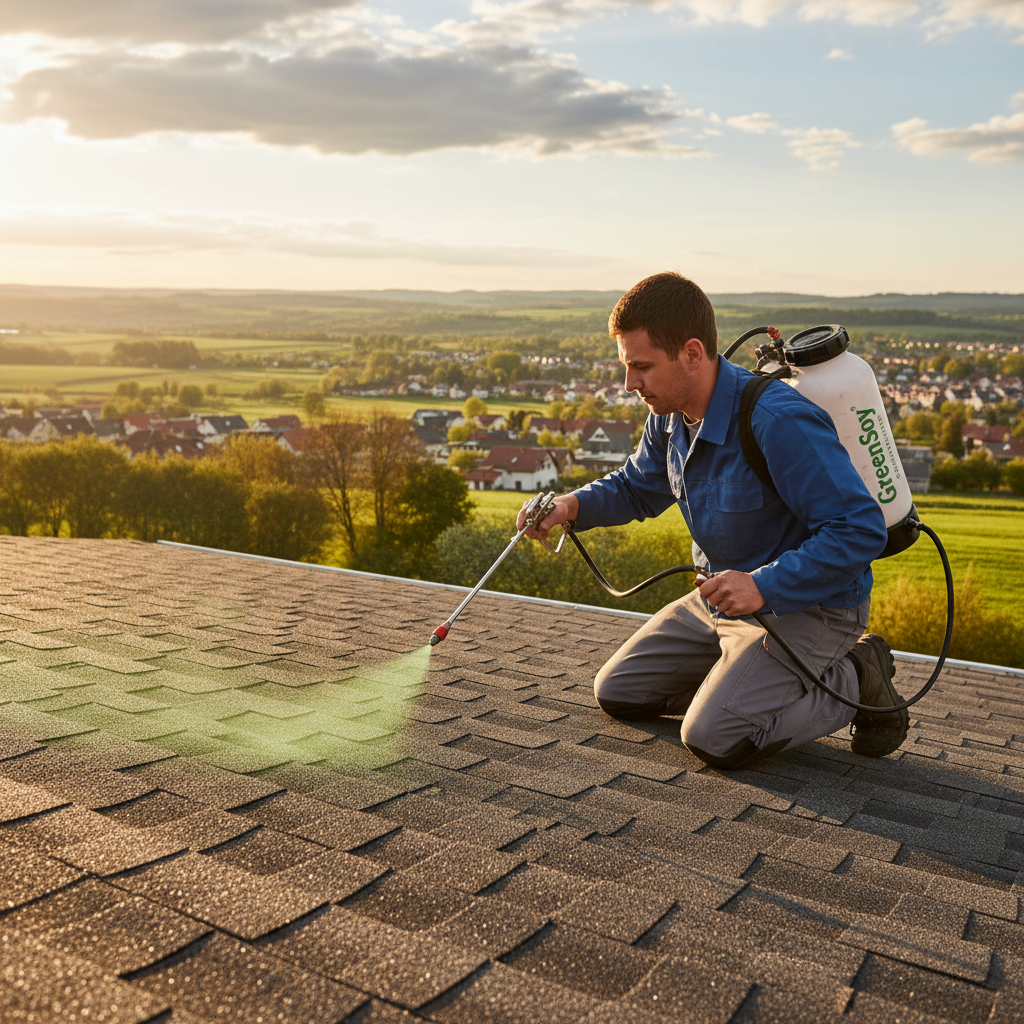
If you’re staring at a roof that’s “still good” but looks washed-out or uneven from the street, you’re not alone. Roof rejuvenation can make a faded, patchy asphalt shingle roof look better, but it won’t fix every kind of patchiness, and the improvement usually comes from a darkening, more uniform look, not a true return to factory-new color.
The key is figuring out what’s creating the contrast on your roof. In coastal North Carolina, what reads as “fading” might be sun exposure or algae staining. The coastal salt + sun exposure reality is unforgiving, and anyone promising it will all “blend” is selling you a story. In the sections below, you’ll learn what “looks better” typically means with rejuvenation and how to diagnose the most common causes of patchiness.
What “Looks Better” Usually Means

Most asphalt shingle roof rejuvenation treatments don’t “restore” the original factory color the way repainting siding would. They typically darken and visually unify the shingles by re-saturating the surface, so the roof reads more even from the curb, like a fresh rain evening out a driveway’s color.
That’s why dramatic before/after photos can be misleading. You might see an immediate visual improvement, but it often softens again as weathering returns. And if your roof absorbs unevenly, a sloppy application can create new blotches, basically the problem you were trying to solve.
Diagnose What’s Causing Your Patchiness
A homeowner sees “fading,” hires a spray treatment, and then realizes the real culprit was roof stains that never got removed. For the cosmetic side, cleaning is often the step that addresses surface appearance when staining is part of the contrast. Getting the cause right first is the difference between a cleaner-looking roof and an expensive shrug.
On many coastal NC roofs, what homeowners call “fading” is actually algae staining that won’t disappear without proper cleaning. Read more in our article: Roof Algae Black Streaks
| What you see | Quick clue | Likely cause | Cosmetic help from rejuvenation? |
|---|---|---|---|
| Dark streaks that lessen when wet | Looks better during/after rain | Algae or dirt | Low unless you clean first |
| Uniform dulling on sunniest slopes | Consistent on south/west planes | UV fade/oxidation | Higher (darkening/unifying effect) |
| Peppery grit in gutters; “bald” spots; shiny asphalt | Texture/color missing | Granule loss | None (won’t look new again) |
| Sharp-edged rectangles | Distinct outlines/bundle lines | Repairs or mismatched bundles | Low (colors usually won’t “blend”) |
Will Roof Rejuvenation Fix Your Case?

It can, but only for certain kinds of “patchy.” If your roof mostly looks uniformly dull or washed-out (especially on the sunniest slopes), rejuvenation’s darkening/unifying effect is where you’re most likely to see a real curb-appeal change. If your problem is algae/dirt streaking, expect rejuvenation to do little cosmetically unless you clean first; otherwise you’re conditioning shingles that still have visible staining on top.
If you’re seeing granule loss or bald spots, the roof is near the end of its cosmetic life—this is where roof restoration vs replacement becomes the real question, and rejuvenation is generally framed as maintenance rather than structural repair. Rejuvenation won’t make it look “new” again because missing granules are like sandpaper worn smooth. And if the patchiness reads like sharp rectangles from repairs or a true shingle-to-shingle color mismatch, don’t bet on a spray to blend it, because two different colors will usually keep aging in parallel, not merge into one.
If granule loss is already showing up, that’s usually the point where replacement starts to make more financial sense than trying to cosmetically improve the shingles. Read more in our article: Roof Restoration Vs Replacement
How to Avoid a Blotchy Rejuvenation Result
Instead of a more even look, you can wind up with striping that grabs attention from the street. The fastest way to regret rejuvenation is letting coverage and prep be treated like an afterthought.
Blotchiness usually comes from uneven absorption, not “bad shingles.” You reduce the risk by controlling the order of operations: clean first if algae or dirt is part of the contrast, then repair/replace damaged tabs before any treatment so you don’t lock in sharp-edged differences.
Also push for even, measured coverage by slope, not a quick walk-and-spray. If a crew shrugs this off, that is a red flag, no matter how good their photos look on Angi or Nextdoor. For instance, your south-facing plane in Wilmington may be drier and more porous than the north side when you’re shopping roof rejuvenation Wilmington NC. A crew that rushes both the same way can leave dark streaks where the roof drinks it in and lighter areas where it doesn’t.
What to Ask for and How to Judge Results
You can get a quote that comes with repeatable proof and consistent photos. Or you can get sold on a glossy before-and-after that vanishes the first time the roof weathers.
Skip the “it’ll look new” pitch (since some services can temporarily darken shingles and make the roof look newer quickly). Buy it on process and proof. Any cosmetic lift is usually front-loaded and can recede with normal exposure.
When you get quotes, ask: Will you clean first if staining is present? What repairs happen before spraying? How do you ensure even coverage by slope (measured gallons per square, not “we spray until it looks wet”)? For before/after, require the same time of day and the same angle.
Pressure washing can strip protective granules and make a roof’s color and texture look worse over time even if it looks cleaner that day. Read more in our article: Pressure Washing Roof
Use a simple test: if the improvement fades within a few months, it wasn’t a durable curb-appeal upgrade. You got a temporary darkening, basically kicking the can down the road like a quick suntan on tired shingles.
Roof not getting any younger? Contact us at Contact us or call 910-241-1152 to find out where you stand.