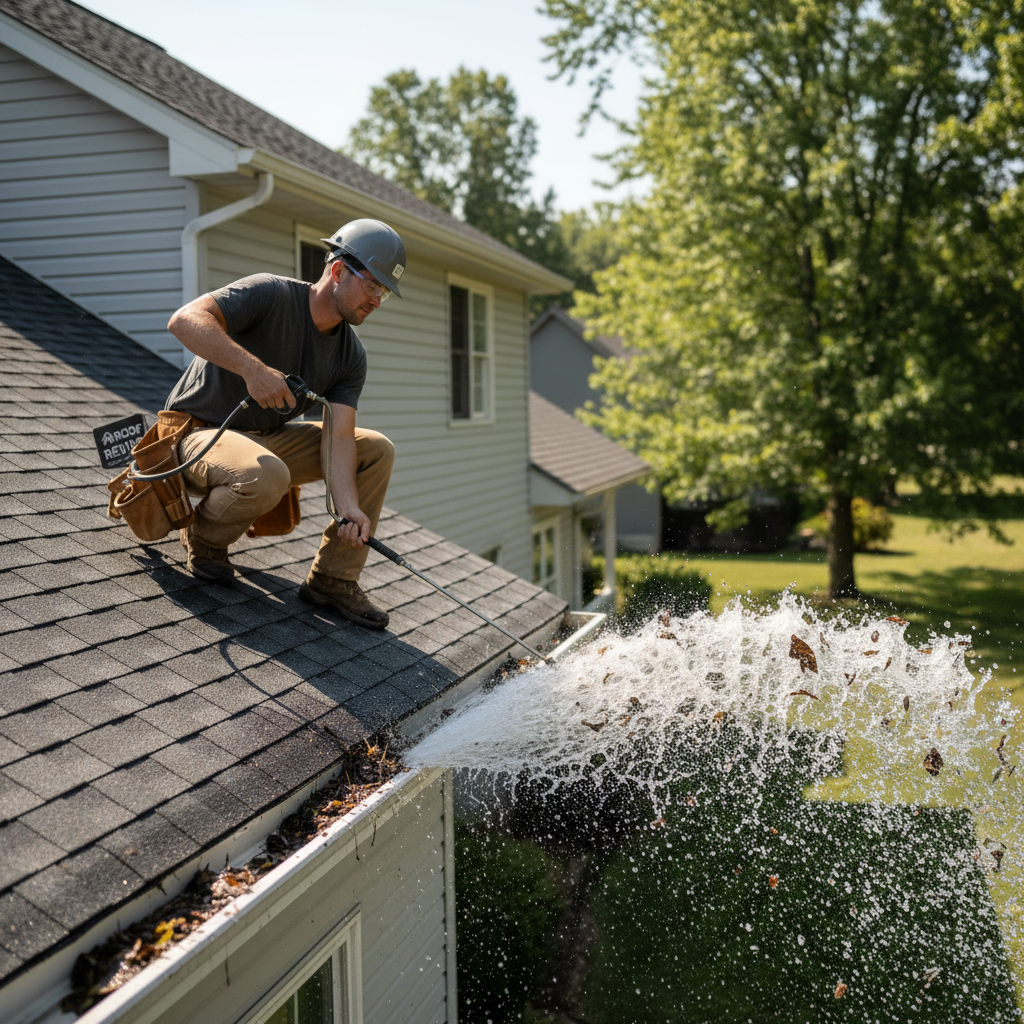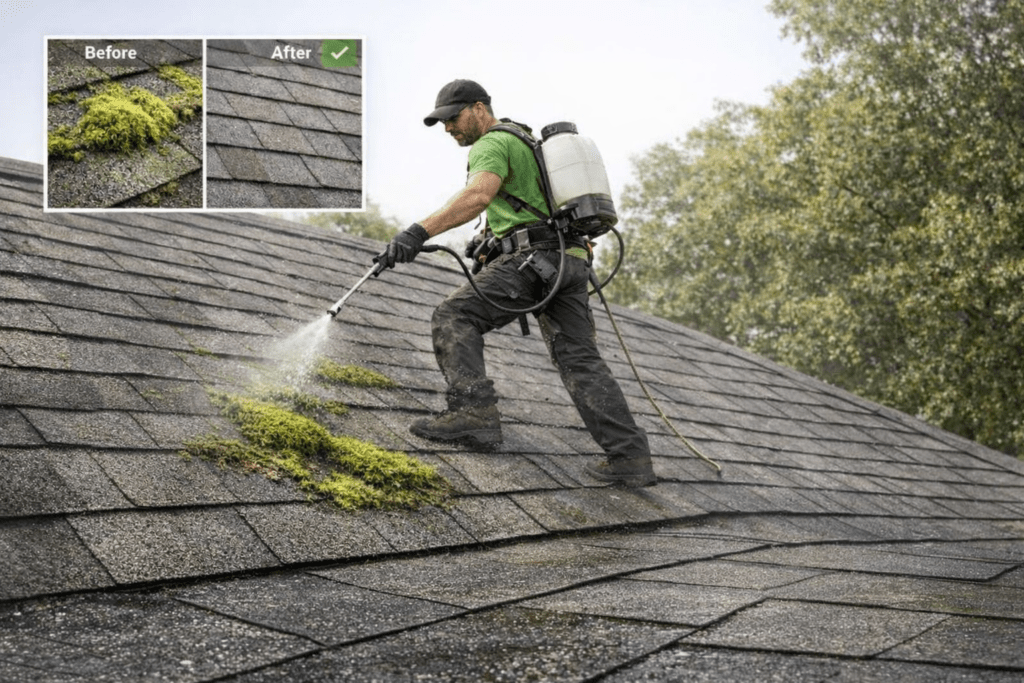
You notice the green tufts, and your first instinct is to get them off fast. But with asphalt shingles, the quickest-looking fixes often do the most harm, stripping granules and shortening roof life.
This guide walks you through how to remove moss from roof safely in warm, humid conditions, with realistic expectations about timing. You’ll learn how to confirm it’s moss (not algae or lichen), when you should stay off the roof and call a pro, and why “kill first, then let weather clear it” beats forcing an instant clean. By the end, you’ll know what to do next and what to avoid so moss doesn’t turn into a bigger roof performance problem.
When Moss Becomes a Roof Problem
Moss isn’t just cosmetic once it starts acting like a sponge and a pry bar. On asphalt shingles, asphalt shingle moss removal matters because thick or persistent moss holds water against the shingle surface and can work into shingle edges. That wet, gritty mat increases wear on the shingle granules and can contribute to edge lift over time, which makes it easier for wind-driven rain to get where you don’t want it. The part that trips homeowners up is thinking the “real problem” starts only when you see a leak. By then, you’re behind the eight ball.
A simple way to judge urgency is to look for signs moss is changing water-shedding. Look for shingles that no longer lay flat. For instance, a shaded north-facing slope under tree cover might show a thin green haze for a while, but when that turns into raised clumps that stay damp days after a storm, it’s no longer harmless.
Pay attention to these red flags (from the ground with binoculars if you can’t safely access the roof), since ARMA’s Residential Asphalt Roofing Manual notes moss growth can damage asphalt shingles and emphasizes non-abrasive debris removal.
Moss is thick enough to look tufted or “puffy,” especially along shingle butts, valleys, or around penetrations.
Shingle edges look lifted or uneven where moss has grown underneath.
Granules are collecting heavily in gutters/downspouts, and the worst buildup lines up with the mossy roof plane.
Water flow changes: gutters overflow sooner, or you see dark, wet streaking that lingers after rain.
If you spot two or more of these, treat it as a roof-performance issue, not a weekend “make it look clean” project. Your next move should prioritize killing and clearing moss without abrasion, because the most satisfying instant-clean methods often cost you shingle life.
If you’re seeing early lift, granule loss, or widespread growth, extending shingle life often comes down to restoring flexibility and adding protection after the roof is clean and dry. Read more in our article: Roof Rejuvenation
Rule Out Lookalikes Fast

A homeowner spots dark streaks, assumes it’s moss, and attacks it with a stiff brush. Two weekends later the “moss” is still there, but the gutter is full of granules.
Before you try eliminating moss on roofs, make sure you’re dealing with moss. Guessing here is a bad idea. If you treat every green or dark patch like moss, you’ll waste effort or reach for harsher methods. GAF’s guidance makes it clear those don’t belong on asphalt shingles.
Moss is usually raised and fuzzy or tufted, often forming little clumps that hold moisture, especially along shingle edges and in shaded areas. Algae tends to look like flat staining or dark streaks (more like a discoloration than a growth), while lichen often shows up as flat, crusty patches in pale green, gray, or yellow that look “stuck on.” If it isn’t puffy or sponge-like, don’t default to tactics meant for thick moss, because chasing a quick visual “clean” can cost you granules and shingle life.
Decide: DIY, Limited DIY, or Pro
If you can’t stay stable and calm on your roof, skip DIY roof moss removal and get it squared away with a pro. Height and steep pitch turn “quick cleanup” into a slip-and-fall trap. Granules are the first to pay. Case in point: the mossiest slope is often the north side, which stays slick longer and is the worst place to test your balance.
| Approach | When it fits | What you do |
|---|---|---|
| DIY | Low slope, single story, dry conditions, light moss, shingles feel solid. | Proceed with careful, non-abrasive steps. |
| Limited DIY | You’re not safe on the roof. | Stay off the roof; handle only ground-level prep (like gutters/downspouts) and schedule treatment.
| Pro | Steep or high roof, older/fragile shingles, widespread tufts/valley growth, or any fear of slipping. | Hire a professional for treatment and cleanup.
Eliminating Moss on Roofs Safely
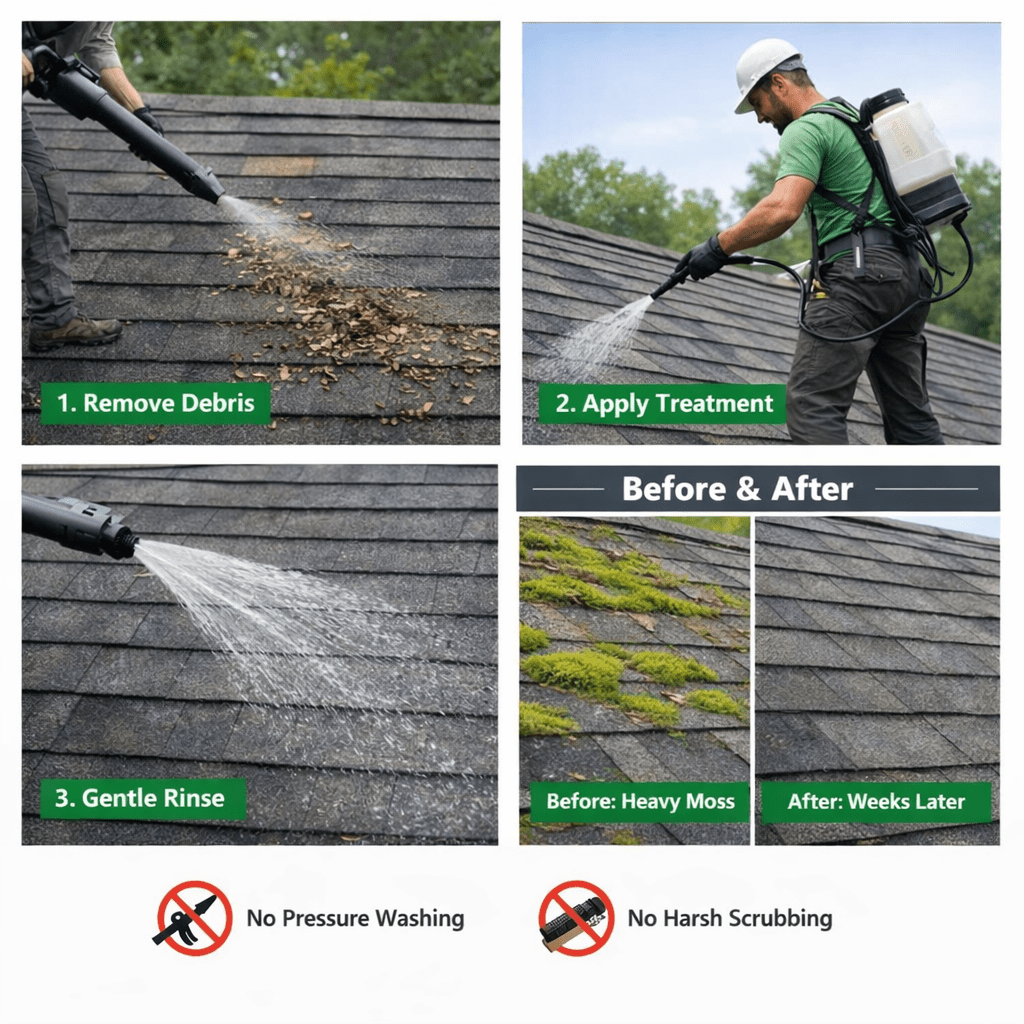
If you want eliminating moss on roofs to extend shingle life, you have to resist the “make it look perfect today” urge. That urge is pure trouble. The safest approach is a sequence, and it is not optional. It is straight out of This Old House: remove loose debris gently, treat to kill roots, then let time and weather do most of the work.
Start with dry, non-abrasive prep. On a dry day, clear loose leaves and needles with a leaf blower (or soft, careful hand cleanup from a ladder if you’re staying off the roof). As an example, if the north-facing slope drops a mat of debris into one valley, that’s where moss usually anchors and where you’ll see the most gutter clogging after treatment.
Then apply a roof-appropriate moss treatment according to the label, and plan for a wait. In warm, humid conditions, you’ll often see moss discolor or flatten over days to a couple of weeks, but the roof may not look “clean” right away. After the product’s dwell time, do a gentle removal or rinse that doesn’t scour shingles. Lightly rinse from the top down with a garden hose for soft wash roof moss removal, then clean out gutters and downspouts soon after.
Soft-wash style cleaning is typically the safest way to improve appearance on asphalt shingles without stripping granules when it’s done with low pressure and roof-safe products. Read more in our article: Roof Cleaning
Methods That Feel Effective but Ruin Shingles
You blast the roof until the green is gone and it looks perfect from the driveway. The next hard rain is when you find out what that force did to the surface that actually keeps water out.
Quick, force-based moss removal almost always harms asphalt shingles. The consequences often show up months later. When the goal is an instant, showroom-clean look, the cleanup usually creates larger problems. You’re shaving off protection like sanding a finished deck.
Here’s what to avoid, even if it “works” visually:
Pressure washing: It can strip protective granules and drive water up under shingle edges. You might get a clean-looking slope and roof granule loss after cleaning that now sheds granules into the gutters every storm.
Scraping or aggressive brushing (wire brushes, stiff brooms): Moss clings and roots into texture. When you scrape, you typically remove granules and tear at shingle edges long before you remove every fragment of moss.
Over-strong chemical mixes or improvised “hot” batches: Stronger isn’t safer. High concentrations can dry out or discolor shingles and create runoff problems for landscaping and metal flashing.
One more trap: “Label-allowed” doesn’t always mean “roof-safe.” Some moss-control labels describe rinsing methods that include high-force washing. Asphalt-shingle manufacturers and roofing manuals emphasize non-abrasive removal for a reason: once you’ve scuffed off granules or lifted edges, no product puts that protection back. When in doubt, choose the method that preserves the shingle surface, not the one that delivers instant gratification.
Runoff and Plant Protection
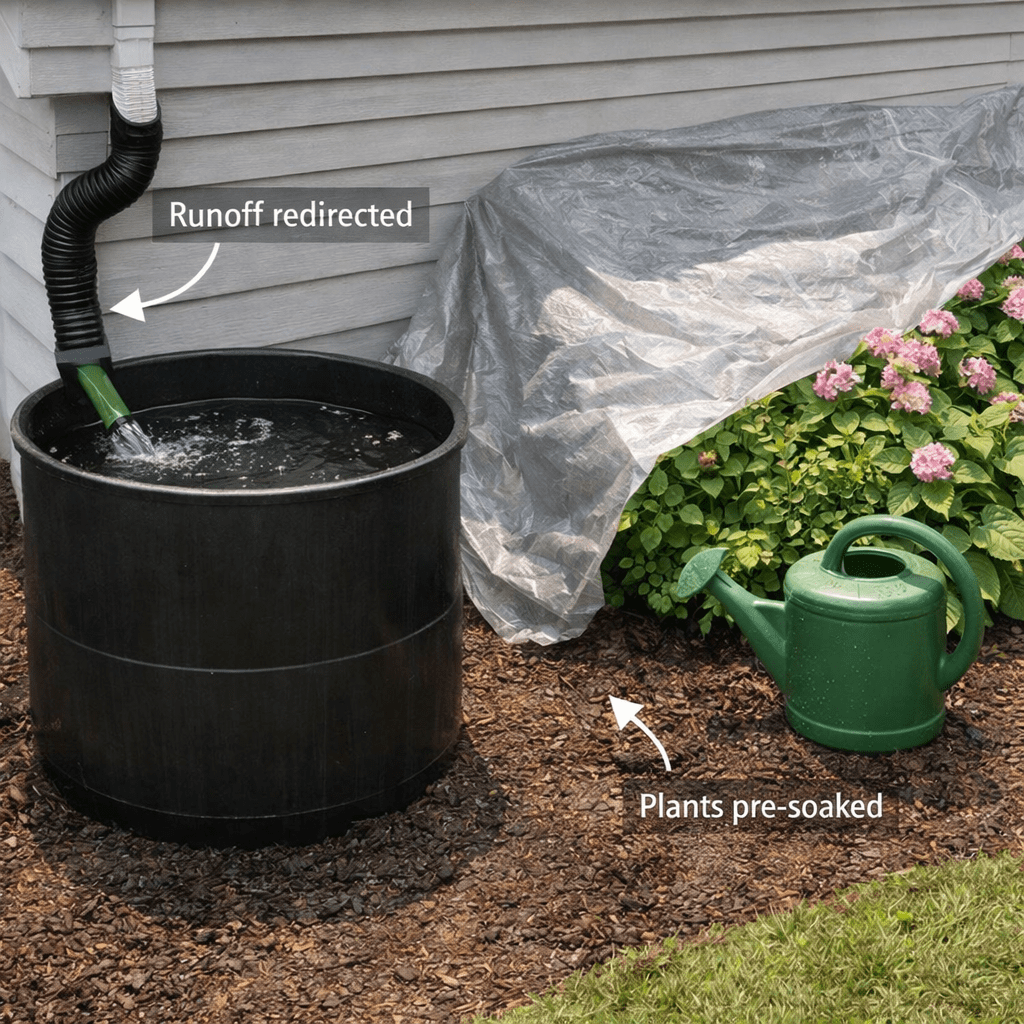
You can do everything right on the shingles and still lose a row of shrubs if the runoff concentrates at one downspout. A little prep keeps the cure from becoming the next problem.
Roof moss treatment doesn’t stay on the roof. In warm, humid yards where beds sit tight to the drip line, whatever you apply can wash off in the next shower, hit mulch and foundation plantings, and end up in gutters and downspouts. If you ignore runoff, you can “fix” the moss and still create burned leaves, stained hardscape, or a clogged downspout full of dead growth. That is inexcusable, even on Angi jobs.
Before you treat, set up a simple runoff plan and choose a plant safe roof cleaner. Pre-soak nearby plants and soil with clean water, and make sure downspouts discharge where you can dilute safely. After application and the next rinse or rain event, water the same areas again to dilute residue, and check that gutter outlets aren’t dumping concentrated runoff directly into a single shrub or flower bed.
Plant-safe application and controlled runoff are a big part of getting results without harming landscaping, especially in humid climates where residue can wash off quickly. Read more in our article: Greensoy Roof Treatment
What “done” looks like

A week after treatment, the roof still looks blotchy, so someone climbs up to “finish the job” with a scraper. That is how a patient process turns into permanent shingle damage.
“Done” is about stopping moisture retention, not chasing a brand-new look the next day. It is not my first rodeo. After treatment, moss often darkens or collapses within days. The leftover mats can take weeks to break loose, like concrete that needs time to cure.
You also shouldn’t expect to remove every last fragment that clings to the shingle texture, and RCABC’s consumer roofing guidance similarly notes it’s nearly impossible to physically remove all moss roots and small pieces from a roof surface. Even when the growth is dead, tiny pieces can stay anchored, and chasing a perfectly clean look is where homeowners often escalate to scraping or harsh brushing that does real shingle damage. A better test is simple: if the moss crumbles easily when lightly touched in a safe, limited spot (or you can see it’s flattening and thinning from the ground over time), your process is working, even if some staining or speckling hangs on for a while.
Preventing moss from coming back
You get a roof that dries quickly after a storm and stays clear through the sticky part of summer. The payoff is fewer treatments, fewer clogs, and fewer reasons to climb up there again.
If you’re wondering how to prevent moss on roof, you don’t do it by finding a stronger remover. Owens Corning would tell you the same thing: you prevent it by making your roof dry faster and stay cleaner. Start with the biggest levers: trim back canopy that keeps the north side shaded and keep valleys clear of leaves and needles. Make sure gutters and downspouts move water off the roof quickly so damp debris doesn’t sit and seed regrowth.
For longer-term control, zinc or copper strips can help inhibit new growth, but they won’t kill what’s already there, so they’re a follow-up step, not the fix. If you use strips, install them carefully and shallowly, no more than about 1 inch under the shingles, so you don’t disturb shingle edges (per GAF zinc strip installation guidance).
FAQ: Eliminating Moss on Roofs
How long does it take to see results after treatment?
Within days to a couple of weeks, moss usually discolors or flattens, while full clearing often takes additional weeks of rain and weathering. If you judge success in 48 hours, you’ll be tempted to use force that costs you shingle life.
How often do you need to treat for moss in warm, humid climates?
Plan on periodic maintenance, not a one-and-done fix, especially on shaded slopes under tree cover. If you see new tufts starting again or debris stays damp on the roof plane, it’s time to readdress the conditions that keep that area wet and dirty.
Do zinc or copper strips remove existing moss?
No, strips mainly inhibit future growth; you still need to clean the roof first. If you install zinc strips, don’t slide them more than about 1 inch under the shingles so you don’t disturb shingle edges.
Will moss removal void my roof warranty?
It can if you damage shingles during cleaning, because manufacturers expect non-abrasive methods. Before you or a contractor starts, confirm they’ll avoid pressure washing and aggressive scraping and will follow the shingle maker’s cleaning guidance.
What should you look for in a contractor for moss removal?
Look for someone who explains a gentle process (debris removal, treatment, then light cleanup), sets expectations that results aren’t instant, and includes gutter/downspout cleanup so dead moss doesn’t create a drainage problem. If the pitch is “we’ll make it look brand-new today,” you’re likely paying for methods that shorten roof life.
Contact us for a free inspection or call 703-673-6301 to find out where you stand.
For coastal NC homes, our Wilmington roof cleaning service removes moss with low pressure and bio-based chemistry.