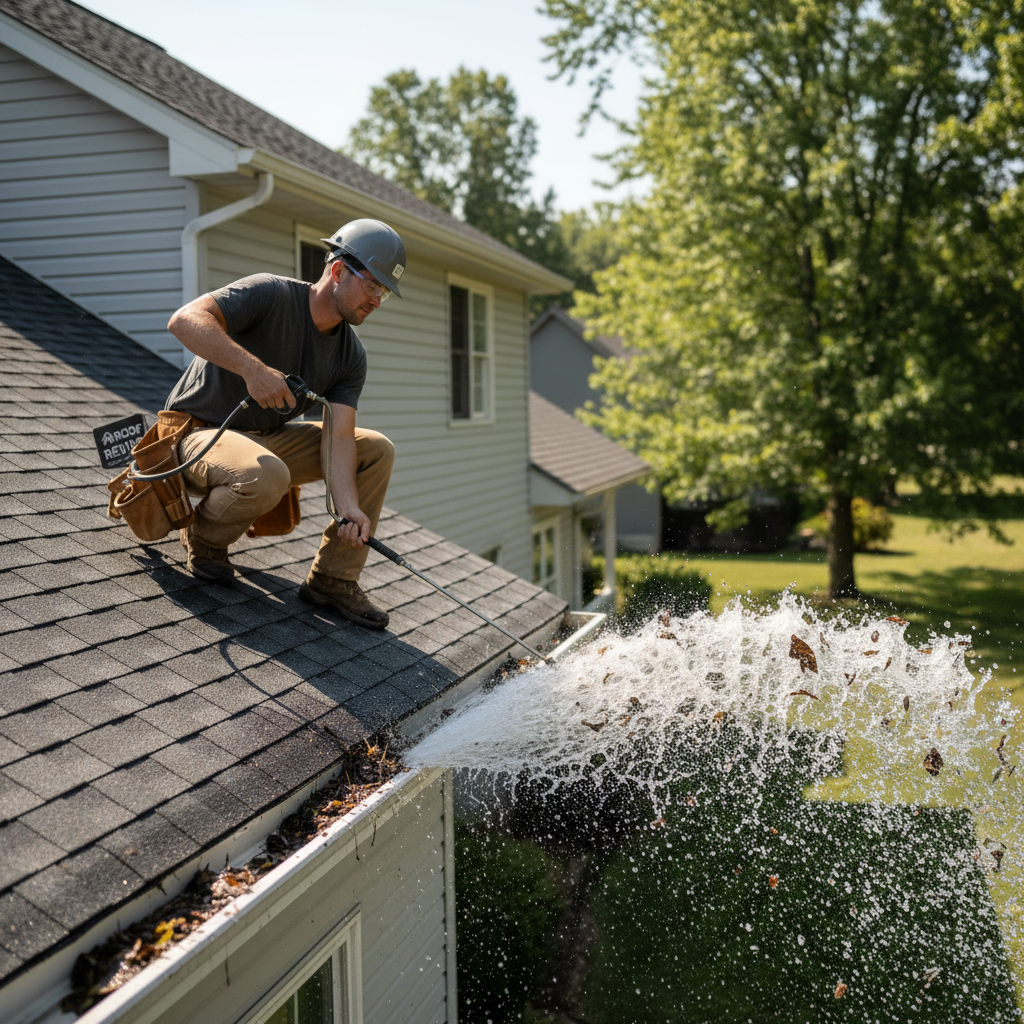
Is roof cleaning safe for shingles, or can it damage the roof? It can be safe, but only with low-force, no-scrub methods. Pressure washing and brushing can damage shingles fast.
If Wilmington’s humidity has left dark streaks and an HOA deadline or pre-sale timeline is looming, skip the buzzwords and focus on what the method puts on the shingles. In this guide, you’ll see when cleaning crosses the line into granule loss or water intrusion, and you’ll get a simple way to judge any contractor or DIY plan using three levers: pressure, abrasion, and dwell time. You’ll also learn what “safe” soft washing should look like on asphalt shingles (is roof cleaning safe for asphalt shingles), why results often keep improving for weeks after treatment, and when your roof’s age and condition mean cleaning is more risk than it’s worth.
When Roof Cleaning Damages Shingles

Roof cleaning turns into roof damage when the method adds mechanical force to a surface that’s built to shed rain, not take abrasion. That’s why ARMA warns against power washing and scrubbing asphalt shingles. It’s like sanding the roof to make it “look clean” while shortening its life.
In practical terms, you’re watching for problems like granules washing off (the gritty coating that protects the shingle) and water intrusion when water gets driven under laps like a jet instead of flowing down like rain.
Granule loss is often easiest to spot by checking downspouts and gutter runs after a heavy rain or any roof work. Read more in our article: Roof Granules Coming Off
The Safety Line: Pressure, Abrasion, Dwell Time
A contractor can call the process “safe,” but the wand distance and spray angle still decide whether it stays that way. One wrong choice here can trade a cosmetic fix for a shingle problem you do not see until the next hard rain.
If you want a quick pass/fail test, judge any “roof cleaning” plan on three levers: pressure, abrasion, and dwell time. Anything else is a distraction.
| Lever | “Safe side” indicators (asphalt shingles) | Red flags that raise damage risk, no matter the BBB ratings |
|---|---|---|
| Pressure | Low pressure (often under ~500 PSI) for wetting/gentle rinse (pressure washing roof shingles damage) | “Pressure washing,” high PSI claims (e.g., ~1,200 PSI), concentrated jetting |
| Abrasion | Zero scrubbing; no brushing on shingles | Brushing/scrubbing; mechanical agitation on shingle surface |
| Dwell time | Controlled dwell; follow guidance such as 15–20 minutes before gentle rinse | Over-long dwell sold as “safer,” or force used to compensate for poor dwell control |
Asphalt shingles handle water flowing down like rain, not a concentrated jet. No pressure washing and no brushing is the baseline.
A method stays on the safe side when it uses low pressure (often under ~500 PSI, not “we only use 1,200 PSI”), zero scrubbing, and controlled chemical dwell time. ARMA’s guidance for bleach-based cleaning calls for letting the solution sit at least 15 minutes but no more than 20 minutes before a gentle rinse. When “more time” or “more force” gets framed as safer, treat it as sales language, not a defined procedure.
Soft Washing Shingles: What “Safe” Looks Like

A homeowner gets their roof treated on Friday, checks it Saturday, and panics because the streaks are still there. Two weeks later, the same roof looks noticeably cleaner without anyone ever blasting it.
Safe soft washing means you’re treating the roof like an infection, not a dirt problem: apply a controlled cleaning mix to kill algae and let gravity do the work. Promises of “instant” results usually mean blasting until the streaks vanish, which favors the photo over the shingles.
Also, get a second set of eyes on it before you judge success in the first hour (many results can take days to weeks to fully show). The kill can show up in 24–72 hours, but the dark staining often lightens over 30–90 days as weather carries away what’s dead. A heavy rinse may boost the immediate look, yet it can strip away some of the residual protection that slows regrowth.
Soft washing success is more predictable when the contractor can explain what mix they use and how they protect plants, siding, and runoff areas. Read more in our article: Roof Cleaning Chemical Safety
Coastal NC reality: maintenance, not one-and-done
In Wilmington’s humidity and shade, algae and mildew pressure stays high, so even a safe clean rarely stays “done,” no matter what Nextdoor says (recolonization and recurring discoloration are expected, per ARMA). ARMA’s own guidance frames algae discoloration as temporary. Expect a 2–4 year maintenance cycle in wetter climates, not a decade-long cure.
That changes what “safe” should mean for you. The schedule and budget have to make sense for this roof’s remaining life. As an example, for an HOA deadline or resale prep, work backward from the date: the roof can keep lightening for weeks, and you’ll likely be back on a maintenance cycle within a few summers.
In coastal North Carolina, salt air and humidity can accelerate shingle aging, which can change whether cleaning is worth it on an older roof. Read more in our article: Salt Air Humidity Shingles
Cleaning vs rejuvenation vs replacement
You want the choice that makes the roof look better without accidentally turning a manageable issue into a bigger project. The right next step depends less on the stain and more on what the shingles are already telling you about their remaining life (roof cleaning warranty void).
When the roof still has useful life, cleaning tends to be the lowest-risk appearance fix since it removes algae without implying the shingles are younger. But if you’re dealing with widespread granule loss or repeated leaks, “make it look new” becomes the wrong goal, and replacement stops being optional and starts being a tripwire, not a makeover.
Use this quick shortlist to pick your next step
-
Choose cleaning if the shingles still lay flat, the discoloration looks like streaking (not missing material), and you can wait weeks for full visual improvement (common with HOA and resale timelines).
-
Consider rejuvenation if the roof is mid-life and you’re trying to kick the can down the road, but only if you accept it won’t fix underlying installation issues, soft decking, or active leaks.
-
Choose replacement if you see widespread granule loss in gutters/downspouts or persistent leaks, or you’re already near the roof’s expected lifespan and don’t want a cleaning visit to be the thing that pushes it over the edge.