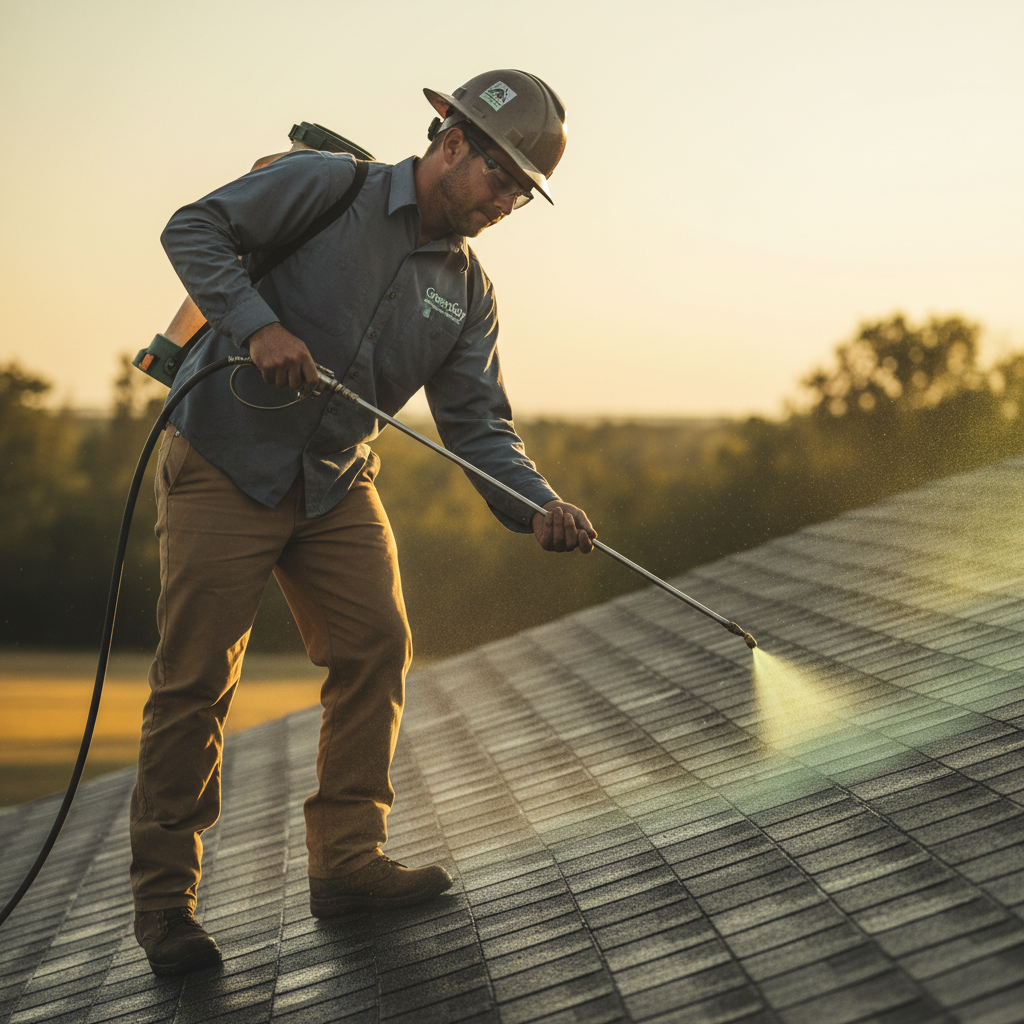
You scheduled a roof treatment to handle ugly black streaks, and now you’re second-guessing it. The roof might look cleaner, but you can’t shake the fear that the crew stripped granules or loosened tabs.
This guide gives you a way to answer it with evidence instead of a hunch. It lets you kick the tires first. You’ll learn what shortens asphalt shingle life after a treatment, including common shingle roof treatment side effects. Think of it like thinning the roof’s sunscreen layer. You’ll also learn what quick signs to check around your gutters and eaves and what to ask the contractor so you can decide whether to monitor or book an inspection before you do anything else.
Did the treatment harm my shingles or shorten their life?

Granule loss is the main way a treatment cuts shingle life, since the granules shield the asphalt from UV and weathering. That’s why manufacturer-level guidance, including the Owens Corning Roofing installation/warranty guide, warns against power washing or scrubbing asphalt shingles. It is just asking for trouble. Abrasion and high pressure can strip the surfacing even if the roof “looks clean.”
A low-pressure, bleach-and-water style algae treatment can improve appearance without improving roof health, and the discoloration often comes back anyway. When you’re assessing risk, “low pressure” by itself doesn’t tell you much. It doesn’t pass the sniff test as a safety guarantee. Instead, ask what they used for agitation (if any) and whether they documented mix ratio and dwell time before a gentle rinse.
The Two Things That Actually Shorten Shingle Life
You can walk away with a roof that looks brighter and still end up paying sooner for repairs or replacement because the protective surface got stripped or the shingles got roughed up in ways you won’t notice from the driveway.
After a treatment, there are typically only two ways things go wrong: granules get removed, or the shingle gets disturbed enough to trap water and wear faster (creased, torn, lifted, or loosened). Everything else, including killing algae, is mostly cosmetic.
So a “brand new” look can hide damage if you find granules in the gutters, more exposed black asphalt, or scuffed shiny areas where the texture changed. It is like sanding the tread off a tire until it shines. If you’re judging outcome by appearance alone, get a second set of eyes on it. You can talk yourself into the exact wrong conclusion.
Fast Homeowner Damage Check (10 Minutes)

ARMA’s guidance for bleach-based algae cleaning hinges on process control like a short dwell time, roughly 15 to 20 minutes, followed by a gentle rinse. So it helps to check where debris ends up, since that often tells you more than color changes do.
Start where evidence collects. Walk the drip line and look for a “peppery” layer of gritty granules on concrete, mulch, or in splash zones, then check gutter elbows and downspout outlets for piles of black sand. A bright roof can still mean the mess got pushed into the drainage instead.
Granules collecting at downspout outlets after a treatment is one of the clearest early clues that abrasion or rinsing removed protective surfacing. Read more in our article: Granules In Gutters After Treatment
Next, from a ladder at the eave (don’t get on the roof), scan with binoculars for shiny scuffed patches or lifted tabs. Finally, peek in the attic after the next rain for fresh dark spots at the deck or around penetrations; new leaks right after treatment point to physical disturbance, not “algae.”
What to Ask Your Contractor, Mix, Dwell, Pressure, Brushing
A homeowner asks for the mix ratio and dwell time, and the crew can’t produce anything beyond “low pressure.” Two months later, when scuffs show up, there’s no way to separate normal wear from a bad process.
A contractor following manufacturer-aligned guidance should be able to provide specifics and basic documentation that protect you on warranty questions. Anything less is unacceptable. If they can only say “we used low pressure” or “it’s our secret sauce,” even an Angi (formerly Angie’s List) profile won’t help you judge whether your shingles took a hit.
If a crew can’t document mix ratio, dwell time, and whether any brushing or pressure washing happened, you’re left guessing about both damage risk and warranty implications. Read more in our article: Roof Cleaning Warranty
Ask these. Get it in writing if possible (see the National Softwash Authority’s documentation guidance)
-
What was the sodium hypochlorite % at the roof (mix ratio), and what was the dwell time?
-
Did you rinse? If yes, how (hose rinse vs any pressure washer use)?
-
Did anyone brush, broom, or scrub any areas?
-
Do you have before/after photos and notes of pre-existing damage (cracks, loose tabs, thin granules)?
When to Stop, Inspect, or Proceed With More Treatment
You want a simple call at the end of this: either you monitor with confidence, or you pause and get eyes on the roof before more work compounds the risk.
| What you found after treatment | Likely risk | What to do next |
|---|---|---|
| Gritty “peppery” granules in gutters/downspouts or at splash zones | Granule loss (reduced UV/weather protection) | Stop further treatment; book an inspection; document debris/photos |
| Shiny scuffed patches, exposed black asphalt, newly lifted/creased tabs | Physical disturbance (higher wear, possible water-holding) | Stop further treatment; book an inspection before any more work |
| Any new leak signs after the next rain (attic spots, around penetrations) | Disturbance-related leak risk | Book an inspection promptly; document timing and locations |
| No visible granules in drainage + no scuffing/lifted tabs from eave check + contractor can document mix/dwell/rinse and no brushing | Lower concern; mostly cosmetic outcome | Monitor after the next hard rain; avoid unnecessary repeat treatments |
| No clear damage, but contractor can’t/won’t provide mix ratio, dwell time, rinse method, or whether brushing/power washing happened | Uncertain process; can’t assess risk | Book an inspection before authorizing anything else |
If you’re seeing granule loss or physical disturbance, don’t let the improved appearance push you into more work. Cover your bases instead, especially if you’re worried about soft washing roof damage shingles. In those cases, pause further cleaning and schedule an inspection.
Even without obvious damage, unclear mix or dwell details are enough to justify an inspection before you approve more work. Missing details are like missing flashing. Water finds a way. On the other hand, if you see no granules in drainage areas and no scuffing or lifted tabs from the eave check, and the contractor can document a low-pressure application with a brief dwell and gentle rinse, you can usually treat it as cosmetic maintenance and simply monitor after the next hard rain.
A professional inspection after a questionable treatment focuses on granule loss, lifted tabs, and early leak pathways around penetrations before those issues turn into active leaks. Read more in our article: Typical Roof Inspection
FAQ (Purpose: resolve the remaining high-anxiety edge cases about shingles, bleach, recurrence, and repeated treatments; Role: implication + reassurance boundaries; Depth: short)
Can A Bleach-Based Roof Treatment “Eat” My Shingles?
A properly diluted, low-pressure sodium hypochlorite (bleach) application with a short dwell time and gentle rinse is a common, manufacturer-aligned way to lighten algae staining on asphalt shingles. The bigger lifespan risk usually comes from abrasion or high-pressure rinsing that strips granules, not from the bleach itself.
The Roof Looks Cleaner, But Did That Mean It Extended Roof Life?
Not necessarily. Algae treatment is often cosmetic and temporary, and staining can return in warm coastal areas even when the shingles are fine.
Is It Normal For The Black Streaks To Come Back In Coastal North Carolina?
Yes. Along the Eastern Seaboard, recurrence is common, so “it came back” usually means you’re dealing with the local climate, not proof that the last treatment failed or damaged the roof (per ARMA’s algae discoloration bulletin).
If I’m Still Worried, Should I Schedule Another Cleaning To “Fix” It?
Don’t stack treatments just to calm the anxiety. It is a bad idea. Repeating any process increases the chance of unnecessary granule loss if the crew scrubs or uses a pressure washer. If you’re unsure how the last job was done, schedule an inspection first and ask for the mix ratio, dwell time, and whether any brushing or power washing happened.
Do I Need To Replace The Roof If A Contractor Used A Pressure Washer?
Not automatically, but you should treat it as a higher-risk event and verify condition rather than guessing. Pull the GAF asphalt shingle warranty documentation and see what it says about improper cleaning. If those signs show up, document them and get the roof inspected before you greenlight anything else.
Roof not getting any younger? Contact us or call 703-673-6301 to find out where you stand.