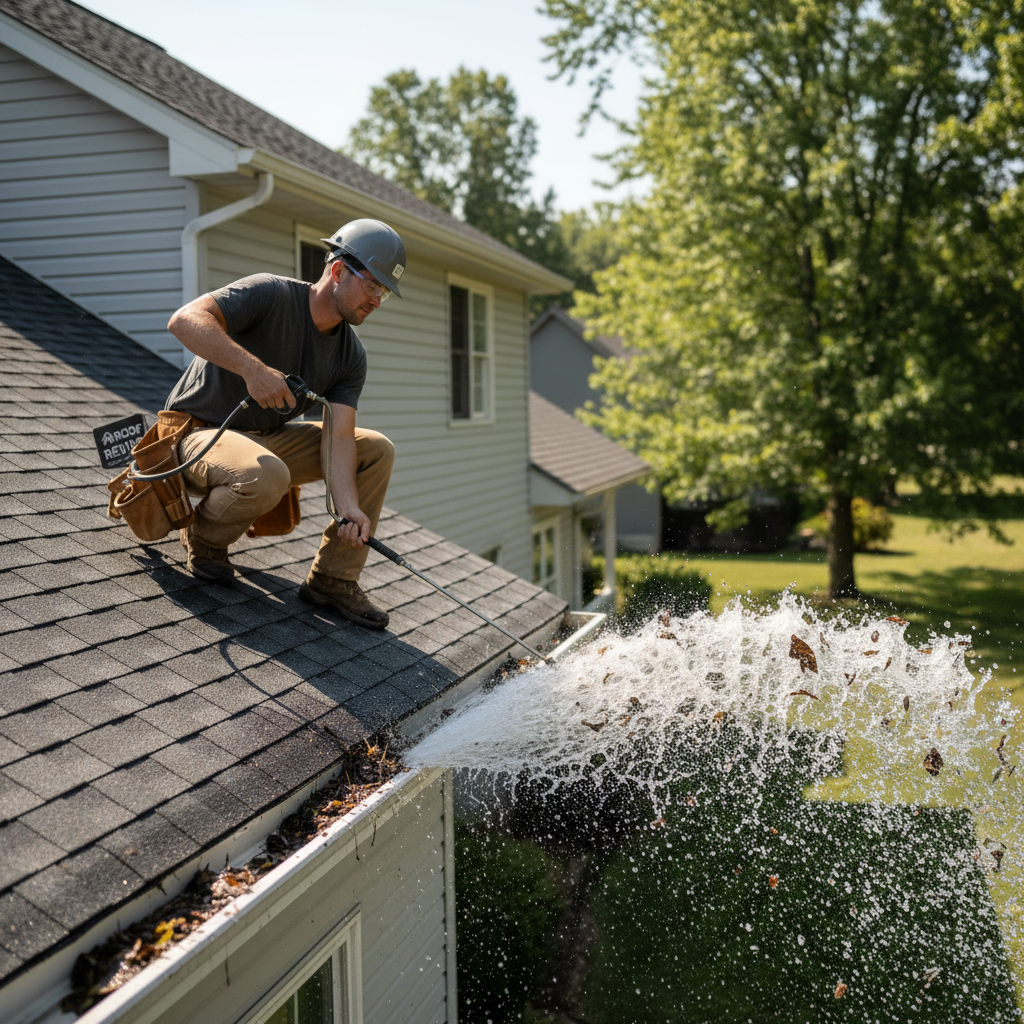
How much roof life does this kind of cleaning usually add? On most asphalt shingle roofs, it’s usually 0–1 year for light black streaks. If you’re removing moss or debris that keeps shingles wet, you might gain 1–3 years. If you’re doing true roof rejuvenation, providers often target about five years per treatment.
| Situation / service | What it addresses | Typical added roof life (asphalt shingles) |
|---|---|---|
| Light black streaks (algae) + soft wash | Mostly cosmetic staining | 0–1 year |
| Moss/debris removal (moisture trap) + gentle cleaning | Areas staying wet (valleys, shaded slopes) | 1–3 years |
| Roof rejuvenation treatment (after gentle prep-clean) | Aging but intact shingles (reconditioning) | ~5 years per treatment |
The catch is that “roof cleaning” gets used to describe very different jobs, and if you don’t kick the tires on the method, the wrong one can cost you more life than it saves. In Wilmington’s humidity, moisture traps do the real damage (roof cleaning Wilmington NC). Cosmetic staining usually does not. This guide breaks down what kind of “dirty roof” you have and what a manufacturer-aligned soft wash can realistically do. It also covers when cleaning can shorten roof life or when you’re better off rejuvenating instead.
The “Years Added” Depends on What’s Happening

If you want a single “how many years does cleaning add?” number, you’ll keep getting burned, because “dirty roof” can mean three very different situations. Light black algae streaks can be mostly cosmetic, so cleaning may make it look better without changing lifespan much.
But mats of pine needles in valleys or clumpy moss on shaded north slopes can speed wear. And if your shingles are already brittle or curling, cleaning won’t make them young again, and the wrong method can shorten life instead.
In coastal NC, algae streaks are usually a cosmetic issue, and the bigger goal is removing what’s actually holding moisture on the shingle surface. Read more in our article: Roof Algae Black Streaks
How much roof life cleaning adds
A homeowner pays for a “roof wash,” sees the black streaks disappear, and then realizes after the next storm that the damp valley spots are still holding moisture. What matters is whether the job removed what was keeping shingles wet without damaging the shingle surface.
On an asphalt shingle roof, a gentle, manufacturer-aligned “soft wash” (soft wash roof cleaning) to kill algae and rinse it off usually adds little to no measurable life when you’re only dealing with light black streaking. Think 0–1 year in many cases, because the roof wasn’t failing from the staining in the first place.
Where cleaning can matter more is when growth or debris is keeping shingles wet (moss or packed valleys), because that moisture trap sits there like a wet sponge on the shingles, and the best-case result is often just good enough for now. In those situations, removing the moisture trap can plausibly buy you 1–3 years of serviceability. But the fastest way to erase any benefit is using pressure or scrubbing that strips granules. The “years added” comes down to whether the method avoids surface damage.
A quick way to calibrate your expectation: if you mainly see stains on otherwise dry, gritty shingles, expect a small gain; if you see clumps, mats, and areas that stay damp long after rain, that’s when cleaning has a better chance of meaningfully slowing wear.
When Cleaning Can Shorten Roof Life

You can end up with a roof that looks cleaner on day one and wears out faster by the next summer. Once the protective granules are scuffed off, there’s no easy way to put that life back.
Pressure washing or aggressive brushing can cut roof life quickly, since asphalt shingles rely on surface granules to absorb sun and rain wear (ARMA also explicitly advises against using a power washer or brush/broom to clean algae on asphalt roofs: asphaltroofing.org ARMA bulletin). Strip or scar that layer and the roof can age quicker. Pressure washing shingles is flat-out reckless (does soft washing damage shingles), no matter what Nextdoor says about how “great” it looked that day.
To avoid paying for negative ROI, make the method non-negotiable: no pressure washer on shingles and no wire brushes. As an example, if you notice piles of colored grit at the bottom of downspouts after the job or you see fresh bare asphalt spots where granules used to be, the cleaning likely cost you more years than it could ever add.
If you see piles of colored grit after a wash, that’s often granule loss, one of the clearest signs the method was too aggressive. Read more in our article: Roof Cleaning Without Removing Granules
How much roof life rejuvenation adds
Most rejuvenation programs treat five years as the unit of measure, then plan on reapplying if the roof is still a good candidate. That built-in cycle is a useful reality check when you’re comparing “years added” claims.
Roof rejuvenation isn’t “cleaning.” It’s a chemical treatment intended to recondition aging asphalt shingles (after any gentle prep-clean), so it’s the category where providers usually talk in years (for example, Roof Maxx’s warranty is five years per treatment: warranty). In practice, most programs anchor to about a 5-year window per treatment (how long does roof rejuvenation last), often with a five-year warranty, because the measurable benefit is expected to fade rather than last indefinitely.
You should rethink the idea that it “adds 10–15 years” in one shot, because this is more like conditioning leather work boots than bringing them back from the dead, and it’s a buy once, cry once decision if you’re paying for it. Rejuvenation can help most when shingles are aging but still intact (no widespread cracking or heavy granule loss). If your roof already looks structurally tired, it may improve appearance and water-shedding short-term, but it won’t reverse end-of-life wear.
Rejuvenation performance is easiest to evaluate when you understand how fast results typically fade and what a realistic re-application cycle looks like. Read more in our article: Roof Rejuvenation Results Last
Decide: clean, rejuvenate, repair, or replace
If your roof is mostly sound and you’re dealing with light black streaking on dry, gritty shingles, clean for appearance (and to reduce growth), not because it reliably buys big time. If the roof is intact but aging and you want a real “years” play, rejuvenate only when shingles still lie flat and aren’t shedding lots of granules.
If you’ve got localized issues, repair first: popped nails or a leaking pipe boot. Replace when you see widespread curling/cracking or repeated leaks. In coastal NC, plan for regrowth. A one-time clean won’t change shade and lingering moisture.
Roof not getting any younger? Contact us or call 703-673-6301 to find out where you stand.