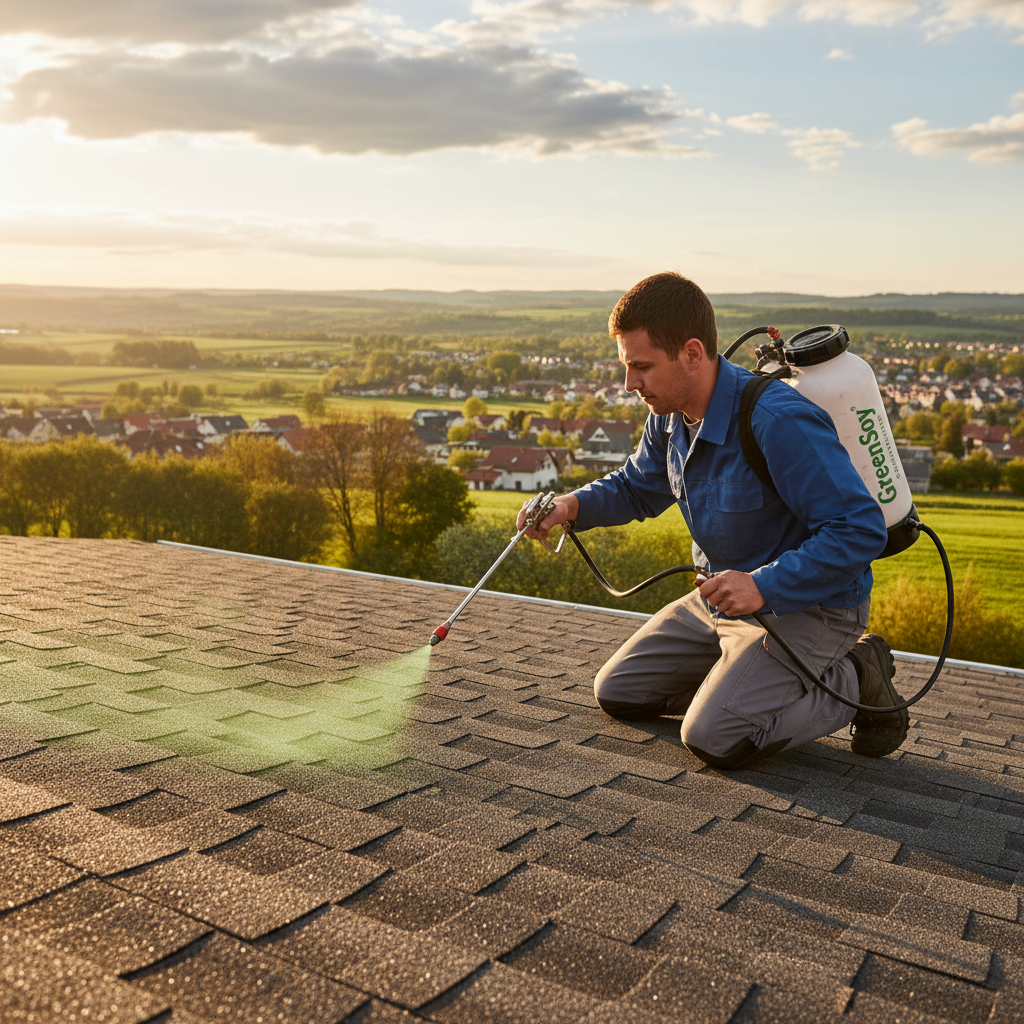
You’re looking at curling edges and hairline cracks, and shingles that seem chalky or brittle. You want to know if roof rejuvenation will fix those problems, or if you’re just kicking the can down the road with a paint-over-rust makeover. In most cases, rejuvenation can’t flatten true curling or reverse material that’s already gone, but it may slow further aging if your roof still has solid granule cover and sealed tabs.
The word “fix” can point to three different outcomes. It can mean making the roof look better from the street or helping the shingles perform longer, or creating paperwork that satisfies an inspector, buyer, or insurer. This article separates those outcomes, explains why curling and cracking show up in coastal North Carolina, and offers a quick screen for whether rejuvenation is even worth pricing.
What ‘Fix’ Means Here

When you ask if rejuvenation will “fix” curling, cracking, or dried-out shingles, start by choosing the outcome you care about because the results don’t track together. There’s (1) cosmetic fix (shingles look flatter or newer from the street), (2) performance fix (shingles stay more flexible and shed granules more slowly, buying time before the roof deteriorates faster), and (3) paperwork fix (something that changes resale conversations or inspection outcomes, including how Zillow or Redfin comps get interpreted). A treatment can potentially help with #2 without delivering #1, and it almost never guarantees #3, no matter what anyone claims.
The mistake is treating “looks old” as the same thing as “acts old.” To illustrate this, a roof can still be watertight yet look dry and mottled, while another roof can look only mildly aged but already have issues around a pipe boot or flashing that no shingle rejuvenation spray touches. Before you compare quotes, decide whether you need appearance, added service life, or documentation that stands up in a roof restoration vs replacement decision.
Why Shingles Curl, Crack, and Look Dried Out

A neighbor swears the roof is “just a little dry,” but the next windy week you notice corners lifting on the same slope that looked fine from the driveway. The symptom you see first is rarely the whole story.
From the yard, different problems can look almost identical. In coastal North Carolina, sun and heat accelerate asphalt oxidation, which pulls oils out of shingles and leaves them brittle, cracked, and “dry,” and no spray can undo that chemistry once it’s advanced. But curling can also be mechanical: seal strips let go and edges get lifted by wind, and the shingle slowly takes a new shape that a surface treatment won’t press flat again.
Poor ventilation can accelerate both paths. If your attic runs hot, the shingle bakes from below and ages early, especially on south and west slopes. What you can do differently: when you see curling or cracking, don’t treat it as one issue; ask what’s causing it on your roof before you pay for any “fix.”
In coastal North Carolina, salt air and humidity can speed up asphalt oxidation and make shingles feel brittle sooner than homeowners expect. Read more in our article: Salt Air Humidity Shingles
What Asphalt Shingle Rejuvenation Can and Can’t Reverse
In testing summaries, the promised win is often granule retention, not cosmetic transformation. One PRI-cited brush test summary reports about 46% lower granule loss after treatment versus untreated shingles (as summarized by Roof Observations).
When it does help, rejuvenation softens the asphalt so the shingle is less brittle. That can translate into better flexibility and granule adhesion in testing, which matters because granule loss accelerates UV damage. If you buy it expecting a “reset” to flat, new-looking shingles, you’re buying a cosmetic promise it doesn’t deliver. After shape change or material loss, a surface treatment can’t restore the missing structure. The material is gone.
To illustrate this, think of two roofs that both look dry from the driveway. One still has intact tabs and decent granule cover, but the shingles feel stiff and the surface looks chalky. The other has corners that stay lifted and seal lines that have let go after wind events, and spots where you can see shiny asphalt or even fiberglass. Rejuvenation might help the first roof age more slowly; it won’t make the second roof start behaving like a properly sealed system again.
Rejuvenation may help (realistic wins):
-
Increase shingle flexibility so edges are less prone to cracking when handled or in temperature swings
-
Slow further surface breakdown by improving granule retention (a performance win even if it doesn’t look dramatic)
-
Make “dried-out” shingles look a bit richer in color, but usually unevenly or not like a new install
Rejuvenation won’t fix (hard stops):
-
Shingles that are already permanently curled or warped (shape change doesn’t un-happen)
-
Broken seal tabs or widespread unsealed shingles that lift in wind
-
Missing granules to the point of bald spots or exposed fiberglass, or thin, shiny asphalt showing through
What you can do differently: when you’re getting an inspection, ask the contractor to show you where the roof is losing granules and whether tabs are sealed. If they can’t point to intact granule coverage and solid sealing on most fields of shingles, you’re not shopping for rejuvenation anymore, you’re shopping for repairs or replacement.
The Fast Screening: When Rejuvenation Is Still on the Table
You don’t need a chemistry debate to screen this. This is a triage call, not a gut-feel call. You need to know whether you’re looking at a roof that’s mostly intact but “aging,” or a roof that’s already failing as a system. Case in point: if the field shingles have decent granule cover and are still largely sealed down, a conditioner-style treatment might buy time. If the roof is shedding granules in sheets or staying lifted after wind, or already leaking, a roof rejuvenation treatment becomes a distraction from the real fix.
A useful rule of thumb some rejuvenation explainers use is granule loss under roughly 15% as a better-candidate range (for example, one explainer frames granule loss as the key screening factor), basically “good enough for government work” for screening, not a lab-grade verdict. It isn’t magic, but it forces the real question: are you slowing wear on intact material, or trying to compensate for material that’s already missing?
| Check | Go (better candidate) | No-go (rejuvenation not appropriate) |
|---|---|---|
| Granule loss | Consistent coverage with only light thinning | Widespread bald spots or shiny asphalt showing, or fiberglass mat showing |
| Brittleness | Tabs can be lifted gently for inspection without cracking | Edges snap or crack webs are common, or chunks break off when handled |
| Seal integrity and lift | Most tabs are sealed and lie down after normal breezes | Many tabs are unsealed or corners stay up, or chronic wind-lift patterns |
| Active leaks or wet decking | None present | Any current leak staining or wet sheathing, or active seepage |
| Scope of damage | Localized: a few problem areas (one slope/section) | Widespread: same issues repeat across most slopes |
If a contractor can’t document these conditions clearly and still pushes “it’ll fix the curling,” you’re not being offered screening, you’re being offered hope.
Granule loss is one of the quickest ways to tell whether a treatment is buying time or just masking a roof that’s already wearing out. Read more in our article: Roof Rejuvenation Granule Loss
Curling vs Cracking: What Changes, What Won’t

If you treat every worn-looking shingle the same way, you can spend money and still end up with lifted tabs and wind-driven leaks that the spray was never going to prevent. Budget gets wasted fastest when a sealing and shape issue gets treated like simple brittleness.
If your shingles are curling or cupping, don’t expect rejuvenation to lay them flat again; once they’ve taken a set, they’ve taken a set. Once a tab has lifted in Wilmington wind events and “taken a set,” that’s a shape change plus a sealing problem, not just dryness. A conditioner may make the shingle less brittle, but it won’t re-bond broken seal strips or press warped edges back into place.
If you’re seeing cracking and a dried-out, chalky look, rejuvenation has a more realistic lane: it may restore some flexibility and slow further surface breakdown, especially when granule cover is still decent. What you can do differently: treat cracks like a clock, not a cosmetic flaw. Ask for a plan that includes replacing the worst cracked shingles now and fixing the reasons they’re aging fast (hot attic, failed seals, leaky penetrations).
Roof Rejuvenation Cost and ROI in Coastal NC Terms

You want the option that buys time without buying constant anxiety every time a storm line shows up on the radar. The right choice is the one that reduces repeat emergency calls and makes the next 12 to 24 months predictable.
In Wilmington, ROI is how many storm seasons you’re buying and what leak risk you’re taking on while you wait, not just the invoice total. Rejuvenation can make sense when your roof screens in as a candidate and you need a lower-cost runway in the roof rejuvenation or replacement decision. Spot repairs can make sense when you’ve got a few fixable weak points, and replacement makes sense when you’re already paying repeatedly to keep a worn-out system limping through hurricane season, even if the replacement price brings sticker shock.
Don’t default to the lowest upfront price if your real goal is certainty before a sale or insurance renewal. As an example, if you’re 12 to 24 months from listing, you’re often better served by either a documented, candidate-appropriate treatment plus targeted repairs, or a clean replacement that removes underwriting and buyer objections, rather than a “cheap now” option that still leaves you explaining curling or granule loss, and wind-lift risk later.
If you’re close to an insurance renewal or a home sale, the “best” option is often the one that reduces underwriting and buyer objections, not just the cheapest invoice. Read more in our article: Roof Work Insurance Resale
FAQ
Does Rejuvenation Come With a Leak Warranty?
Usually not. Most warranties cover the treatment itself (for example, material or application) rather than guaranteeing your roof won’t leak, so read what’s covered and what conditions void it.
Should You Worry About Chemicals, Odor, or Pets?
You should ask what the product is (and request the SDS) and how long any odor typically lingers, especially if you have open soffit vents or attic fans that can pull smell indoors. If the contractor can’t explain overspray protection for siding and patios, and HVAC intakes, you’re taking on avoidable cleanup risk.
Will a Treated Roof Still Be “Class A” Fire Rated?
Don’t assume it automatically stays the same rating just because the original shingles were Class A (a recent review notes the certification nuance for treated roofs). Ask the contractor what fire-testing documentation exists for the product on treated shingles and whether it’s a lab test summary or a full certification claim.
Will Rejuvenation Remove Algae or Black Streaks?
Not reliably. Algae staining is usually a biological or cosmetic issue, so you may see little to no improvement unless you also do a proper roof-safe cleaning plan, and you should avoid anyone promising it’ll make streaks disappear like a new roof.
How Do You Pick the Right Inspector or Contractor for This?
Choose someone who will document granule loss and seal integrity, and any active leak indicators with roof photos during a storm damage roof inspection, because trusting Angi or Nextdoor vibes over evidence is a bad idea, and will say “no” when the roof isn’t a candidate. As an example, a good inspection in Wilmington includes checking common leak points like pipe boots and step flashing, and wind-lift patterns, not just selling you a spray based on how the shingles look from the street.
Roof not getting any younger? Contact us at Contact us or call 910-241-1152 to find out where you stand.