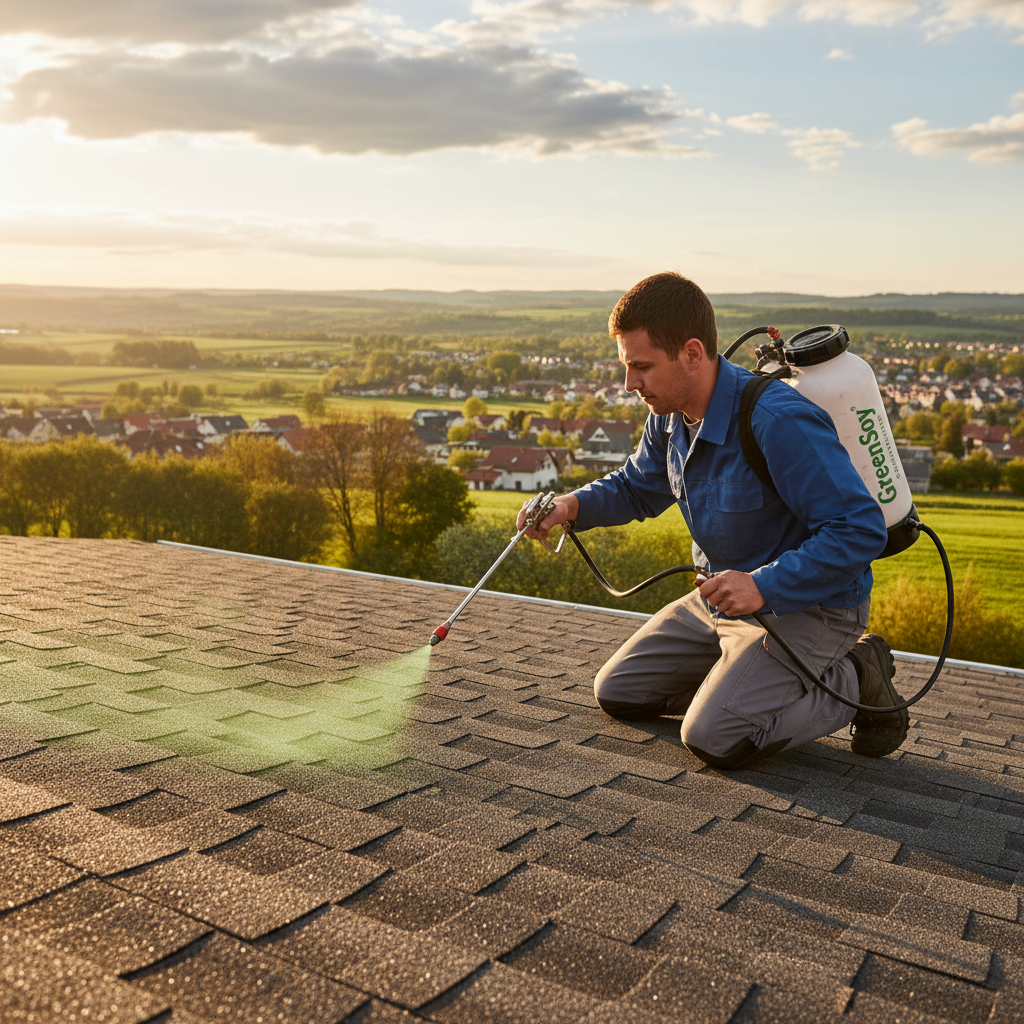
You can mess up a roof rejuvenation treatment with the wrong “cleaning,” even if the roof looks better that day. The biggest risks come from high pressure and harsh or repeated chemical applications that strip granules, lift shingle edges, or over-soften the surface.
If you’re in coastal North Carolina, the risk is higher because wind-driven rain can turn small shingle damage into leaks fast, and algae growth makes contractors push for immediate results. In the sections below, you’ll get guardrails on what to avoid, how to spot “soft wash” that’s really pressure washing, and what a safer, low-impact cleaning plan should look like so your treatment lasts.
| Topic | Avoid | Why it’s risky after rejuvenation | Safer approach |
|---|---|---|---|
| Water pressure | Pressure washing or “soft wash” that relies on a forceful rinse | Can strip granules and lift shingle edges; raises leak risk in wind-driven coastal rain | Truly low-pressure application and light rinse; ask for the PSI hitting shingles |
| Agitation | Stiff brushing, scraping, scouring pads, turbo/rotary nozzles | Dislodges granules and roughs edges, especially when freshly treated surfaces are slightly softened | Let chemistry + dwell do the work; no scrubbing for instant results |
| Chemistry | Hot bleach mixes, high-pH degreasers (TSP-heavy), acids/solvents | Can over-soften/dry out/haze what you just protected; shortens treatment life | Mild mix at the surface (often ~1.5–3% sodium hypochlorite) with surfactant; avoid “stronger is better” |
| Re-application timing | Re-wetting/re-dosing repeatedly to force brightness | Over-saturates shingles; roof may look better short-term but age faster | Wait the provider’s minimum before washing; allow 2–4 weeks for staining to fade before “another round” |
Roof cleaning methods to avoid: Pressure Washing (and “Soft Wash” That’s Really a Rinse)

You approve a “quick rinse” because the roof looks dull, and by the next nor’easter you’re chasing a mystery leak that started as lifted edges. The worst part is it can look cleaner and still be more vulnerable.
If you’ve had a roof rejuvenation treatment (or you’re planning one), take pressure washing off the table. High pressure can strip protective granules off asphalt shingles and lift shingle edges (see asphalt-shingle cleaning cautions from the Asphalt Roofing Manufacturers Association (ARMA)). That turns your roof from a tough wear layer into bald tread in wind-driven coastal rain.
Don’t get lulled by the label, either, soft wash vs pressure wash roof comes down to the actual pressure and process, not the marketing. Some companies call it “soft wash,” but I’d rather do it right the first time than watch them rely on a forceful rinse for an instant clean. A real soft wash keeps pressure very low and lets the chemistry do the work; if they can’t tell you the PSI range they’ll use on shingles and how they’ll avoid granule loss, treat it like pressure washing in disguise.
High-pressure rinsing is one of the fastest ways to knock loose granules and shorten the life of a treated asphalt shingle roof. Read more in our article: Pressure Washing Roof
Avoid abrasion and aggressive agitation
A homeowner watches a crew break out stiff brushes to “finish strong,” and the black streaks disappear fast. A month later, the shingles look sanded down in patches where the surface took the hit.
Even at low pressure, you can still mess up a rejuvenation treatment with mechanical work, roof brushing damages shingles. Freshly treated shingles can be slightly softened, so stiff brushing or scraping can knock off granules and chew up edges.
Resist the urge to chase an instantly perfect look, no matter what the Nextdoor threads and HOA chatter say. After a proper low-pressure chemical clean, it’s normal for staining to fade over days or a couple of weeks as dead growth weathers off. Chasing same-day perfection is how people over-saturate and scrub their way into premature wear.
If you’re seeing “sanded” patches or extra grit in gutters after a cleaning, that’s often granule loss rather than normal weathering. Read more in our article: Roof Cleaning Without Removing Granules
Avoid harsh or incompatible chemicals

Right after a rejuvenation treatment, don’t reach for “stronger must be better” chemistry that can cook the surface like overdone biscuits. Steer clear of hot bleach mixes (if someone can’t state a mild mix range, that’s a red flag) and high-pH degreasers like TSP-heavy cleaners that can dry out, haze, or soften what you just paid to protect, roof cleaning chemicals to avoid.
Don’t let anyone sell you on multiple passes just to force brightness. When the same spot gets re-wet and re-dosed, shingles can get over-saturated, so the roof may brighten briefly while aging faster. If a contractor’s plan sounds like “we’ll just keep applying until it pops,” veto it.
What to do instead (safe cleaning playbook)
You can get the algae under control without turning your roof into a science experiment or a sanding project. The win is boring on purpose: low impact, predictable, and easier to repeat without shortening the treatment’s life.
If you want the treatment to last, treat roof cleaning like pest control, not paint stripping: your goal is to kill the growth and rinse lightly, not “erase” every shadow today. The tradeoff is that the roof may not look instantly perfect, but you avoid the granule loss and over-softening that shortens a rejuvenation’s life.
Use this simple playbook when you talk to a contractor or plan a DIY touch-up:
-
Time it right: Don’t clean immediately after rejuvenation. Ask your provider what their minimum wait is before any wash, and avoid any plan that re-wets the same areas repeatedly.
-
Define “soft wash” with numbers: Ask what PSI will hit the shingles. You’re looking for truly low pressure (often well under ~500 PSI at the surface). A contractor who won’t talk PSI is a hard no, Mike Holmes style.
-
Sanity-check mix strength: For asphalt shingles, typical guidance lands around ~1.5–3% sodium hypochlorite at the roof surface with a surfactant so it clings. If someone proposes a much hotter mix or multiple coats “until it pops,” stop them.
-
Plan for runoff in coastal NC: Require plant and soil protection, downspout control, and runoff capture or dilution. If you’re near sensitive landscaping or waterways, ask about oxygen-bleach options (sodium percarbonate) where appropriate.
Bleach-based roof mixes and runoff can scorch plants and stain surfaces if masking and pre-wetting aren’t handled correctly. Read more in our article: Cleaning Chemicals Landscaping Pets
- Let weather finish the job: After a proper low-pressure treatment, give it 2–4 weeks for dead growth and staining to fade before you approve “another round.”
One day of work from our roof rejuvenation for Wilmington homes beats a month of tear-off quotes when the roof still has life left.