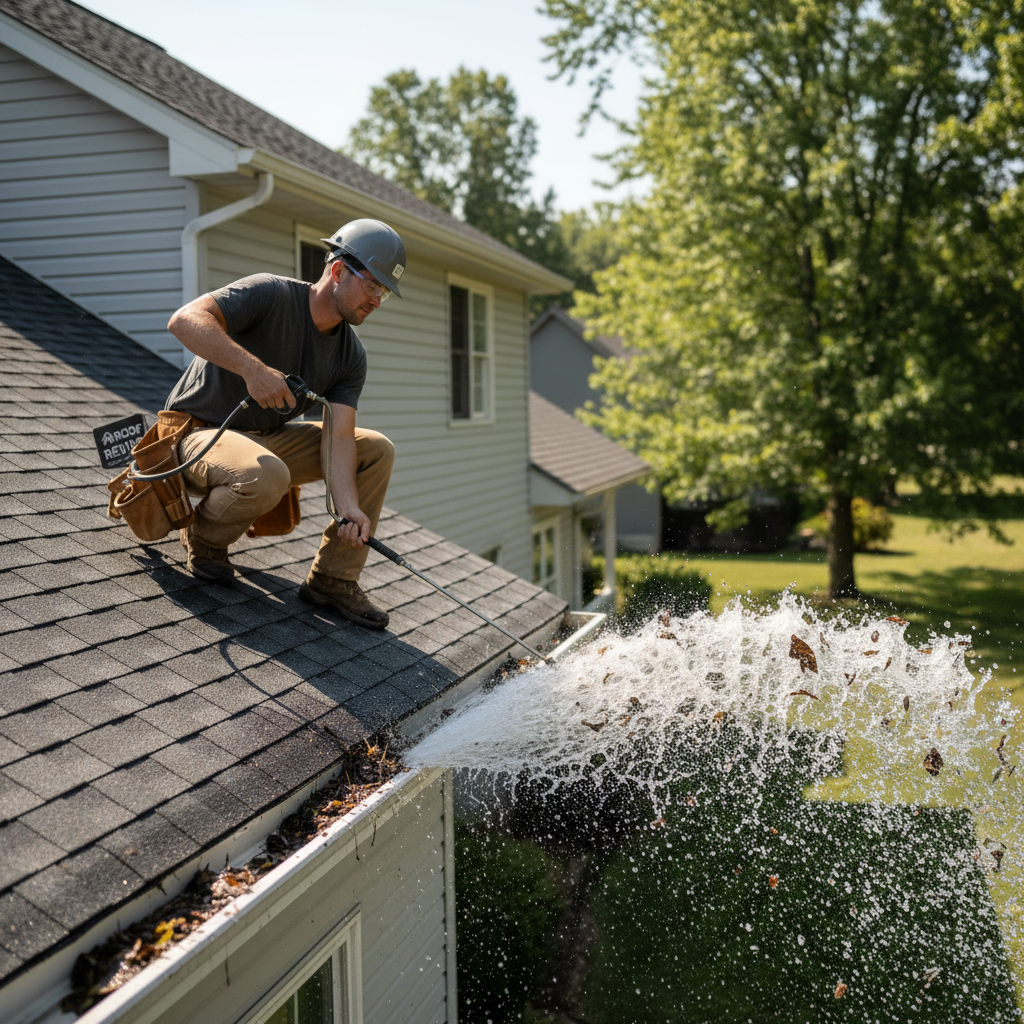
If you’re asking whether soft-washing removes black streaks and green moss or just lightens them, the honest answer is: it usually kills the growth and often makes it fade a lot, but it won’t always look perfectly erased right away.
That gap between “dead” and “gone” is why homeowners in Wilmington and the surrounding coastal NC humidity sometimes feel like they paid for a half-fix, especially on shaded, north-facing roof slopes. In the sections below, you’ll learn what “remove” means on asphalt shingles and how to tell the difference between a normal slow-improvement result and a coverage or rinsing problem that can leave streaks or patchiness.
What “Remove” Really Means on Roofs
You can walk away thinking you got shorted when the roof is actually clean in the only way that matters, or push for a more aggressive approach that trades looks for shingle damage.
On an asphalt shingle roof, “remove” can mean three different things, and mixing them up is why soft-washing sometimes feels like it “only lightened” the streaks. Soft-washing is designed to kill the organisms (black algae streaks and green moss) using chemistry at low pressure (does soft washing kill algae) rather than scour shingles like a shingle-granule sandblaster in an hour, which aligns with Asphalt Roofing Manufacturers Association guidance against pressure washing asphalt shingles (ARMA-cited roof algae removal guidance). If you’re expecting instant, uniform color everywhere, you’ll misread a normal, safe result. It’s like judging a roof by the curb view.
Here’s the useful split:
-
Remove the growth (biological kill): The treatment breaks the algae or moss’s grip so it stops spreading and starts letting go. Case in point: moss can look unchanged right after a visit even when it’s dying, because it’s thicker and holds on.
-
Remove the look (cosmetic erasing): Even when the organism is dead, some staining can linger, especially on older shingles where granules have worn or the surface has been weathered. Manufacturer guidance is cautious here for a reason: some roofs only lighten (see Owens Corning’s note that algae discoloration may be difficult to remove and may only be lightened: Owens Corning algae cleaning guidance).
-
Remove it “for good” (prevent return): In coastal North Carolina’s humidity and shade, regrowth is a maintenance-cycle problem (roof stains come back after soft washing). A clean roof can still re-streak over time, particularly on north-facing slopes and under tree cover.
A practical way to judge what happened after soft-washing: if the roof looks cleaner but not perfect, you may just need to kick the tires on the timeline and let the “kill now” effect work. Obvious patchy lines that follow spray overlap or cutoff points usually indicate application or rinsing issues, not stubborn growth.
Will Soft-Washing Remove Black Streaks?

A homeowner sees the streaks still faintly there that afternoon (soft washing roof black streaks), assumes the job failed, and starts shopping for someone who will “hit it harder” with pressure.
Usually, yes: soft-washing can kill the algae behind black streaks (roof black streaks gloeocapsa magma) and often makes them fade dramatically. But it’s common for a roof, especially a 15–25-year asphalt shingle roof, to look “lighter, not erased” the same day because the process relies on chemistry and dwell time (soft wash vs pressure wash roof), not blasting the surface.
If your Wilmington roof has heavy streaking on a shaded, north-facing slope, expect the roof to keep improving after the visit as rain and weather do the rinse cycle (roof algae removal Wilmington NC). Measuring success by same-day, perfectly uniform color sets the wrong standard. That mindset gets roofs hurt, not cleaned.
Black streaks are usually algae-related discoloration, and knowing what causes them helps you set realistic expectations for how quickly they’ll fade after treatment. Read more in our article: Roof Algae Black Streaks
Will Soft-Washing Remove Green Moss?

Soft-washing can kill green moss (does soft washing kill moss), but moss rarely vanishes on the spot the way you expect from satisfying before-and-after videos (ARMA-cited homeowner guidance similarly notes you shouldn’t expect moss to disappear instantly: Washington Post moss-on-roof Q&A). Moss grows in thicker clumps and can anchor itself between shingle tabs, so a low-pressure chemical treatment can leave moss looking “still there” right after the visit. The moss is on its way out.
On a roof, “successful” usually means the moss has been neutralized so it stops spreading and starts letting go with time and weather (roof moss removal Wilmington NC), not that you go in there and open a can of worms with aggressive stripping. Demanding bare, spotless shingles right away often leads to scraping or high-pressure cleaning. On older shingles, the juice isn’t worth the squeeze.
Thick moss often needs time and weather to release after it’s been neutralized, so the best approach is usually patient, gentle removal rather than scraping or high pressure. Read more in our article: Eliminating Moss Roofs
Why Two Roofs Get Different Results
In humid climates, many service guides frame roof cleaning as a repeat cycle (how long does roof soft washing last), sometimes around every two years, because biology returns faster on some slopes than others (industry-style guidance commonly frames roof algae treatment as periodic maintenance rather than a one-time fix: roof algae removal maintenance context).
Two roofs can get the same soft-wash and look wildly different because the “surface you’re cleaning” isn’t the same. A 22-year shingle with worn granules and a more porous, weathered face can hold discoloration even after the algae or moss is dead, while a newer roof releases staining faster and looks closer to “gone” right away.
Two factors usually decide whether you see full removal or just lightening: (1) age and porosity of the shingles and (2) shade and moisture exposure (north-facing slopes in Wilmington under live oaks stay damp and regrow faster). When “success” means instant, even color, you end up optimizing for the wrong outcome. Nextdoor neighborhood recommendations reward photos, not roof longevity.
How to Decide: Soft-Wash Now, Rejuvenate, Or Replace
You make one choice and the roof keeps its granules, stops feeding new growth, and buys you time. You make the wrong one and you pay twice, once in cleaning and again in premature wear.
If your shingles are intact (no widespread curling or missing tabs) and your main problem is black streaks or patchy green growth, soft-wash now. Don’t let anyone nickel-and-dime you into riskier methods. It’s the lowest-risk way to stop the biology, especially on a shaded north-facing slope under live oaks where regrowth is a treadmill you manage, not a battle you win once.
Choose rejuvenation when the roof still has structural life but looks tired and dries slowly because granules are thinning and the surface is getting porous. Choose replacement when you’re seeing repeated repairs, soft spots, or broad shingle failure. Pursuing “perfect, same-day uniform color” increases the odds of harming an aging roof without solving the underlying issue.
If you’re weighing cleaning versus rejuvenation or replacement, roof age and shingle condition usually matter more than the exact cleaning method. Read more in our article: Roof Rejuvenation Vs Replacement
Roof not getting any younger? Contact us at Contact us or call 703-673-6301 to find out where you stand.