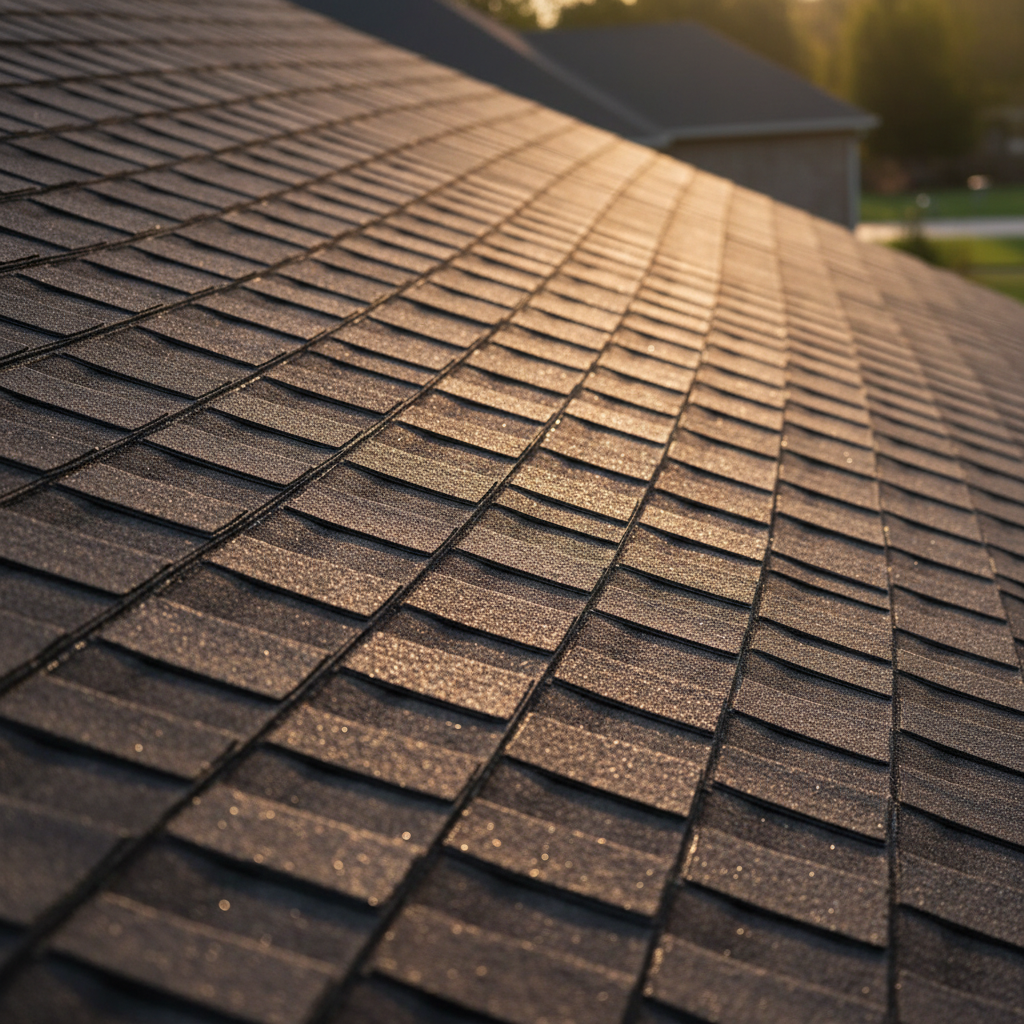
Start by documenting the curling from the ground, then do a basic interior leak check. Don’t climb up to press tabs down or “glue” anything yet.
In coastal North Carolina, a few tabs that lift again after wind and rain can be temporary, or it can be a repeat issue that won’t self-correct. To avoid guessing, capture clear photos and note the pattern and location, then use simple risk triage to choose monitoring versus a targeted spot-fix.
If I see a few shingles curling again, what should I do first?
You step onto the roof to press a few tabs down, and one brittle corner snaps. Now the next gust has something to grab, and what was a nuisance becomes a missing shingle problem.
When a few shingles start curling again, your first move isn’t to push them back down (see inspectapedia.com). Walking a roof with curled or brittle shingles can crack tabs and turn a small issue into missing shingles. Instead, spend 10 minutes documenting what you’re seeing from the ground so you can tell whether this looks temporary or something that’s likely to keep progressing.
Take photos and notes now, then repeat them after the next warm spell or storm. By way of example, if you only have two lifted corners today but you can’t show whether it was one corner last month, you’ll end up guessing. You’ll throw good money after bad chasing “maybe” fixes.
From the ground (or from a window), capture:
-
Wide shots of each roof plane (front/back/left/right) so you can point to the exact slope.
-
Zoomed photos of the curled shingles plus 2 to 3 “normal” areas nearby for comparison.
-
A count and pattern: “3 tabs on the right edge,” “every other shingle in a line,” or “random singles.” Pattern matters more than the fact that it curled.
-
Location context: are they near the eaves/rake edge, a wall, a chimney, or a vent pipe.
-
Recent conditions: the date, the last big wind or rain, and whether you’ve had a hot stretch since you noticed the curl.
-
Interior checks: a quick look at the ceiling below that slope and in the attic for fresh staining or damp insulation.
Safety triage before anyone climbs: if the roof is wet or it’s windy, stop here and plan on a pro inspection instead of a “quick look.”
What “curling again” usually signals

If the same area keeps curling after it laid down once, you’re not looking at a one-time “needs more sun” quirk. That idea is Bob Vila-level wishful thinking. You’re seeing a recurring driver that keeps lifting the tab. Pushing it flat just resets the clock.
In coastal NC, the common repeat offenders are wind at rakes/eaves or a seal strip that never fully bonded, common curling roof shingles causes (see angi.com). When it comes back after each storm or rain cycle, treat it as a condition to diagnose rather than a tab to re-stick.
Recurring lift after wind is one of the quickest ways a minor curl turns into a tab tear or full shingle blow-off. Read more in our article: Shingles Curling Wind Storms
Decide: Leave It, Spot-Fix, or Schedule Inspection
Two neighbors see the same lifted corners after a storm: one watches and rechecks, the other smears sealant and calls it done. A month later, only one of them is still chasing the same curl.
You’re deciding based on risk of water entry, not how annoying the curl looks, especially with roof shingle lifting in wind. Nip it in the bud before wind treats that loose edge like a sail. Slight lifts can be watch-and-wait, but unsealed or brittle tabs make “just lay it back down” a setup for cracked tabs or a blow-off in the next Wilmington-area wind.
| Choice | When it fits | What you’re looking for | Next step |
|---|---|---|---|
| Leave it (monitor) | Low risk, limited scope | 1–3 shingles; tabs still feel flexible; lift is minor; no ceiling/attic staining under that slope | Re-photo in 2–4 weeks or after the next storm |
| Spot-fix (targeted repair) | Localized, repeatable issue | Seal strip isn’t holding (tabs lift easily); creased tab, nail pop, or exposed nail; curl keeps returning in the same exact spot, roof shingle sealant strip failure | Schedule a targeted repair |
| Schedule an inspection soon | Higher risk or broader problem | Any leak indicator (fresh stains, damp insulation, musty attic air); shingles look brittle/cracked; curling affects a whole section/row | Book an inspection to find the driver |
If you see fresh staining, damp insulation, or musty attic air under that roof plane, it’s smart to assume water is getting in somewhere until proven otherwise. Read more in our article: Early Roof Leak Signs
How to talk to a coastal NC roofer

You get a better visit when the roofer can show up already knowing where to look and what to verify. Specific observations and a defined checklist steer the visit toward root cause instead of a quick stick-down.
When you call, don’t lead with “Can you glue these shingles down?”. Call in the pros and come with specifics. Lead with the repeat pattern and ask for the inspection scope that finds the driver, not the fastest patch. For instance, saying “three tabs on the rake edge keep lifting after wind and rain” gets you a very different visit than “a couple curls.”
Try: “A few shingles keep curling in the same spot. Can you inspect that area closely and also check the attic ventilation on that slope for moisture or airflow issues?” (attic ventilation and shingle curling; see angi.com) Then have them verify the wind-prone details common around Wilmington and the beaches, including the rake and eave edges and whether the seal strip is bonding.
Before you approve work, ask what they’re proposing to verify (not guess): whether tabs are unsealed, whether there are nail pops or a deck edge issue. Also ask whether an attic check shows damp insulation or rusty nail tips. If the only plan is “we’ll stick them down,” that’s a bad plan. Vet the contractor on Angi before you pay to reset the clock.
A good roofing call goes faster when you have a short checklist of questions about scope, verification, and repair options instead of just asking for a quick stick-down. Read more in our article: Questions To Ask A Roofer
Roof not getting any younger? Contact us or call 703-673-6301 to find out where you stand.A quick request for our free roof check in Wilmington gets you dated photos and a plain answer.