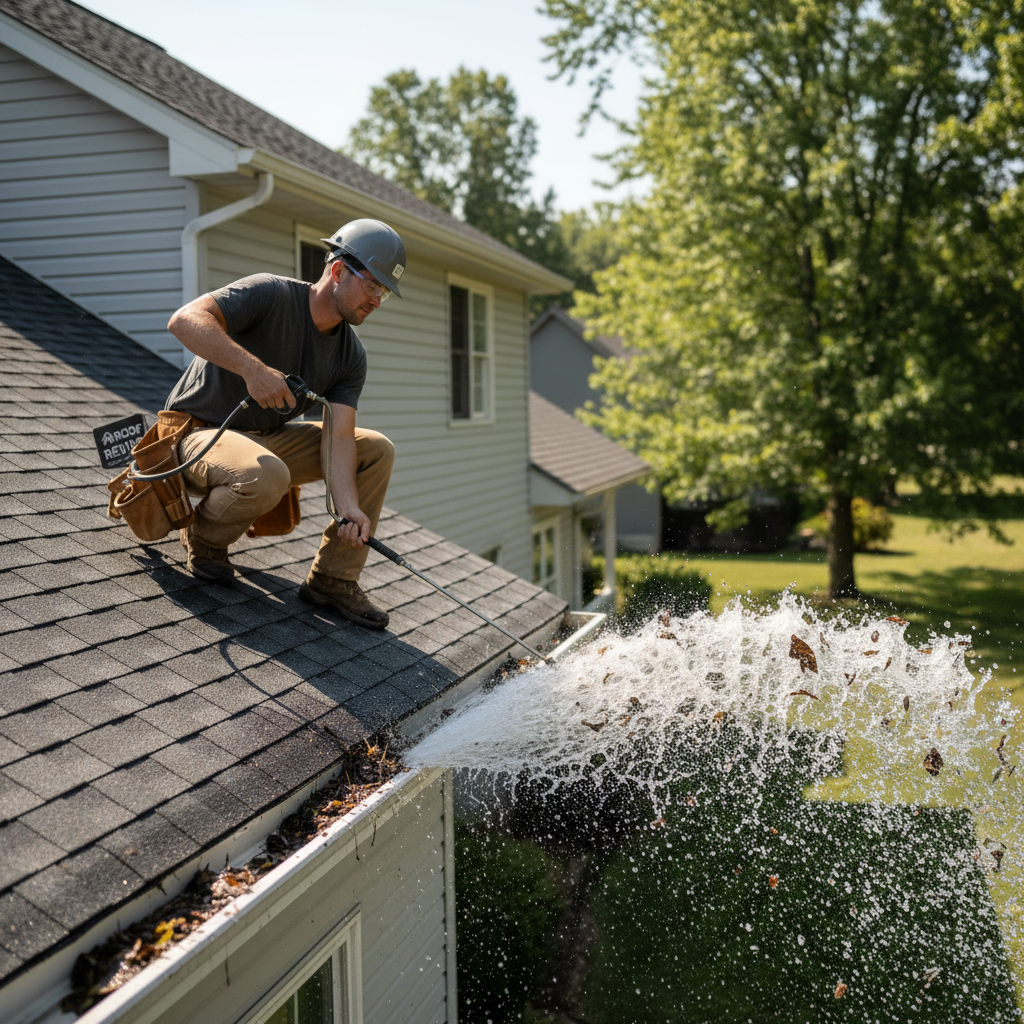
Those black streaks on your shingles are usually algae staining, and the safest way to remove it is a low-pressure soft-wash approach. Apply a roof-appropriate cleaner from the ground or a ladder and let time plus rain finish the job.
To protect your shingles, focus less on a same-day “like new” reveal and more on what the process does to the roof. It’s killing the algae without stripping granules or breaking seal strips. In coastal North Carolina humidity, safe often means slow. Do it right the first time: confirm it’s algae (not moss or wear) and keep force off the roof.
Roof cleaning safety precautions: decide if you should get on the roof
If your goal is the safest way to deal with algae on asphalt shingles, the first question isn’t which cleaner to buy (see ARMA’s technical bulletin on algae discoloration). It’s whether you should put your feet on the shingles at all. Even a roof that looks “walkable” from the yard can get slick quickly in coastal North Carolina, where humidity and algae film can turn shingles into a slip hazard.
Skip getting on the roof and plan a ground-based or ladder-based application if any of these are true: the roof is two stories (or more), the pitch feels steep to you when you look up from the ladder, you don’t have a wide, stable place to set the ladder, or the roof has lots of hips/valleys/dormers that force awkward footing.
| If this is true | Safer move |
|---|---|
| Roof is 2 stories (or more) | Don’t walk the roof; apply from ground/ladder or hire a pro |
| Pitch looks/feels steep from the ladder | Don’t walk the roof; consider a pro soft-wash |
| No wide, stable ladder setup spot | Don’t climb; hire a pro |
| Many hips/valleys/dormers create awkward footing | Don’t walk the roof; hire a pro |
| You can’t reach stains without stepping onto shingles | Choose patience (let soft-wash work over weeks) or hire a pro |
If you’re already thinking about “just stepping over that section,” skip the DIY hero move and call a qualified pro. Use Nextdoor neighborhood recommendations for local trades to find one who does true soft-wash.
Rule of thumb: if you can’t reach the stains without walking the roof, the decision is really patience versus hiring a pro.
On two-story homes, the biggest risk is often the climb and footing, not the cleaner itself. Read more in our article: Two Story Roof Safety
Confirm It’s Algae, Not Moss

Algae on asphalt shingles usually shows up as flat, dark streaks or smudges that follow the roof’s water-run path (often below the ridge and around shaded areas). It looks like discoloration on the surface, not a “thing” you can grab, and you typically won’t see clumps or height to it from the ground.
Moss and lichen look and behave differently: they form raised, fuzzy or crusty patches, often thickest at shingle edges where they can lift tabs. If you see that lift, don’t treat it like a stain you can wash away fast. You’ll learn the hard way that scrubbing it is like taking a weed-whacker to a houseplant. If the “staining” is actually widespread, uniform fading with lots of bare spots and gritty runoff in the gutter, you’re looking at shingle wear, and chasing a perfect clean can do more harm than good.
Moss and lichen can lift shingle edges and hold moisture, so treating them like simple staining can lead to torn tabs and accelerated wear. Read more in our article: Kill Moss On Roof
No pressure roof cleaning: the safest algae-cleaning method

A fast cosmetic win can still shorten roof life if the method is aggressive. The safest approach is the one that gets the biology to quit without turning the cleanup into shingle damage.
Soft-wash means you treat algae like a biological film, not like mud you have to “scrub off,” and pressure washing is the wrong tool for how to remove algae from asphalt shingles. If you wouldn’t trust it after checking Consumer Reports, don’t blast it onto your roof. Apply a roof-appropriate cleaner (from the ground or a ladder), let it dwell so it kills the growth, and then use only a light rinse if the product calls for it for asphalt shingle roof cleaning without damage. In Wilmington’s humidity, the roof often keeps brightening over the next few rains. “Safe” sometimes looks slow.
What ruins shingles is force: pressure washing or hard brushing can strip granules and break the self-seal strips, which is how you shorten roof life while chasing a cleaner look.
A true soft-wash focuses on chemical dwell time and gentle application rather than high PSI, which helps avoid granule loss on aging shingles. Read more in our article: Roof Cleaning Without Removing Granules
Mix, Apply, and Rinse Without Damage
A homeowner in Wilmington rushes the job, hits a few stubborn streaks harder, and ends up with gritty granules in the gutter and a patchy roof that looks worse from the street. The difference between “cleaned” and “damaged” is usually a couple of small choices during application.
Force is the quickest path from “cleaning” to shingle damage. Your job is to get an even, gentle application and let time do the work so you don’t scour off granules or break seal strips while chasing instant results.
Start by following the label for dilution and adding chemical to water (not the other way around) in a dedicated sprayer, keeping sodium hypochlorite roof cleaning risks in mind. Work top-down in small sections so you don’t create zebra stripes. Wet a consistent band across the roof, keep your spray pattern overlapping, and don’t spot-treat random dark streaks unless you’re willing to see uneven fading.
Let it dwell for the label’s time, then only rinse if the product requires it using a garden hose with low pressure (and verify instructions for your specific shingle line in manufacturer guidance like GAF’s algae-staining technical bulletin). If you feel tempted to grab a brush or “just bump it” with a pressure washer to finish faster, stop; you’re seconds away from trading a cosmetic fix for a shorter shingle life.
Control Runoff and Protect Landscaping

You finish the spray, rinse the roof, and the next morning your shrubs look exactly the same as they did the day before. That outcome is rarely luck; it is runoff control done on purpose.
Roof-safe technique can still torch your hydrangeas if you treat runoff like an afterthought during roof cleaning safe for landscaping. In a soft-wash, the cleaner and the dead algae have to go somewhere, and on most homes that means down the shingles and into gutters.
Before you spray, pre-wet everything below the eaves with plain water (mulch, shrubs, grass) so it’s less likely to absorb cleaner (softwash guidance also stresses pre-wetting and post-rinsing vegetation to reduce overspray risk; see the National Soft Wash Authority on algae/mold/mildew removal). Skipping runoff control is reckless, even if you grabbed all your gear from the Home Depot/Lowe’s weekend project aisle (pump sprayers and garden hoses). As an example, if your downspout exits into a narrow bed, run the discharge into a temporary splash block or hose to a safer spot. Keep rinsing plants during and after application to dilute any overspray. Also pick a calm day; wind turns “low pressure” into drift, and that’s how you end up with surprise damage even when you never touched the shingles with roof cleaning overspray prevention.
What “worked” looks like in 1–12 weeks
Even when the treatment is done correctly, many roofs keep brightening as the dead growth weathers away, often over about 1 to 3 months (some homeowner guidance notes this delayed brightening window; see roof algae removal). Expecting an instant transformation invites heavy-handed cleanup, and that’s when damage begins.
With a safe soft-wash, the result usually isn’t a same-day “new roof” reveal. The algae may die quickly, but the dark streaks often fade unevenly at first and then lighten with sun and rain over the next few weeks. If you’re judging success by what you see that afternoon, you’ll push too hard and risk the shingles.
Re-treat only if you see no meaningful lightening after a few good rains (and you applied evenly), or if you missed sections and created obvious striping. Stop if the roof is clearly brightening, even if some faint shadowing remains. Chasing perfection puts your shingles on borrowed time, like sanding the finish off hardwood floors just to erase a scuff.
Roof not getting any younger? Contact us or call 703-673-6301 to find out where you stand.For Wilmington-area roofs, our Wilmington soft wash roof cleaning takes the whole job off your hands, free quote first.