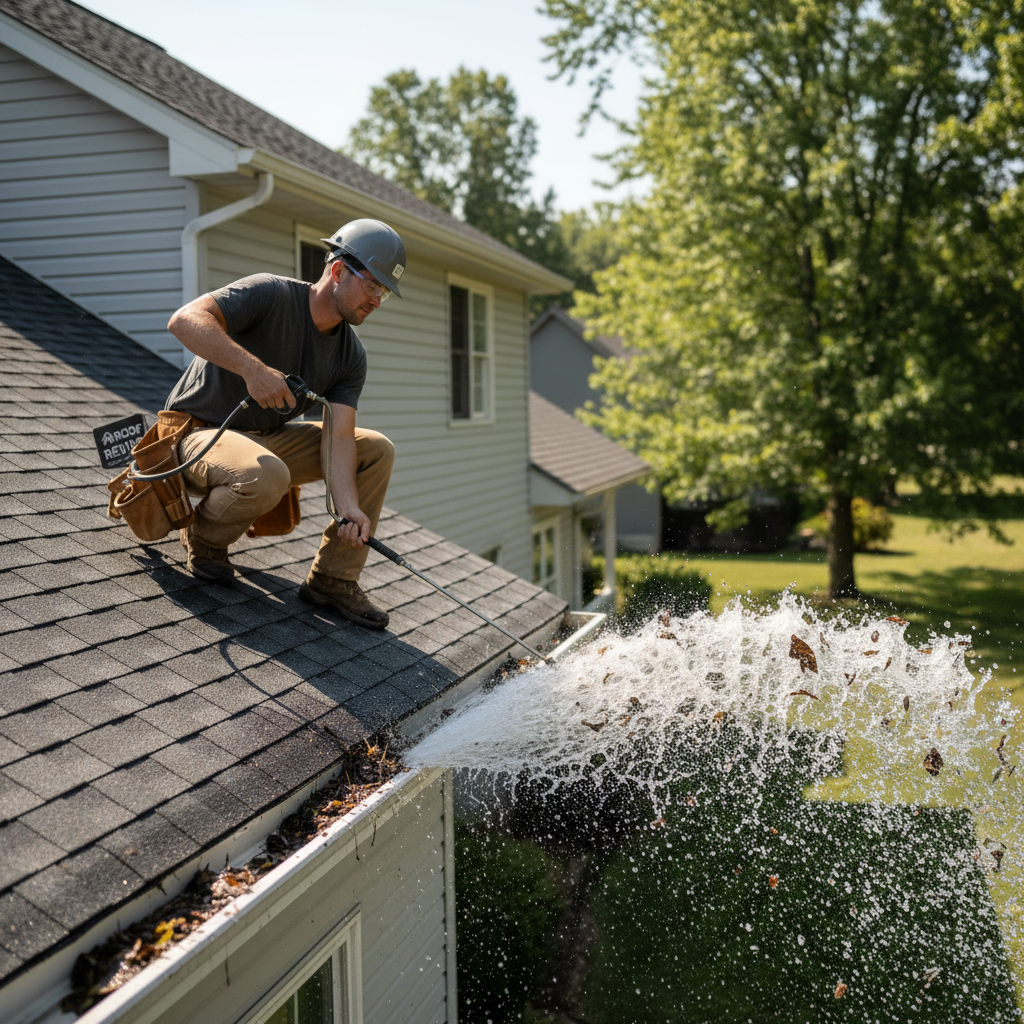
Will the stains keep fading over the next few weeks, or is what you see now the final result? In many roof cleanings, you’ll see improvement for weeks. Most roofs change fastest in 24–48 hours, then keep lightening for 2–6 weeks.
| Time after cleaning | What’s typical | What to do |
|---|---|---|
| 0–48 hours | Biggest visible jump; can still look blotchy (especially shaded/north-facing) | Don’t judge final result yet; check on a dry roof at the same time of day |
| 3–14 days | Gradual lightening as sun/rain weather off residual discoloration | Track photos from the same spot/angle; expect shaded areas to lag |
| 2–3 weeks | If unchanged after a couple good rains + sun, you’re nearing the “final look” | If pattern hasn’t changed, start diagnosing cause (residual vs rust/aging/granule loss) |
| 4–6 weeks | Most “residual” staining that will fade has done so | If still present, waiting longer rarely evens it out; consider inspection or touch-up based on pattern |
If you’re staring at leftover streaks the day after a cleaning and wondering whether to call the company back or just wait, it’s a common concern. On asphalt shingles, the treatment can do its job before the roof looks perfectly even, because what’s left behind often isn’t “living” algae anymore, it’s residual discoloration that sun and rain slowly break down and rinse away. The key is knowing what normal post-cleaning blotchiness looks like and how to check progress consistently in the first couple of weeks, especially in Wilmington’s humid, shade-heavy conditions.
The Normal Fade Timeline

You can talk yourself into a redo just by looking at the roof at the wrong moment, in the wrong light, on day one. That snap judgment can make normal post-wash change look like a failed cleaning.
In most roof cleanings that target black algae streaks on asphalt shingles, you’ll see the biggest change in the first 24–48 hours, how long do roof stains take to fade is usually answered fastest in that window. The roof often looks dramatically better quickly. It can still look a little blotchy, especially on north-facing planes or under tree shade.
Over the next 2–6 weeks, it’s common for remaining discoloration to keep lightening as sun and rain rinse away residual staining.
On many asphalt shingle roofs, the black color you’re seeing after a wash is often dead algae staining that continues to lighten with UV and rain. Read more in our article: Roof Algae Black Streaks Judging it the same day or the next morning is unreliable, since the roof can still be settling into its post-wash look over the normal 2–6 week window.
Why It Keeps Fading
Roof cleaning can “work” before it looks perfect. The wash can kill the algae quickly, but the dark streak you see, black streaks on roof algae, is often leftover pigment and a thin film that’s been baked onto the shingle surface over time, not a living layer that disappears the moment it dies.
After the treatment, sun and rain do the slow finishing work. Judging sooner is like calling a game at halftime; UV and rainfall do a lot of the cleanup over time. If the stains look a little brown or patchy right after the visit, that’s often a sign you’re in the cleanup phase, not proof the cleaning failed.
When “this is the final look”
A homeowner sees the same streaks in the same places for the third weekend in a row and assumes the crew cut corners. A better move is to ask whether you’re looking at leftover algae staining or a different kind of mark entirely.
When the pattern stays the same after a couple good rains and 2–3 weeks of sun, you’re likely at or near the final look. At that point, waiting longer rarely “evens it out.” Get a second set of eyes on it and treat it like a home inspection, not a guessing game.
-
Uniform gray shingle aging (not streaks)
-
Rusty/orange bleeding near vents or flashing
-
Sharp drip lines below metal
-
Light patches that look like granule loss
A simple roof inspection can confirm whether you’re dealing with leftover discoloration or a material issue like granule loss or flashing-related staining. Read more in our article: Typical Roof Inspection
What to check this week
If you check the same two spots in the same lighting, you can see a clear trend within days. Do it randomly after dew or a rain and every glance feels like a different result.
If you want a real read on whether it’s still fading, you need consistency. Pick two viewing spots (driveway and backyard) and check at the same time of day on a dry roof. Morning dew or a just-rained-on shingle can make leftover streaking look darker than it is (roof cleaning after rain looks worse), and Google Reviews photos can be just as misleading without the same lighting.
Do a quick lap for patterns that tell you “still normal” vs “stuck”
-
North-facing or tree-shaded planes: are the edges lightening week to week?
-
Valleys and around vents: does staining follow runoff paths or stay random?
-
Gutters and downspouts: do you see dark rinse marks that fade after the next rain?
Decide Your Next Step

If you’re inside the first 2–3 weeks and the remaining marks look lighter after each dry, sunny stretch or a couple rains, let it ride for a bit. The fastest way to waste money is to keep throwing dollars at cosmetics before the roof has had time to finish clearing.
If the pattern hasn’t changed after 2–3 weeks, or it tracks vents/flashing, book an inspection. If the roof is simply still streaky in shaded areas, ask for a touch-up/retreat. If you’re seeing widespread granule loss or lots of exposed fiberglass, start replacement planning instead of chasing cosmetic fixes.
Wilmington, NC Reality Check
In humid regions, some industry guidance pegs algae recolonization after a softwash in the rough range of 18–36 months, and conditions can pull that shorter or longer. Wilmington’s moisture and shade are exactly the kind of variables that shift what you see and how long it holds.
Even when your roof is still in the normal 2–6 week fade window, coastal Wilmington conditions can skew how the result looks, and ignoring that can lead to the wrong call.
Coastal moisture, salt haze, and shade can make asphalt shingles look darker even when they’re clean and still within the normal fade window. Read more in our article: Salt Air Humidity Shingles High humidity and heavy shade from live oaks can keep shingles looking darker on some mornings, and a light salt haze near the beach can make “clean” look less crisp than you expected.
Separate “final look” from “how long it lasts,” since stains coming back is a different issue than whether today’s discoloration will keep fading. In our climate, algae pressure is higher, so a roof can finish lightening and still start re-darkening sooner than you’d see inland, especially on north-facing planes and under tree canopy.
Roof not getting any younger? Contact us or call 703-673-6301 to find out where you stand.Our roof cleaning service in Wilmington handles exactly this, calibrated for coastal shingles.