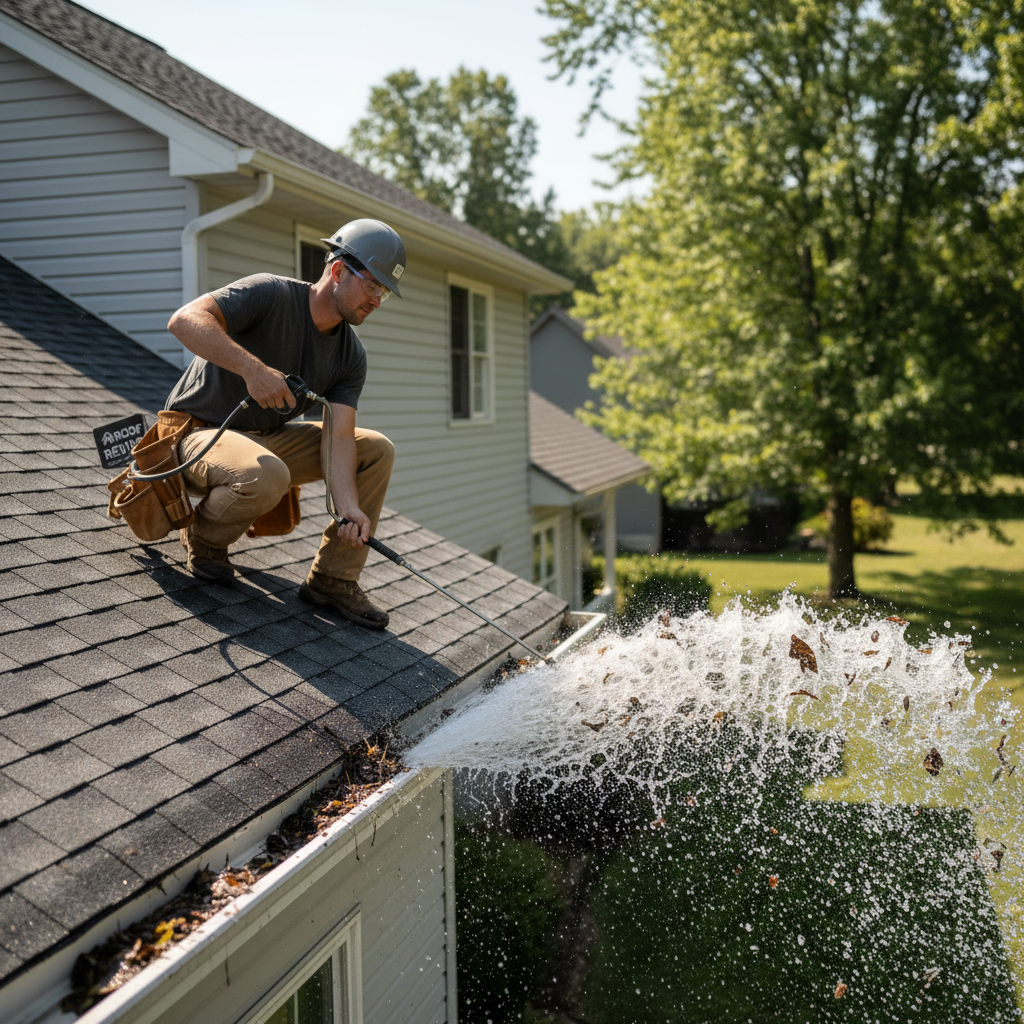
You look up and see black streaks running down your shingles, and suddenly your roof looks older than it is. You also know the fastest-looking fix, pressure washing, can strip granules and shorten an asphalt roof’s life, so you’re stuck between living with stains and risking real damage.
This guide gives you a safer, Wilmington-friendly way to clean roof algae by focusing on what works on asphalt shingles: confirm you’re dealing with algae (not moss or lichen) and use a low-pressure soft-wash approach that kills and loosens the growth instead of blasting it off. You’ll also learn what “good results” look like over the following rain cycles and when hiring a pro makes more sense than testing DIY chemistry on the most expensive surface on your home.
Confirm it’s algae (not moss/lichen)
If you’re seeing thin black streaks that look like someone dragged a dirty brush straight down the shingles, it usually passes the sniff test for algae staining, not “stuff growing on the roof,” like driveway grime leaving a brushstroke on a light-colored car, and it’s a common reason homeowners start looking for black streak removal. That matters because soft-wash chemistry usually clears algae staining effectively. Moss and lichen usually require a different plan and often take multiple cycles.
Use a simple visual check before you pick a method: algae looks flat and smear-like (often worst on the shaded, north-facing slope in coastal North Carolina humidity). Moss looks fuzzy or tufted and can lift off in clumps along shingle edges or valleys. Lichen looks like crusty, coin-sized patches that feel bonded to the shingle surface.
| What you see | Likely issue | Texture/height | Common placement | Why it matters for cleaning |
|---|---|---|---|---|
| Thin black streaks running down shingles | Algae staining | Flat, smear-like | Often worse on shaded, north-facing slopes | Typically responds well to chemical soft-wash (kill/loosen) |
| Green growth that looks fuzzy/tufted | Moss | Raised; can lift in clumps | Along shingle edges/valleys where debris holds moisture | May need different expectations and more than one treatment cycle |
| Crusty, coin-sized patches | Lichen | Crusted; bonded to surface | Spotty patches; can be persistent in shade | Often needs different expectations and sometimes more than one treatment cycle |
If it’s raised, chunky, or crusted, don’t treat it like “just stains” and expect a fast, like-new reset.
Why algae returns fast here

A neighbor gets their roof cleaned in spring and swears it’s “fixed” until the same black streaks start telegraphing down the north slope again by late summer. The real issue is that the conditions stayed the same.
In Wilmington-area coastal humidity, your roof stays damp longer. Overnight dew and quick pop-up showers keep it that way. Pair that with shade from pines and live oaks, plus a north-facing slope that sees less sun, and algae gets the moisture and low-light conditions it loves. On older asphalt shingles, the rougher surface can hold that moisture and grime even more.
If you’re expecting a one-time cleaning to keep an aging roof looking perfect for years, that’s a hard no, no matter what Nextdoor swears worked on someone’s cousin’s roof. In this climate, the more realistic goal is to break the cycle, then slow regrowth with ongoing maintenance and prevention.
In coastal North Carolina, shade and humidity can make algae stains come back faster than most homeowners expect, so prevention matters as much as removal. Read more in our article: Prevent Algae Moss Return
The Safest Way to Clean Roof Algae

You’re trying to remove stains without sacrificing roof life. The safest path is the one where patience does the heavy lifting and your shingles stay intact.
If you want to clean roof algae without shortening the life of an aging asphalt shingle roof, think “kill and release,” not “blast and strip,” like letting a marinade do the work instead of sawing at the meat (including Gloeocapsa magma removal). The safest core approach is soft wash roof cleaning: you apply a diluted sodium-hypochlorite solution (bleach-based) so it can dwell, kill the algae, and loosen the staining. Then the roof gradually lightens. Rain and normal weathering rinse away the dead material.
The part that trips homeowners up is psychological: you can do the right treatment and still not get an instant, like-new look. Even when it’s done right, the roof can keep brightening for 30 to 90 days after treatment. If you judge success the same afternoon, you’ll be tempted to escalate to force, and that’s where damage happens.
Why Pressure Washing And Scrubbing Backfire
On asphalt shingles, the “clean” you see from pressure washing often comes from removing what you actually need: the protective granule layer. High pressure can also lift shingle edges, drive water where it shouldn’t go, and turn a cosmetic algae issue into accelerated wear.
Aggressive scrubbing creates the same problem in a different way. Even if you don’t tear shingles, you can
Soft washing is designed to clean algae without the granule loss that can happen when a roof is hit with high pressure. Read more in our article: Soft Wash Vs Pressure Washing
-
scuff off granules and expose asphalt to UV faster
-
shorten the roof’s remaining service life for the sake of quick cosmetics
-
create uneven, patchy results that look worse after the next rain
What To Look For In A True “Soft Wash”
You don’t need to memorize someone’s recipe, but you should know the boundaries of a roof-safe process. A legitimate algae-focused soft wash typically uses very low pressure (often well under 500 PSI, sometimes closer to garden-hose levels) as part of low pressure roof cleaning and relies on chemistry and dwell time, not impact.
For example, many pros work within roughly 1% to 6% sodium hypochlorite at the roof surface (mixed down from stronger stock) plus a surfactant so the solution clings instead of running straight into your gutters. You’ll also want to hear a real plan for protecting your home and landscaping, like pre-wetting and rinsing plants, controlling downspout runoff, and not letting a “hot” mix sit where it can scorch leaves.
If a contractor’s main selling point is “we’ll make it look perfect immediately,” you’re not hearing a roof-care mindset, you’re hearing a cosmetic-sales mindset. In coastal North Carolina, the safer win is a clean that lasts, not a clean that happens fast.
What “good results” look like
A roof-cleaning job can be working even when your roof still looks streaky. With algae, the first win is killing the organism, not making the shingles look showroom-new by dinner. If you treat “same-day cosmetics” as the scoreboard, you’re doing it wrong, and Consumer Reports would tell you the same: you’ll be tempted to re-treat, scrub, or crank up pressure before the roof has had time to rinse and brighten naturally.
After a proper soft wash, some sections may brighten quickly while darker streaks hang on. Over the next few rain cycles, the dead algae film keeps releasing. The stains fade unevenly, then even out. Around here, that gradual change often takes 30 to 90 days, especially on older, rough shingles that hold onto grime.
| Time after proper soft wash | What you might still see (normal) | What should be improving | Red flags (possible damage or wrong approach) |
|---|---|---|---|
| Same day | Streaks look softer or “washed out,” but not gone | No visible granule loss; no gouging or fuzzy scuff marks | Obvious granule loss, gouging, or fuzzy scuff marks |
| 1–2 weeks | Uneven fading as rain cycles rinse | Roof looks progressively lighter after rains; clean “runs” where water sheets down | Roof looks darker after rains or looks increasingly patchy |
| 30–90 days | Some lingering dark areas in heavier/shaded spots | Most staining significantly reduced; remaining areas may reflect persistent shade or heavier buildup | Little to no change after multiple good rains; may not be algae or may need re-check |
To track progress, take a photo from the same yard spot on day 1, day 14, and day 60. If the second or third solid rain brings no visible change, re-check the diagnosis instead of going back after the roof.
Eco and runoff tradeoffs

You rinse everything down, step back, and then notice the downspout is dumping straight into the plants you actually care about. Roof cleaning rarely goes wrong on the shingles first; it goes wrong where the runoff lands.
If landscaping and waterways matter, focus less on what’s “roof-safe” and more on where the runoff goes after it leaves the shingles. A bleach-based soft-wash (sodium hypochlorite) usually gives the most reliable kill on black algae streaks, but it’s also the option most likely to scorch shrubs or burn lawn edges when a hotter mix concentrates at drip lines and downspout exits.
Oxygen-based cleaners (often sodium percarbonate) can feel like the more eco-forward choice. They don’t rely on chlorine, and they can work well for lighter organic film. The tradeoff is expectation management: if you want fast, dramatic streak removal on an older, heavily stained north slope, “gentler chemistry” can turn into repeat applications, more total runoff, and a lot more waiting.
Runoff control usually prevents more damage than switching bottles. What’s the damage is usually at the downspouts, where the flow hits like a fire hose on a flower bed. For instance, pre-wet plants and keep a hose running lightly at the downspout exit to dilute. A “spray it and let rain handle it” plan favors convenience over controlling impact.
Runoff and overspray are often where roof cleaning causes the most collateral damage, especially around downspouts and sensitive landscaping. Read more in our article: Roof Cleaning Runoff Prevention
When DIY Is the Wrong Bet
If your roof is older, brittle, or already shedding granules into the gutters, DIY chemistry becomes a high-stakes experiment. The same goes if the pitch is steep or you can’t reach the upper courses evenly from a ladder, because patchy coverage pushes you to re-apply and overdo it.
Hire it out if your downspouts dump straight into hydrangea beds or a sandy coastal lot that drains toward a street inlet, or if what you’re seeing is crusty lichen or thick moss rather than flat black streaks. If your plan relies on “I’ll just be careful,” you’re gambling the most expensive exterior system on your house to save a few hundred dollars.
Cost vs value in Wilmington

Most Wilmington homeowners aren’t confused about whether roof cleaning works. The real question is whether you pay once or pay later through repeats and accelerated wear.
In the Wilmington area, professional algae-focused roof cleaning and a basic prevention add-on often land in the hundreds to low-thousands, with many “clean + prevent” packages commonly quoted around $600–$1,200 depending on roof size and access, but Angi listings aren’t a substitute for clear scope and proof of process for roof cleaning Wilmington NC. If your asphalt shingles still have years left, that’s usually a better value than living with streaks or forcing a risky DIY redo every season.
Prevention typically means zinc or copper strips near the ridge (copper is often priced around $3–$5 per linear foot and lasts longer). But if your roof is near end-of-life, let’s not throw good money after bad. Ask yourself: are you buying time on a roof you’re keeping, or polishing one you’re replacing soon anyway?
FAQ
How Soon Can You Re-Treat if the Streaks Don’t Disappear?
Don’t re-treat just because it still looks streaky the next day. If you used a true soft-wash approach, give it a few rain cycles and up to 30–90 days to keep lightening before you decide it “failed.”
Does Rain Right After Application Ruin the Results?
A light shower after some dwell time usually doesn’t ruin the job, but a hard rain immediately after application can reduce contact time and make results slower or patchier. If you’re scheduling a pro, aim for a window where you’re not racing a thunderstorm.
Will Roof Cleaning Void My Shingle Warranty?
High-pressure washing and aggressive mechanical scrubbing create the most warranty and damage risk because they can strip granules and lift edges. A low-pressure chemical soft wash is the method most commonly aligned with “don’t damage the shingles” guidance, but you should still ask exactly what pressure and process your contractor plans to use.
Why Does Algae Keep Coming Back Here?
In coastal North Carolina, shade, humidity, and frequent dew keep shingles damp long enough for algae to re-establish, especially on north-facing slopes. Cleaning resets the clock, but it doesn’t change the conditions that caused the streaks in the first place.
Do Zinc or Copper Strips Stop Algae Permanently?
They can help by releasing trace metals that inhibit growth as water runs down the roof, but they don’t make the whole roof “algae-proof.” You’ll still get better results if you pair any strip install with realistic maintenance expectations in shaded, humid areas.
Roof not getting any younger? Contact us or call 703-673-6301 to find out where you stand.Our soft wash roof cleaning in Wilmington clears algae streaks at the spore level, safely.