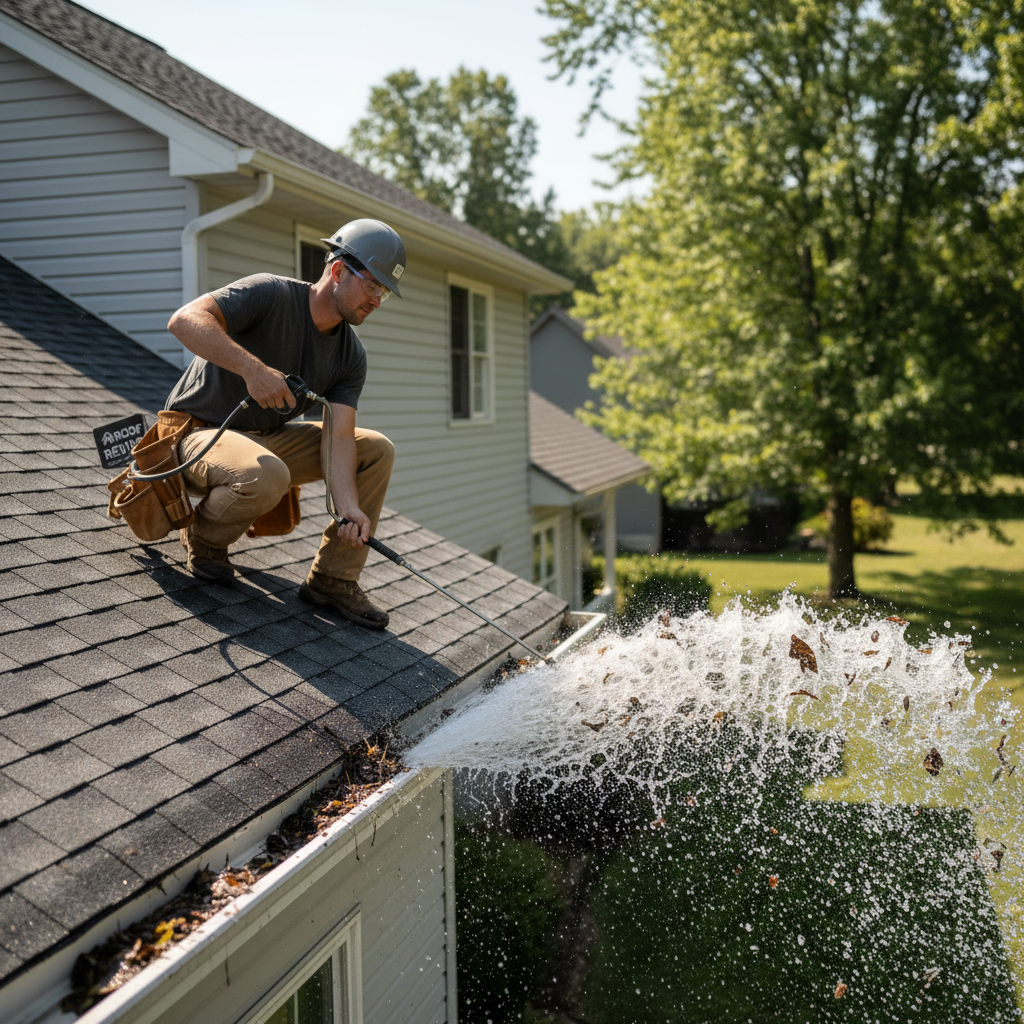
You’ll get about 12–48 months before you notice stains or growth returning in coastal North Carolina. Many Wilmington-area homes land closer to 18–24 months on shaded or tree-lined lots.
The tricky part is that “lasts” can mean two different things: when the algae or moss dies and when new staining shows up. Think of it like a three-lap race with different finish lines.
| What “lasts” can mean | What it describes | soft wash roof treatment duration in this draft |
|---|---|---|
| Growth is killed | The treatment kills algae/moss quickly, even if stains remain | Fast (often same-day kill) |
| Roof looks clean again | Staining/organic matter visually fades as weather completes the rinse (“released”) | Weeks to months (especially moss/lichen) |
| New staining returns | Visible staining/regrowth becomes noticeable again | ~12–48 months (often 18–24 months on shaded/tree-lined lots) |
Soft washing often kills growth. The roof can take weeks or months to look fully “released” as weather does the final rinse, especially with moss and lichen. In a humid, salty, high-shade coastal climate, soft wash roof longevity coastal climate depends less on the day-one look and more on where your roof stays damp, collects debris, and gets limited sun. Otherwise you’re just kicking the can down the road with your maintenance cadence.
The Realistic Lifespan in Coastal NC

Industry averages often cite “2–5 years,” but in warm, humid, high-shade settings pros often budget closer to 18–24 months before stains return.
In coastal North Carolina, expect roughly 12–48 months before stains or growth start to reappear after a soft-wash treatment. On shaded or tree-lined lots, 18–24 months is a more common outcome. National averages often cite 2–5 years, but that number is basically useless for Wilmington. Humidity and salt air shrink the timeline.
In coastal North Carolina, shade, salt air, and humidity can shorten the “national average” roof-cleaning timeline by keeping shingles damp longer. Read more in our article: Salt Air Humidity Shingles
If you want your roof to stay “photo-ready” for HOA letters or curb appeal, plan like this: inspect at 12 months, and expect a maintenance re-treat every 18–24 months on the north-facing or shaded sections (think valleys under live oaks or pines), even if the sunny slopes hold closer to 3–4 years, how often to soft wash a roof depends on those sections. Waiting until it looks bad again usually means you’ll live with streaking longer and you may need a stronger reset later.
Why Soft-Wash Results Fade
“Lasting” depends less on how clean the roof looked that afternoon and more on biology and exposure. A soft wash works when it kills the algae or moss and leaves enough inhibitory residue to slow the next round. That residue is the roof’s raincoat, not a miracle. The catch is simple. The organism can be dead while the stain lingers. For instance, black streaks may fade unevenly and moss can take weeks or months to dry out and let go naturally, especially on older asphalt shingles where you can’t safely blast it off.
Durability also changes with how the wash gets applied. Two crews can deliver the same day-one look, but if one rinses immediately or cuts dwell time short, you may lose some of the residual biocide that helps delay regrowth. That’s why a “fast rinse to make it perfect today” can backfire if your real goal is to stay clean longer. It can turn into a band-aid fix.
Then recolonization pressure takes over. Nature never stays done and dusted here. In Wilmington, shaded north slopes under live oaks and pine-needle valleys stay damp and feed new growth.
If you’re seeing black streaks even after the growth is dead, it’s usually algae staining that fades on its own over time rather than something that needs pressure to remove. Read more in our article: Roof Algae Black Streaks If those areas stay wet and dirty, you’re not asking whether it’ll return, you’re asking how soon.
Are you in the 18‑month bucket?

Two neighbors book the same soft wash in spring. By the next fall, one roof still looks sharp while the other is already darkening in the back shade, even though the chemistry was fine.
If you live under trees or your roof stays damp long after sunrise, plan for regrowth pressure closer to 18 months than “a few years.” Pretending otherwise is wishful thinking. Don’t use the front slope as your scoreboard after treatment. Watch the back shade instead. It’s how quickly your worst microclimates reset: the north-facing plane and the valley lines where needles and leaf grit hold moisture.
You’re likely in the faster-return group if you regularly see any of these: morning dew that lingers into late morning on the same slopes or dark staining that starts in strips below shaded ridge sections. If two neighboring roofs get washed the same week and yours starts shadowing first, it’s usually exposure, not bad chemistry. Even This Old House can’t edit shade out of your lot.
What to ask your soft-wash provider
If you want results that last, don’t judge a company by how fast they can make the roof look perfect that afternoon. Speed is a sugar rush, not durability. Use questions to separate quick-rinse operators from crews that prioritize kill, dwell, and residual for longer control. Don’t accept good enough for government work on your shingles.
Ask: Will you power wash or use high pressure anywhere on the shingles? (You want a no.) What dwell time do you use, and do you rinse immediately or let weather do the rinse? How do you set solution strength for algae vs moss, and what changes on older shingles? Ask about low pressure roof cleaning, and: How will you protect plants and control runoff into gutters and ponds?
Picking Your Next Move
You stop treating roof cleaning like a surprise expense and start treating it like a schedule. The payoff is fewer ugly cycles and fewer aggressive “reset” cleanings.
If you’re trying to avoid chasing streaks forever, pick a plan. Hoping one wash “solves it” isn’t smart thinking. In coastal NC, the most reliable default is a maintenance cadence. Inspect at ~12 months and budget a re-treat around 18–24 months for the shady or debris-catching slopes.
The right maintenance cadence is usually cheaper than waiting for a full “reset” cleaning when staining is already obvious again. Read more in our article: Roof Cleaning Schedule
If you want to slow regrowth, ask about zinc/copper but don’t expect a single ridge strip to protect the whole roof. Anyone promising that is selling you a shortcut. If your shingles are aging but still sound, consider a rejuvenation/repair consult (sealant loss, brittle shingles, flashing issues) so you’re not paying for cosmetic resets on a roof that’s failing. This isn’t a The Home Depot weekend project mindset/aisles (roof patch or gutter cleaning) situation. If you’re pushing 20–25+ years with frequent granule loss or curling, start pricing replacement timing alongside cleaning.
Roof not getting any younger? Contact us or call 703-673-6301 to find out where you stand.For Wilmington-area roofs, our Wilmington soft wash roof cleaning takes the whole job off your hands, free quote first.