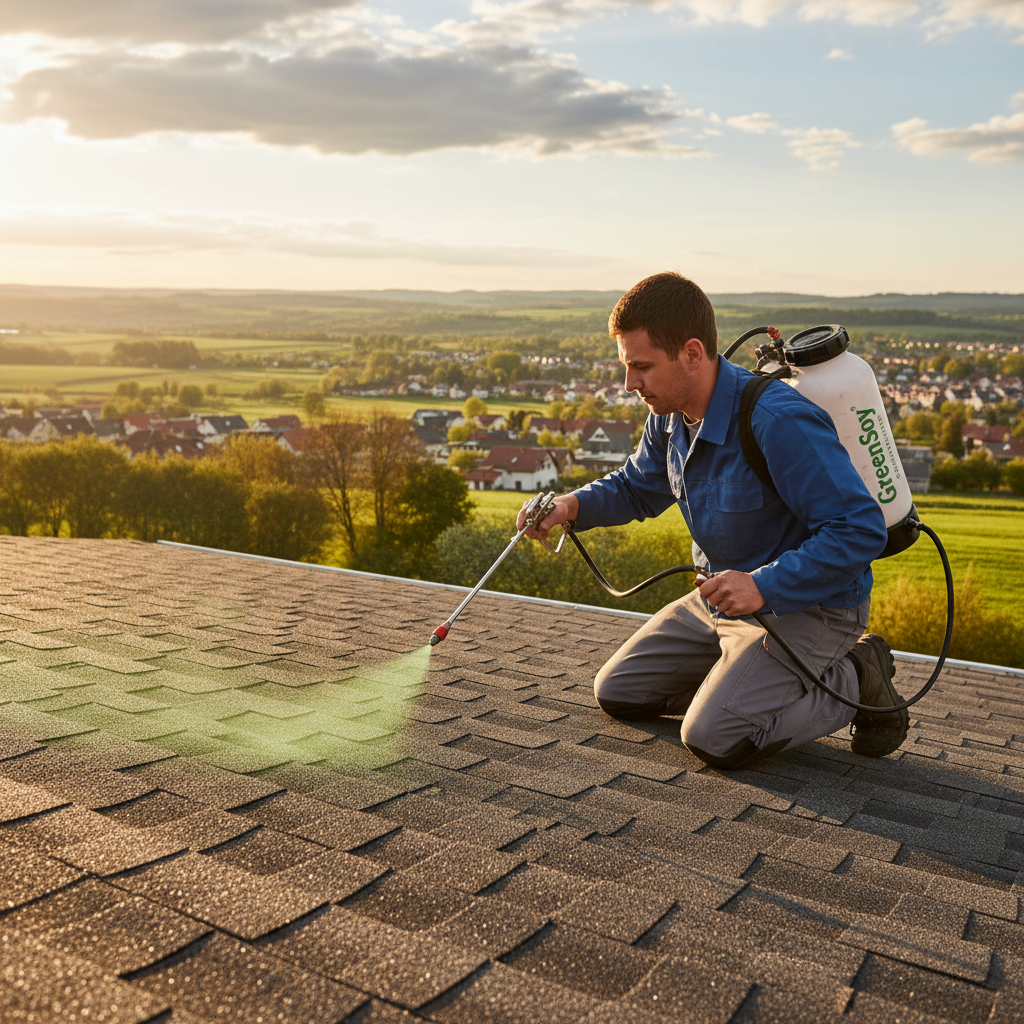
What happens if you find damaged shingles, do you still do the treatment or do I need repairs first? In most cases, you need repairs first, then treatment. Treatments can’t replace missing shingle material or repair flashing.
That matters even more in Wilmington’s wind-driven rain when you’re asking, should I repair roof before rejuvenation. Small openings turn into a funnel fast. It also matters for your wallet, since many rejuvenation and coating providers won’t cover results on roofs that are already leaking or missing shingles (see, for example, Shingle Hero’s warranty terms). In the sections below, you’ll learn how to separate cosmetic issues (like staining) from true damage. You’ll also learn when a soft-wash step can make sense for visibility, and how to decide between repair and proceed.
When Damage Blocks Treatment
You pay for a spray, the roof still takes water, and now the provider can point to the pre-existing damage and say it never qualified in the first place.
If you’ve got true shingle damage, doing a treatment anyway is a waste of money. Even the best coating won’t restore missing shingle material or undo a leak path caused by failed flashing. Many providers also make performance or warranty coverage contingent on the roof being in good condition. That’s the same baseline a home insurance adjuster will look for after storm damage, including questions about roof rejuvenation after storm damage. That order can leave you paying for a service that was never capable of fixing the problem. In some cases, the roof won’t qualify at all.
Treat these as stop signs that mean repairs or a roofing assessment comes first
-
Missing shingles or missing tabs (you can see exposed underlayment or a bare nail line). Water can get driven under adjacent courses in a coastal wind.
-
Active leaks or fresh interior signals (new ceiling stain or wet insulation). Waiting for “a bigger leak” often just buys you bigger drywall and framing repairs.
-
Lifted or unsealed shingles (corners that won’t lay flat or widespread edge lift after a storm). A wash or spray won’t reliably re-bond a shingle that’s lost its seal.
-
Compromised flashing around chimneys, walls, valleys, or pipe boots (rust-through or cracked boot). Flashing failures can dump water under otherwise decent shingles.
What you can do next: take clear photos and start with a shingle damage assessment so the specific pieces can be repaired or replaced first.
If you suspect water is getting past the shingles, a targeted leak repair is usually the fastest way to stop hidden decking and insulation damage from spreading. Read more in our article: Roof Leak Repair Once the roof is back to intact, water-shedding condition, you can reassess whether a cleaning or rejuvenation step makes financial sense.
What “Damage” Means

A lot of what looks like “damage” is just appearance: algae streaks or light scuffing from a branch, hail can be similar, where much of the impact may be cosmetic depending on the type of mark (see NRCA technical guidance on hail damage). That stuff can look awful in Wilmington humidity but still shed water fine, so a cleaning-focused treatment may make sense.
What should change your plan is damage that alters the shingle’s water path. Focus on whether the defect changes how water moves: surface cracks that break through, or bald areas where the dark mat shows. Seeing black substrate, lifted edges, or shiny fiberglass is your cue to treat it as repair-first, not cosmetic.
In coastal North Carolina, salt air and high humidity can speed up granule loss and aging even when shingles aren’t technically “damaged.” Read more in our article: Salt Air Humidity Shingles
Repair, Replace, or Proceed
That gray area is where homeowners overspend in the roof restoration vs repair decision: treating a roof that needed a couple of fixes or patching a roof that has already crossed into system-level failure. One common rule of thumb is that once damage reaches around 20% of shingles, replacement starts making more financial sense than chasing repairs (a similar threshold shows up in IKO’s repair-vs-replace guidance).
Use a simple three-way rule: proceed with treatment only if what you’re seeing is cosmetic (staining or light scuffs) and the roof is still intact and sealed. If you just want peace of mind, verify the roof is truly sealed first.
| What you’re seeing | What it usually means | Best next step |
|---|---|---|
| Cosmetic issues (staining or algae streaks) and roof is intact/sealed | Appearance problem; water-shedding likely still OK | Proceed with treatment (as appropriate) |
| Localized defects (a few lifted/slid tabs or a puncture) | Water path may be compromised in a small area | Repairs first, then reassess treatment |
| Widespread unsealing/damage (roughly ~20%+ of shingles or whole slopes) | System-level failure risk; treatment may waste money | Start a replacement conversation |
Choose repairs first if damage is localized, like a few lifted/slid tabs or a puncture. Wilmington wind-driven rain will nickel-and-dime me through even tiny openings.
Start a replacement conversation if damage or unsealing shows up across roughly 20% or more of the shingles (or whole slopes) or if problems repeat after each storm. Follow the “three bids” rule here so pricing is real, not vibes. Don’t let “no leaks yet” talk you into spraying over a roof that’s already losing its water-shedding system. Kicking the can down the road is how you buy a bigger job later.
The Safest Order of Operations

A Wilmington homeowner soft-washes to see what they are dealing with, finds a few lifted tabs and a tired pipe boot, fixes those, then treats the roof with confidence instead of hoping the spray acts like a repair.
Start with a real condition check, not a spray. Have a qualified roofer evaluate it in person. Photograph suspect areas (tabs and valleys) and, if you’re unsure, get a qualified inspection. When staining or grime obscures the surface, a gentle soft-wash can improve visibility, but it doesn’t restore the roof or replace repairs.
Next, fix anything that breaks the water-shedding surface (missing tabs or punctures), then re-check that the roof is intact and dry (product instructions often require this step, such as Techniseal RoofKeeper prep guidance). After the roof is intact and dry, then a rejuvenation treatment becomes the next decision. Read the terms like a map before a hurricane, and confirm your shingle manufacturer’s guidance doesn’t exclude damaged or leaking roofs. “No leaks yet” isn’t proof you’re safe to treat.
Knowing what a professional looks at during an evaluation makes it easier to compare bids and avoid paying for an “inspection” that misses common failure points. Read more in our article: Typical Roof Inspection
Roof not getting any younger? Contact us or call 703-673-6301 to find out where you stand.