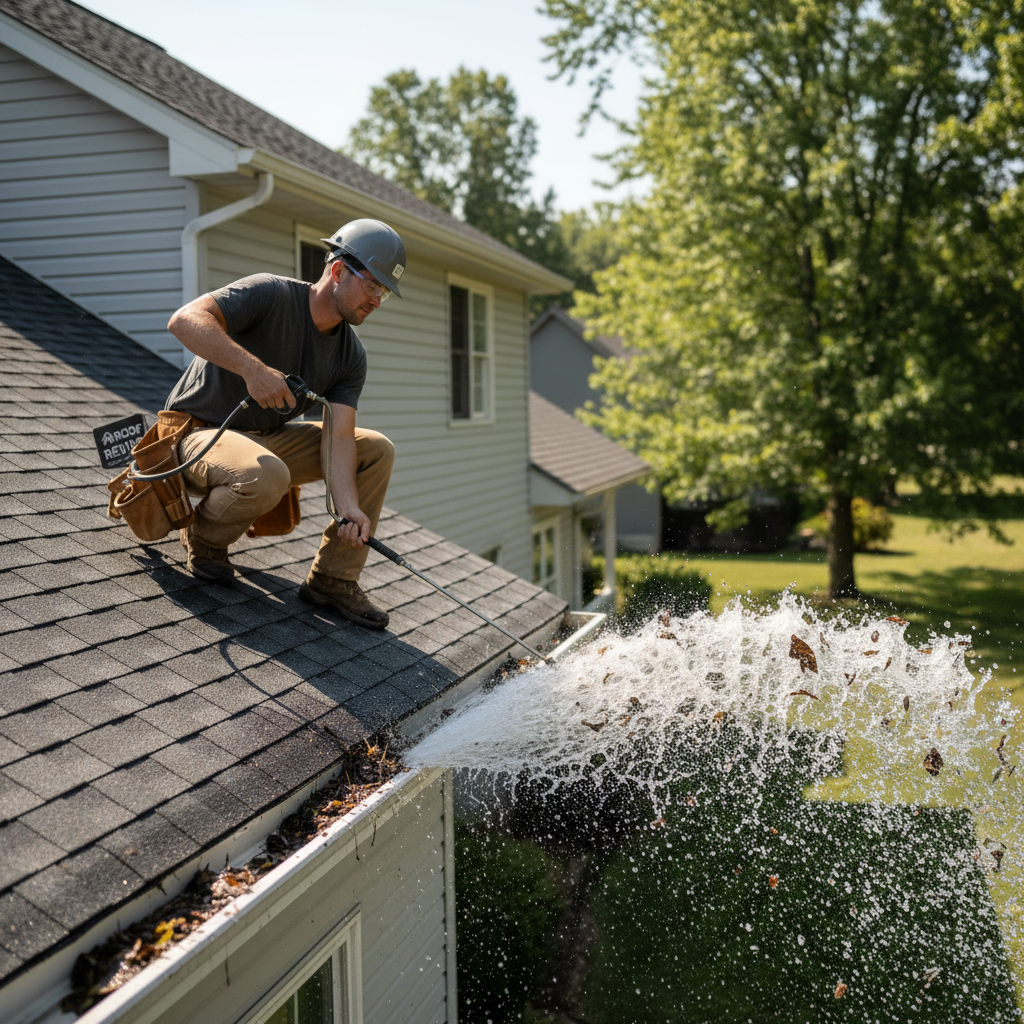
You can clean your roof after a treatment, but you shouldn’t pressure wash asphalt shingles. A pressure washer can strip granules and drive water under laps where it doesn’t belong. Even if the roof looks clean, that kind of damage can cancel out the benefit of the treatment.
If you’re in Wilmington or anywhere along the coast, you’re probably dealing with algae streaks and salt film, and “roof cleaning” gets pitched like a single, instant fix, like wiping off a salt-air patina with one swipe. It isn’t. In this guide, you’ll learn the difference between safe post-treatment roof care and roof-damaging blasting. You’ll also learn the timing that helps the treatment cure properly and the exact questions to ask so a “soft wash” quote doesn’t turn into a pressure-wash job.
Can You Pressure Wash a Roof, or Is That the Real Risk?

Black streaks can vanish fast, but the tradeoff can be real shingle wear. The catch is you might not notice the harm until wind tests the tabs or a leak appears.
What can “mess up” a roof treatment usually isn’t rinsing it off, it’s damaging the shingles. On asphalt shingles, a pressure washer can strip protective granules, lift or break the seal strip that helps shingles stay bonded in wind, and drive water up under laps where it doesn’t belong (as also cautioned in the residential asphalt roofing manual). The “cleanup” can shorten shingle life and create paths for leaks.
Granule loss from washing can show up as gritty downspout discharge and bare-looking shingle spots over time. Read more in our article: Normal Shingle Wear Vs Damage
If instant dark-streak removal is the goal, you may trade away the added service life the rejuvenation was supposed to buy. After a rejuvenation-type treatment cures, normal rain won’t undo it (a detailed discussion of asphalt shingle rejuvenation treatments makes the same point while warning that heavy rain too soon can be an issue). Mechanical blasting can remove the very surface the treatment was meant to help you preserve, and Consumer Reports-style basics back that up.
Roof Cleaning After Treatment: What’s Safe?
A homeowner clears a few pine needles, gives the roof a gentle down-slope rinse, and everything looks the same the next day except the gutters stop overflowing. Their neighbor hires a “quick wash” and starts finding shingle grit at the bottom of the downspouts.
You can usually do gentle, non-abrasive maintenance after the treatment has had time to cure, but you shouldn’t “clean” an asphalt shingle roof by blasting it or scrubbing it. The goal is to remove loose debris and lightly rinse. It is not to sandpaper the shingle surface or force water under it.
| Post-treatment action | OK for asphalt shingles? | What makes it safe/unsafe |
|---|---|---|
| Leaf blower pass (down-slope) | Yes | Minimizes tab lifting; removes loose debris without abrasion |
| Clear valleys/gutters by hand | Yes | Prevents backups; avoid scraping shingle surface |
| Gentle rinse (garden-hose strength, down-slope) | Yes | Low force; avoids driving water under laps |
| Soft-wash application (low pressure, dwell time, no scrubbing) | Sometimes | Appropriate for algae/streaks when allowed to dwell; rinse gently |
| Pressure washing / power washing | No | Strips granules, lifts tabs, forces water where it shouldn’t go |
| Stiff brushing / broom-scrubbing | No | Mechanical abrasion damages the shingle surface |
Safe usually looks like clearing valleys and gutters and using a low-pressure rinse that’s about garden-hose strength. Avoid any approach that relies on abrasion or high force, including pressure washing or stiff brushing used to chase black streaks (a manufacturer algae bulletin similarly advises against scrubbing or high-pressure washing). If a contractor can’t tell you the method in plain terms (low pressure, dwell time, rinse) and instead sells you on “we’ll just power wash it,” treat that as a red flag, not a shortcut.
Low-pressure, down-slope rinsing and non-abrasive debris removal are the two biggest rules for keeping asphalt shingles intact after any service. Read more in our article: Safe Roof Cleaning
How Soon Can You Wash Roof After Treatment?

Give the product a clean window to soak in, and you get the low-effort version of roof maintenance where rain does most of the work later. Rush water onto it too soon and you can end up paying twice for the same outcome.
For the first day, plan on a no-water window and skip rinsing or any planned washing. You’re not trying to keep the roof bone-dry forever. Early heavy water exposure can dilute product before it fully soaks in and cures. The result is a diluted application that may not work as intended.
After about 24 hours, keep any contact light: a down-slope, garden-hose rinse is fine, but avoid a nozzle setting that hits like a jet. If you want to address black streaks or algae, wait until the treatment has had time to set, then use a low-pressure soft wash roof cleaning style application (dwell time and no scrubbing) rather than trying to force a “same-day clean” look.
Rain and heavy water exposure right after application can interfere with how evenly a roof treatment penetrates and cures. Read more in our article: Rain After Roof Treatment
Quick Contractor Script For Wilmington, NC
“Soft wash” can mean anything unless you pin it to a number. Many homeowner guides put true roof-safe rinsing in the garden-hose neighborhood, roughly 60 to 100 PSI (for example, one roof-cleaning guide frames soft-wash pressures in that range), which makes vague promises a lot harder to hide behind.
When you call a roof cleaning Wilmington NC provider, don’t ask if they “power wash” or “soft wash” because those labels can nickel-and-dime you. Instead, ask what they’ll do to keep force and abrasion off the shingles, since labels can hide aggressive methods.
Use this script: “What PSI hits the shingles at the nozzle, and can you keep it in garden-hose range while rinsing down-slope only?” “Are you letting the solution sit before rinsing, with a light bleach mix (around 3% to 5% active chlorine)?” “No scrubbing, no stiff brushing, correct?” “How will you protect landscaping and control runoff into gutters and beds?”
Roof not getting any younger? Contact us or call 703-673-6301 to find out where you stand.