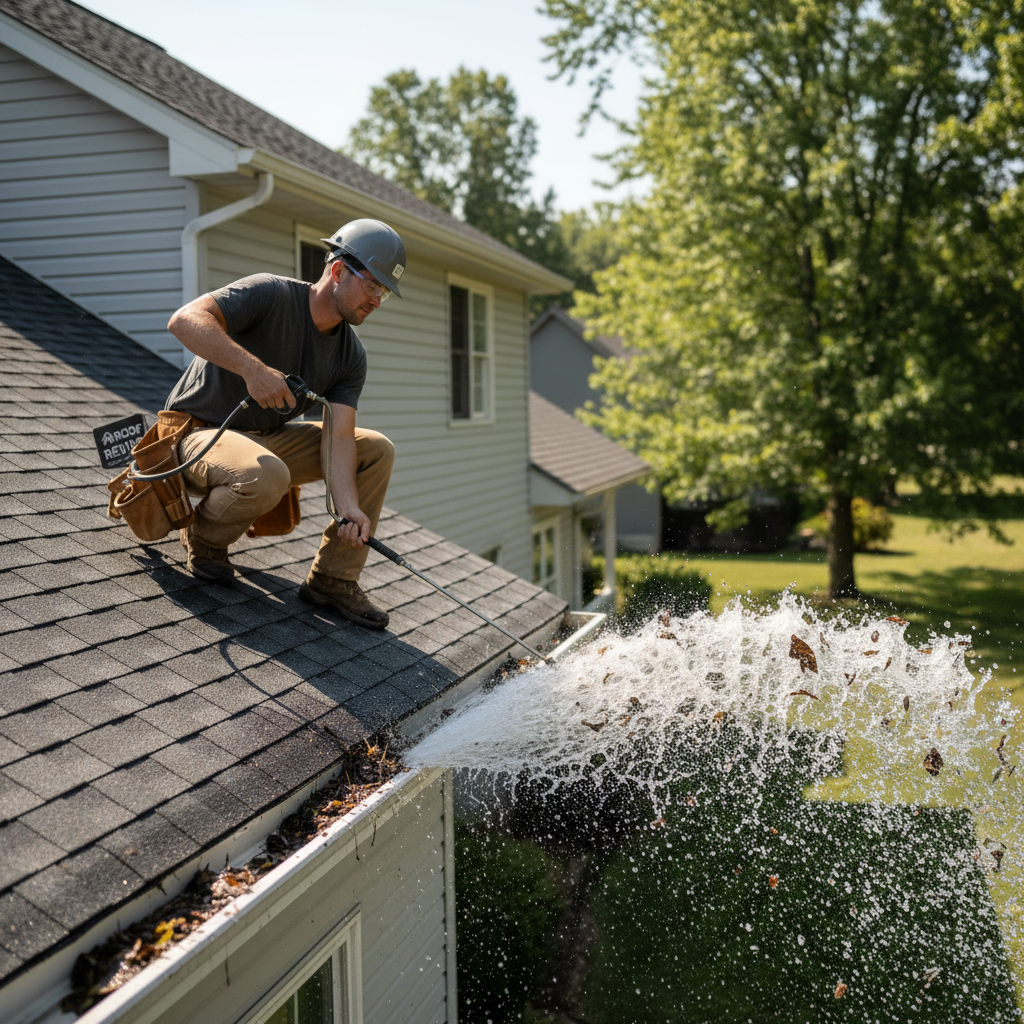
If you have an asphalt shingle roof, you should treat pressure washing as a no. You’ll almost always want a true soft wash instead. Pressure can be acceptable only in narrow cases, like certain metal roofs or controlled rinsing that doesn’t blast shingle faces.
You’re probably here because two contractors used different labels for the same job and promised different timelines, and you don’t want to pay for “clean today, damage later,” so let’s not turn this into a whole thing. In coastal North Carolina, the risk isn’t theoretical: high pressure can strip shingle granules and drive water up under edges, while sloppy chemical work can burn landscaping if runoff isn’t managed, roof cleaning chemicals safe for plants matter here. This guide helps you figure out what’s safe for your specific roof and what to ask so you know what hits your shingles.
| Roof/surface | Default safe approach | When pressure can be acceptable | Key risk to avoid |
|---|---|---|---|
| Asphalt shingles (typical) | True soft wash (low-PSI + chemistry + dwell time) | Avoid pressure on shingle faces; at most limited, controlled rinsing for runoff management | Stripping granules; driving water up under shingle edges |
| Metal roofing | Cleaning method depends on condition; can be washed more aggressively than shingles | Pressure may be acceptable in controlled use (surface-dependent) | Damaging coatings/finishes; forcing water where it shouldn’t go |
| Some tile systems | Often more pressure-tolerant than shingles (system-dependent) | Pressure may be acceptable in narrow cases (material-dependent) | Cracking/dislodging tiles; driving water into underlayment |
| Non-roof areas (gutters/soffits/brick/concrete) | Method varies by surface | Pressure commonly used (risk profile differs from shingles) | Overspray/runoff onto landscaping; surface etching/damage |
Roof pressure washing vs soft washing: what roof do you have?

Before you compare “pressure washing” to “soft washing,” pin down your roof material and its current condition because that determines what’s even on the table for anyone asking if pressure washing a roof is safe. On most Wilmington-area homes, that means asphalt shingles, and the tradeoff is stark: the same force that makes a roof look clean fast can also strip protective granules and shorten the roof’s life.
Do this quick diagnosis first
-
Material: Asphalt shingles (most common), or a more pressure-tolerant surface like metal.
-
Age and wear: If your roof is 10 to 25+ years old, looks bald in spots, or you find lots of granules in gutters/downspout splashes after a storm, you’re already operating with less margin.
-
How it’s built: Steeper slopes and lifted edges make “anything that can drive water up-slope” a bigger risk than most homeowners expect.
If you can’t confidently name the material and rough age, grab your closing paperwork or take a clear phone photo from the ground. Then ask a roofer, not a cleaning company or a Better Business Bureau (BBB) ratings page.
When pressure washing is not okay

A roof can look cleaner in an hour, then leave you chasing a new leak stain through the next storm season. The damage you pay for rarely shows up the same day the streaks disappear.
If you have an asphalt shingle roof, pressure washing to remove black streaks or algae isn’t an “option.” It’s a risk trade that isn’t worth the headache. High-pressure spray can scour off the protective granules that shingles need to shed water and UV, classic roof granule loss pressure washing (see Asphalt Roofing Manufacturers Association guidance on algae discoloration). It can also drive water up-slope under shingle edges, like prying up a sealed ridge cap one blast at a time (consistent with NRCA technical guidance warning against power washing asphalt shingles).
It can also “work” in the worst way: you blast the discoloration off without actually killing the organism, so it returns faster. A wand that promises instant brightness can trade today’s look for less roof life later.
The Narrow Cases Pressure Can Be Okay
Pressure can be okay when it isn’t being used to clean the face of asphalt shingles (see general method comparisons like soft washing vs power washing that keep asphalt shingles in the soft-wash-only bucket). Think more like targeted rinsing or cleanup: washing metal roofing that can tolerate it, rinsing a valley or drip edge after a chemical treatment, or cleaning non-roof parts of the project where the risk profile is totally different.
What surprises most homeowners is that a proper roof “soft wash” often uses garden-hose-level force at the roof, low pressure roof washing, with chemistry doing the work (often described as sub-100-PSI application in professional softwashing guidance). So instead of asking, “Do you power wash?”, ask: What PSI hits my roof and where will you aim it? If they won’t answer clearly, walk away.
If you’re seeing piles of grit at downspout exits after storms, it can be a clue that your shingles are shedding more granules than they should. Read more in our article: [Granules In Gutters] HomeAdvisor blurbs are not a process.
What “Soft Wash” Should Mean

A neighbor takes the lowest bid, gets an instantly brighter roof, and then sees algae return before the next summer. Another homeowner hears “it’ll keep fading over the next few weeks,” and that slower answer is usually the safer one.
On an asphalt shingle roof, “soft wash” should mean you do it right the first time. What you’re paying for is controlled chemistry and dwell time, not force. If the plan is a wand that “scrubs it clean,” that’s a can of worms. The label doesn’t matter. The mechanism does.
A “soft wash” that’s too hot or poorly rinsed can still create avoidable risk for plants, pets, and surrounding surfaces. Read more in our article: [Roof Cleaning Chemical Safety]
As a homeowner, you can use these guardrails to verify you’re getting a true soft wash
-
Low-PSI delivery at the roof: garden-hose-level spray, not blasting. Ask what PSI hits the shingles and how they apply it.
-
Chemistry in a roof-safe range: many pros work roughly in the 3% to 5% active-chlorine range for asphalt shingles, adjusted for growth level (a common range cited in softwash training guidance). You’re looking for a clear explanation, not secrecy.
-
Dwell time, not immediate abrasion: the solution needs time to kill and loosen growth. If they won’t talk about dwell time, they’re often leaning on mechanical cleaning.
-
Realistic outcome timing: black streaks can keep fading over 30 to 90 days (often noted in softwashing guidance). “Instant bright” can be a red flag on shingles.
-
Rinsing approach: they may do limited, controlled rinsing for runoff management, but they shouldn’t rely on high-pressure rinsing to create the result.
Hiring in coastal NC: questions that expose risky methods
The right questions reveal who respects the roof as a system and who treats landscaping protection as optional. The goal is simple: no mystery pressure, no mystery mix, no surprise runoff.
Coastal humidity and salt air can accelerate algae growth and make “how fast it comes back” just as important as how clean it looks on day one. Read more in our article: [Salt Air Humidity Shingles]
In Wilmington’s salt air and humidity, you don’t need a contractor with the right label. You need one who can describe the exact process, and Nextdoor neighborhood recommendations shouldn’t be your standard. “We soft wash” isn’t an answer if they can’t tell you what hits the shingles and what’s in the mix.
Use these questions on the phone and listen for clear, specific responses
-
What PSI actually hits my roof surface, and are you ever using a pressure-washer wand on the shingles?
-
How do you apply the solution: dedicated pump/softwash system, or a pressure washer downstream injector?
-
What’s your mix control like for asphalt shingles (range of active chlorine), and how do you adjust for algae vs. moss?
-
What do you do to protect plants and manage runoff, especially if I don’t have gutters or I’m close to my neighbor’s landscaping?
-
Will your method affect my roof warranty, and can you put in writing that you won’t use high pressure on asphalt shingles?