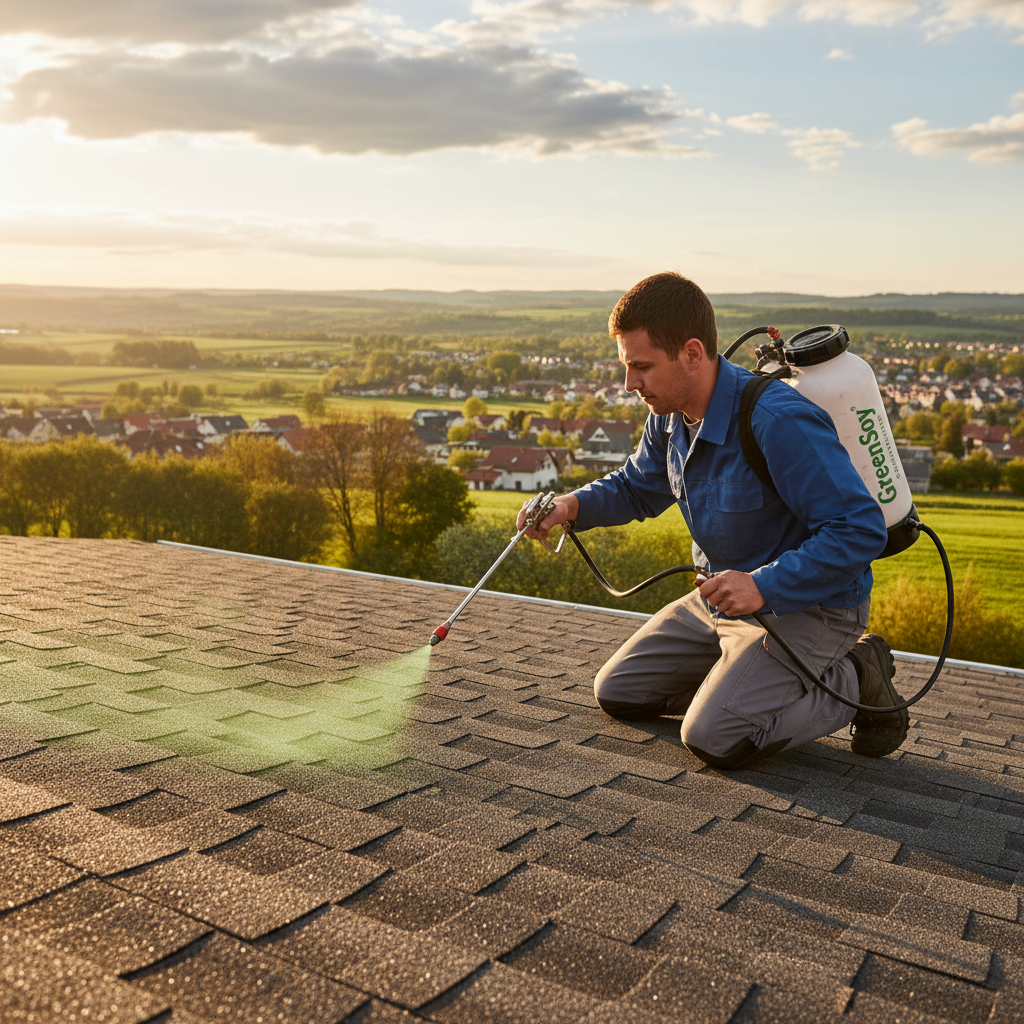
If you’re asking how long roof rejuvenation will last on a roof like yours, the most honest answer is usually about five years per application. Expect less than that if the shingles are already failing or the roof gets hammered by sun and coastal storms. A mid-life, mechanically sound roof is the scenario where five years is most plausible.
What matters is whether you’re “buying time” or just paying for a temporary improvement that won’t change the roof system’s weak points. This guide helps you translate the marketing into a realistic roof rejuvenation lifespan for an asphalt-shingle roof near Wilmington. It keeps you from kick the can down the road with a treatment that is just a fresh coat of paint on weathered siding. You’ll also see the warranty and chemistry tradeoffs to check before you put any product on your shingles.
What “Lasting” Means on Shingles

When someone says a rejuvenation treatment “lasts” (how long does roof rejuvenation last), you shouldn’t hear “the roof is good for X years.” Instead, read it as “the shingles age more slowly for a while.” On asphalt shingles, that mainly means three things. They keep more flexibility (so tabs resist cracking) and they shed granules more slowly (so the mat doesn’t get exposed).
Looks can improve while the underlying aging rate stays the same. If you want a longevity claim to mean anything on a roof like yours near Wilmington, treat vague promises like a Consumer Reports red flag and demand what will be tracked or rechecked: brittleness on high-sun slopes, signs of fresh granule loss in gutters/downspouts after storms, and whether the shingle surface is getting chalky and thin rather than just stained with algae.
Your roof’s 5-year odds
Most reputable rejuvenation pitches converge on “about 5 years per application” (roof rejuvenation lasts how long), but it only pencils out if your roof is in the mid-life window and still mechanically sound, like budgeting a roof the way you budget a car’s tires. If your shingles are roughly 10–20 years old and lying flat, and you’re mainly seeing dryness (stiff tabs) or early granule loss, your odds of getting around five more years are the best.
| Roof situation (asphalt shingles) | Likely outcome from rejuvenation | Decision takeaway |
|---|---|---|
| ~10–20 years old, tabs flat/sealed; mostly dryness, light wear, early granule loss | Best-case: close to ~5 years per application | Rejuvenation is most defensible if you’re buying time |
| 20+ years old (even if it “looks fine”) | Often <5 years, or contractor may decline | Treat as short runway; start replacement planning |
| Widespread cracking/curling, exposed fiberglass mat, unsealed tabs | Low benefit; can’t reverse mechanical failure | Skip rejuvenation; plan replacement |
| Active leak sources at flashings/boots/penetrations | Unreliable; failures persist | Repair/replace; don’t expect rejuvenation to solve leaks |
If the roof is 20+ years old, you’re already chasing time, not extending life, and you should expect less than five years or a no-bid.
Knowing the difference between normal aging and true storm or mechanical damage helps you predict whether a treatment is actually buying time or just masking a replacement problem. Read more in our article: Normal Shingle Wear Vs Damage Treat it as a red flag if you have widespread cracking or exposed fiberglass mat; conditioner can’t reverse that kind of failure, even if the roof “looks fine” from the yard.
Coastal Wilmington Factors That Shorten It

In accelerated-weathering testing, treated shingles showed dramatically lower mass loss and particulates than untreated samples after 1,500 hours of exposure, a reminder that the real fight is UV and abrasion, not the calendar. Wilmington’s mix of sun, humidity, and storm grit turns that lab idea into your roof’s day-to-day reality.
Near Wilmington, the “about 5 years” talk can be optimistic because your roof ages under a mix of high UV and humidity that speeds up the same failure modes you’re trying to slow, classic humid climate roof maintenance challenges. Closer to the water, longer wet cycles, biological growth, and wind-driven grit all speed granule wear.
Coastal salt air and persistent humidity can accelerate granule loss and shorten the practical life of asphalt shingles, even when a roof still looks “okay” from the yard. Read more in our article: Salt Air Humidity Shingles
Hot attics from weak ventilation or insulation gaps also shorten the runway. Heat loads them from both sides. Case in point: a south- or west-facing slope over a poorly ventilated garage often turns brittle sooner than the shaded back side, so the treatment “wears off” in practice even if the calendar says it shouldn’t. If you want durability, ignore national averages because they mislead in Wilmington, and don’t let HomeAdvisor-style timelines set your expectations; plan to recheck sooner after hurricane season.
Rejuvenation vs Replacement Decision Line

You want the kind of choice where you’re not crossing your fingers every time the forecast turns tropical. The right call here buys you calmer seasons now without setting you up for a bigger, wetter bill later.
Use this as your decision line: choose rejuvenation only if your roof is mechanically sound today and you want to sleep better at night while buying roughly one planning cycle (about a few seasons up to ~5 years), not certainty, because the next hurricane is the stress test, that’s the real roof rejuvenation vs replacement longevity question. In practical terms, the tabs still lie flat and seal, penetrations and flashings aren’t active leak sources, and you can tolerate the chance of a post-hurricane repair.
If you need predictable protection for a long horizon or you’re already seeing widespread cracking or recurring leak points, skip the spray and plan replacement. Saving money only counts if it doesn’t buy you a bigger, wetter problem.
After a Wilmington-area hurricane, the fastest way to protect your home is to check for lifted tabs, missing shingles, and new granule piles before small issues become leaks. Read more in our article: After Hurricane Roof Check
Warranty and Chemistry Tradeoffs
Picture paying for a “life-extending” treatment, then learning the hard way that it complicated your next warranty conversation or created a problem you cannot see from the ground. The chemistry question matters most when the roof is stressed and you need the paperwork to back you up.
“How long will it last?” also includes what happens to your shingle warranty and the roof rejuvenation warranty terms tied to what you’re actually putting on the roof. At least one major manufacturer warns that applying unknown-chemistry rejuvenators or coatings is asking for trouble, and Owens Corning shingles documentation calls out new failure modes (softening and moisture trapping) that may jeopardize warranty coverage. If your roof still has any meaningful coverage, a five-year bump that voids it can be a bad trade.
Before you agree, get the exact product name and SDS, and ask a blunt question: is this a penetrative rejuvenator meant to soak in or a coating that leaves a film? Don’t accept “it’s all the same” as an answer, because it isn’t, and the downside shows up when you need a claim or you discover trapped moisture after a coastal storm cycle.
Roof not getting any younger? Contact us or call 703-673-6301 to find out where you stand.