You’re looking at a roof that’s aging, maybe streaked, maybe “fine from the driveway,” and you’re hearing that rejuvenation can buy you years. Are there roofs that should not be rejuvenated and need replacement? Yes: if your roof has system-level failures like active or recurring leaks and soft or sagging decking, replacement (or tear-off level repair) is the safer call.
In coastal North Carolina, that line matters. Wind-driven rain and storm “temporary fixes” can leave hidden water paths like sand channels under a dune, even when the shingles still look presentable and you’re tempted to kick the can down the road. In the sections below, you’ll learn the specific disqualifiers to check first and the Wilmington-area “looks fine” traps that catch homeowners.
Roof Rejuvenation vs Replacement: Why System Failures Change the Answer

You can do everything “right” on the surface and still watch the same leak reappear in a new spot after the next storm. When water is traveling under shingles or through flashings, a conditioner just makes the failure harder to spot.
Rejuvenation products can make aging shingles more flexible, but they don’t rebuild the roof system that keeps water out—those are roof rejuvenation limitations. When the failure is below the shingles, like wet decking or underlayment breakdown, a surface treatment won’t stop it. Pretending it can is wishful thinking. You can’t “condition” your way out of it. A roof that’s already leaking in multiple areas or showing structural movement needs real repairs.
For instance, after a Wilmington wind event, a tarp gets nailed through shingles to stop the rain (GAF notes shingles nailed through during tarping must be replaced). Even if the roof looks fine afterward, you may now have dozens of penetrations and stressed shingle tabs. At best, the shingles feel softer, but the leak pathways around fasteners and lifted edges remain.
If you’re trying to avoid paying twice, ask for a home inspector report summary style answer to one question: is this a shingle-aging issue or a system-integrity issue? Red-flag findings that typically push you toward replacement (or at least tear-off level repair) include sagging/soft decking and recurring leaks in different rooms.
Recurring leaks that “move” room-to-room often mean the problem is flashing, underlayment, or fastener-related—not just shingle aging. Read more in our article: Roof Leak Repair
Replacement-Only Disqualifiers to Check First
People treat an older roof to save money, then pay again when the first sideways rain spreads a ceiling stain. The difference usually comes down to whether any of the red flags below were present before the treatment.
If any of these show up, skip the “make the shingles flexible again” pitch—these are roofs that cannot be rejuvenated. Otherwise you’re throwing good money after bad. Put your money toward tear-off level repair or full replacement. You’re not just buying time. You’re taking a risk. You’re betting that a surface treatment can outrun active water pathways or structural failure, and it can’t.
| Disqualifier (replacement likely) | What to look for in an inspection |
|---|---|
| Active or recurring leaks | Stains that keep growing, multiple rooms affected, or repeated “patches” that don’t hold through a Wilmington-style wind-driven rain. |
| Sagging, soft spots, or deck rot | Any dip in a roof plane, spongy sheathing, or evidence the decking has stayed wet. |
| Widespread shingle loss or unsealable tabs | Lots of missing/creased shingles, lifted edges, or shingles that won’t re-bond after storms. |
| Severe granule loss from storm damage | Bald areas where asphalt is exposed, not just a little grit in gutters. That aging accelerates fast. |
| Failed flashings and penetrations | Deteriorated pipe boots, chimney/wall flashing gaps, or tarp nail holes through shingles; shingles in these areas need replacement, not conditioning. |
If you’re on the fence, ask the inspector to separate “cosmetic wear” from “water-entry points,” and treat the second category as a replacement trigger.
Coastal NC “looks fine” traps

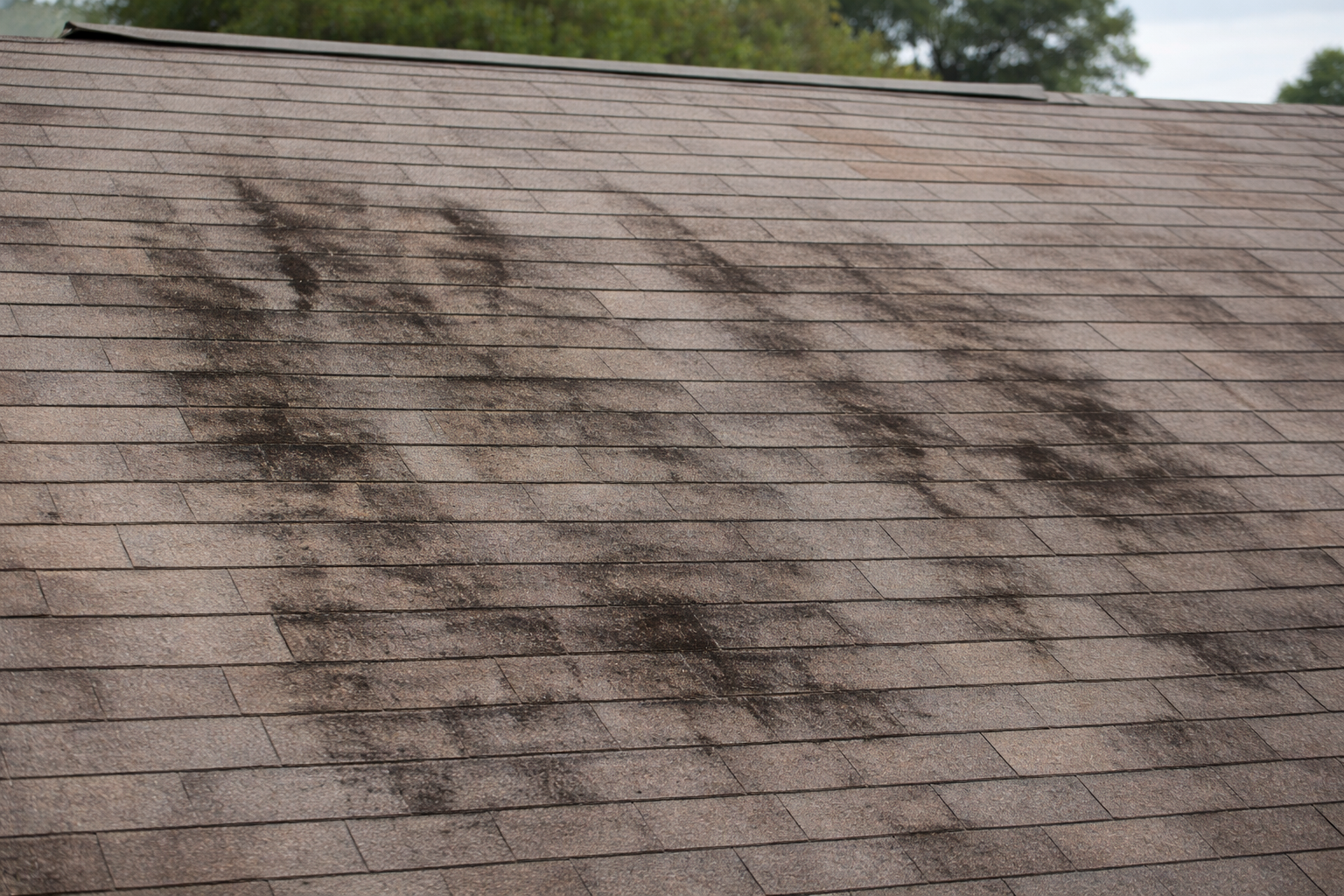
In Wilmington’s wind-driven rain and salt air, “it looks fine from the driveway” can be the most expensive take, and it can be a reckless one. Algae streaks can hide granule loss, salt can corrode flashing and fasteners, and a storm can lift shingle seals just enough that tabs lay back down but no longer bond.
Case in point: if your roof was ever tarp-protected after a blow, nailed-through shingles and hurried patches can sit out of sight. The next sideways rain exploits those weak points. Don’t let surface appearance decide for you; ask your inspection to specifically verify sealed tabs, flashing condition, and any tarp nail penetrations, not what you saw on Nextdoor neighborhood recommendations.
Salt air and humidity can accelerate corrosion at flashings and fasteners, creating leak points even when shingles still look decent from the ground. Read more in our article: Salt Air Humidity Shingles
Practical Constraints That Force Replacement

Many rejuvenation warranties are about five years and focus on shingle flexibility, not leak prevention (NRCIA highlights this warranty reality in its rejuvenation product overview). If your real standard is “will this hold up under insurance scrutiny and wind-driven rain,” the fine print and the code book matter as much as the shingles.
Sometimes the deciding factor isn’t “how bad does it look,” it’s what you’re allowed to build and what you’re buying, and codes aren’t optional. Local codes commonly limit you to two roof coverings (ARMA summarizes this common code limit in its reroofing guidance). So if you already have two layers, or your contractor can’t verify you don’t, your next step often becomes a tear-off and replacement even if the top layer still looks serviceable. That often surfaces during a permit for a sale or renovation, when an older recover turns up under the current shingles.
Age can force your hand, too. It can do it right the first time or not. If you’re near the typical end of life for your shingle type, roughly 15–20 years for 3-tab and 25–30 years for many dimensional shingles, rejuvenation becomes “buying a little time” at best, not a reset. And if your decision yardstick is leak risk or insurance scrutiny, pressure-test any rejuvenation pitch against its warranty reality: many rejuvenation warranties run about five years and focus on shingle flexibility, not guaranteeing you won’t leak. If you’ve been telling yourself “it isn’t leaking, so it’s safe to treat,” this is where that logic breaks.
If You’re Unsure, What to Ask in an Inspection
You leave the estimate with photos, clear yes-or-no answers, and a short list of fixable issues instead of a sales pitch. That’s how you avoid guessing wrong and learning about it after the next storm.
Bring these questions to every estimate or roof inspection Wilmington NC appointment, whether it came from Angi (formerly Angie’s List) or a referral, and don’t accept vague answers. If the inspector won’t document findings with photos, walk away. That is a nonstarter.
Ask: Is the decking solid everywhere (any soft spots/sagging)? Any moisture evidence in the attic, around penetrations, or at valleys? Ask: Are flashings and pipe boots intact or at end-of-life? Are shingles still well-fastened, or do you see nail pops/fastener pull-through from wind? If you repaired the specific failures you found, would this roof qualify as serviceable for a few more years, or does it require tear-off to fix the water paths?
A documented inspection with photos is the fastest way to separate normal shingle wear from hidden damage that makes rejuvenation a bad bet. Read more in our article: Typical Roof Inspection
Roof not getting any younger? Contact us at Contact us or call 910-241-1152 to find out where you stand.