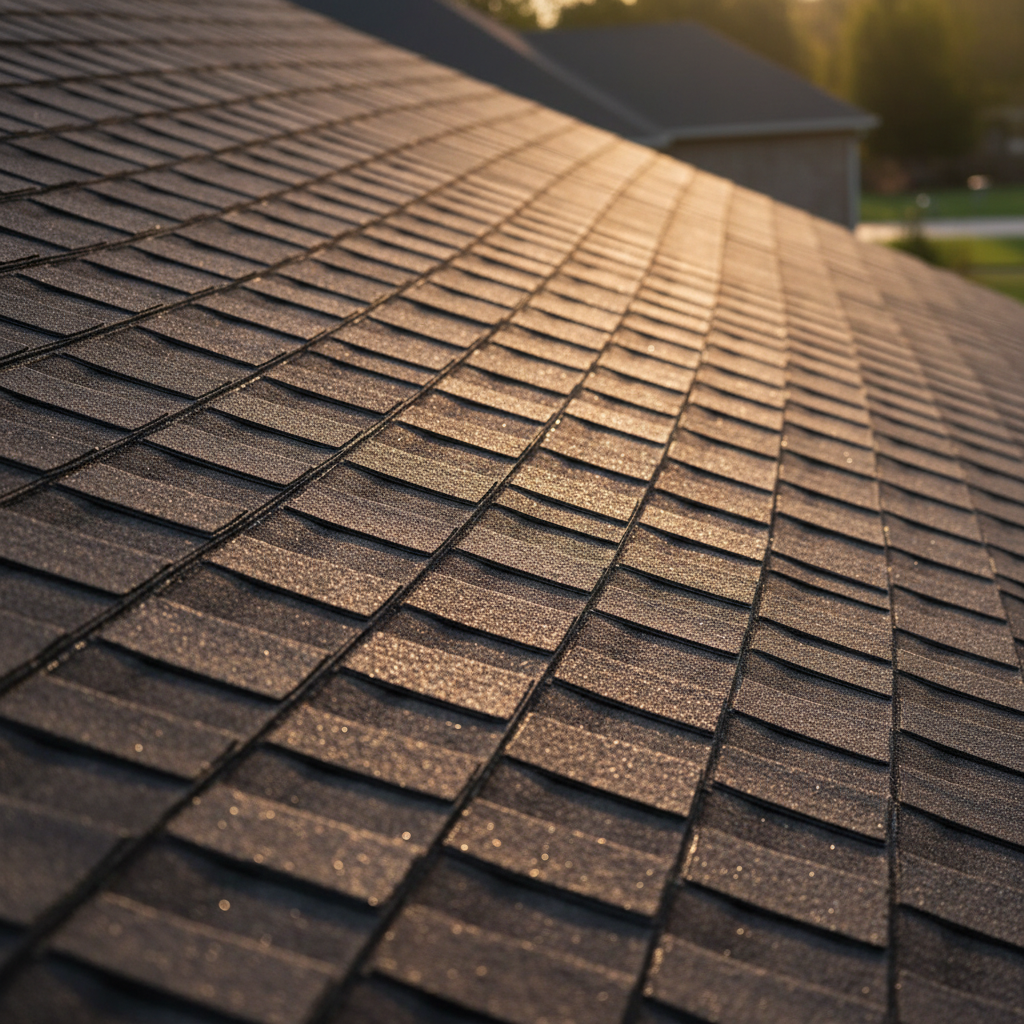
You’re usually seeing an asphalt shingle roof that’s aging and losing its UV protection. Dry, brittle shingles and granules in the gutters often mean the surface has oxidized, so the roof wears faster and becomes harder to repair.
That doesn’t always mean you need to replace your roof today. In coastal Wilmington, normal wear can look dramatic, and the real tell is timing and pattern: whether the loss is light and even, or sudden after a storm and concentrated in one area. This guide walks you through the quickest ways to read what you’re seeing. It explains what “dry” actually signals and how to choose your next step so you can plan with confidence instead of guessing.
The Fastest Way To Tell: Timing + Pattern
You can sweep out gutters and still miss the real problem if you read the mess instead of the moment it showed up. Get the timing wrong and a small, localized issue can turn into the first leak you notice during the next hard rain.
If your roof is newer (roughly the first few months), some granules in gutters or at downspout splash blocks can be normal “extra” shedding from manufacturing and handling (see GAF’s guidance on granule loss on new shingles). But if the roof is older and the shingles also look dry or brittle, granules coming off usually points to aging: the surface oxidizes and the shingle stiffens.
Pattern is the shortcut for shingle granule loss. A light, even “sand” over time suggests general wear (often faster in coastal Wilmington sun and wind). A sudden, storm-timed heavy dump, or loss concentrated in one area, should push you to book a Wilmington NC roof inspection. Waiting for a leak is a bad plan, especially if the NOAA hurricane season updates are lighting up your local weather app.
A basic inspection checklist helps you understand what a roofer should (and shouldn’t) be looking for when granule loss is storm-timed or concentrated in one area. Read more in our article: Typical Roof Inspection
| What you notice | Likely meaning | Best next step |
|---|---|---|
| Light, even grit showing up gradually over time | General aging/wear | Monitor and document with repeat photos |
| Sudden heavy granule dump after a storm | Possible accelerated wear or localized damage | Book an inspection |
| Granule loss concentrated on one slope/valley/below ridge | Localized issue rather than uniform aging | Book an inspection |
| Newer roof and only small amounts of granules early on | Often normal “extra” shedding | Monitor; it often settles down |
What “Dry” and Brittle Really Signals

A neighbor calls it “just old shingles” until a routine ladder bump snaps a tab clean off. That’s usually the point where the roof stops acting like a flexible surface and starts behaving like something fragile.
When shingles look “dry,” you’re often seeing the asphalt binder aging and oxidizing from heat or UV (UV damage asphalt shingles), a mechanism tied to brittleness/cracking and reduced granule adhesion in durability research on asphalt shingle aging. That change makes the shingle stiffer and more prone to cracking or breaking when wind flexes it, especially on sun-baked slopes.
As the shingle stiffens, it also loses grip on its protective granules. So if you’re seeing brittleness and granules in the gutters, don’t write it off as cosmetic. Get a second set of eyes on it. You’re watching the roof lose both flexibility and its UV shield, like a rain jacket that’s lost its coating. That is when deterioration tends to speed up and spot repairs get harder.
Coastal Wilmington Wear vs True Damage
Along the Wilmington coast, shingles can look like they’re “wearing out early” because UV is intense and salty air can speed surface breakdown (salt air damage roof shingles), and coastal vs inland roof-wear comparisons often note climate-amplified granule erosion and UV breakdown (see coastal vs inland roof wear). That often shows up as a more uniform, gradual thinning of granules on the most sun-exposed slopes, even if the roof was installed correctly.
Coastal UV, salt, and humidity can accelerate aging and make shingles look worse faster than inland roofs of the same age. Read more in our article: Salt Air Humidity Shingles
True damage usually has a sharper fingerprint: a sudden change right after a storm, concentrated loss in one area, or clear impact marks you don’t have to squint to see. If your Ring doorbell or exterior camera caught the worst gusts, trust that timeline more than your gut. If you catch yourself thinking “it’s not leaking so it must be fine,” remember that coastal wear can stay watertight for a while and still push you toward the point where repairs stop being practical. Before you call anyone, jot down what changed and when it changed so you can separate climate wear from a one-off event.
Decision Path: Monitor, Inspect, Restore, or Replace

You don’t need a roofer’s vocabulary to make a smart call, just a clean next step based on what you can observe. When you match the response to the pattern, you protect your budget and avoid emergency work.
Monitor if the grit is light and steady, there are no bald spots, and tabs still flex without cracking: photograph the same areas monthly and after big wind. Book an inspection if you see a storm-timed granule dump or any interior clues like a new ceiling stain or damp decking at the ridge, and do it before the next blow.
If an inspection shows the shingles are aging but still intact and mostly covered, restore/rejuvenate (roof rejuvenation vs replacement) aims to slow drying and buy time. If shingles crack when lifted, edges break, or you can see widespread exposed asphalt, skip “it’s not leaking so it’s fine” and plan a replacement. At that point the roof is held together with duct tape and prayers, and repairs usually won’t hold.
Rejuvenation tends to work best before shingles start cracking or losing large areas of granule coverage, so timing matters for whether it’s worth considering. Read more in our article: Roof Rejuvenation Vs Replacement
Questions Homeowners Ask About Granule Loss
Someone notices black grit at the downspout and suddenly every roof in the neighborhood looks suspicious. A few quick answers can keep you from either panicking or ignoring the one scenario that really deserves urgency.
Is Granule Shedding Ever Normal (is granule loss normal on new roof)?
Yes, on a newer roof it can be. In the first several months, you may see extra “rider” granules wash into gutters from manufacturing and handling, and it often settles down; granule loss that starts years later, especially alongside a dry look, deserves more attention.
If I See Grit in the Gutters, Does That Mean I Need a New Roof?
Not necessarily. A light, steady sandy grit can be normal aging, but a sudden storm-timed pile is a better reason to schedule an inspection. This isn’t where you should gamble. Use Google Reviews or Nextdoor neighborhood recommendations to find a local roofer who can confirm whether it is accelerated wear or localized damage.
Could This Be Hail Damage Even If the Shingles Don’t Look “Smashed”?
Sometimes, but clear impact signatures matter (as noted in inspection training guidance on hail damage signatures on asphalt shingles). As a rough benchmark, hail around 1 inch (three-tab) to 1 1/4 inch (laminated/architectural) is more likely to cause functional damage (per NRCA’s hail size thresholds), and if you have to squint and debate each mark, it often isn’t severe enough to be the main story.
What’s the Safest Way to Check Without Getting on the Roof?
Stay off the roof and use binoculars or your phone’s zoom from the ground. Next, check gutters or downspout splash blocks, and after heavy rain look in the attic for new staining or damp decking. If you want one useful habit, take repeat photos of the same two spots after big wind events so you can tell “ongoing wear” from a sudden change.
Roof not getting any younger? Contact us or call 703-673-6301 to find out where you stand.If your shingles are aging faster than your budget, HardShore’s roof rejuvenation treatment in Wilmington restores them for about 70% less than replacement.