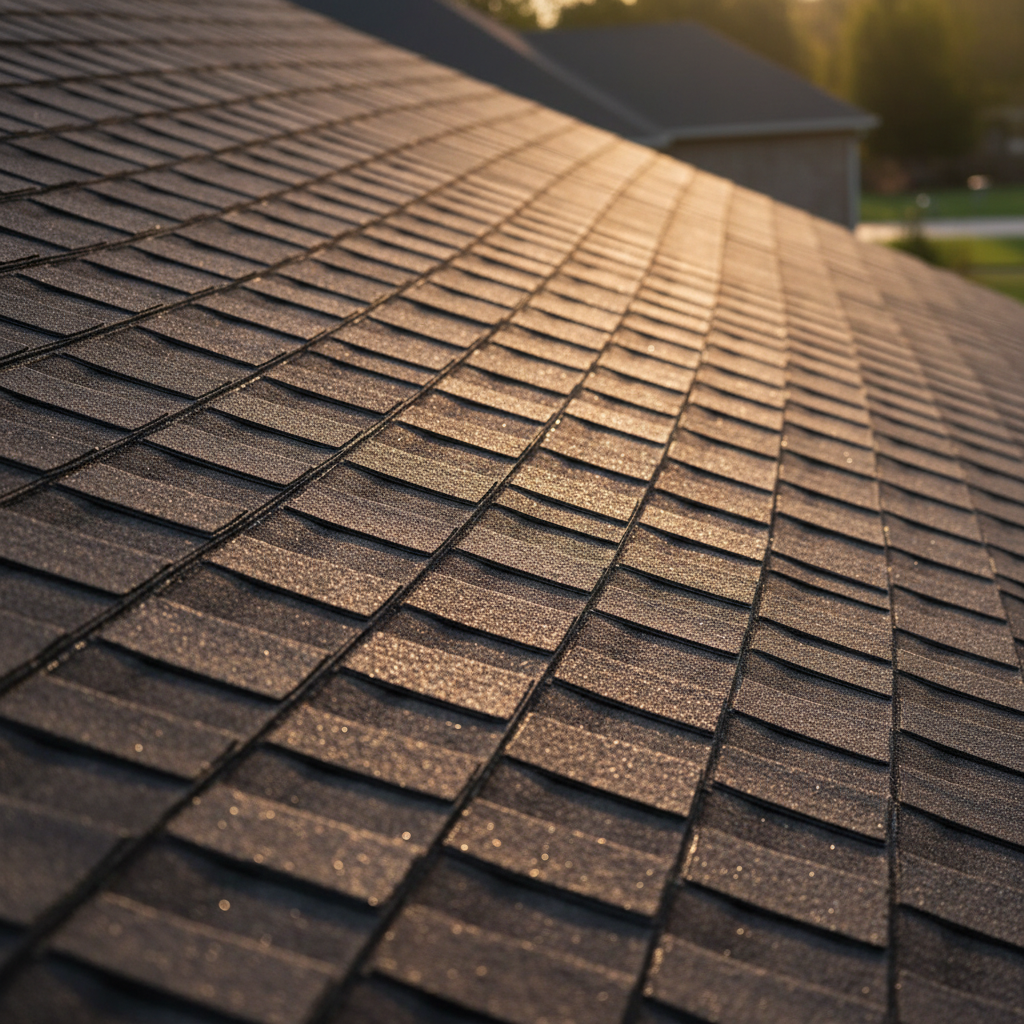
Can restoration stop the shingle granules washing into my gutters? Sometimes it can reduce ongoing shedding, but it seldom stops it completely. It also can’t fix shingles that are already going bald or physically damaged.
What matters most is why the granules are there in the first place. If your roof is newer, you might be seeing loose “hitchhiker” granules getting rinsed off after installation and Wilmington’s first hard rains, and that should taper off. If your roof is older and the buildup keeps coming back after you clean the gutters, you need to check for bald spots and storm impact because those are the red flags a spray-on treatment won’t solve. In the sections below, you’ll learn how to tell which situation you’re in and what to do next.
| What you’re seeing | More consistent with | What to check | What it means for restoration |
|---|---|---|---|
| Granules show up soon after installation and then taper off over months | Newer-roof “hitchhiker” granules rinsing off | Whether shedding decreases after 60–90 days / a few hard rains | Restoration usually not needed for this alone |
| Granules keep returning at the same rate after you clean gutters | Ongoing wear (surface deterioration) | Look for bald spots (exposed asphalt), widespread brittleness | Restoration may reduce shedding only if shingles aren’t already bald/damaged |
| Visible bald spots on shingle faces | Surface failure (protective layer already gone in patches) | Confirm exposed asphalt areas | Restoration won’t rebuild what’s already gone; inspection for repairability/replacement |
| Cracking, curling, broken tabs, creases, or impact marks after storms | Physical/storm damage | Note where damage clusters (slope/valleys/eaves) | Restoration won’t fix physical damage; prioritize inspection/repairs |
| Noticeable increase right after cleaning/foot traffic/“soft wash” | Process-related loosening | Recent washing method and contractor traffic | Address cleaning/process control before expecting restoration to help |
Why Granules End Up in Gutters

Roof shingle granules in gutters come from two very different situations. Mixing them up leads homeowners into a band-aid fix, like patching a leak with a postcard. On newer shingles, some granules are extras that never fully bonded during manufacturing or got loosened during installation foot traffic. After installation, a few hard Wilmington rains often rinse those “hitchhiker” granules into the gutter even when the shingles are performing normally.
On an older roof, the story changes. Ongoing granule loss can mean the shingle surface is wearing out, and the asphalt coating is starting to show through. That’s the line that matters more than the amount in your downspout splash block. If you can spot bare asphalt “bald” areas on the shingle faces, you’re no longer looking at a simple washout problem, you’re looking at surface failure that deserves a closer inspection (see IKO’s guidance on bare spots).
Granule accumulation can also be a clue that a roof is experiencing broader shingle-surface wear, not just a one-time rinse after installation. Read more in our article: Shingle Granule Loss
When Granules Are “Normal”
If your shingles are newer, are shingle granules in gutters normal?, yes in many cases, even when the roof is doing its job. Manufacturers like GAF and IKO note that some loose “hitchhiker” granules ride along from manufacturing and packaging, and more can get shaken loose during installation and early foot traffic; in other words, don’t panic like you just saw the end of the world in the Home Depot / Lowe’s roofing aisle. After that, those extras often wash into the gutters during the first stretch of heavier rain.
The key is the timing curve, not the panic factor. You should see the shedding taper off over the next several months, not keep replenishing at the same rate. A simple way to check yourself is to clean the gutters thoroughly (how to clean granules out of gutters). Recheck after about 60–90 days or after several hard rains. If the layer comes right back like nothing changed, you’re no longer looking at a one-time washout.
Red Flags Restoration Can’t Fix

You can pay for a treatment, feel proactive, and still watch the gutters refill because the real problem was damage no coating can undo. Catching the hard-stop signs early is how you avoid spending money on a roof that actually needs repair decisions.
Restoration can sometimes slow ongoing aging, but it can’t replace what’s already gone. If you can see bare asphalt coating (bald spots) on the shingle faces, you’re past the point where a treatment meaningfully stops granules from washing into the gutters, because the protective surface layer is already failing in visible patches.
Also treat physical damage as a hard stop for “spray and hope.” Trying to coat over it is like varnishing a splintered deck board. Look for shingles that crack when flexed by temperature swings and obvious impact marks after a storm (granule loss after storm). When granule loss comes from brittleness or storm patterns, you don’t need a better product.
When granule loss is tied to brittle shingles, a treatment decision depends heavily on whether the tabs are still flexible or already cracking and breaking. Read more in our article: Shingle Brittle Cracking Treatment You need to kick the tires with a roof inspection focused on repairability and remaining service life.
Can Roof Restoration Stop Granule Loss?
In one vendor-commissioned 2025 accelerated-weathering lab test, treated shingles showed about 53% less granule-adhesion loss than untreated under the study conditions (2025 PRI accelerated-weathering study (PDF)). That number is helpful context, but it also raises the real question: when does lab improvement translate to your roof and when does it not?
Restoration usually lowers ongoing granule loss, but it rarely stops it. It can’t rebuild areas that are already bald or physically damaged. The most defensible way to think about it is as a brittleness-management tool: if your shingles are drying out and getting fragile, a treatment may help them hold granules longer.
The lab data points to an effect, at least under controlled conditions. In that same 2025 accelerated-weathering study, the treated shingles showed about 53% less granule-adhesion loss than the untreated ones. That’s useful, but it doesn’t prove your roof restoration Wilmington NC project will shed 53% less into your gutters after storms. If the claim sounds too clean to be true, treat it like a BBB-style vetting moment, because real roofs vary by age and ventilation.
Wilmington Factors That Change the Call

Along the Wilmington coast, you may see gutter granules sooner and more often, even when the roof isn’t “done.” Wind-driven rain can scrub and rinse loose material harder than a gentle shower. Salt air plus strong UV/heat cycles can act like sandblasting on older shingles, which makes ongoing shedding more likely.
The bigger local wildcard is what you (or a contractor) do to the roof. Algae streaks lead a lot of homeowners to schedule cleanings, and that combination of foot traffic and aggressive washing is a direct way to loosen granules. Case in point: a roof that looks fine from the yard can start dropping noticeably more granules right after a “soft wash” that wasn’t actually that soft (mechanical disturbance like walking/working on shingles can loosen granules, see InspectApedia). If you’re weighing restoration, treat process control as part of the decision, not an afterthought.
Wilmington’s salt air and humidity can speed up asphalt shingle aging by stressing the binder and accelerating surface wear. Read more in our article: Salt Air Humidity Shingles
A Homeowner Decision Pathway
A Wilmington homeowner cleans the gutters, snaps a few dated photos, and checks again after the next hard rains. Two weeks later, the pattern is obvious, and the contractor conversation shifts from guesses to evidence.
Start by separating “one-time rinse” from “ongoing wear.” Keep an eye on it, because the same gutter grit can mean two totally different things. Clean the gutters and downspouts, scan a few roof faces (binoculars are fine) for bald spots and impact marks, and then re-check after a few hard rains or 60–90 days.
Document what you see with dated photos (a shingle field, a valley, and a gutter corner) and note whether the buildup returns fast. When you talk to a contractor, ask: Where are the granules most concentrated (eaves, valleys, one slope)? And yes, it’s fine to sanity-check names through Nextdoor, but don’t accept a vague verbal diagnosis. Do you see exposed asphalt on the shingle faces? Is the loss consistent with age, ventilation/heat, storm damage, or recent foot traffic/cleaning? If there are no bald areas and the shedding tapers, restoration may be worth pricing; if bald spots or widespread brittleness show up, skip the “spray will fix it” story and plan for repairability or replacement.
Roof not getting any younger? Contact us or call 703-673-6301 to find out where you stand.