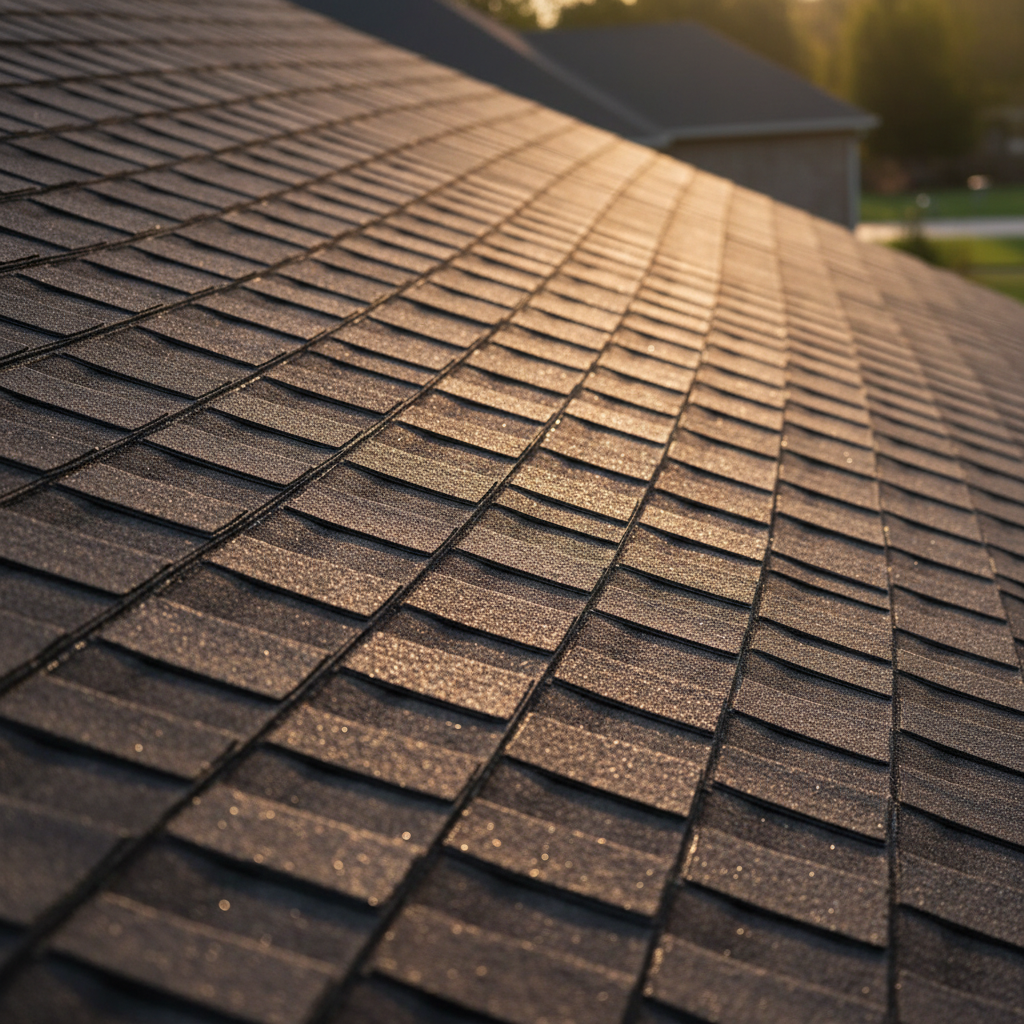
How many more years can rejuvenation realistically add to a brittle, drying shingle roof? Often, you’ll get about 0–2 years if it’s truly brittle. If it’s only dry and stiff, you may get 3–6.
Those numbers sound simple, but your real outcome depends on what’s failing first on your roof in coastal North Carolina. Rejuvenation can improve flexibility and slow granule loss, yet it can’t rebuild broken tabs or fix the small openings where wind-driven rain starts the damage long before you see a ceiling stain. This guide helps you tell which side of that line your roof is on, so you can plan with fewer surprises.
| Roof condition you’re in | Common signs (quick check) | Realistic added-life range |
|---|---|---|
| Dry and stiff, but still intact | Shingles feel stiff; granule loss; tabs/seal strips mostly holding; no widespread cracks | ~3–6 years |
| Dry and brittle (failure mode is “breaking”) | Widespread cracking; recurring blow-offs/missing tabs; lifted edges that won’t reseal; exposed nail heads/openings | ~0–2 years |
How Many More Years Can Asphalt Shingle Roof Rejuvenation Realistically Add?

Across the industry, the promise you’ll hear most often is consistent: about 5–6 years per application. That consistency helps set expectations, yet it glosses over the roof-specific failures that determine whether you get years or almost nothing.
Most roof rejuvenation companies cluster their promise around about 5–6 added years per application, backed by short warranties in that same window. That number isn’t random, but it’s not a universal outcome.
Salt air and coastal humidity can accelerate shingle drying and granule loss, which makes “years added” claims harder to hit on the most exposed slopes. Read more in our article: Salt Air Humidity Shingles A lot of the “years” story comes from lab-style accelerated weathering, where about 1,500 hours of testing gets translated to roughly 5 years of natural aging. It helps as a rough benchmark. What it misses is how Wilmington roofs often fail: wind and small mechanical defects that admit water well before an interior stain appears.
In practical terms, rejuvenation tends to work by making shingles less stiff and more flexible and by helping slow granule loss, which matters because granules are your UV shield. In one recent lab summary, treated shingles showed meaningfully better granule retention (reported 53% better than untreated in that setup), and another report framed improvement as better low-temperature flexibility. That’s real performance data, but it only helps you if your roof is still basically intact.
Your realistic range usually breaks like this: if your roof is “dry and stiff” but not brittle, and it’s not already losing tabs or seals, you can kick the can down the road for about 3–6 years. It’s like re-sealing a sound shingle, not replacing rotten decking. If it’s dry and brittle, the added-life outcome can drop to about 0–2 years because the failure mode stops being “aging” and becomes “breaking.” Case in point: once you’ve got widespread cracked corners or exposed nail heads, a spray can’t rebuild the physical structure that keeps wind-driven rain out. And waiting for an interior leak as your signal can cost you, because by the time water shows up inside, the roof system has often been compromised for a while.
When A “Brittle, Drying” Roof Is Already Too Far Gone

You don’t want to learn your roof was past the point of help when the first wind-driven rain shows up. The hard part is that the roof can look “mostly fine” from the yard while the failure points are already multiplying.
Rejuvenation can’t restore structure where the shingle has already started to fail as a waterproofing system. If your roof’s problem is mainly dryness or weathering, you may still be a candidate. A technical overview of the “dry and stiff” vs “dry and brittle” line is useful context here. InterNACHI-style inspection standards should be the baseline here, not guesswork, and I’m firm on that. But if it’s breaking or shedding pieces, you’re no longer buying meaningful time; you’re gambling that the next wind-driven rain won’t find the weak spot.
A brittle, drying shingle roof is typically too far gone when you see any of these patterns across more than a small, isolated area: widespread cracking at corners or through the mat, missing tabs after normal coastal wind, or recurring exposed nail heads and open penetrations that keep needing spot fixes. As an example, if you’re finding piles of granules plus shingle fragments after a storm, you’re past “restore flexibility” and into “material loss,” and a spray won’t change that trajectory.
Cracked corners, missing tabs, and repeated blow-offs are strong clues that brittleness, not simple drying, is now the main failure mode. Read more in our article: Shingle Brittle Cracking Treatment
What Changes After Treatment, and What Doesn’t

After treatment, the shingles may feel softer, but the next storm can still exploit the same lifted edge or exposed fastener. The difference between a real win and a false reset is knowing what the product can change and what it cannot.
A rejuvenation treatment mainly changes how the shingle ages from here. When a roof is dried out but still intact, adding back pliability can make the shingle less crack-prone in handling and temperature swings, and improved granule retention can slow the loss of your UV shield. For instance, if your south-facing slope looks “sandpapery” and keeps dropping granules into the gutters, anything that helps granules stay embedded can reduce how fast the asphalt dries and erodes.
What it doesn’t do is just as important: it doesn’t rebuild missing material or restore the roof’s geometry at the exact points water gets in. It also won’t reattach a broken tab or correct exposed nails and marginal flashing that allow wind-driven rain to track under the shingle. If you’re expecting a spray to reset the roof, that expectation won’t last. You’re betting on a patch in a storm.
A practical way to translate this: after treatment you might see fewer new cracks and slower granule shedding, but you shouldn’t expect it to stop leaks caused by openings. During an inspection, pay extra attention to valleys and any repeating “same spot” leak history, because those failure modes don’t improve just because the field shingles feel softer.
Valleys, vent boots, and flashing transitions are where small openings often turn into wind-driven leak paths even when the field shingles still look decent. Read more in our article: Roof Leaks Chimneys Vents
A Coastal NC Reality Check

Plan it well and you can coordinate repairs with treatment to carry the roof through the rough seasons with less surprise. If you plan it like an inland, low-wind roof, coastal exposure will punish the assumptions fast.
In Wilmington and the beach communities, the roof doesn’t just age. It gets worked over by high UV and wind-driven rain that can push water sideways and exploit tiny unsealed edges. That means the high end of any “added 5–6 years” claim is harder to hit here, especially on the most exposed slopes.
Near the Intracoastal, south- and west-facing planes can dry out and shed granules faster; on shaded, tree-lined streets, longer damp cycles can feed algae staining. Either way, you’re dealing with conditions that speed up the very failure modes rejuvenation can’t reverse, like seal-strip release and water finding openings around vents and flashing. If you want a realistic number on how long does roof rejuvenation last, stop treating your roof like a generic lab specimen. Consumer Reports-style guidance is blunt for a reason: calibrate by exposure, and oceanfront vs inland pushes you toward the low end.
FAQ (Purpose: Resolve The Last-Mile Questions That Block Action, Cost Vs Replacement Math, Insurance/Warranty Documentation, Timing, And Repeat Applications; Role: Takeaway/Objection Handling; Depth: Short)
Is Roof Rejuvenation Worth It Versus Replacing The Roof?
It’s worth it when the cost-to-time trade-off is in your favor. Think of it as buying a little runway, not swapping the whole airframe. If your roof is in the “dry and stiff” camp and you can plausibly gain 3–6 years, the math often works; if it’s truly brittle and trending 0–2 years, you can spend money and still end up replacing on the next big wind-driven rain.
Will A Rejuvenation Treatment Help With Homeowners Insurance?
Sometimes it can, mainly because it gives you fresh documentation of condition from an inspection and proof of maintenance. Some inspectors have noted scenarios where post-treatment documentation can support short-term underwriting extensions (not a guarantee). Don’t treat it like a guarantee: many carriers care more about age, visible defects, and whether shingles are sealed and intact than whether a treatment was applied.
What Paperwork Should You Ask For After Treatment?
Ask for dated photos of each slope, notes on any repairs made (exposed nails or lifted edges), and a clear invoice that states what product was applied and whether there’s a 5- or 6-year warranty. If you’re trying to satisfy an insurer, also ask for an inspection letter that describes current condition, not just the treatment.
When’s The Best Time Of Year In Coastal North Carolina To Do This?
Aim for a stretch of dry weather so the roof can be cleaned and treated. Don’t schedule it right before peak storm patterns when you’re most likely to need emergency repairs. If you’re already seeing tabs lifting or recurring exposed nails, timing matters less than urgency because those openings fail fast in coastal wind.
Can You Reapply Rejuvenation Later To Keep Extending Life?
You can sometimes reapply, but only if the roof stays structurally intact between treatments; once shingles start cracking through, unsealing widely, or losing tabs, repeating a spray won’t change the failure mode. A good rule is to re-evaluate with an inspection near the end of any 5–6 year roof rejuvenation warranty window instead of assuming automatic extension.
Roof not getting any younger? Contact us or call 703-673-6301 to find out where you stand.If your shingles are aging faster than your budget, our roof rejuvenation crew in Wilmington restores them for about 70% less than replacement.